
📋 Table of Contents
Most homeowners don’t realize that a simple $50 metal rod is the only thing standing between their water heater and a catastrophic flood. According to data from the International Association of Certified Home Inspectors (InterNACHI), the average water heater lasts 10 to 15 years, but in the unique microclimates of the Bay Area, that lifespan can be cut in half without the right aluminum vs magnesium anode strategy.
Key Takeaways for Bay Area Homeowners
- Magnesium is best for the soft, high-purity water from the Hetch Hetchy system (San Francisco, parts of the Peninsula).
- Aluminum (or Aluminum-Zinc) is the standard for harder water areas like San Jose or the East Bay to prevent rapid depletion.
- Odor Prevention: If you smell rotten eggs, switching to an aluminum-zinc alloy is often the immediate fix.
The Science of Sacrificial Anode Rod Replacement
The real kicker? Your water heater is essentially a giant battery, and the anode rod is designed to be eaten alive so your tank doesn’t have to be. In our work with established homeowners in Palo Alto and Los Altos, we consistently find that sacrificial anode rod replacement is the most neglected maintenance task, leading to thousands in avoidable replacement costs.
But wait—not all metals react the same way to our local water. The Bay Area is a patchwork of water sources, from the pristine Sierra snowmelt of the Hetch Hetchy reservoir to the mineral-heavy groundwater blends in the South Bay. Choosing the wrong metallurgy can lead to one of two disasters: a rod that dissolves in eighteen months, or a rod that doesn’t react at all, leaving your steel tank to rust.
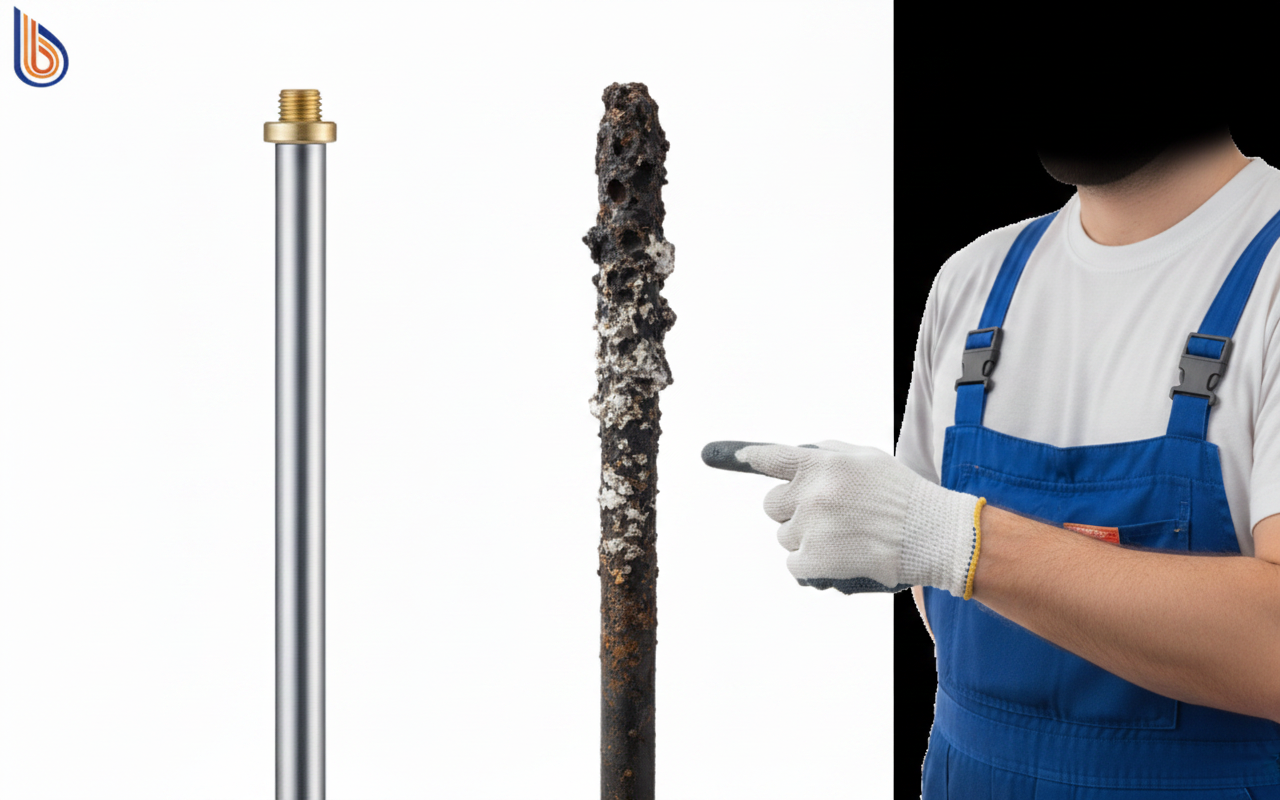
Magnesium Anodes: The Gold Standard for Hetch Hetchy Water
Magnesium provides a higher driving voltage than aluminum, making it the superior choice for the low-conductivity water found in San Francisco and the northern Peninsula. Here’s the thing: because Hetch Hetchy water is so pure, it lacks the minerals that usually help conduct electricity. A magnesium rod is “aggressive” enough to protect the tank even in these low-conductivity environments.
- Pros: Higher protection potential, healthier for those concerned about metal leaching, better for soft water.
- Cons: Depletes rapidly in hard water, can react with bacteria to produce hydrogen sulfide gas.
- Best for: San Francisco, Redwood City, and Menlo Park residents.
For many of our clients, particularly those in the tech sector who value high-efficiency systems like heat pump water heaters, maintaining the anode is the difference between a 15-year ROI and a 7-year failure. If you haven’t checked your rod in three years, schedule a professional inspection to avoid unexpected leaks.
Aluminum vs Magnesium Anode: Why San Jose Needs a Different Approach
What most people miss is that the “best” metal is entirely dependent on your zip code’s Total Dissolved Solids (TDS) levels. In areas like San Jose, Sunnyvale, and parts of the East Bay, the water is significantly harder. A magnesium rod in these conditions is like throwing an ice cube into a furnace—it will vanish far too quickly.
| Feature | Magnesium Rod | Aluminum Rod |
|---|---|---|
| Water Type | Soft / Hetch Hetchy | Hard / Blended Well Water |
| Lifespan | 2-4 Years | 3-5 Years |
| Odor Risk | High (Rotten Egg) | Low (with Zinc alloy) |
| Corrosion Protection | Excellent | Good |
Aluminum rods are more durable in high-TDS environments. However, a common contrarian insight we share with clients is that standard aluminum can sometimes form a layer of corrosion products (aluminum hydroxide) that actually insulates the rod, stopping it from protecting your tank. This is why we often recommend a specific aluminum-zinc alloy for water heater odor prevention.
Solving the ‘Rotten Egg’ Smell in East Bay Homes
If you turn on your hot water in Walnut Creek or Fremont and get a whiff of sulfur, you’re likely dealing with sulfate-reducing bacteria. These bacteria aren’t harmful to your health, but they react with the electrons produced by a magnesium anode to create hydrogen sulfide gas. This is the source of the infamous rotten egg smell water heater issues.
- Step 1: Identify if the smell is only in the hot water. If it’s both, the issue is your well or city supply.
- Step 2: Replace the magnesium rod with an aluminum-zinc alloy rod.
- Step 3: The zinc acts as a catalyst that inhibits the bacterial reaction, killing the odor instantly.
In our experience with typical Bay Area mid-market residential properties, switching to an aluminum-zinc rod solves 95% of odor complaints without requiring expensive whole-house filtration. You can learn more about these specific fixes by browsing our odor solution guides.

The Coastal Factor: Fog, Salinity, and External Corrosion
Living in the ‘Fog Belt’—areas like Pacifica or Daly City—introduces a secondary corrosion factor. High coastal humidity and salt air don’t just affect your car; they accelerate the corrosion of the external fittings on your water heater. While the aluminum vs magnesium anode debate focuses on the inside of the tank, the external environment often dictates how difficult the anode rod replacement will be.
Salt air can “seize” the anode hex head into the tank. We’ve seen many DIY attempts end in disaster when a homeowner shears off the top of the rod. For coastal residents, we recommend applying a small amount of high-temp anti-seize to the threads during every 3-year checkup. This simple trick, often overlooked by general contractors, ensures your tank remains serviceable for decades.
Future-Proofing: Powered Anodes and 2027 Regulations
The real kicker for the next few years is the transition toward zero-NOx requirements and the rise of Heat Pump Water Heaters (HPWH). These high-tech units are expensive investments. To protect them, many Bay Area homeowners are opting for Powered Anode Rods (ICCP). Unlike sacrificial rods, powered anodes use a small amount of electricity to send a protective current through the tank. They never need replacement and don’t produce the rotten egg smell.
While the upfront cost is higher, the ROI is clear for anyone planning to stay in their home for more than five years. As we move toward the 2027 gas water heater bans, ensuring your existing tank lasts as long as possible is a savvy financial move. If you’re curious about how these regulations affect your specific city, check out our Bay Area regulation tracker.
Practical Steps for Your Maintenance Weekend
Don’t wait for a puddle in the garage to take action. This week, we recommend two simple steps: First, check your water utility bill to see if your water is sourced from Hetch Hetchy or local wells. Second, if your heater is over four years old, pull the anode rod. If you see more than six inches of the central wire core, the rod is spent.
Need a professional hand? Contact Better Water Heaters today for a comprehensive water chemistry audit and anode replacement. We’ll make sure your metallurgy matches your zip code, saving you from the $3,000 “surprise” of a premature tank failure.
Frequently Asked Questions
Is aluminum leaching from the anode rod a health concern?
According to the EPA, aluminum in drinking water is primarily a secondary aesthetic standard. Since the anode is in the hot water tank—which is generally not used for drinking or cooking—the risk of ingestion is minimal. However, for those with extreme sensitivities, magnesium remains the preferred natural choice.
How often should I perform sacrificial anode rod replacement in the Bay Area?
In high-TDS areas like San Jose, we recommend an inspection every 2-3 years. In Hetch Hetchy served areas like San Francisco, you might get 4-5 years out of a magnesium rod. Regular checks are the only way to prevent the tank from rusting once the “sacrificial” metal is gone.
Why does my new water heater smell like rotten eggs?
New heaters often come with magnesium rods. If your local water has high sulfate content and specific bacteria, they react with the magnesium to create hydrogen sulfide gas. The solution is switching to an aluminum-zinc alloy rod, which stops the chemical reaction causing the rotten egg smell water heater.
Can I switch from magnesium to aluminum myself?
Yes, provided you have a 1-1/16 inch socket and a breaker bar. However, be warned: anode rods are often tightened to over 100 ft-lbs of torque at the factory. If the tank isn’t secured, you risk snapping the water lines while trying to unscrew the rod. Most Bay Area homeowners prefer a professional to handle the seismic strapping and torque requirements.