
📋 Table of Contents
A typical water heater in the Bay Area lasts just 8 to 12 years, yet according to the U.S. Department of Energy, proactive anode rod maintenance can effectively double that lifespan. Most homeowners don’t realize their water heater contains a ‘sacrificial’ lamb—a metal rod designed to be eaten away by electrolysis so your steel tank doesn’t have to be.
Key Takeaways for Bay Area Homeowners
- The Sacrifice: Anode rods prevent tank corrosion by attracting corrosive elements to themselves.
- The Softener Paradox: Water softeners can accelerate rod depletion by up to 300%.
- The 3-Step Framework: Inspect, Select, and Replace is the gold standard for maintenance.
- Financial Impact: A $50 rod can prevent a $2,500 emergency tank replacement.
1. The Hidden Tax: Why Anode Rod Maintenance Matters
The real kicker about modern plumbing is that the very systems designed to make our lives comfortable often shorten the life of our appliances. In our work with established Bay Area homeowners, we frequently see 40-gallon tanks failing in under six years because the homeowner installed a high-end water softener but never checked the anode rod.
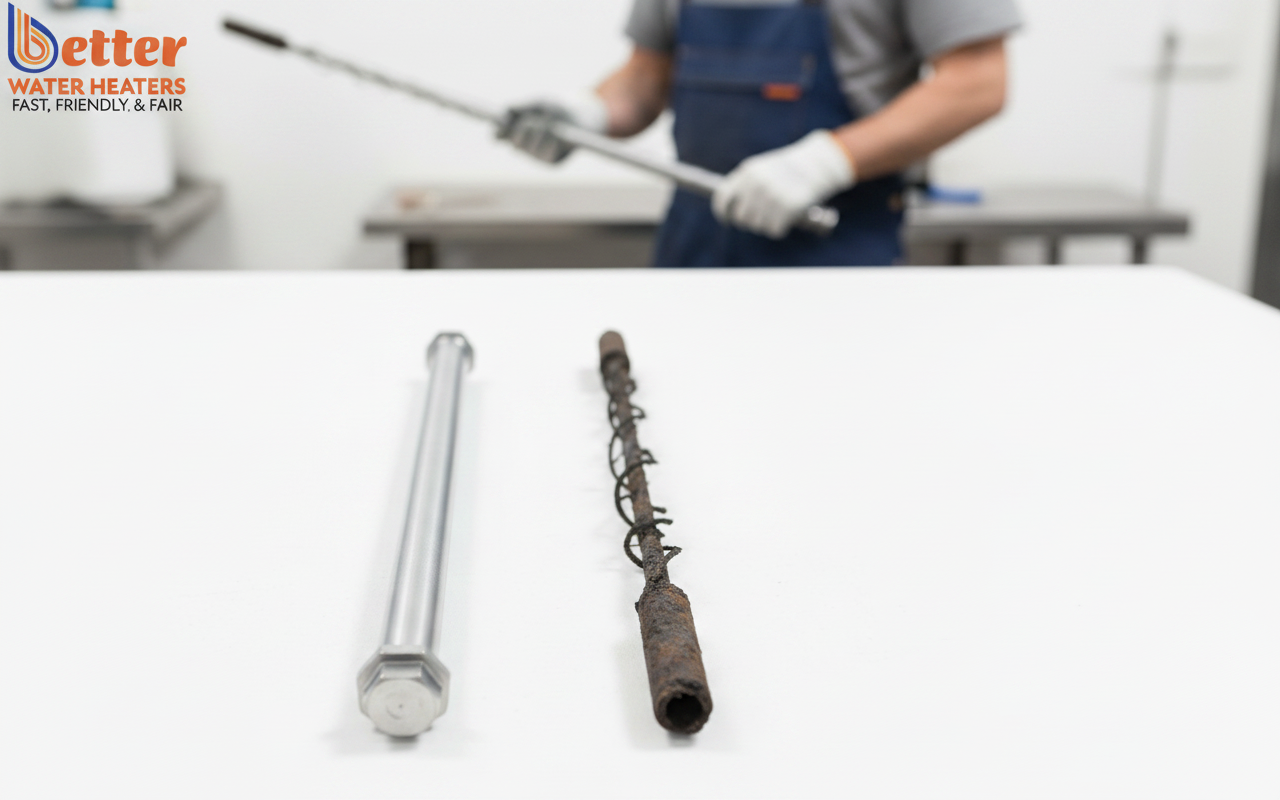
Here’s the thing: soft water is highly conductive. While it feels great on your skin and keeps your glassware spot-free, it creates an aggressive environment for preventing tank corrosion. The salt used in softeners increases the electrical conductivity of the water, causing the sacrificial anode rod to dissolve at a much faster rate than in hard water environments.
- Magnesium Rods: Best for standard water but react aggressively to softeners.
- Aluminum/Zinc Rods: The go-to solution for eliminating that ‘rotten egg’ sulfur smell.
- Powered Anodes: A permanent, non-sacrificial option that uses electricity to prevent rust.
What most people miss is that once that rod is gone, the electrolysis doesn’t stop; it just moves to the next easiest target—your steel tank lining. We call this the ‘Hidden Tax’ of home comfort. If you aren’t performing regular water heater maintenance, you are essentially paying for your softener twice: once in salt, and once in a premature tank replacement.
2. The 3-Step Framework: Inspect, Select, Replace
Successful maintenance isn’t about complex engineering; it’s about following a repeatable process before the emergency happens. Most Bay Area residents wait for a leak to call a plumber, but by then, the tank is already destined for a landfill. Instead, we recommend this proactive framework.
Step 1: The Visual Health Check (Inspect)
You don’t always need to drain the tank to know there’s a problem. Start with the ‘Tap Test’: gently tap the top of the anode hex bolt (usually found on top of the heater). A hollow, metallic ring often suggests the rod is still intact, while a dull thud can indicate it’s covered in heavy calcium or completely depleted.
Step 2: Choosing the Right Protection (Select)
Selecting the right material is critical. If you have a ‘rotten egg’ smell, a standard magnesium anode rod replacement will only make it worse. You need an aluminum-zinc alloy rod to kill the bacteria causing the odor. For those who want to ‘set it and forget it,’ a powered impressed current anode is a superior, albeit more expensive, investment that never needs replacing.
Step 3: The Swap (Replace)
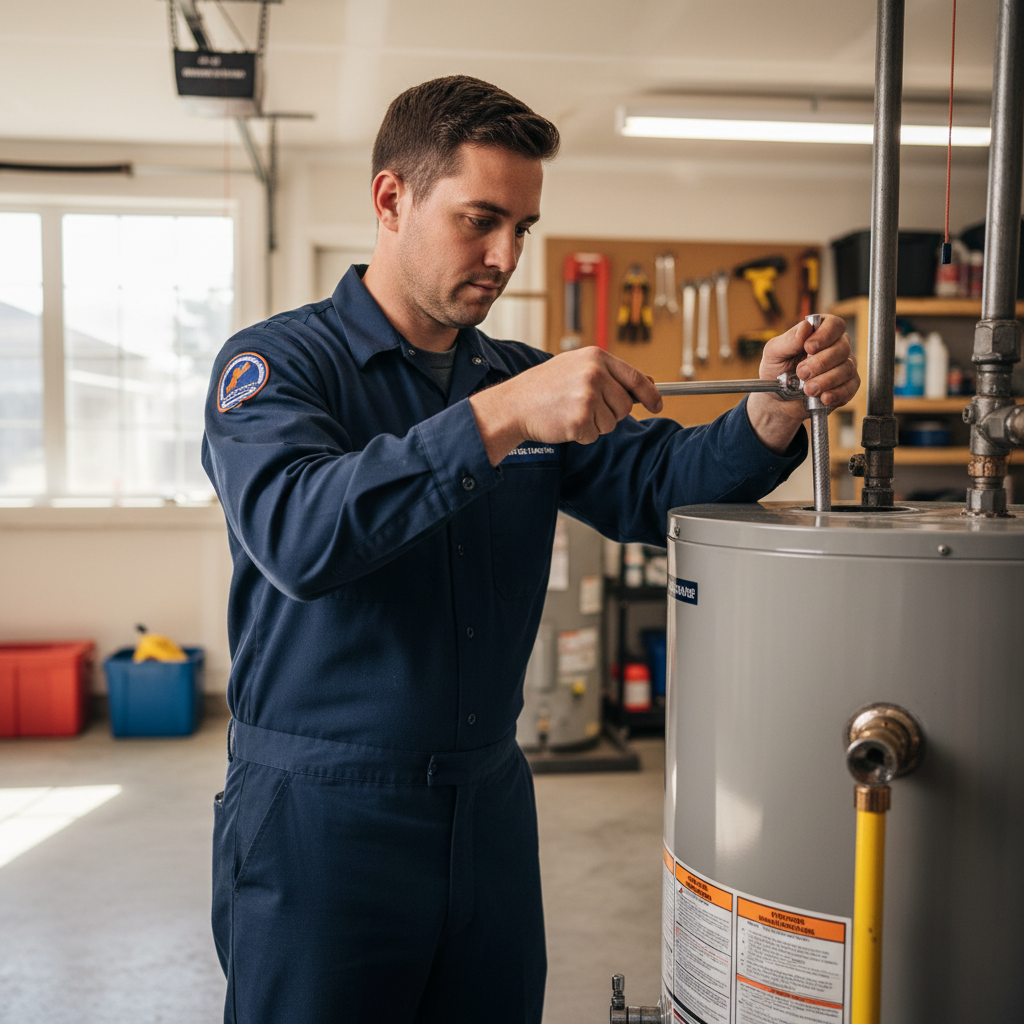
Replacing the rod involves shutting off the water, relieving pressure, and using a 1-1/16 inch socket wrench to swap the old ‘skeletonized’ rod for a fresh one. It’s a 20-minute job that adds years to your system. If you’re uncomfortable handling a breaker bar, scheduling a professional inspection ensures the job is done without damaging the tank’s glass lining.
| Feature | Magnesium (Sacrificial) | Aluminum/Zinc (Sacrificial) | Powered (Impressed Current) |
|---|---|---|---|
| Lifespan | 3-5 Years | 3-5 Years | 20+ Years |
| Best For | Hard Water | Sulfur Odor Issues | Softened Water |
| Cost | $30 – $50 | $40 – $60 | $150 – $250 |
3. The Sustainable Plumbing Advantage
Every time a water heater is replaced prematurely, 500 lbs of steel and insulation end up in a landfill. In a region as environmentally conscious as the Silicon Valley, anode rod maintenance is more than just a cost-saving measure; it’s a sustainability imperative. By spending $50 every few years, you are preventing the massive carbon footprint associated with manufacturing and shipping a new 150lb appliance.
But wait—there’s a warranty catch. Many manufacturers, like Rheem or Bradford White, require proof of maintenance to honor tank leak warranties. If your tank fails in year five and you can’t show that the anode was inspected, they may deny your claim. We’ve seen this happen to first-time homebuyers who inherited an old system without realizing the clock was ticking.
For those managing multiple units or working long hours in tech, we recommend Smart Home Integration. Installing a simple leak sensor near the base of the tank is a start, but some modern systems now include maintenance alerts that track the electrical potential of the anode rod in real-time. This is how we move from ‘break-fix’ to ‘predictive’ maintenance.
Need help determining if your rod is spent? Book a maintenance check with our Bay Area specialists today to avoid a $2,000 surprise tomorrow.
4. Sacrificial vs. Powered: Which is Best for You?
The choice between a standard sacrificial anode rod replacement and a powered version often comes down to your water chemistry. Sacrificial rods work by creating a low-voltage battery effect inside your tank. The rod is the ‘anode’ (negative), and the tank is the ‘cathode’ (positive). The rod corrodes so the tank won’t.
However, in a typical Bay Area mid-market home with a water softener, a sacrificial rod might only last 18 months. A powered impressed current anode uses a small plug-in transformer to send a consistent electrical pulse through a titanium rod. Since the titanium doesn’t dissolve, you never have to replace it. It’s the ultimate ‘contrarian’ choice: pay more now to never pay again.
- Sacrificial: Low upfront cost, requires recurring labor.
- Powered: High upfront cost, zero maintenance, ideal for well water.
- Hybrid: Some newer heat pump models use electronic anodes by default.
5. When to Call a Bay Area Professional
While DIY is possible, there are risks. A common issue we see is the ‘frozen’ hex bolt. If you apply too much torque to a rusted anode bolt, you risk cracking the internal glass lining of the tank or snapping the nipple entirely. If you see heavy rust around the top of the heater, it’s time to stop and call a pro.
Professional service also includes a full tank flush to remove water heater sediment buildup. In cities like Fremont or San Jose, where water can be moderately hard, sediment acts as an insulator, causing the bottom burner to work harder and eventually overheat the steel. Combining an anode check with a flush is the single best thing you can do for your utility bill.
Our team at Better Water Heaters has spent 20+ years navigating local codes and water conditions. We don’t just swap parts; we consult on the best long-term strategy for your specific home. Whether that’s a simple magnesium rod or a transition to a heat pump system, we provide the data you need to decide.
Final Strategy for Your Monday Morning
Don’t wait for a puddle. This week, take five minutes to locate your water heater’s manual or look up the model number online. Find the age of the unit. If it’s older than four years and has never been serviced, call a specialist. It is significantly cheaper to replace a rod than to replace a floor damaged by a burst tank.
Ready to double your tank’s life? Schedule your professional anode inspection with Better Water Heaters today. We serve the entire Bay Area with transparent, honest pricing.
Frequently Asked Questions
How often should I check my anode rod?
For most Bay Area homes, we recommend a visual inspection every 3 years. However, if you have a water softener, you should check it every 12 to 18 months, as salt-softened water accelerates the corrosion process significantly.
What are the signs of a failing anode rod?
The most common signs include a ‘rotten egg’ smell in your hot water, rusty-colored water, or small bits of gray sediment in your faucet aerators. If your water heater is making popping sounds, it may also be a sign that sediment has covered the rod, rendering it ineffective.
Can I switch from a magnesium to an aluminum rod?
Yes, and it is often recommended if you have high pH water or odor issues. Aluminum-zinc rods are less reactive and can help neutralize odors, though magnesium is generally better for pure corrosion protection in standard municipal water.
Is a powered anode rod worth the extra cost?
If you plan on staying in your home for more than 5 years, yes. A powered anode eliminates the need for future replacements and provides superior protection in softened water, eventually paying for itself in avoided labor and part costs.