
📋 Table of Contents
According to recent industry data from ENERGY STAR, the average water heater lifespan has stabilized at 8 to 12 years, yet manufacturers are increasingly pushing 15-year coverage plans. This water heater warranty comparison will reveal whether those extra years are a badge of durability or simply a clever piece of service insurance you’ve already paid for.
For most Bay Area homeowners, the water heater is a “set it and forget it” appliance until the day the garage floor is flooded. When you are standing in a showroom or reviewing a quote from a specialist, the jump from a 10-year to a 15-year warranty often feels like a no-brainer. But here is the thing: a longer warranty doesn’t always mean a better tank. In many cases, the internal components are identical, and you are simply paying an upfront premium to cover the statistical likelihood of a failure in years 11 through 15.
To help you navigate this, we’ve developed the 4-Quadrant Reliability Matrix. This framework moves beyond simple years and looks at the total cost of ownership, local water conditions, and the “protection gap” that leaves many residents footing massive labor bills despite having a “warrantied” part.
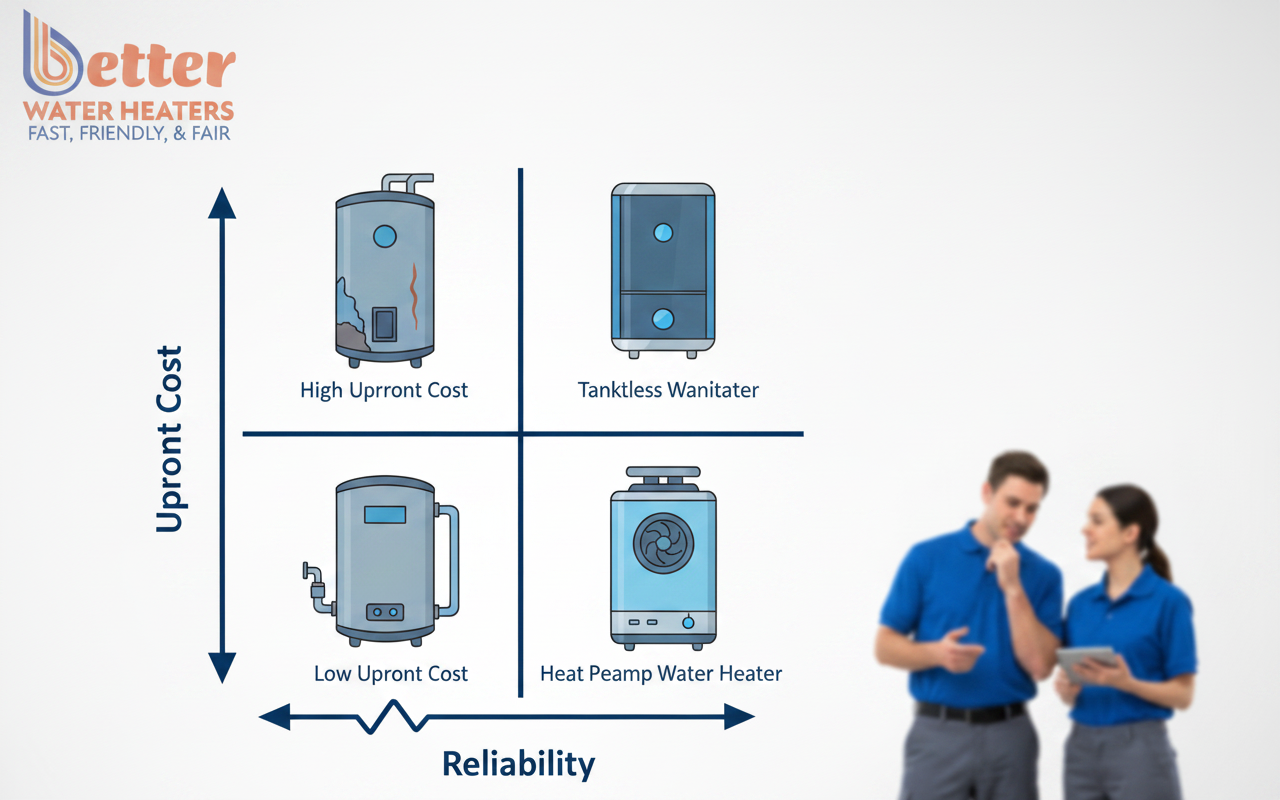
The 4-Quadrant Reliability Matrix Explained
The secret to a smart purchase is realizing that reliability is a balance between upfront cost, technology type, maintenance requirements, and peace of mind.
- Quadrant 1: The Value Baseline (6-10 Years). Typically features a single anode rod and standard heating elements. Best for landlords or short-term residents.
- Quadrant 2: The Optimized Mid-Range (12 Years). Often includes upgraded “extra-thick” anode rods or dual-rod systems to fight Bay Area plumbing reliability issues like hard water.
- Quadrant 3: The Premium Tank (15 Years). Usually the same tank as the 12-year model but with a higher price tag to cover the manufacturer’s extended risk pool.
- Quadrant 4: The Technology Shift (Tankless/Heat Pump). These units often have 15+ year lifespans but require specific electrical or gas venting upgrades.
What most people miss is that a 15-year warranty is often a “parts-only” guarantee. While the manufacturer might send you a new $1,200 tank in year 13, you will still be responsible for the $800 to $1,500 in Bay Area labor costs, permits, and disposal fees. This is what we call the Protection Gap.
Why Water Heater Lifespan Varies in the Bay Area
Your water heater lifespan is dictated more by what is inside your pipes than what is written on your warranty certificate.
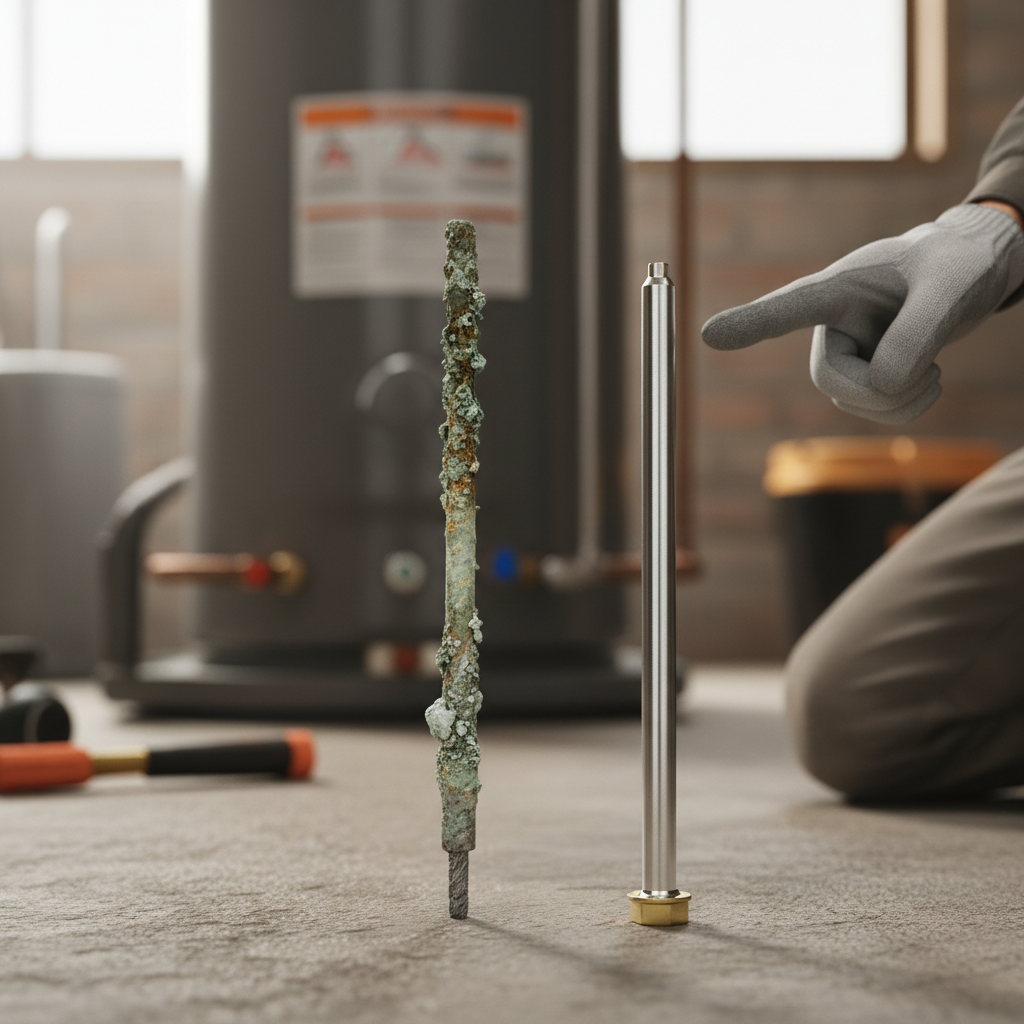
In our work with typical Bay Area mid-market homeowners in San Jose or Fremont, we see a massive disparity in tank health based on local mineral content. Hard water acts like sandpaper on the interior glass lining of a tank. If you live in an area with high mineral counts, a 15-year warranty won’t stop the tank from leaking if you don’t maintain the anode rod protection system. The anode rod is a sacrificial piece of magnesium or aluminum that corrodes so your tank doesn’t have to.
- Hard Water Scaling: Minerals settle at the bottom, creating an insulating layer that causes the burner to overheat the steel tank.
- Electrolysis: Without a functional anode rod, the water begins eating the tank walls directly.
- Thermal Expansion: Constant pressure changes in closed plumbing systems can stress even the best 15-year tanks.
The real kicker? Many manufacturers include a “secret clause” that voids your 12 or 15-year warranty if you don’t replace the anode rod every 3 to 5 years. It’s the plumbing equivalent of a car warranty requiring regular oil changes. If you haven’t checked your rod, your 15-year peace of mind might already be gone.
Need a professional eye on your current system? Schedule a reliability inspection today to see how much life your tank really has left.
Water Heater Warranty Comparison: 10 vs. 12 vs. 15 Years
When performing a water heater warranty comparison, you need to look at the “High-Recovery” capabilities and the physical build of the unit.
| Warranty Term | Typical Build Quality | Bay Area Suitability | Total Cost Outlook |
|---|---|---|---|
| 10-Year | Standard Anode, Standard Lining | Good for soft water areas | Lowest upfront, moderate risk |
| 12-Year | Dual Anodes or Powered Anode | Best for San Jose/Hard Water | Best ROI for most families |
| 15-Year | Premium Anode + Insurance Premium | Peace of mind seekers | High upfront, low late-stage risk |
But wait—there is a contrarian view here. Some of the most reliable units we install are actually 10-year high-efficiency models. Why? Because the manufacturers invest in better heat exchangers and stainless steel components rather than just extending a paper warranty on a standard steel tank. In these cases, the high-recovery water heater reliability comes from engineering, not insurance.
The Hidden Costs: Labor vs. Parts Coverage
A “Full Warranty” is a bit of a misnomer in the plumbing world; it usually only covers the “Full Tank” and not the “Full Service.”
In a typical scenario for a Bay Area homeowner, a tank failure in year 9 of a 12-year warranty results in a free replacement tank from the manufacturer. However, the labor allowance provided by companies like Rheem or Bradford White is often capped at a fraction of what actual Bay Area plumbing rates are. You are essentially paying for a “pre-paid repair plan” that only covers the hardware. To ensure tank failure prevention, we recommend focusing on the quality of the installation and the addition of a thermal expansion tank, which protects the warranty’s validity.
- Labor Coverage: Usually expires after 1 year.
- Pro-rated vs. Non-pro-rated: Ensure your 15-year warranty doesn’t lose value every year you own it.
- Leak-Sensing Models: Some insurance companies offer premium discounts if you install a 12+ year model with automatic shut-off valves.
We use our internal AI content engine to track these changing manufacturer terms, ensuring our recommendations stay current with 2025 industry standards.
Planned Obsolescence and the Modern Tank
There is a growing debate about “planned obsolescence” in modern water heater manufacturing compared to the “tanks of the 70s” that lasted 30 years.
The truth is more nuanced. Modern tanks are actually more efficient and safer, but they are subject to stricter environmental regulations, such as the Bay Area Air Quality Management District’s zero-NOx requirements. These regulations require thinner, more sensitive burners that can be prone to clogging if not maintained. When you choose a 15-year warranty, you aren’t necessarily buying a tank that won’t break; you’re buying a manufacturer’s promise to keep you in their ecosystem if it does.
For environmentally-minded residents, the shift toward Heat Pump Water Heaters (HPWH) offers a different warranty landscape. These units often come with 10-year electronic warranties, which are crucial because the “brain” of the unit is more likely to fail than the tank itself.
Maintenance: The Only Real Warranty
The most honest advice we can give is this: a 6-year warranty tank that is flushed annually will almost always outlast a 15-year warranty tank that is ignored.
If you want true Bay Area plumbing reliability, you should follow this simple maintenance checklist rather than relying on a piece of paper in your junk drawer:
- Annual Flush: Removes sediment that causes tank hotspots.
- Anode Inspection: Check every 3 years (more often if you have a water softener).
- T&P Valve Test: Ensure your safety valve isn’t seized shut.
- Expansion Tank Pressure: Match it to your home’s water pressure to prevent tank fatigue.
Ready to upgrade to a system that actually lasts? Find a specialist in your Bay Area neighborhood and get a quote on a high-reliability system today.
Final Takeaway: Which Quadrant Are You?
Choosing the right warranty is about matching the coverage to your life stage. If you are a startup founder planning to move in 3 years, a 10-year warranty is plenty. If you are in your “forever home” in Los Gatos, the 12 or 15-year model with a dual-anode system is a strategic investment in tank failure prevention.
Don’t just buy the years. Buy the components that make those years possible. In the Bay Area, that means prioritizing anode rod quality and professional installation over marketing stickers.
Frequently Asked Questions
Is a 15-year water heater warranty worth the extra cost?
For most homeowners, a 12-year warranty offers the best balance of upgraded components (like better anode rods) without the “insurance premium” added to 15-year models. The 15-year option is best if you want the absolute longest protection against tank replacement costs, but remember it rarely covers labor beyond the first year.
Does hard water void my water heater warranty?
Technically, no, but manufacturers can deny claims if they prove the tank failed due to massive sediment buildup caused by a lack of maintenance. In hard water areas like San Jose, regular flushing is often a requirement hidden in the fine print to keep your warranty valid over 10+ years.
What is the difference between a 6-year and 12-year tank?
In many brands, the physical tank is identical, but the 12-year model includes a larger or second sacrificial anode rod. This rod significantly extends the water heater lifespan by providing more material to corrode before the water attacks the steel tank itself.
Does a warranty cover the cost of a plumber?
Standard manufacturer warranties typically cover labor for only the first year. If your tank fails in year 10 of a 12-year warranty, the manufacturer will provide a new tank for free, but you will need to pay a professional for the installation, permits, and disposal of the old unit.
Can I extend my warranty after installation?
Some manufacturers and utility programs offer extensions at the time of purchase, but rarely after the unit is installed. The best way to “extend” your protection is through a third-party home warranty or by investing in a leak-detection system that may lower your home insurance premiums.