
📋 Table of Contents
- How Bay Area Microclimates Dictate Your Heater’s Lifespan
- The ‘Fog Belt’ Tax: Coastal Salt Air Appliance Damage
- Inland Stress: Heat, Hard Water, and Thermal Expansion
- Heat Pump Water Heaters and Local Ambient Temperatures
- Micro-Zoning Your Maintenance Schedule
- Protecting Outdoor Units from Atmospheric Rivers
- FAQs
While the average tank water heater is rated for 10 to 12 years, homeowners in the San Francisco ‘Fog Belt’ often see units fail in as little as 7 or 8 years due to Bay Area microclimates. According to the National Association of Corrosion Engineers (NACE), atmospheric salt at coastal distances can increase metal loss rates by up to 10 times compared to inland environments.
Key Takeaways for Bay Area Homeowners
- Coastal zones (Pacifica, Sunset District) require anode rod inspections every 18 months due to accelerated salt air appliance damage.
- Inland regions (Walnut Creek, Livermore) face thermal expansion stress from extreme day-to-night temperature swings.
- Heat pump efficiency is directly tied to your local ambient air temperature; foggy microclimates may require specific sizing adjustments.
- Recent storms have highlighted the need for better freeze protection on outdoor tankless units in the North and East Bay.
How Bay Area Microclimates Dictate Your Heater’s Lifespan
Your zip code is often the most accurate predictor of when your hot water will stop flowing. In the Bay Area, we don’t just have one climate; we have dozens of distinct atmospheric zones that dictate how fast metal degrades and how hard your heating elements must work.
Here is the thing: a water heater in a ventilated garage in San Bruno faces a completely different chemical battle than one in a sealed basement in San Jose. The high moisture content and salt ions in coastal air act as a catalyst for water heater corrosion, eating through outer jackets and burner assemblies long before the internal tank fails.
- The Humidity Factor: High humidity in places like Richmond or Daly City prevents condensation from drying, leading to premature rust on gas valves.
- Temperature Fluctuations: In the East Bay, 40-degree swings between noon and midnight cause constant expansion and contraction of the tank, weakening glass linings.
- Air Quality: Particulates in more industrial or high-traffic corridors can clog intake filters on high-efficiency tankless units.
The ‘Fog Belt’ Tax: Coastal Salt Air Appliance Damage
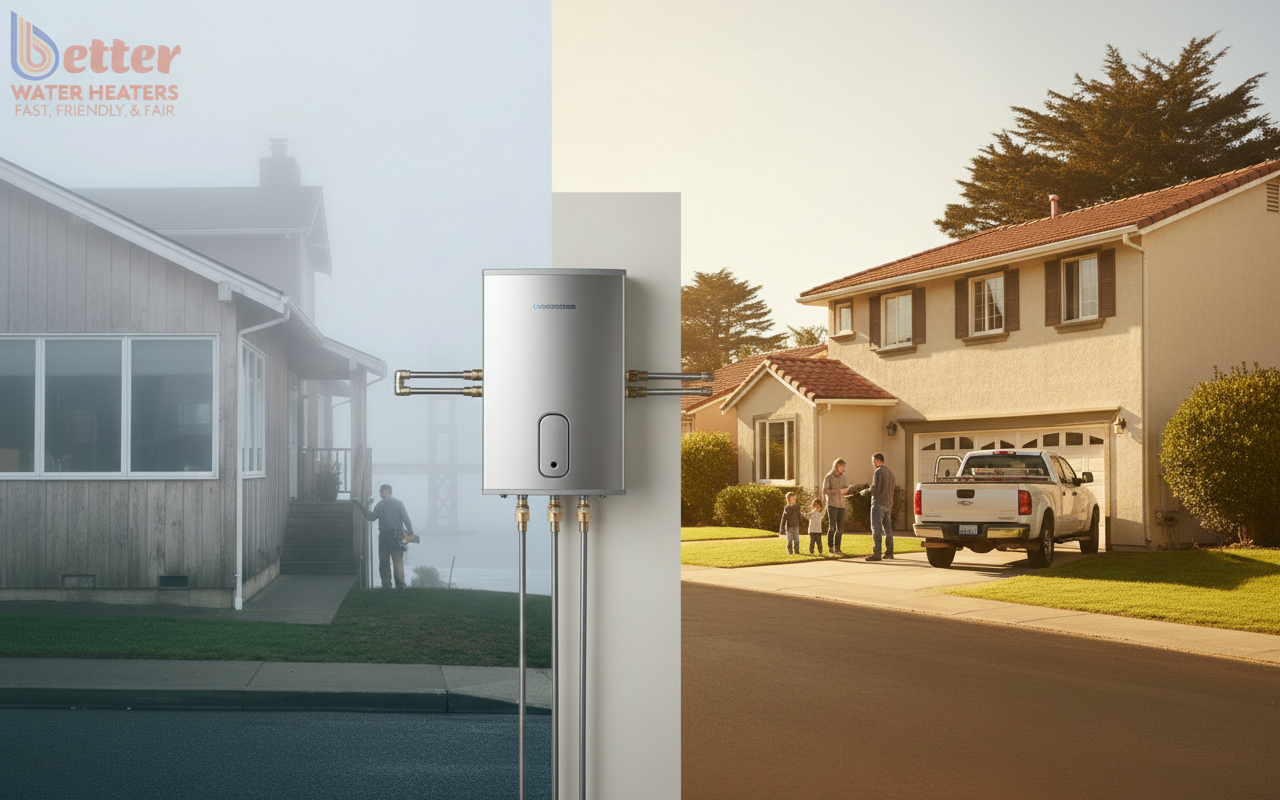
Living near the Pacific provides beautiful views, but it also subjects your home to a constant mist of corrosive sodium chloride. For homeowners in Pacifica, Half Moon Bay, or the Outer Sunset, salt air appliance damage isn’t a theory—it is an expensive reality that shortens the life of any metal equipment stored in unconditioned spaces.
What most people miss is that the salt doesn’t just stay outside. It enters garages and utility closets through vents, settling on the water heater’s exterior. This leads to “pitting” corrosion on the tank’s surface. In our work with typical Bay Area residential property managers, we’ve found that units located within 5 miles of the coast require 30% more frequent component replacements than those in the South Bay.
Coastal Maintenance Checklist:
- Wipe down the exterior of your unit with a damp cloth every six months to remove salt deposits.
- Check the pilot light assembly for green or white crusty buildup (signs of oxidation).
- Ensure your water heater closet is properly sealed from direct drafts while maintaining code-required ventilation.
Need a professional eye on your coastal unit? Schedule a local maintenance check to catch corrosion before it becomes a flood.
Inland Stress: Heat, Hard Water, and Thermal Expansion
If you live in Walnut Creek, Dublin, or Pleasanton, your water heater isn’t fighting salt—it is fighting physics. The primary stressor here is the significant delta between the cold water entering your home and the ambient temperature of your utility space.
Thermal expansion occurs when water is heated and its volume increases. In inland microclimates, where water temperatures can be quite low in winter and air temperatures soar in summer, the internal pressure spikes are more dramatic. Without a properly functioning expansion tank, this pressure creates microscopic cracks in the tank’s glass lining, leading to water heater corrosion from the inside out.
| Feature | Coastal (Pacifica/Sunset) | Inland (Walnut Creek/Livermore) |
|---|---|---|
| Primary Threat | External Salt Corrosion | Internal Sediment & Expansion |
| Anode Rod Life | 2-3 Years | 4-6 Years |
| Efficiency Driver | Humidity Management | Ambient Air Temperature |
Heat Pump Water Heaters and Local Ambient Temperatures
The transition to electrification is a major trend in California, but heat pump water heater ambient air temperature requirements vary wildly across our region. Because these units pull heat from the surrounding air, their efficiency (COP) drops when the air is cold and damp.
For a startup founder in a modern Palo Alto home, a heat pump water heater in a sunny garage is an energy-saving miracle. However, for a homeowner in a foggy pocket of San Francisco, the unit may have to rely more heavily on its backup electric resistance coils during the summer ‘June Gloom.’ This doesn’t mean you shouldn’t get one—it just means you need to size it correctly for your specific microclimate to ensure the recovery rate meets your family’s needs.
According to the U.S. Department of Energy, heat pumps are most effective in spaces that stay between 40°F and 90°F year-round, which describes most of the Bay Area perfectly—if you account for your specific zone.
Micro-Zoning Your Maintenance Schedule
The real kicker is that a “standard” maintenance schedule doesn’t exist in a place as geographically diverse as Northern California. We recommend “micro-zoning” your approach based on your specific environmental stressors.
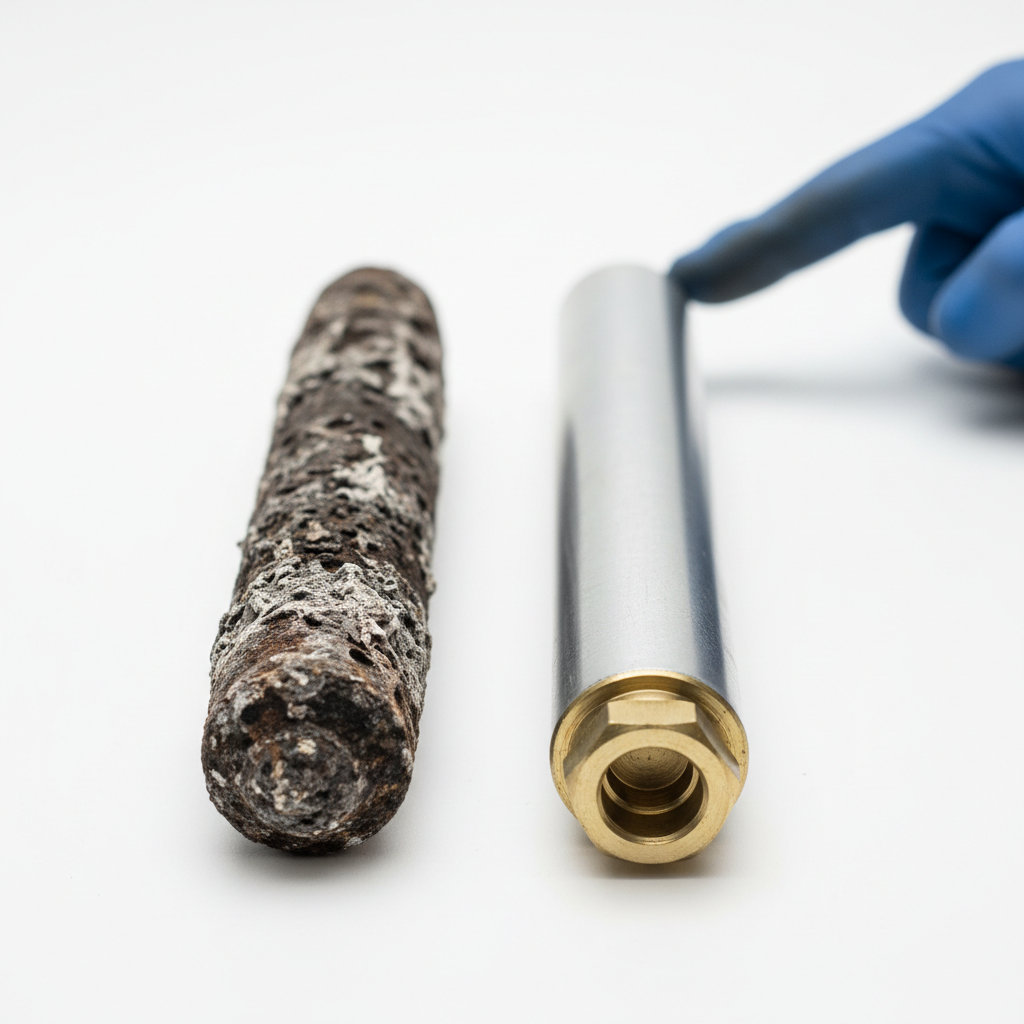
For example, coastal water heater maintenance should prioritize the sacrificial anode rod. This rod is designed to corrode so your tank doesn’t. In high-conductivity environments (like those with salty air or specific water chemistry found in parts of the Peninsula), the rod dissolves much faster. If you wait the industry-standard five years to check it, you might find nothing left but a rusted wire, leaving your tank completely unprotected.
- East Bay Tip: Focus on annual flushing to remove mineral scale that accumulates faster in warmer, inland water systems.
- San Francisco Tip: Inspect venting and intake pipes for moisture-driven blockages or rust every autumn.
- South Bay Tip: Check your expansion tank pressure, as the consistent heat can cause the internal rubber bladder to fail prematurely.
If you’re curious about how we track these trends, we use our internal AI content engine to monitor local service data and weather patterns, ensuring our advice stays current with the latest Bay Area climate shifts.
Protecting Outdoor Units from Atmospheric Rivers
The 2024 winter storms were a wake-up call for many Bay Area residents with outdoor tankless installations. While these units are designed to be weather-resistant, the sheer volume of water from atmospheric rivers can overwhelm standard drainage and venting configurations.
But wait—it isn’t just the rain. The wind-driven spray in coastal areas can force salt-laden water into the internal electronics of a tankless unit. If you have an exterior installation, consider a protective recess box or a wind-baffle kit. These small investments can prevent a $4,000 replacement after a major storm cycle.
Ready to upgrade to a more resilient system? Explore our tankless solutions designed for California’s unique weather patterns.
FAQs: Navigating Bay Area Water Heater Challenges
How does salt air affect my water heater warranty?
Most manufacturers include clauses regarding “corrosive atmospheres.” If a unit fails because it was installed in an environment with high salt or chemical exposure without proper protection, the warranty may be voided. Regular professional maintenance and documenting your coastal water heater maintenance can help protect your claim.
Do I really need to replace my anode rod more often in San Francisco?
Yes. The combination of local water chemistry and the higher conductivity of the air in Bay Area microclimates often leads to faster anode rod replacement needs. We recommend a check every 2 years for SF residents, compared to every 4-5 years for those in more stable inland climates.
Will a heat pump water heater work in a cold, foggy garage?
It will work, but its efficiency may fluctuate. In foggy areas like Daly City, the unit will work harder to extract heat from the damp air. Choosing a model with a higher storage capacity can help offset the slower recovery times during particularly cold or foggy spells.
Are outdoor tankless heaters safe during Bay Area storms?
Generally, yes, provided they were installed with proper freeze protection and debris shielding. However, the recent trend of atmospheric rivers has shown that poorly positioned units can suffer from water intrusion. A professional inspection of your outdoor unit’s seals and drainage is highly recommended before the winter season.
Final Verdict: Don’t Ignore Your Zip Code
The most important action you can take this week is to identify your zone. If you can smell the salt air from your front porch, your water heater is under constant attack. If you see the thermometer hit 100°F in the summer, your tank is under extreme pressure stress. Stop following generic YouTube advice and start maintaining your unit for the specific Bay Area microclimates you live in. A simple anode rod check this weekend could save you from a $2,500 emergency replacement next year.
Don’t wait for a leak to find out how your microclimate is affecting your home. Contact Better Water Heaters today for a specialized maintenance plan tailored to your neighborhood.