
📋 Table of Contents
In the Bay Area, where every square foot of an Accessory Dwelling Unit (ADU) can command upwards of $3.50 in monthly rent, losing a 10-square-foot closet to a bulky appliance is effectively a $420 annual tax on your ROI. Choosing the right ADU water heater isn’t just a plumbing decision; it is a high-stakes real estate optimization play that balances California’s strict Title 24 energy codes against the physical limits of small-footprint living.
Key Takeaways for Homeowners:
- Wall-mounted systems can reclaim up to 9 square feet of floor space.
- Zero-clearance requirements are the #1 cause of ADU inspection failures.
- Bay Area rebates can offset up to $4,900 of high-efficiency heat pump costs.
- Noise mitigation is critical for studio-style ADU layouts.
1. The Footprint Audit: Reclaiming Floor Value
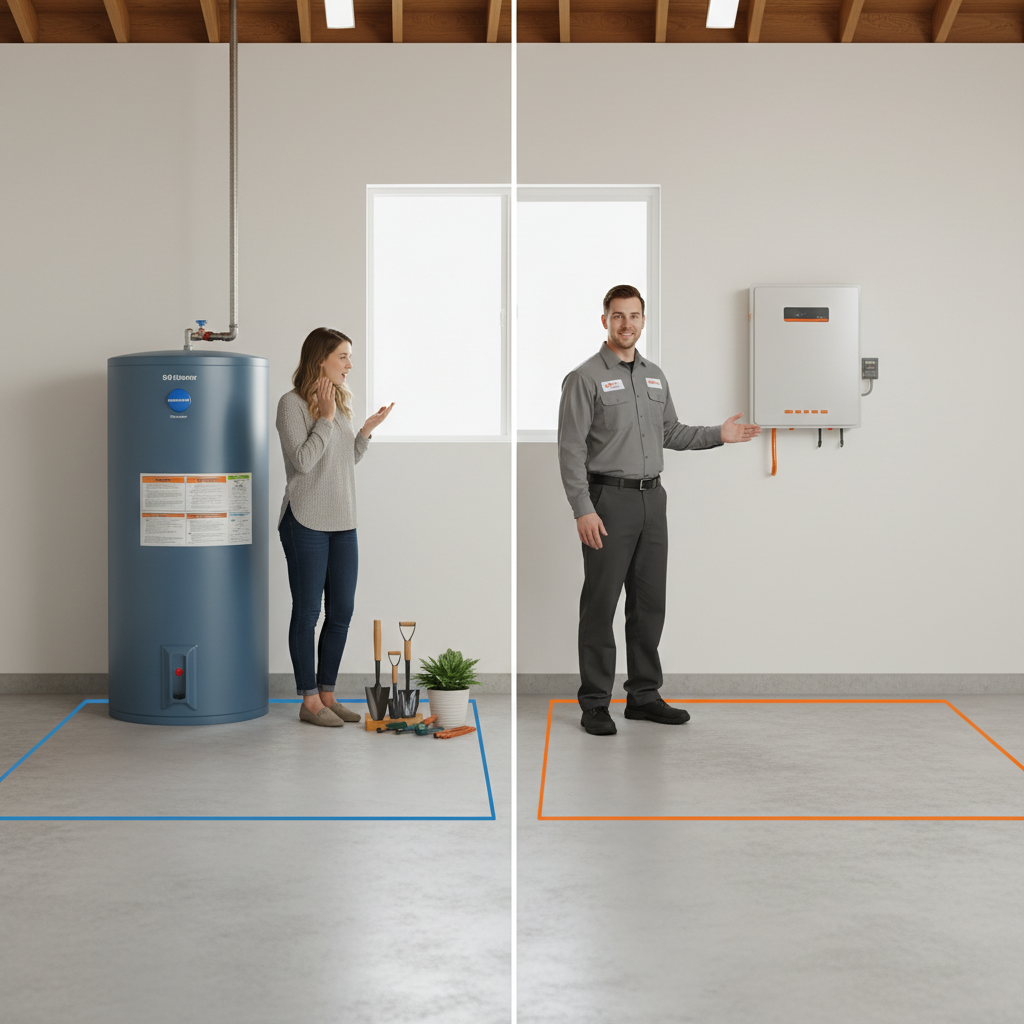
The most expensive mistake we see in garage-to-ADU conversions is the “default tank” mentality that eats into habitable living space. Here’s the thing: a standard 50-gallon tank requires a 24-inch diameter plus seismic bracing and clearance, often consuming a 3’x3′ footprint once you factor in access.
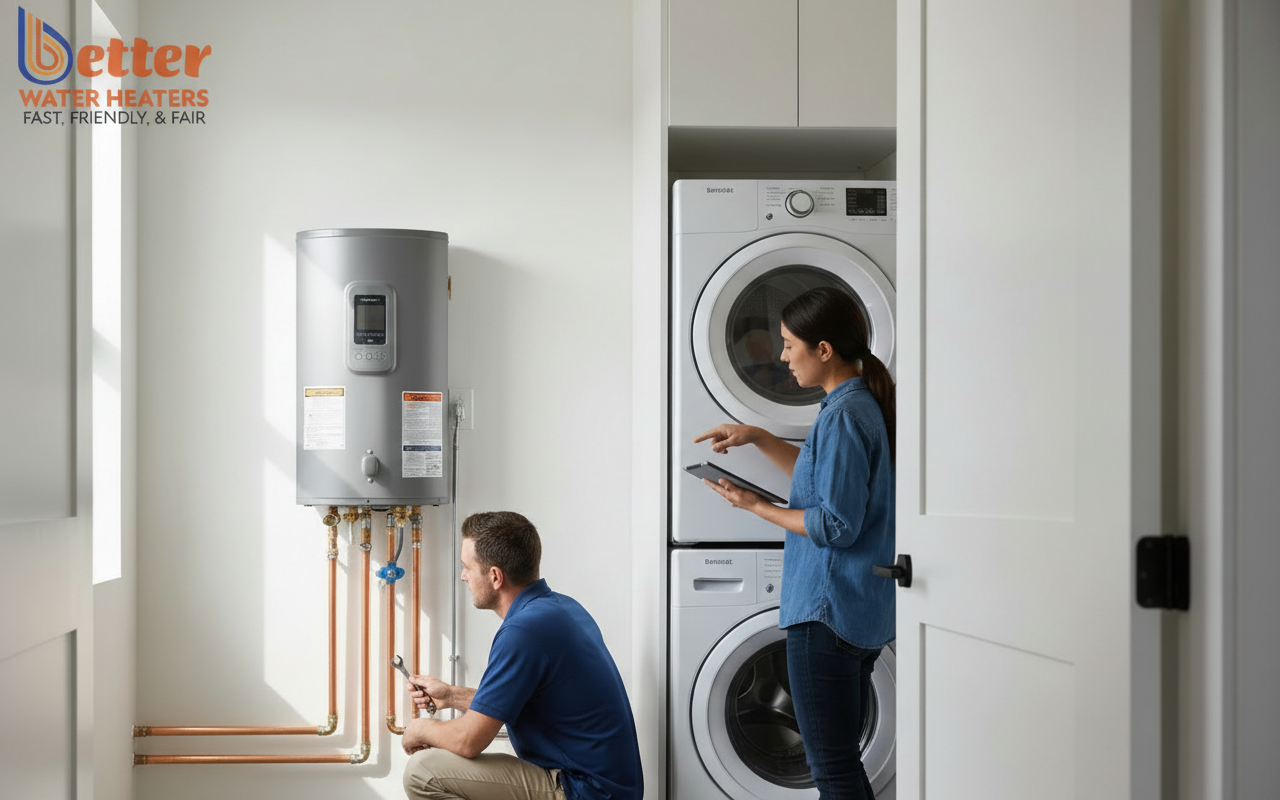
What most people miss is the “Verticality over Volume” principle. By switching to a space-saving water heater like a wall-mounted tankless unit, you move the mechanical load from the floor to the wall, opening up space for a pantry or linens. In our work with typical Bay Area mid-market property owners, this shift often allows for a full-sized washer/dryer stack where only a water heater would have fit previously.
- Tankless Units: Typically 20″ x 14″ and mounted 12″ off the floor.
- Slim-Line Heat Pumps: Taller but narrower, designed for tight closet fits.
- Point-of-Use (POU): Small electric units that fit under a kitchen sink.
2. The Clearance Audit: Navigating Zero-Clearance Realities
Zero-clearance installation doesn’t actually mean “zero space”; it means the unit is rated to be placed against combustible materials like drywall without causing a fire hazard. According to the California Energy Commission, modern ADUs must meet stringent safety and efficiency standards that dictate exactly how much breathing room a unit needs for intake and exhaust.
But wait—the real kicker is the 2024 plumbing code intersection regarding serviceability. Even if a unit is “zero-clearance,” a technician must still be able to access the heat exchanger or heating elements. If you bury your ADU water heater behind a kitchen cabinet without a removable panel, you’re looking at a mandatory teardown during the first repair cycle.
Common ADU Clearance Zones:
| System Type | Floor Space Needed | Venting Requirement | Best Use Case |
|---|---|---|---|
| Gas Tankless | 0 sq ft (Wall) | Direct Vent (Exterior Wall) | High-flow, multi-bath ADUs |
| Heat Pump (HPWH) | 7-9 sq ft | Louvered doors or ducting | Max rebate eligibility |
| Electric Tankless | 0 sq ft (Wall) | None | Small studios / POU |
Need help navigating these complex codes? Schedule your free ADU plumbing consultation with our experts today.
3. The Energy & Rebate Audit: Maximizing Square Footage ROI
Electrification is no longer a choice for many new Bay Area builds; it is a mandate. The Bay Area Air Quality Management District (BAAQMD) has set clear paths for phasing out gas appliances, making the heat pump water heater footprint a central design challenge for 2025 and beyond.
The contrarian insight here? While heat pumps take up more physical space than tankless gas units, they are the only systems that qualify for the massive federal and state rebates currently available. In a typical Bay Area mid-market project, we’ve helped owners secure up to $4,900 in incentives via programs like TECH Clean California. This essentially pays for the square footage the unit occupies over its 15-year lifespan.
- Pro Tip: Use an outdoor-rated enclosure to move the HPWH outside, completely removing the footprint from your interior plan.
- Pro Tip: Check your electrical panel capacity; a 240V circuit is standard for heat pumps, which may require a panel upgrade in older garage conversions.
4. The Livability Audit: Noise and Temperature Control
In a 400-square-foot studio, a water heater that sounds like a jet engine every time the shower turns on is a dealbreaker for tenants. Bay Area ADU plumbing requires a “Noise Mitigation Audit.” Heat pumps, while efficient, use a compressor that generates a hum similar to a refrigerator, while some tankless gas units have loud exhaust fans.
For high-end ADUs, we recommend the “Hidden Utility” approach: camouflaging units within custom cabinetry lined with sound-dampening rockwool. This ensures that the mechanical heart of the home doesn’t ruin the aesthetic or acoustic peace of the living area. If you’re building a rental unit, quiet operation directly correlates to tenant retention.
Ready to optimize your build? Browse our guide to quiet tankless solutions or call us at 408-250-6672 for immediate advice.
Conclusion: Your Monday Morning Action Plan
Don’t let your mechanical closet dictate your floor plan. This week, take a tape measure to your ADU blueprints and apply the “Square Footage ROI” calculation. If your current design uses a standard tank, you are likely leaving $5,000+ in lifetime rental value on the table. Switch to a wall-mounted or slim-line system, verify your zero-clearance pathways, and lock in your Bay Area rebates before the current funding cycles close.
Frequently Asked Questions
What is the smallest water heater for an ADU?
The smallest option is typically an electric point-of-use tankless water heater, which can be as small as a shoebox (10″x7″). However, for a full ADU with a shower, a whole-home electric or gas tankless unit is required, usually measuring roughly 20″x14″x10″. These are ideal compact water heating solutions.
Do I need a permit for an ADU water heater in the Bay Area?
Yes, all water heater installations in the Bay Area, especially for new ADUs, require a plumbing permit and a final inspection. This ensures compliance with California Title 24 energy standards and local seismic strapping codes. We handle all permit filings for our clients to ensure 100% compliance.
Can a heat pump water heater be installed in a small ADU closet?
Yes, but it requires specific tankless water heater clearance logic applied to air volume. A heat pump needs roughly 1,000 cubic feet of air to pull heat from, or it must be installed with louvered doors or dedicated intake/exhaust ducting to prevent the closet from becoming a refrigerator.
How much does it cost to install a water heater in a Bay Area ADU?
Costs typically range from $2,500 to $6,500 depending on the technology. While a standard electric tank is cheaper upfront, a high-efficiency heat pump or tankless system offers better long-term value through space savings and rebates, which can cover a significant portion of the initial investment.