
📋 Table of Contents
According to the U.S. Department of Energy, water heating is the second largest energy expense in most homes, yet much of that heat is lost in transit through uninsulated pipes. For Bay Area homeowners with detached ADUs or remote guest wings, a cold start audit is the only way to prove whether your system is actually delivering comfort or just wasting metered water.
Here’s the thing: most guest suites sit dormant for weeks, allowing water to reach ambient temperature and potentially harbor bacteria. When a guest finally turns on the tap, they often face a three-minute wait for warmth, leading to frustration and wasted gallons. By measuring the fixture delivery time, you can identify if the issue is a failing heater or simply poor plumbing physics.
What Exactly is a Cold Start Audit?
A cold start audit is a diagnostic process that measures the time, temperature, and volume of water required to reach a usable 105°F after a period of total system inactivity. It transforms a vague complaint like “it takes forever to get hot” into actionable data points that dictate whether you need insulation, a pump, or a new unit.
- Baseline Temperature: Recording the temperature of the water currently sitting in the pipes.
- Time-to-Tap: Using a stopwatch to measure exactly how long it takes for the shower to hit 105°F.
- Volume Waste: Measuring how many gallons flow down the drain before the water is usable.
- Stagnation Check: Assessing the risk of “dead legs” where water sits long enough to lose residual chlorine.
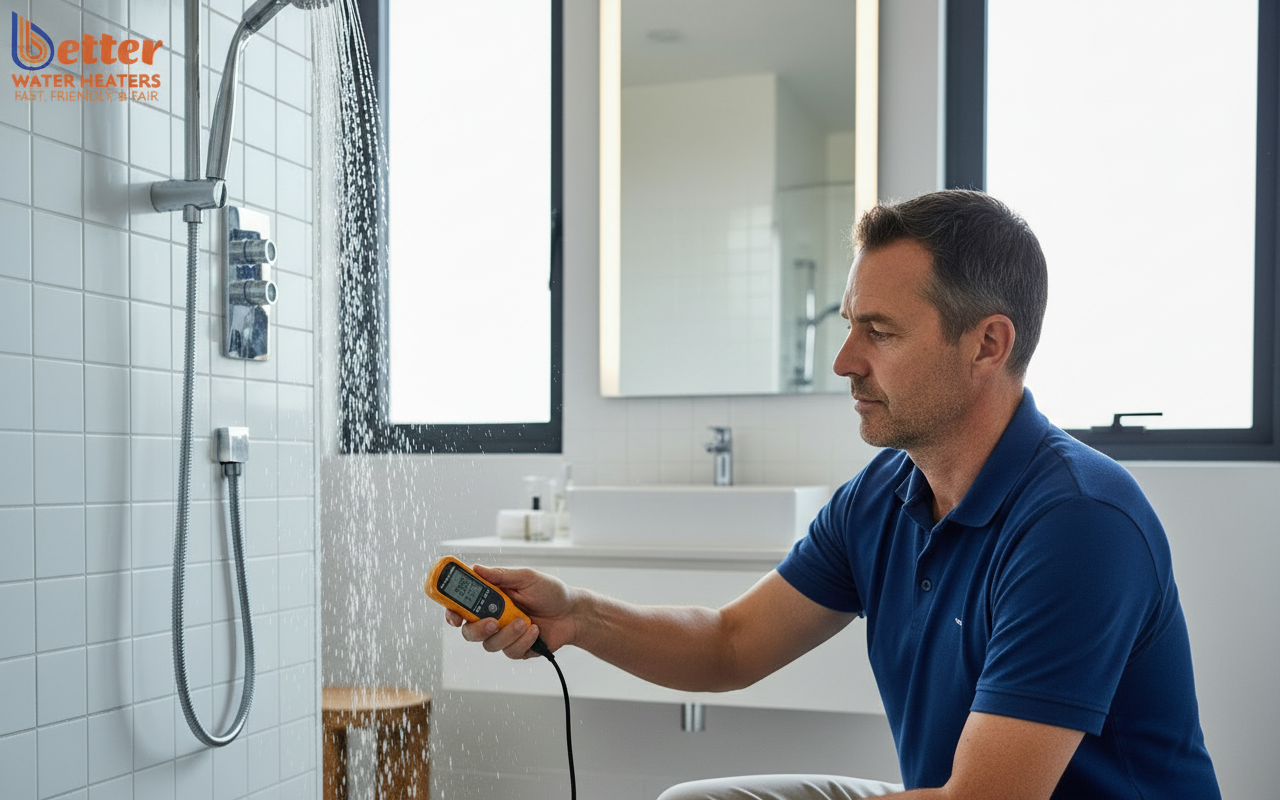
The Physics of the ‘Dead Leg’
In many older San Jose or Palo Alto homes, guest suites were added as retrofits, often using 3/4-inch copper pipes for long runs. The real kicker? A 50-foot run of 3/4-inch pipe holds roughly 1.5 gallons of water; if your faucet flows at 1.5 GPM, you are guaranteed a full minute of waiting before the first drop of hot water even exits the heater.
What most people miss is that larger pipe diameters aren’t always better. While they allow for more volume, they drastically increase the fixture delivery time because there is more cold mass to displace. For a deep dive into how piping affects performance, you can search our technical guides on plumbing diameter.
Step-by-Step: Conducting Your Own Cold Start Audit
To get professional-grade results, you need to simulate the worst-case scenario: a guest arriving on a Friday night after the suite has been empty for a week. This isn’t just about comfort; it’s about identifying plumbing stagnation protocols that keep your home safe from Legionella, which thrives in tepid, stagnant water between 77°F and 113°F, according to CDC guidelines.
- Prepare the System: Ensure no hot water has been drawn in the guest suite for at least 24 hours.
- Set Your Tools: You’ll need a digital thermometer, a one-gallon bucket, and a stopwatch.
- The First Draw: Turn the shower to full hot and start the timer immediately.
- Capture the Data: Record the temperature every 30 seconds until it stabilizes.
- Calculate the Loss: Note how many buckets you filled before reaching 105°F.
But wait—don’t just look at the clock. If the water gets hot and then suddenly dips back to lukewarm, you likely have a cross-connection or a failing check valve in a recirculation loop efficiency failure. This is common in multi-unit properties where pressure imbalances occur.
| Wait Time | Rating | Recommended Action |
|---|---|---|
| 0-20 Seconds | Excellent | No action needed. |
| 21-60 Seconds | Acceptable | Pipe insulation may help. |
| 61-120 Seconds | Poor | Install a recirc pump or POU unit. |
| 120+ Seconds | Critical | Major system redesign required. |
Need a professional eye to interpret your audit results? Schedule a free consultation with our Bay Area specialists to review your system’s performance.
The Point-of-Use Water Heater: A Contrarian Solution
Standard industry advice often suggests installing a massive recirculation pump for every long-run issue, but we often take the opposite side. Recirculation pumps, even “smart” ones, can lead to significant heat loss through the pipe walls (thermal bridging) and can actually accelerate the erosion of copper pipes due to constant flow.
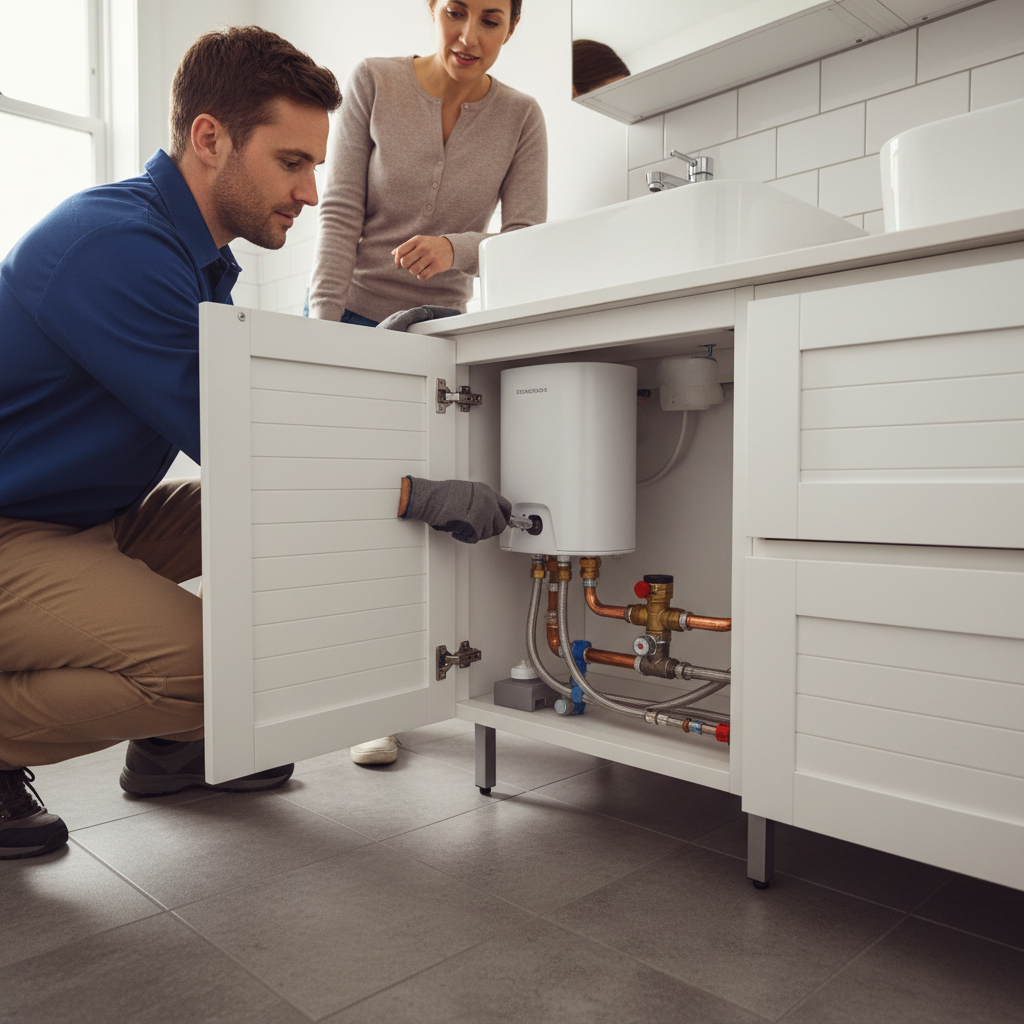
Instead, a point-of-use water heater (POU) is often the superior choice for guest suites. These small, 2-to-6 gallon electric tanks or compact tankless units sit right under the bathroom vanity. They provide instantaneous hot water for the first few minutes of a shower while the main house line is still warming up.
- Pros: Zero wait time, lower water bills, and reduced load on your primary heater.
- Cons: Requires a dedicated electrical circuit (usually 120V for small tanks, 240V for tankless).
- Best For: Airbnb hosts who want 5-star reviews for “instant hot showers.”
Analyzing Water Heater Recovery Rate
In a typical Bay Area mid-market home, we often see guest suites struggling because the primary heater has a low water heater recovery rate. If your main tank is an older 40-gallon gas unit, it may struggle to replenish hot water fast enough if the main house and the guest suite are drawing simultaneously. Transitioning to a hybrid heat pump system can offer higher efficiency, though recovery times differ from gas.
Addressing Stagnation and Health Risks
Stagnation is the silent enemy of the guest suite. When water sits for weeks, the residual disinfectants (like chlorine) dissipate, allowing a biofilm to form. A proper cold start audit should include a visual check for “cloudy” water or a metallic smell, which indicates the sacrificial anode rod in the main tank may be depleted or that the guest line needs a high-temperature flush.
For property managers, we recommend a plumbing stagnation protocol: flushing all guest fixtures for 5 minutes every two weeks. This simple task prevents bacterial buildup and ensures the mixing valve calibration remains accurate, preventing accidental scalding when the suite is finally occupied.
Bay Area Regulations and Rebates for Upgrades
If your audit reveals that your guest suite system is failing, now is the time to look at local incentives. The Bay Area Air Quality Management District (BAAQMD) is moving toward zero-NOx requirements by 2027, making electric and heat pump options more attractive than ever. Programs like TECH Clean California offer substantial rebates for switching to high-efficiency electric systems.
- TECH Clean California: Up to $3,100+ for heat pump water heater installs.
- BayREN: Local rebates for pipe insulation and high-efficiency upgrades.
- Federal Tax Credits: Up to 30% of the project cost under the Inflation Reduction Act.
We’ve helped hundreds of homeowners in San Jose, Fremont, and Redwood City navigate these permits and rebates. If you’re ready to stop the lag and start saving, get your free estimate today.
Key Takeaways for Your Monday Morning
To wrap up, don’t let a lukewarm guest shower ruin your property’s reputation or inflate your PG&E bill. Start by timing your shower tonight. If you’re over the 60-second mark, you have a clear ROI case for an upgrade. For those looking to scale their content strategy for property management, using a tool like Ingest.blog can help distribute these maintenance insights to your tenants and clients efficiently.
Frequently Asked Questions
How long should hot water take to reach a guest suite?
Ideally, hot water should reach a fixture within 15 to 30 seconds. In many Bay Area homes with remote ADUs, this can extend to 2 or 3 minutes without a recirculation pump or point-of-use water heater. Anything over 60 seconds is considered a significant waste of water and energy.
Will insulating my pipes fix a cold start lag?
Insulation helps maintain the temperature of the water already in the pipes, but it does not speed up the fixture delivery time during a cold start. It is most effective for frequent-use scenarios where the water is drawn every hour or two, rather than suites that sit empty for days.
Are point-of-use tankless heaters worth it for guest bathrooms?
Yes, especially for short-term rentals. A small electric tankless unit can provide immediate hot water for handwashing and shaving, while a larger POU tank can buffer a shower. This eliminates the “cold start” frustration for guests while avoiding the cost of re-piping the entire home.
What is the risk of not flushing guest suite plumbing?
The primary risks are bacterial growth (Legionella) and sediment buildup. Stagnant water loses its chlorine residual, allowing pathogens to multiply. Regular flushing as part of a plumbing stagnation protocol ensures water safety and maintains the integrity of your fixtures and valves.