
📋 Table of Contents
In the Bay Area, the average wait time for a PG&E transformer assessment can now stretch beyond four months, turning a simple appliance swap into a logistical marathon. According to the Bay Area Air Quality Management District (BAAQMD), new regulations will phase out most gas water heater sales by 2027, making an electrical service upgrade not just a luxury, but a regulatory necessity for aging homes.
Most homeowners assume that moving to high-efficiency electric appliances requires a massive, $5,000+ investment in a new 200-amp service. However, in our work with established residents in San Jose and Redwood City, we’ve found that a strategic approach can often bypass the most expensive infrastructure hurdles. The real kicker? You might not even need a full panel replacement if you utilize modern load-management technology.
This guide outlines our proprietary 3-stage framework designed to navigate the PG&E panel upgrade process while staying ahead of California’s aggressive electrification mandates. Whether you are prepping for a heat pump water heater or an EV charger, this is how you build a future-proof home without the unnecessary delays.
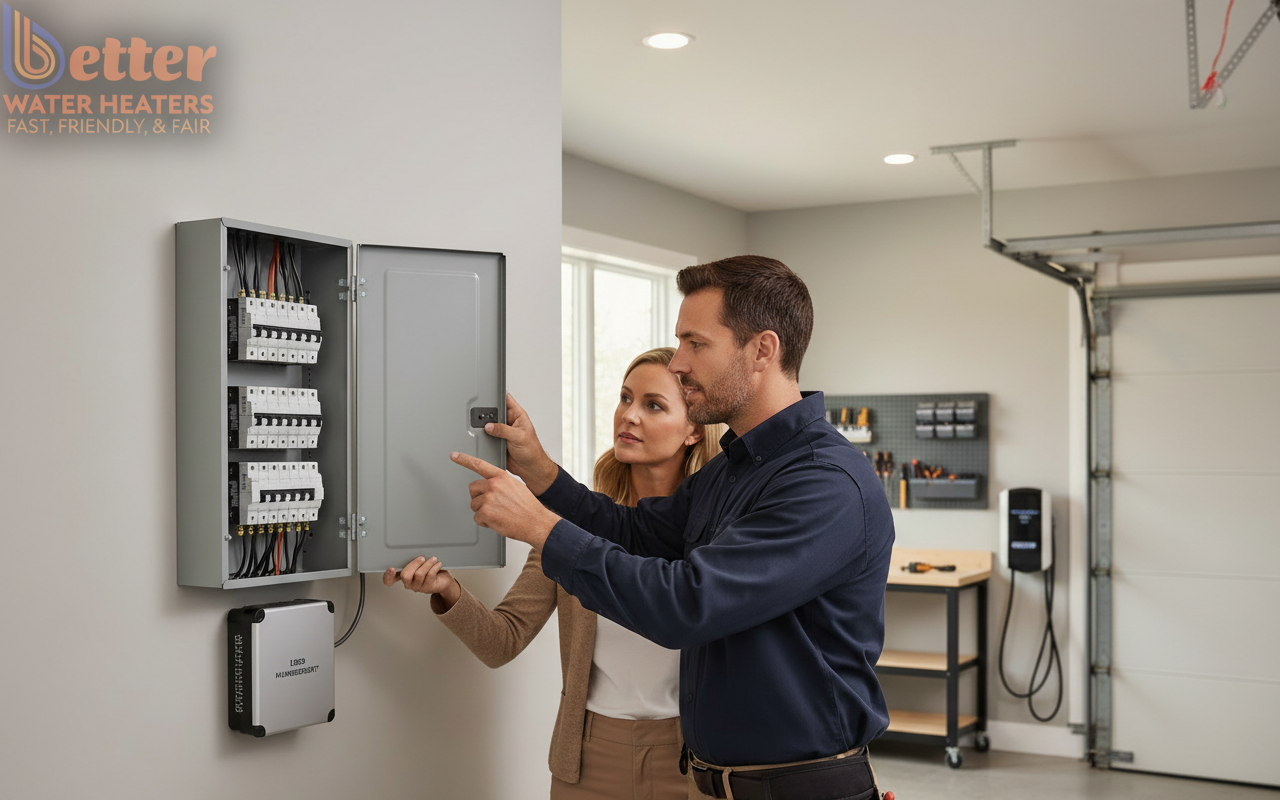
Stage 1: The Load Calculation & Capacity Audit
Before you call an electrician, you must understand that your home’s electrical capacity is a finite resource, much like a monthly budget. What most people miss is that a panel capacity study often reveals unused headroom that can be reclaimed through smarter appliance choices.
- NEC 220.82 Calculations: We use the National Electrical Code standards to determine your existing demand based on square footage and fixed appliances.
- Historical Data Review: PG&E allows for load calculations based on your actual peak usage over the last 12 months, which is often lower than theoretical maximums.
- The 120V Alternative: For homes stuck on 100-amp service, we often recommend new 120V “plug-in” heat pump models that require no electrical service upgrade at all.
Here’s the thing: most “standard” quotes assume you need a 200-amp panel because it’s easier for the contractor to bid. But if you’re a typical Bay Area homeowner with a mid-sized home, a “Watt Diet” approach—choosing high-efficiency appliances that pull fewer amps—can save you thousands in utility trenching costs. According to Energy.gov, these systems are significantly more efficient than their predecessors, but they require precise planning.
Stage 2: The Infrastructure Bridge (Smart Splitters & Sub-panels)
The smartest way to handle Bay Area home electrification is to avoid upgrading the main service drop entirely by using intelligent load management. Think of this stage as adding a traffic controller to your home’s power grid to prevent the main breaker from ever tripping.
- Load Shedding Controllers: These devices automatically pause your water heater for 20 minutes if the electric range and dryer are running simultaneously.
- Smart Circuit Breakers: Systems like Lumin or Span allow you to prioritize circuits via an app, effectively making a 100-amp panel behave like a 150-amp one.
- Sub-panel Installation: If your main panel is full but the service capacity is sufficient, a simple sub-panel is a 1-day job compared to a 6-month PG&E project.
But wait—before you invest in a smart panel, check your local municipal requirements. A Title 24 electrical compliance review is mandatory in cities like San Jose and Oakland, and some jurisdictions are more restrictive about load-sharing devices than others. If you’re feeling overwhelmed by the technical requirements, schedule a free consultation with our team to see which bridge technology fits your home.
Stage 3: The Final Circuit Dedication & PG&E Coordination
When a full electrical service upgrade is unavoidable, the secret to success lies in the “Permit-Ready” framework to minimize downtime. The PG&E panel upgrade process involves a complex dance between your private contractor, the utility’s engineering department, and the city inspector.
| Step | Responsibility | Typical Timeline |
|---|---|---|
| Site Visit & Load Sheet | Contractor | 1-2 Weeks |
| PG&E Engineering Review | Utility | 8-16 Weeks |
| City Permit Issuance | Municipal Dept | 2-4 Weeks |
| Physical Installation | Electrician | 1-2 Days |
What many homeowners find frustrating is the “disconnect-reconnect” window. In our work with property managers, we prioritize pre-wiring for future needs—like V2H (Vehicle-to-Home) capabilities—during the initial electrical service upgrade. This prevents you from having to open your walls a second time when you eventually buy an electric truck or add solar storage.
Navigating BAAQMD and HEEHRA Incentives
Urgency is growing because the BAAQMD water heater regulations will soon make gas replacements illegal in the Bay Area. The good news? The federal 25C tax credit now covers up to $600 for electrical panel upgrades if they are performed in conjunction with a heat pump installation.
Additionally, the HEEHRA (High-Efficiency Electric Home Rebate Act) provides point-of-sale discounts for low-to-moderate-income households. We’ve seen typical Bay Area mid-market clients stack these with local utility rebates to offset nearly 50% of the total project cost. If you’re looking to scale your home’s efficiency, our internal AI content engine, Ingest.blog, helps us stay updated on these rapidly changing local codes so we can pass that knowledge to you.
The Contrarian View: Why 200 Amps Isn’t Always Better
Here is an honest, contrarian insight: Upgrading to a 200-amp panel can sometimes decrease your home’s value in the short term if it triggers a mandatory utility undergrounding requirement. In certain older neighborhoods in Palo Alto or Berkeley, PG&E may require you to pay for trenching across the street, which can cost upwards of $15,000.
In these scenarios, we advocate for the “Permit-Ready” sub-panel or a 120V Heat Pump Water Heater. These solutions provide 90% of the benefit of a full electrification project at 20% of the cost. Don’t let a contractor talk you into a massive infrastructure project before you’ve explored every load-management alternative.
Key Takeaways for Your Monday Morning
- Request a panel capacity study before committing to a full upgrade.
- Check if a 120V heat pump water heater can solve your hot water needs without new wiring.
- Start the PG&E application now—even if you aren’t ready to install—to get in the engineering queue.
- Verify your eligibility for the $2,000 federal tax credit for heat pumps and $600 for panels.
Ready to navigate the complexities of the PG&E panel upgrade process? Don’t wait until your old water heater fails and leaves you in a cold shower. Contact Better Water Heaters today for a comprehensive home electrification audit and professional installation.
Frequently Asked Questions
How long does a PG&E service upgrade actually take?
While the physical work takes 1-2 days, the entire PG&E panel upgrade process typically takes 4 to 6 months in the Bay Area. This includes engineering reviews, site inspections, and city permitting. Starting the application early is critical to avoid being stuck without hot water during an emergency replacement.
Can I install a heat pump water heater on a 100-amp panel?
Yes, it is often possible. You can either use a 120V “plug-in” model that shares a standard circuit or install a load shedding controller that manages power between the water heater and another large appliance. This avoids the high cost of a full electrical service upgrade.
What are the 2027 BAAQMD regulations?
The BAAQMD water heater regulations mandate that starting in 2027, only zero-NOx (electric) water heaters can be sold or installed in the Bay Area. This effectively bans traditional gas water heaters. Homeowners should plan their Bay Area home electrification strategy now to avoid a crisis later.
Are there rebates for upgrading my electrical panel?
Yes, under the Inflation Reduction Act, you can claim a federal tax credit of 30% (up to $600) for a panel upgrade if it’s required for a heat pump installation. Local programs like TECH Clean California and Peninsula Clean Energy often offer additional incentives that can total several thousand dollars.