
📋 Table of Contents
According to the insurance industry experts at Insurance Information Institute, water damage and freezing account for nearly 24% of all homeowner insurance claims, with water heater failures ranking as a top offender. For a typical Bay Area mid-market property manager, managing the water heater life-cycle isn’t just about plumbing; it is a high-stakes game of financial risk mitigation.
Key Takeaways for Property Managers
- Shift to Proactive Cycles: Moving from reactive repairs to a 10-year replacement cycle reduces emergency labor costs by up to 40%.
- Insurance Protection: Regular audits prevent the “Hidden Liability” of aged units that can lead to premium hikes or denied claims.
- Decarbonization Readiness: Audits identify electrical panel constraints before the 2027 gas water heater regulations take effect.
- Tenant Retention: Eliminating “no hot water” emergencies directly correlates with higher lease renewal rates.
1. Anode Rod Integrity: The Sacrificial First Line of Defense
The real kicker is that most property managers never check the one component designed to die so the tank can live. Anode rods are magnesium or aluminum wires that attract corrosive elements in the water; once they dissolve, the water begins eating the steel tank itself.
In our work with multi-family portfolios across San Jose and Fremont, we’ve found that the anode rod replacement cycle is the single most ignored aspect of property management maintenance. When these rods fail, a tank that should last 12 years often fails in six. This is especially true in areas with high mineral content where water heater scale buildup analysis reveals accelerated degradation.
- Visual Inspection: If the rod is rusted down to the core wire, the tank is officially on the clock.
- Material Choice: For properties with “rotten egg” smelling water, switching to powered anodes can extend tank life indefinitely.
- Frequency: Standard rods should be checked every 2-3 years, not 10.
2. Sediment Levels and Thermal Expansion Functionality
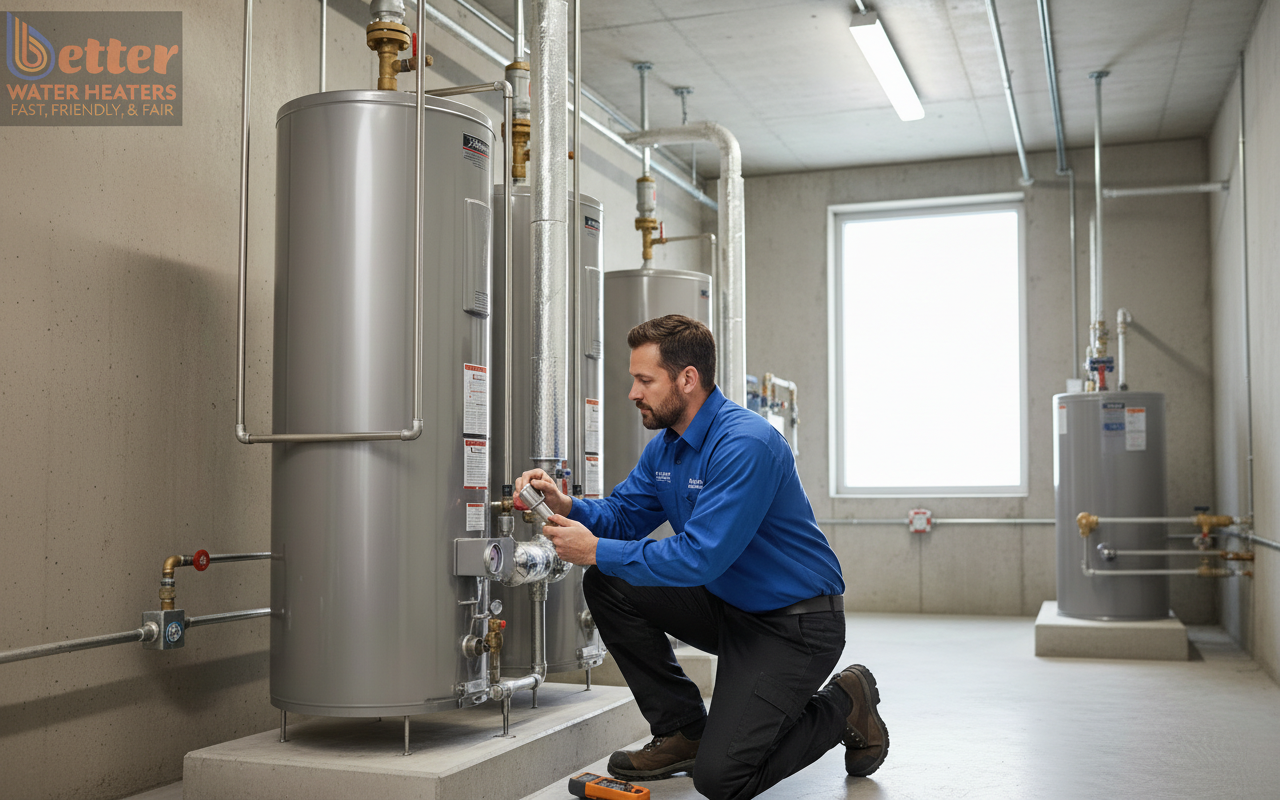
Sediment acts as an insulator, forcing the burner to run longer and hotter, which eventually crystallizes the glass lining of the tank. What most people miss is that sediment buildup doesn’t just slow down recovery times—it creates a “popping” sound that signals the tank is overheating and structurally weakening.
Furthermore, property managers must verify the health of the thermal expansion tank. As water heats, it expands; if the expansion tank’s internal bladder has failed, that pressure has nowhere to go but against your water heater’s seams. This is a core component of multi-family plumbing risk mitigation.
- Flush Protocols: Implement a semi-annual flush for units in high-sediment areas like the Peninsula.
- Expansion Tank Pressure: Ensure the air charge matches the building’s static water pressure.
- T&P Valve Testing: If the Temperature and Pressure relief valve is dripping, it’s often a sign of failed expansion, not just a bad valve.
Need a professional assessment of your portfolio? Schedule a property-wide audit with our specialists today.
3. Venting Safety and Decarbonization Readiness
The water heater life-cycle is currently being disrupted by local regulations, specifically the Bay Area Air Quality Management District’s move toward zero-NOx emissions. The real insight here? If you are still using atmospheric vented units, your next replacement might require significant structural or electrical changes.
A strategic proactive appliance replacement plan involves mapping out which units have the electrical capacity for Heat Pump Water Heaters (HPWH). Transitioning early allows you to leverage Energy.gov tax credits and local TECH Clean California rebates that can reach up to $4,900 per unit.
- Electrical Mapping: Identify units near 240V panels to simplify the shift to heat pumps.
- Vent Clearance: Ensure older gas units aren’t showing signs of “backdrafting,” which poses a CO2 risk to tenants.
- ESG Compliance: Use the audit to document your property’s reduced carbon footprint for investors.
4. The TCO of Water Heating Systems: Scheduled vs. Emergency
Here’s the thing: an emergency water heater replacement on a Sunday night costs roughly 50-70% more than a scheduled Tuesday installation. When you factor in the cost of water damage restoration and potential tenant relocation, the “wait until it leaks” strategy is a documented financial loser.
| Cost Factor | Scheduled Replacement | Emergency Failure |
|---|---|---|
| Labor Rate | Standard | 2x Overtime Surcharge |
| Water Damage | $0 | $2,500 – $15,000+ |
| Tenant Impact | Zero (Scheduled) | Displacement / Rent Credit |
| Equipment Choice | Optimal/Energy Efficient | Whatever is in stock |
But wait—don’t just replace for the sake of replacing. Use the audit to categorize units into “Green” (0-6 years), “Yellow” (7-9 years), and “Red” (10+ years or showing signs of failure). This allows for a predictable capital expenditure (CapEx) budget rather than unpredictable operating expense (OpEx) spikes.
The Contrarian Insight: Why “Longer Warranties” Are Often a Trap
Most property managers buy 12-year warranty tanks thinking they are getting a “better” product. The truth? Often, the only difference between a 6-year and a 12-year tank is an extra anode rod and a longer paper trail. If you aren’t maintaining the rod, the 12-year tank will fail just as fast as the 6-year. Focus on the preventative maintenance schedule for property managers rather than the sticker on the tank.
To help maintain our own content standards and high-velocity updates, we sometimes utilize ingest.blog, our internal AI content engine, to synthesize local regulatory data, though every recommendation here is vetted by our 20+ years of Bay Area field experience.
Ready to de-risk your portfolio? Explore our commercial maintenance plans tailored for Bay Area landlords.
Implementing the Audit This Week
What most people miss is that you don’t need to audit every unit in one day. Start with your oldest building or the units located on upper floors where a leak causes the most collateral damage. This is the foundation of commercial water heater asset management.
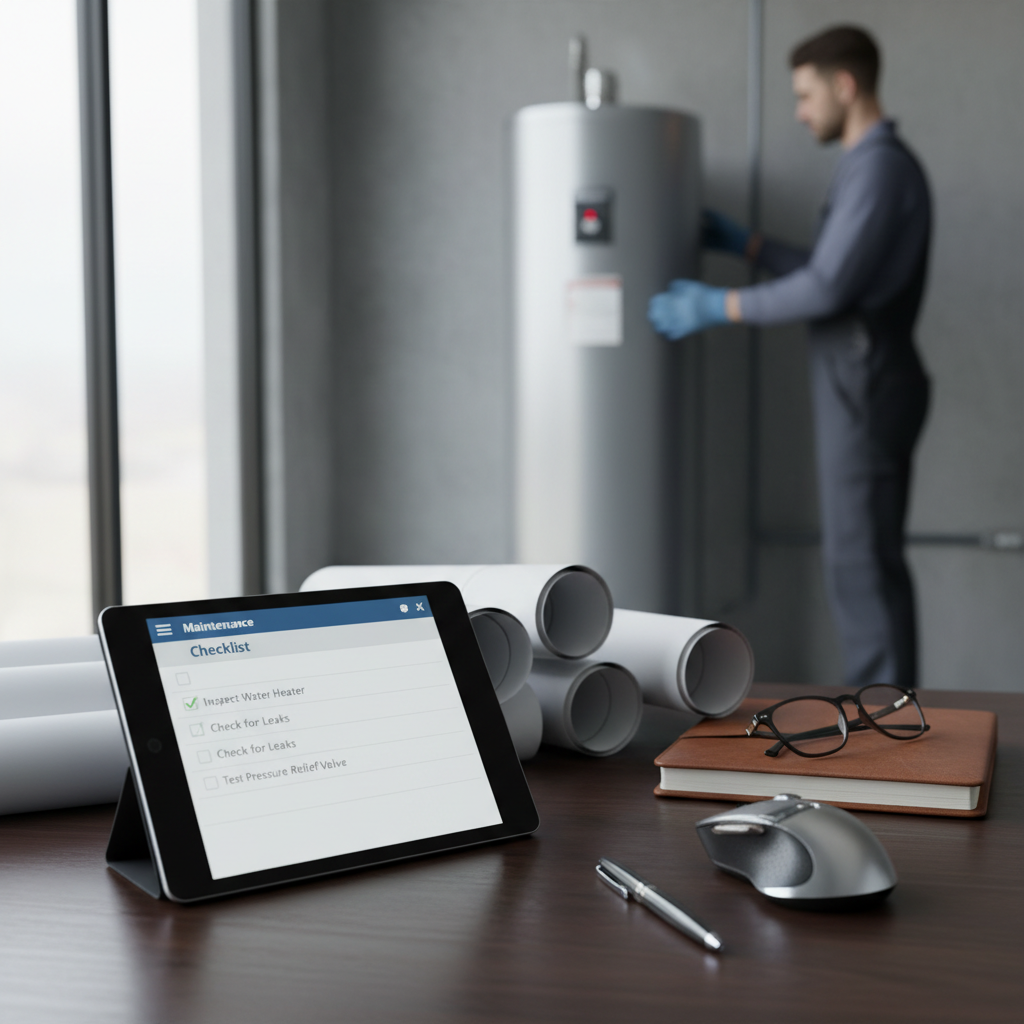
- Step 1: Identify all units older than 8 years.
- Step 2: Check the base of the tanks for “weeping” or rust.
- Step 3: Verify that earthquake strapping meets current California seismic codes.
- Step 4: Get a quote for a bulk proactive appliance replacement to secure volume pricing.
For more specific guides on local requirements, check out our Bay Area Rebate Guide or contact us directly at Better Water Heaters to schedule your first 4-point audit. Don’t let a $1,500 appliance turn into a $20,000 liability.
FAQs for Property Managers
How often should I perform a water heater life-cycle audit?
We recommend a high-level visual audit annually and a deep-dive 4-point audit every 3 years for units under 7 years old. Once a unit hits the 8-year mark, it should be audited annually as part of your property management maintenance routine to catch signs of tank fatigue before a catastrophic breach occurs.
Are heat pump water heaters worth the investment for multi-family units?
Yes, especially in the Bay Area. While the upfront cost is higher, the TCO of water heating systems drops significantly due to 70% lower energy usage. Additionally, by installing them now, you avoid the inevitable rush and price spikes that will occur as the 2027 gas phase-out deadlines approach.
What is the most common cause of premature water heater failure in Bay Area rentals?
Sediment buildup and failed thermal expansion tanks are the dual culprits. Many Bay Area cities have moderately hard water; without regular flushing, sediment creates hotspots that crack the internal glass lining. In closed-loop plumbing systems, the lack of a functioning expansion tank creates pressure spikes that fatigue the steel tank seams.
How do I know if a water heater is a “hidden liability” for insurance?
Any tank older than 10 years located in a finished space or upper floor without a drain pan and a functioning leak detection shut-off valve is a liability. Many modern commercial policies are beginning to require these safety features or are increasing deductibles for properties with aged water heating assets.