
📋 Table of Contents
According to the American Society of Sanitary Engineering (ASSE), tap water at 140°F can cause a third-degree burn in just five seconds, yet storing water at lower temperatures invites dangerous bacterial growth. Navigating the choice between a standard water heater mixing valve and a precision thermostatic controller is no longer just a plumbing preference—it is a critical safety strategy for modern Bay Area homes.
The Dual-Benefit Narrative: Safety vs. Sanitation
The real kicker in water heater management is the conflict between energy efficiency, bacterial control, and physical safety. To effectively eliminate Legionella bacteria, the CDC recommends storing hot water at 140°F or higher. However, sending 140°F water directly to your shower is a massive liability, especially for households with children or seniors.
Water heater mixing valve technology solves this by allowing for “high-temp storage” and “safe-temp delivery.” By installing a mixing valve, you can crank your tank up to 140°F (killing bacteria) while the valve automatically blends in cold water to ensure the output at your faucet never exceeds a safe 120°F.
- Thermal Disinfection: High tank temperatures neutralize pathogens.
- Increased Capacity: Mixing hot water with cold effectively increases your usable hot water volume.
- Scald Prevention: Immediate cooling at the source prevents accidental burns.
- Code Compliance: Many Bay Area cities now require ASSE 1017 certified valves during heater replacements.
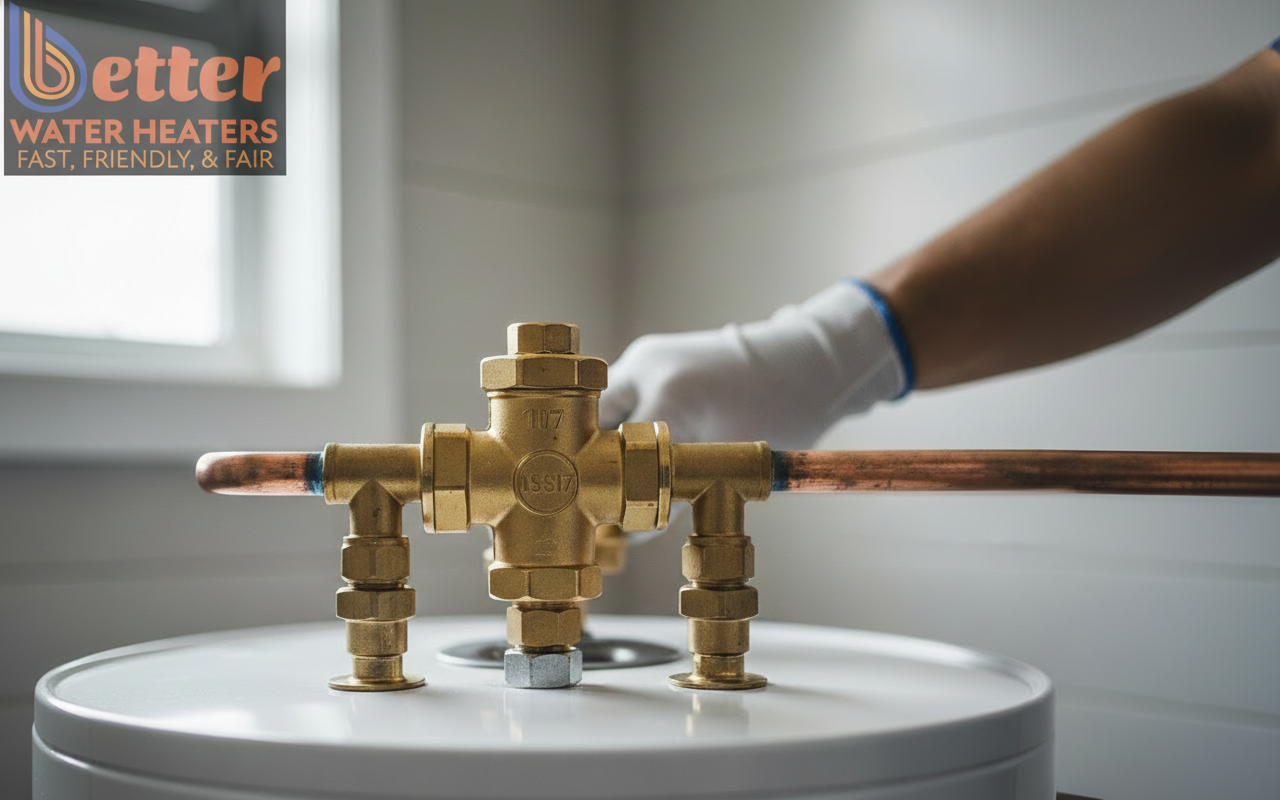
Mixing Valve vs. Thermostatic Control: What is the Difference?
What most people miss is that while all thermostatic valves are mixing valves, not all mixing valves are thermostatic. A standard tempering valve (mechanical mixing valve) uses a simple bimetallic strip or wax element to blend water based on a fixed ratio. If the cold water pressure drops suddenly—like when a toilet flushes—a basic valve may not react fast enough to prevent a “slug” of hot water from reaching the tap.
In contrast, thermostatic mixing valve installation provides active pressure and temperature monitoring. These devices are designed to shut off the flow almost instantly if the cold water supply fails. For a typical Bay Area mid-market client, this distinction is the difference between a minor temperature fluctuation and a dangerous scalding event.
Key Comparison Factors
| Feature | Standard Mixing Valve | Thermostatic Control (TMV) |
|---|---|---|
| Reaction Time | Moderate (2-5 seconds) | Instant (<1 second) |
| Pressure Balancing | Limited | Full Compensation |
| Certification | ASSE 1012 / 1070 | ASSE 1017 (Main Source) |
| Typical Cost | $150 – $300 | $400 – $800+ |
Need to know which one fits your current setup? Schedule your free safety audit here.
Why Bay Area Codes Demand Precision
Local regulations in San Jose, Fremont, and Redwood City are increasingly stringent regarding anti-scald protection. During a major remodel or a water heater upgrade, inspectors often look for ASSE 1017 certified devices at the water heater or point-of-use temperature control at the fixture. This is particularly true for multi-family housing and senior living environments where the risk of injury is higher.
Beyond safety, there is the ROI of precision. Traditional tanks lose heat through the pipes (standby loss). By using a water heater mixing valve, you reduce the temperature of the water traveling through your home’s pipes, which significantly cuts down on heat loss compared to sending 140°F water through uninsulated copper lines. This is a subtle but effective way for environmentally-minded residents to reduce their carbon footprint.
The ‘Set it and Forget it’ Fallacy
Here’s the thing: even the best thermostatic mixing valve installation requires periodic maintenance. Mineral deposits from the Bay Area’s varied water quality can seize the internal springs or wax elements over time. We recommend an annual calibration check to ensure the output remains at the desired 120°F. If you haven’t touched your valve in five years, it might not be providing the protection you think it is.
In our work with Series B SaaS founders and busy entrepreneurs, we find that “smart” digital mixing stations are becoming the new standard. These systems allow for digital monitoring and can alert your smartphone if the temperature deviates from the set point. While more expensive, the peace of mind is invaluable for those managing high-end residential properties or multiple rental units.
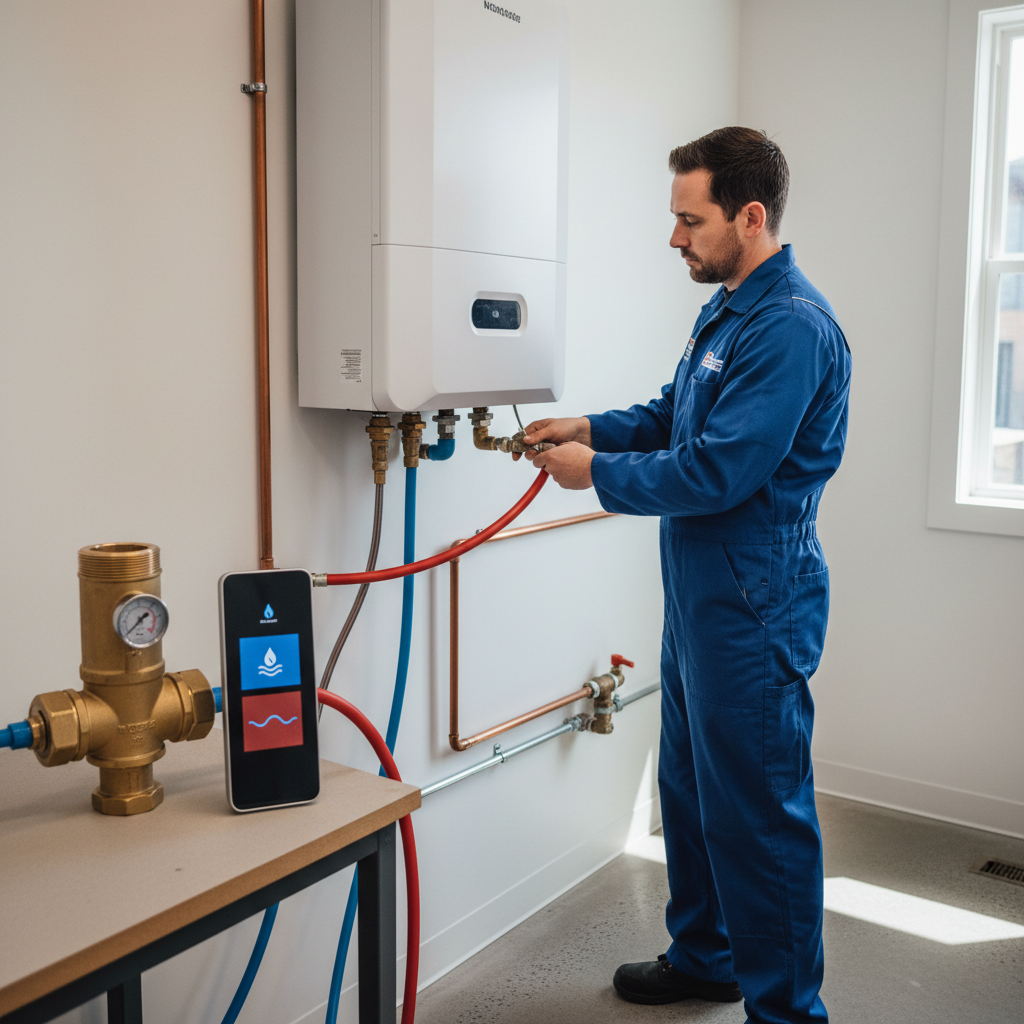
But wait—before you jump into a DIY project, consider the liability. Incorrectly installing a water heater mixing valve can result in cross-contamination of your cold water lines or, worse, a complete failure of the scald protection mechanism. In California, plumbing failures resulting from unpermitted or non-professional work can lead to insurance claim denials.
Safety Audit Checklist for Homeowners
Use this checklist to determine if your home is due for a safety upgrade:
- Check the Tank Temp: Is your heater set to 140°F for Legionnaire’s disease prevention?
- Test the Tap: Use a thermometer at the kitchen sink. Does it exceed 125°F?
- Identify the Valve: Look at the top of your water heater. Do you see a brass valve connecting the hot and cold lines?
- Check Certification: Look for an ASSE stamp (1017 or 1070) on the valve body.
- Observe Fluctuations: Does the shower temp jump when a dishwasher starts? If so, your pressure balancing is failing.
If your system fails more than two of these points, it’s time to consult a specialist. You can browse our guide on valve maintenance to learn more about keeping your system in top shape.
Advanced Integration: Heat Pumps and Tankless Systems
The transition to heat pump water heaters, spurred by the 2027 gas water heater regulations, makes mixing valves even more relevant. Heat pumps often operate most efficiently when heating water to a higher temperature during off-peak hours. A water heater mixing valve allows you to store that high-energy water safely for use during peak evening hours without risk.
For tankless systems, the challenge is flow rate. High-flow tankless units require high-precision thermostatic controls to ensure the “sandwich effect” (cold bursts between hot water cycles) is minimized. This is where digital mixing stations truly shine, offering a level of modulation that traditional bimetallic valves simply cannot match.
To help our team manage the high volume of educational resources we provide, we use Ingest.blog as our internal AI content engine to ensure our technical guides remain accurate and up-to-date with the latest California plumbing codes.
Actionable Takeaway for This Week
Don’t wait for a minor burn to check your settings. This weekend, take a simple kitchen thermometer and measure the hottest water coming out of your furthest faucet. If it’s over 125°F and you don’t have a visible mixing valve, you are at risk. Contact a professional to discuss a thermostatic mixing valve installation—it is one of the most cost-effective safety upgrades you can make for your home.
Ready to secure your home? Request a professional safety inspection today or call us to discuss the best anti-scald technology for your specific water heater model.
Frequently Asked Questions
Is a mixing valve required by law in California?
While not universally required for every existing home, the California Plumbing Code and many Bay Area local jurisdictions require water heater mixing valve installation during new builds, major remodels, or when replacing a water heater in multi-family dwellings to meet anti-scald protection standards.
Can I install a thermostatic mixing valve myself?
We strongly advise against DIY thermostatic mixing valve installation. These devices require precise calibration and proper orientation to prevent cross-flow between hot and cold lines. Furthermore, unpermitted plumbing work can lead to significant liability issues and potential insurance complications in the event of a leak or injury.
How long do water heater mixing valves last?
A high-quality brass mixing valve typically lasts 8 to 12 years. However, in areas with hard water, which is common in parts of the Bay Area, mineral buildup can shorten this lifespan. Regular annual testing and flushing can help extend the life of the valve and ensure it continues to provide scald prevention.
Does a mixing valve reduce hot water pressure?
A correctly sized and installed water heater mixing valve should have a negligible impact on water pressure. If you experience a significant drop in pressure after installation, it usually indicates the valve is undersized for the home’s flow requirements or that there is debris trapped in the internal screens.