
📋 Table of Contents
According to the Building Decarbonization Coalition, nearly 50% of U.S. homes may require an electrical service upgrade to fully electrify, a hidden hurdle that can add $2,000 to $5,000 to a standard project. Before you commit to a sustainable upgrade, performing a rigorous electrical panel capacity audit is the only way to ensure your home can handle the new load without a budget-breaking surprise.
Key Takeaways for Homeowners
- Avoid the 200-Amp Trap: You don’t always need a service upgrade; smart load management can often bridge the gap.
- 120V vs. 240V: New “plug-in” heat pump water heaters can bypass the need for new dedicated circuits.
- Stacking Incentives: Combine the $2,000 HPWH tax credit with a $600 panel upgrade credit under the Inflation Reduction Act.
- The 80% Rule: Understanding continuous load is critical for safety and NEC compliance.
1. The Inventory: Mapping Your Current Amperage
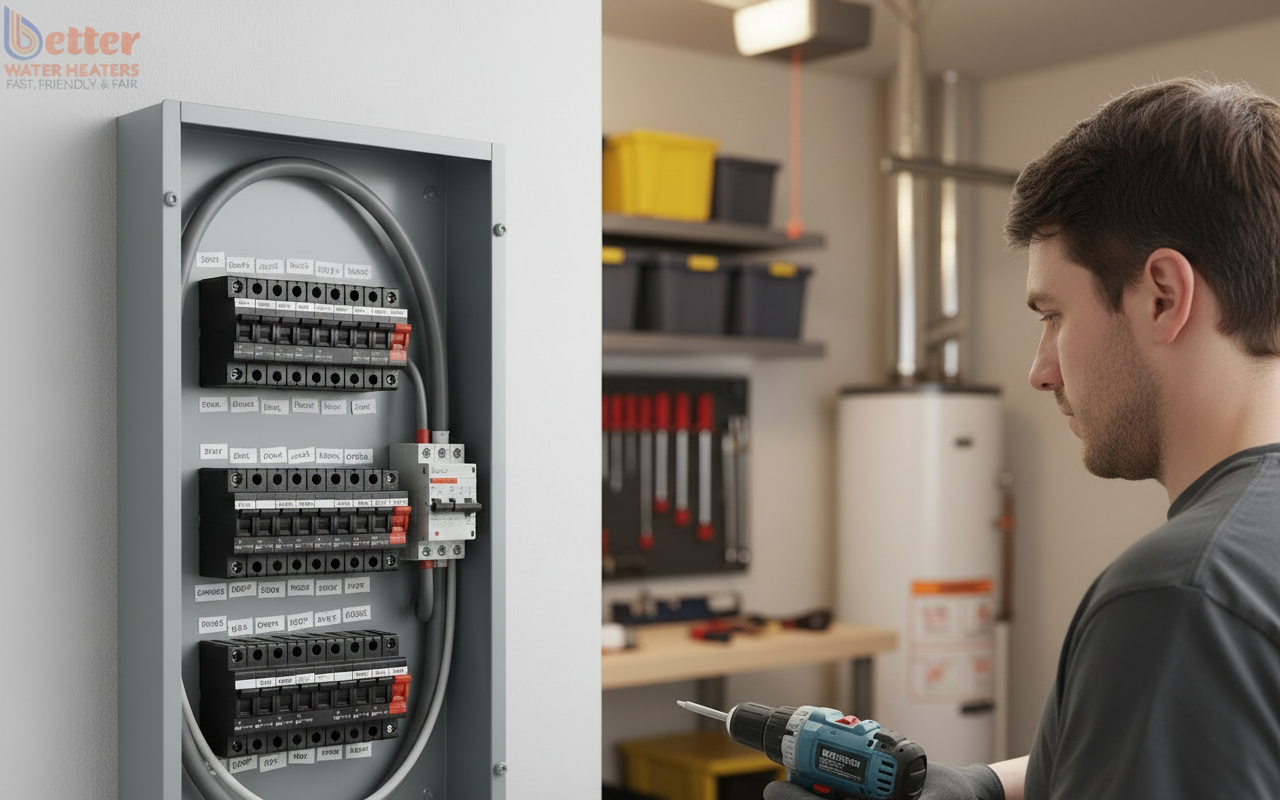
Most Bay Area homes built between 1950 and 1980 operate on 100-amp or 125-amp service, which was never designed for the simultaneous load of an EV charger, induction range, and a heat pump water heater. The first step of your electrical panel capacity audit is documenting every major appliance currently drawing power.
Here’s the thing: your panel’s “main breaker” number isn’t the whole story. You need to look at the sum of your branch breakers and how they relate to your actual peak demand. In our work with established homeowners in San Jose and Palo Alto, we often find that panels appear full, but the actual concurrent usage is surprisingly low.
- Identify High-Draw Appliances: Note everything using 240V circuits (Dryers, A/C units, Electric Ranges).
- Check for “Tandem” Breakers: These are thin breakers that allow two circuits in one slot, often a sign that a panel is nearing its physical limit.
- Locate the Main Service Rating: Look for the large breaker at the top or bottom of your bus bar (e.g., 100A, 125A, 150A, or 200A).
2. The NEC Load Calculation: Beyond Simple Math
Professional electricians don’t just add up breaker numbers; they use the National Electrical Code (NEC) Article 220 method to determine “calculated load.” This involves taking the square footage of your home, adding the small appliance circuits, and then applying demand factors—because you’re rarely running your oven, dryer, and toaster at the exact same second.
What most people miss is the “80% Rule.” Per the National Fire Protection Association (NFPA), a circuit should not be loaded to more than 80% of its rating for continuous loads (anything running for 3 hours or more). For a heat pump water heater circuit requirement, this means a 30-amp breaker is typically required for a 24-amp draw.
| Appliance Type | Typical Amperage | Circuit Requirement |
|---|---|---|
| Standard Tank (Electric) | 30A | 240V Dedicated |
| Heat Pump Water Heater (240V) | 15A – 30A | 240V Dedicated |
| Plug-in HPWH (120V) | 15A | 120V Shared/Dedicated |
| EV Charger (Level 2) | 40A – 50A | 240V Dedicated |
But wait—if your math shows you are over capacity, don’t panic. Modern circuit sharing devices (like NeoCharge or SimpleSwitch) allow two heavy appliances to share one breaker by pausing one while the other is in use. This is a game-changer for home electrification audit results that would otherwise trigger a $4,000 utility service upgrade.
Need a professional eyes-on assessment? Schedule a professional capacity review with our team today to see if your panel is ready for the transition.
3. Evaluating Heat Pump Water Heater Circuit Requirements
The real kicker in electrification is the choice between 120V and 240V systems, which dictates the complexity of your installation. Traditional heat pump water heaters require a 240V dedicated circuit, which often necessitates a new wire run from the garage to the panel.
However, the rise of 120V “plug-in” heat pumps (like the Rheem ProTerra or A.O. Smith Voltex) has changed the landscape for Bay Area residents with finished basements or difficult wire paths. These units can often plug into a standard outlet, though they have slower recovery times. As of 2024, these are the primary tools we use to help clients avoid the “Panel Tax.”
- 240V Advantage: Faster recovery rates and higher efficiency in cold snaps.
- 120V Advantage: Lower installation cost; often utilizes existing electrical panel capacity without upgrades.
- Space Constraints: Remember that all heat pumps require roughly 700-1,000 cubic feet of air space to breathe and extract heat effectively.
4. Leveraging the Inflation Reduction Act (IRA) and Local Rebates
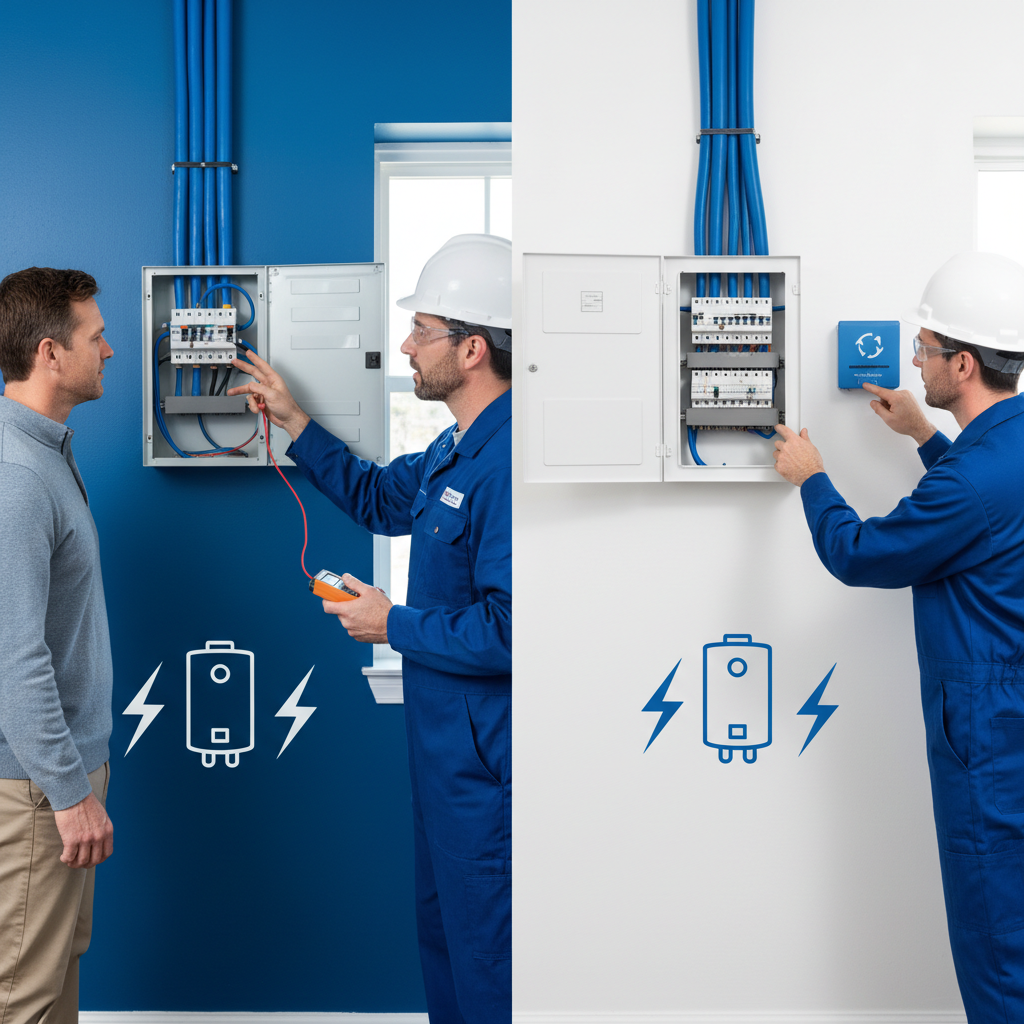
If your electrical panel capacity audit concludes that an upgrade is unavoidable, the federal government provides a significant silver lining through the 25C Tax Credit. You can claim 30% of the cost of an electrical panel upgrade, up to $600, if it is installed in conjunction with a heat pump water heater.
In our work with typical Bay Area mid-market residential clients, we also look toward local programs like TECH Clean California and BayREN. These programs frequently offer thousands in rebates that can be stacked. For example, some Peninsula Clean Energy customers have accessed combined incentives exceeding $4,000, effectively making the panel upgrade “free” when bundled with the water heater.
Pro Tip: Don’t just upgrade to 200 amps because it’s the standard. Consider a “Smart Panel” like Span or Schneider Pulse. These allow you to digitally manage loads, potentially qualifying you for even higher “demand response” rebates from PG&E.
Ready to maximize your savings? Explore our guide to Bay Area water heater rebates to see how much you can shave off your installation costs.
The Contrarian View: Why You Might NOT Want a 200-Amp Upgrade
Industry “wisdom” suggests that every modern home needs 200-amp service. We disagree. For many Bay Area homes, a 200-amp upgrade requires underground trenching or moving the meter, which can escalate costs to $10,000+. By using demand response water heaters and smart load shedders, you can often achieve full electrification on a 125-amp service. It’s not about how much power you can draw; it’s about how intelligently you manage what you have.
Preparing for Your Audit: A Checklist
- Photograph your panel: Take a clear photo of the circuit directory and the main breaker.
- Check the gas line: If you’re switching from gas, note the distance to the nearest electrical sub-panel.
- Review your PG&E bill: Look for your peak summer usage to see how much headroom you actually have.
- Consult a hybrid specialist: Work with a team that understands both plumbing and the NEC load calculation requirements.
At Better Water Heaters, we’ve spent 20+ years navigating the unique codes of the Bay Area. We don’t just swap tanks; we act as your energy consultants to ensure your home is future-ready. Whether you’re in San Jose, Fremont, or Redwood City, we can help you navigate the complexities of a home electrification audit.
Don’t let an aging panel stall your sustainability goals. Contact Better Water Heaters today for a comprehensive electrification readiness assessment or call us at (408) 250-6672.
Frequently Asked Questions
How do I know if my electrical panel is full?
A panel is physically full if there are no open slots for new breakers. However, it is electrically full only if the NEC load calculation shows that adding a new heat pump water heater circuit requirement would exceed the main service rating. A professional can often add “tandem” breakers or use load-sharing devices to create space without a full upgrade.
Can I run a heat pump water heater on a 100-amp panel?
Yes, it is often possible to run a heat pump water heater on a 100-amp panel, especially if you use a 120V model or a 240V model with a low-amperage compressor. The key is performing an electrical panel capacity audit to ensure your total concurrent load (like A/C and electric dryer) stays within safe limits.
What is the 25C tax credit for electrical panels?
Under the Inflation Reduction Act, the 25C tax credit allows homeowners to claim 30% of the cost of an electrical panel upgrade, up to $600. To qualify, the upgrade must be performed in conjunction with the installation of a qualified energy-efficient appliance, such as a heat pump water heater or heat pump HVAC system.
Do I need a permit for a panel capacity audit or upgrade?
While a simple audit or inspection does not require a permit, any physical changes to your electrical system—such as adding a new circuit for a water heater or upgrading the panel—require a permit from your local Bay Area building department. Better Water Heaters handles all permitting and compliance as part of our full-service installation process.