
📋 Table of Contents
According to the U.S. Department of Energy, water heating accounts for nearly 20% of a commercial building’s energy use, yet most legacy systems are oversized by as much as 30% to account for ‘worst-case’ scenarios that never actually happen. For Bay Area property managers, multi-unit water heater sizing isn’t just a plumbing task; it is a high-stakes financial decision that impacts tenant retention and long-term ROI.
The real kicker? Most contractors still use sizing charts from the 1990s that don’t account for modern low-flow fixtures or the post-pandemic shift toward remote work, which has flattened the traditional ‘morning rush’ into a more sustained, mid-day demand curve. If you over-size, you waste thousands in standby energy losses; under-size, and you’re fielding 6:00 AM calls from angry tenants with cold showers.
Here is how we solve the ‘Electrification Gap’ and ensure your building is ready for upcoming 2027 regulations using our proprietary 4-Quadrant Sizing Framework.
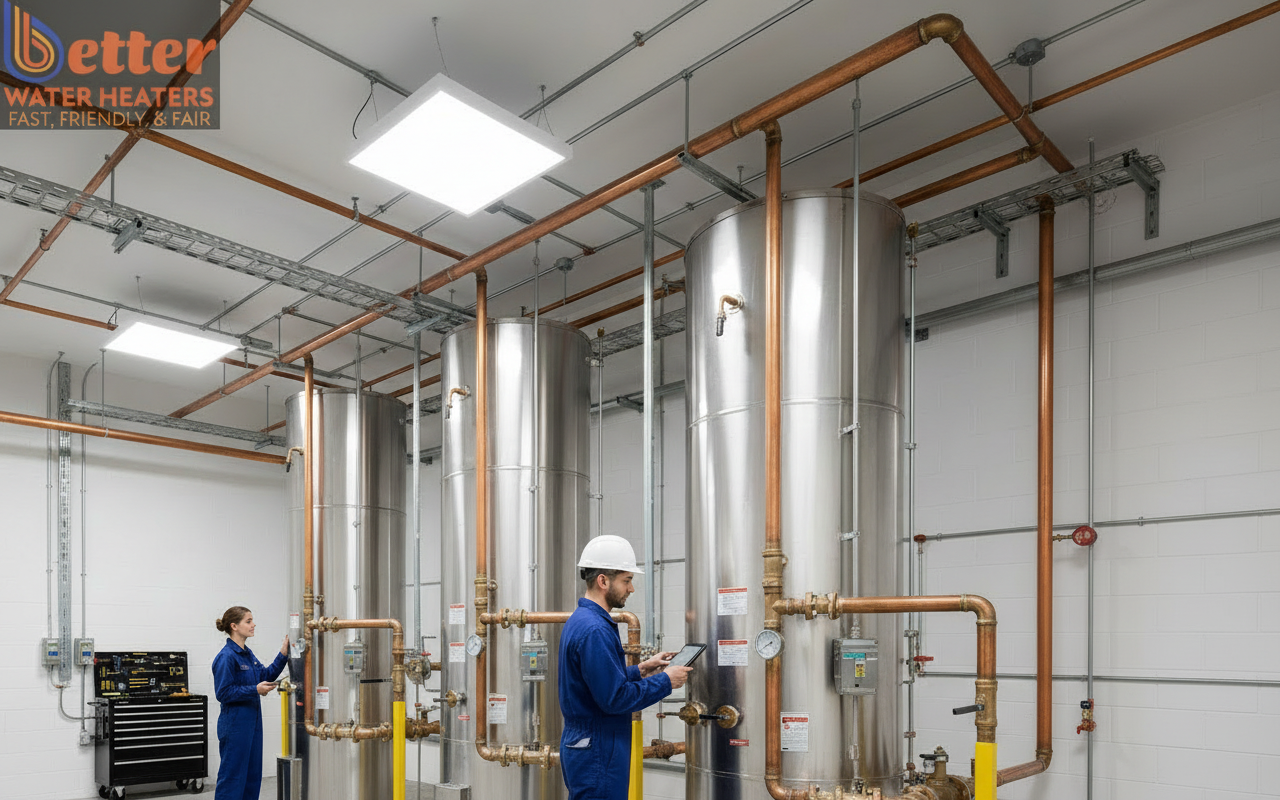
1. The 4-Quadrant Framework for Hot Water Demand Calculation
Effective sizing requires moving beyond simple unit counts and looking at the intersection of storage capacity and recovery speed.
In our work with mid-market Bay Area property owners, we’ve found that the most common mistake is focusing solely on tank size. The 4-Quadrant Framework forces you to evaluate four critical variables simultaneously:
- Quadrant A: Peak Hour Demand (PHD) – The maximum volume of water needed during the busiest 60-minute window.
- Quadrant B: Recovery Rate – How quickly the system can reheat water after it’s been depleted.
- Quadrant C: Diversity Factor – The mathematical probability that not every tenant is using hot water at the exact same second.
- Quadrant D: Physical Footprint & Power – The constraints of your existing mechanical room and electrical panel capacity.
What most people miss is that Quadrant C (Diversity Factor) has changed. With more people working from home in cities like San Jose and Palo Alto, the ‘peak’ is less spikey but lasts longer. According to Energy.gov, calculating the First Hour Rating is essential, but for multi-family buildings, we must apply a diversity coefficient—usually between 0.4 and 0.6—to avoid massive over-investment.
2. Solving the Electrification Gap in Property Manager Plumbing Guides
Transitioning from gas to electric heat pumps often feels like trying to fit a square peg in a round hole due to the increased space requirements.
The decarbonization retrofit strategy for 2025 and beyond requires a shift in mindset: heat pumps have slower recovery rates than gas but higher efficiency. To compensate, you generally need more storage or a ‘Hybrid’ approach. This is where the 4-Quadrant Framework prevents premature compressor failure; by correctly sizing the storage, the heat pump can run in its ‘sweet spot’ rather than constantly cycling on and off.
Key considerations for Bay Area retrofits include:
- Ambient Air Temperature: Our moderate climate is perfect for heat pumps, but garage installations require specific cubic footage for airflow.
- Electrical Service: Switching a 10-unit building to all-electric might require a panel upgrade. We often recommend modular distributed units to avoid a full service overhaul.
- Seismic Requirements: Every retrofit must meet strict California Title 24 and seismic strapping codes.
Need a professional eyes-on assessment of your mechanical room? Schedule your free multi-unit onsite estimate today.
3. The ROI of Diversity Factors in Multi-Unit Water Heater Sizing
Modern usage patterns mean you can likely afford a smaller system than you think, provided you have the right recovery technology.
Consider a typical Bay Area mid-market apartment complex with 12 units. Traditional math might suggest a 200-gallon storage tank. However, by applying a modern hot water demand calculation that accounts for high-efficiency 1.5 GPM showerheads, we often find that a 120-gallon high-recovery system is more than sufficient. This reduces the ‘standby loss’—the energy wasted keeping water hot when no one is using it.
| Factor | Legacy Gas Tank | Modern Tankless | Heat Pump (HPWH) |
|---|---|---|---|
| Recovery Speed | High | Instant/Infinite | Low to Moderate |
| Space Required | Medium | Low | High |
| Bay Area Rebates | None | Up to $900 | Up to $4,900+ |
But wait—don’t just go smaller for the sake of it. The contrarian truth is that oversizing your storage slightly while undersizing your heating element is often the secret to the longest-lasting heat pump systems. It prevents the system from ‘hunting’ for temperature and reduces wear on the compressor.
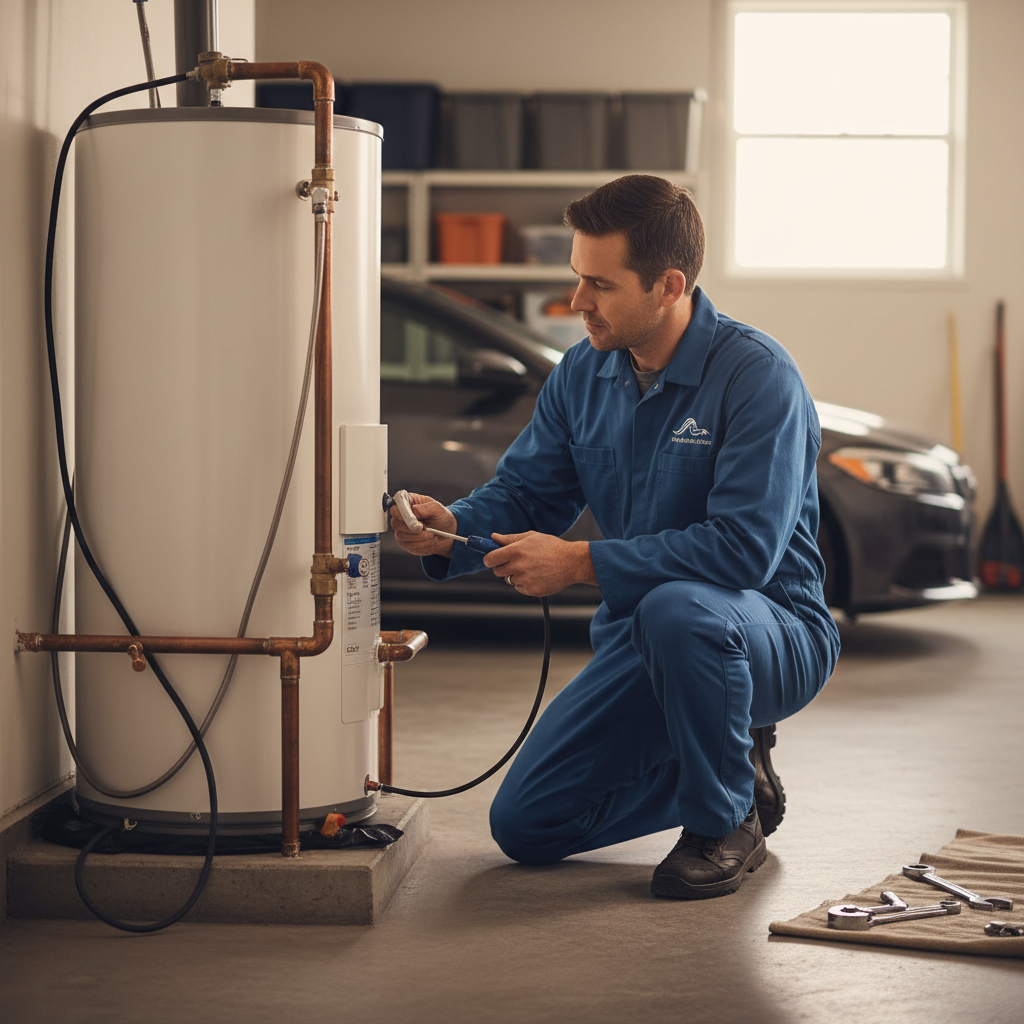
4. Navigating Space Constraints in 1970s-80s Retrofits
Many buildings in Redwood City or Fremont were built with tiny mechanical closets designed for compact gas units that no longer meet modern efficiency standards.
When the physical footprint is the limiting factor, the 4-Quadrant Framework points us toward Quadrant D: Modular Distributed Systems. Instead of one massive central boiler, we might install three or four smaller units in a banked configuration. This provides built-in redundancy—if one unit fails, the others keep the hot water flowing, preventing a total building outage.
Common workarounds for tight spaces:
- Wall-Mounting: Utilizing vertical space for tankless or smaller hybrid units.
- Exterior Enclosures: Moving the system to a protected outdoor area to free up indoor square footage.
- Manifold Systems: Using smart controllers to balance the load across multiple smaller tanks.
At Better Water Heaters, we specialize in these ‘impossible’ fits. Check out our guide on tankless conversions to see how we’ve helped other Bay Area landlords reclaim space.
5. Risk Mitigation: Tenant Satisfaction vs. Efficiency
The ultimate goal of any property manager plumbing guide is to eliminate complaints while keeping overhead low.
Here’s the thing: tenants don’t care about your decarbonization retrofit strategy if they run out of hot water halfway through a shampoo. To bridge this gap, we recommend integrating smart leak detection and remote monitoring. These systems can alert you to a failing heating element before the water goes cold, allowing you to schedule a repair during business hours rather than paying emergency weekend rates.
What most people miss is that modern smart systems can also track peak usage times. This data is gold for future sizing. If you’re managing multiple properties, this level of insight allows you to standardize your maintenance across the portfolio. Our internal AI content engine, Ingest.blog, helps us stay on top of these technical shifts so we can provide you with the most current data-driven advice.
Conclusion: Your Monday Morning Action Plan
Don’t wait for a catastrophic tank failure to think about sizing. This week, take ten minutes to walk your mechanical room and note the age and capacity of your current system. If it’s over 10 years old, you are likely sitting on a ticking clock of inefficiency.
By applying the 4-Quadrant Framework now, you can plan a transition that maximizes Bay Area energy rebates—which can currently total over $4,900 per unit—rather than rushing into an expensive, un-rebated emergency replacement.
Ready to future-proof your building? Contact Better Water Heaters today for a professional sizing audit. We’ve served the Bay Area for over 20 years, and we know exactly how to navigate the permits, codes, and rebate programs that make these retrofits successful.
Frequently Asked Questions
How do I calculate hot water demand for a 10-unit building?
To calculate demand, you must determine the Peak Hour Demand (PHD). For a 10-unit building, multiply the number of occupants by the average gallons per use (approx. 12-15 gallons per person during peak), then apply a ‘diversity factor’ (usually 0.4 to 0.6) to account for non-simultaneous use. This prevents over-sizing the system.
What is a diversity factor in multi-unit water heater sizing?
A diversity factor is a mathematical adjustment used in multi-unit water heater sizing that accounts for the fact that not all tenants will use hot water at the same time. Using a diversity factor allows for a smaller, more efficient system that still meets 100% of tenant needs during peak windows.
Are heat pumps viable for multi-family retrofits in the Bay Area?
Absolutely. The Bay Area’s moderate climate allows heat pumps to operate at high efficiency year-round. While they require more physical space and have slower recovery rates than gas, the massive rebates from programs like TECH Clean California often make them the most cost-effective long-term choice for property managers.
Do I need a permit for a multi-unit water heater replacement?
Yes, all multi-unit water heater replacements in the Bay Area require a permit from the local building department. This ensures the installation meets seismic strapping requirements, venting codes, and safety standards. Better Water Heaters handles the entire permit and inspection process for our clients.