
📋 Table of Contents
According to the U.S. Department of Energy, heat pump water heaters can be up to three times more energy-efficient than conventional electric resistance models, yet many Bay Area families hesitate to switch due to concerns about recovery time. If you have a high-volume household with back-to-back showers and laundry, a successful high-volume heat pump conversion requires more than just swapping units; it requires a strategic infrastructure audit.
Key Takeaways for Homeowners
- Calculate FHR: Your First Hour Rating is the only metric that matters for high-demand mornings.
- Infrastructure Triage: Identify panel capacity and drainage paths before calling a contractor.
- The 120V Alternative: New ‘Plug-in’ models can bypass expensive electrical upgrades.
- Maximize ROI: Leverage up to $4,900 in local Bay Area rebates and federal tax credits.
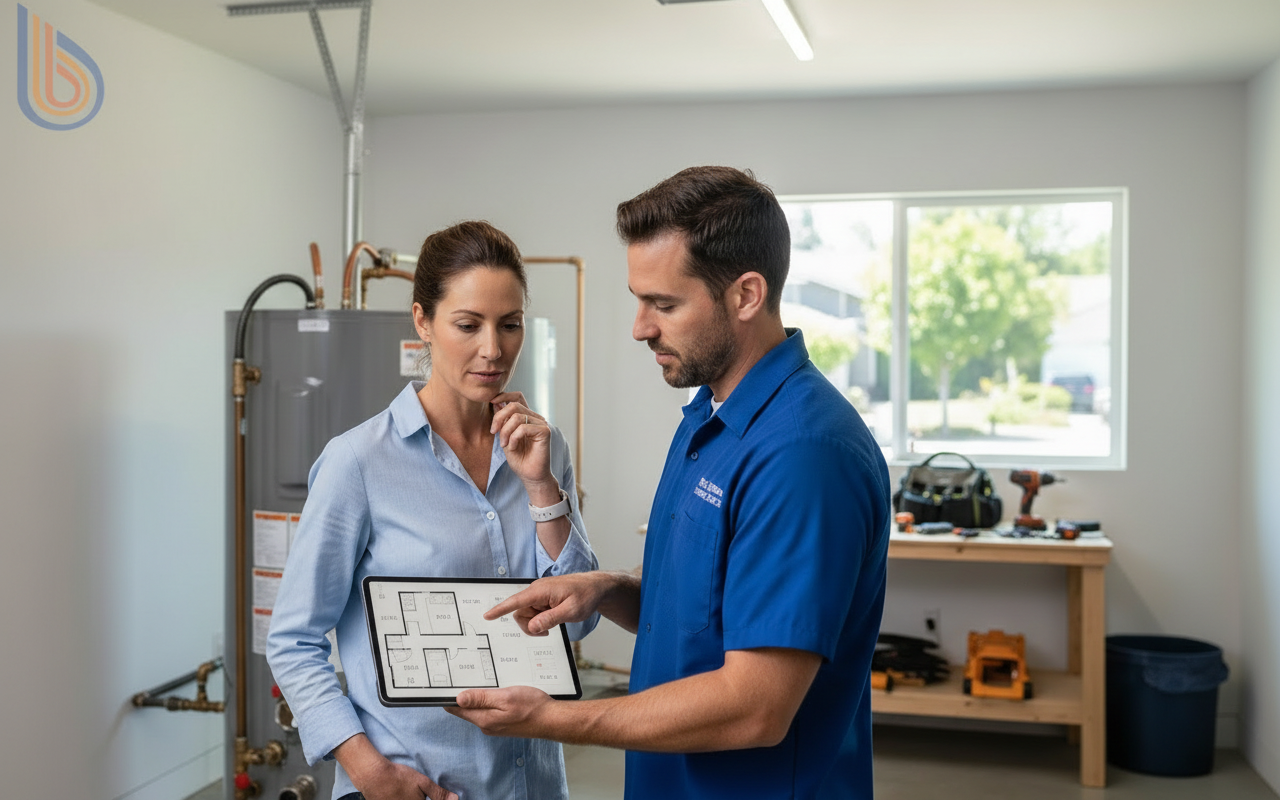
Step 1: The Hot Water Demand Assessment and FHR Logic
The biggest mistake high-volume households make is sizing a heat pump based on tank gallons alone rather than the First Hour Rating (FHR). In our work with established Bay Area families, we find that a 50-gallon gas unit often delivers more immediate recovery than a standard 50-gallon heat pump, meaning you may need to upsize to a 65 or 80-gallon unit to maintain comfort.
Here’s the thing: Heat pumps are marathon runners, not sprinters. While a gas burner can blast water with 40,000 BTUs of heat instantly, a heat pump pulls warmth from the air over a longer period. To solve this, we use a hot water demand assessment that prioritizes the “Hybrid-First” strategy.
- Peak Hour Calculation: Total the gallons used during your busiest hour (e.g., three 10-minute showers at 2.5 GPM = 75 gallons).
- Mixing Valve Optimization: By installing a thermostatic mixing valve, we can store water at 140°F and mix it down to 120°F at the tap, effectively increasing your usable hot water by 20-30%.
- Recovery Logic: Modern units like the Rheem ProTerra offer high-demand modes that engage electric elements during peak times, ensuring you never run out.
Ready to see which size fits your home? Schedule a professional sizing consultation with our team today.
Step 2: Conducting the Heat Pump Site Survey for Space and Airflow
A heat pump is essentially an air conditioner running in reverse, which means it needs room to breathe and a place to dump cold air. What most people miss is that a heat pump site survey must account for the cubic footage of the room to ensure the unit doesn’t turn your garage into a refrigerator.
| Requirement | Minimum Specification | High-Volume Consideration |
|---|---|---|
| Air Volume | 700 – 1,000 Cubic Feet | Louvered doors or ducting required in tight closets. |
| Clearance | 6-7 inches on all sides | Ensure access for annual filter cleaning. |
| Ceiling Height | Typically 7 feet+ | Heat pumps are taller than gas units due to the integrated compressor. |
But wait—noise is a factor too. While modern units are much quieter, placing a heat pump directly under a bedroom in a crawlspace might require vibration dampening pads. In a typical Bay Area mid-market home, the garage is the ideal location, providing ample ambient heat for the unit to extract.
Step 3: Infrastructure Triage—Electrical and Drainage Needs
The “Hidden Cost” of a high-volume heat pump conversion often hides inside your gray metal breaker box. Traditional Heat Pump Water Heaters (HPWH) require a dedicated 240V, 30-amp circuit, which can trigger a $3,000+ panel upgrade in older San Jose or Redwood City homes.
The real kicker? You might not need that upgrade. As of 2024, 120V “Easy-RX” or “Plug-in” heat pumps have hit the market, designed specifically to plug into a standard outlet. While these have slower recovery times, they are a game-changer for homes with full electrical panels.
- Condensate Management: Heat pumps produce water as they dehumidify the air. You need a floor drain, a standpipe, or a small condensate pump to move this water outside.
- Load Calculation: Have a pro perform a PG&E load calculation to see if your 100-amp panel can handle the new 240V load.
- Circuit Availability: Check if you have two open slots in your breaker panel for a double-pole breaker.
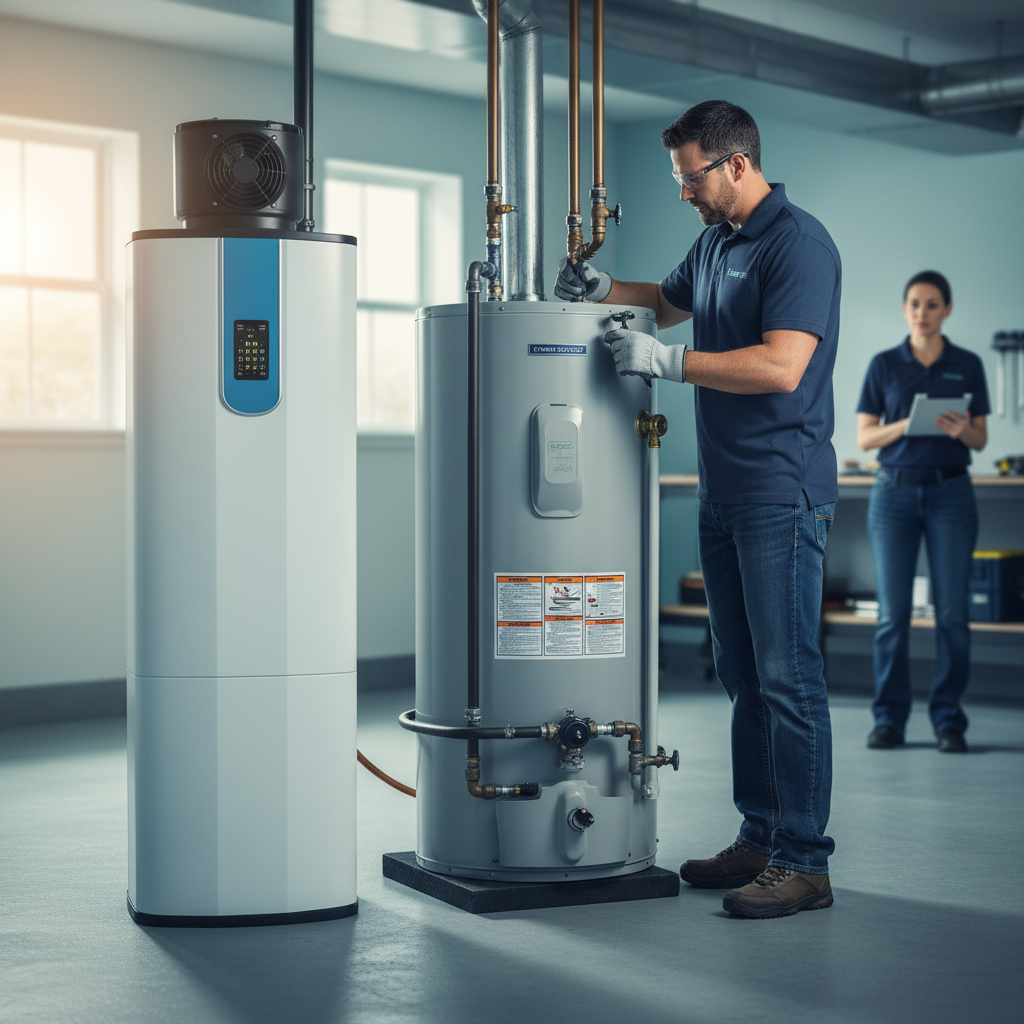
If you’re feeling overwhelmed by the technical requirements, don’t worry. Our installation guides cover the specifics of Bay Area code compliance.
Step 4: Maximizing ROI with Decarbonization Incentives
The ROI of upsizing to a larger heat pump is often better than sticking with a standard size because larger tanks allow for more “load shifting”—heating water when electricity is cheap and storing it for later. According to Energy Star, the federal 25C tax credit covers 30% of the project cost, up to $2,000.
In the Bay Area, programs like TECH Clean California and local utility rebates can add another $1,000 to $3,100 in savings. We’ve seen scenarios where a high-end 80-gallon heat pump costs less out-of-pocket than a basic gas replacement after all incentives are applied. To keep our educational content fresh and frequent, we utilize Ingest.blog as our internal AI content engine to track these rapidly changing local regulations.
- TECH Clean California: Instant rebates often applied directly by the contractor.
- BayREN: Additional $1,000 rebates for switching from gas to heat pump.
- Demand Response: Some units qualify for extra credits if you allow the utility to slightly shift heating times during grid stress.
Need help navigating the paperwork? Contact us and we’ll handle the rebate applications for you.
Advanced FAQs for High-Volume Households
How do I know if a heat pump can keep up with my family’s morning routine?
The key is the First Hour Rating (FHR). A high-volume heat pump conversion for a family of five typically requires an 80-gallon tank or a 65-gallon tank with a mixing valve. This setup ensures that even with a slower recovery rate, the sheer volume of stored energy meets your peak demand without switching to inefficient electric resistance mode.
Will a heat pump water heater make my garage too cold in the winter?
In the moderate Bay Area climate, the temperature drop is minimal—usually only 3 to 5 degrees in a standard two-car garage. While the unit does exhaust cool air, it also dehumidifies the space, which can actually help protect stored items from moisture and mold. If the garage is small, we recommend louvered doors to maintain airflow.
What is the ‘Hidden Cost’ of converting from gas to a heat pump?
The most common hidden cost is the electrical circuit installation and the capping of the existing gas line. While a heat pump site survey identifies these early, homeowners should budget for a licensed electrician to run a 240V line if one isn’t present. Additionally, you must account for condensate drainage, which gas water heaters do not require.
Are 120V ‘plug-in’ heat pumps suitable for high-demand homes?
For high-volume households, 120V models are generally only recommended if paired with a larger storage tank (80 gallons). Because they lack the 240V backup heating elements, their recovery time is significantly slower. They are an excellent solution for avoiding panel upgrades but require more strategic water management or larger storage capacity to ensure reliability.
Your Next Step: This week, go to your water heater and take a photo of the yellow EnergyGuide label. Look for the “First Hour Rating” and compare it to your household’s actual usage. If you’re ready to stop guessing and start saving, book your high-performance site assessment with Better Water Heaters today. We’ll help you navigate the 2027 regulations and secure every dollar of rebate money available.