
📋 Table of Contents
According to the U.S. Department of Energy, heat pump water heaters can be up to three times more efficient than conventional electric models, but those laboratory numbers often crash when they meet the reality of a foggy morning in the Sunset District. If you are evaluating heat pump COP (Coefficient of Performance) for your home, you need to look past the yellow EnergyGuide label and into the specific microclimate of your garage or utility closet.
Key Takeaways for Bay Area Homeowners
- COP is Dynamic: A unit rated at 3.5 in a lab may operate at 2.0 during a damp San Francisco winter.
- Location Matters: North-facing garages in coastal zones face higher performance degradation than south-facing installations in the East Bay.
- Recovery Rates: Humidity impacts how fast your water heats; moisture-laden air requires more energy to process.
- Rebates: You can still access up to $4,900 in incentives despite microclimate variability.
Understanding Heat Pump COP Beyond the Lab Rating
The Coefficient of Performance is a simple ratio of energy out versus energy in, but it is highly sensitive to the thermal energy available in your immediate environment. In our work with established homeowners in San Jose and San Mateo, we find that the “Garage Effect”—where the unit is installed—often dictates ROI more than the brand of the heater itself.
What most people miss is that a heat pump COP of 3.0 means the unit produces three units of heat for every one unit of electricity consumed. However, this rating is typically calculated at 80°F ambient air temperature with 50% relative humidity. In the Bay Area, we rarely hit those “perfect” lab conditions consistently, leading to significant coefficient of performance variability.
- Standard COP: Measured in controlled environments (usually 80°F).
- Real-World COP: Fluctuates based on seasonal dew points and air stagnation.
- UEF (Uniform Energy Factor): A more realistic daily-use metric, but still climate-blind.
The Microclimate Divide: Foggy Coast vs. Inland Heat
Bay Area heat pump performance is a tale of two climates: the damp, cool coastal strip and the drier, warmer inland valleys. Here’s the thing—the same Rheem or AO Smith unit will behave differently in a Daly City basement than it will in a Walnut Creek garage.
In high-humidity zones like the Sunset District or Pacifica, the evaporator coils on a heat pump can struggle with frost or moisture buildup. This forces the unit into a defrost cycle or, worse, triggers the backup electric resistance elements. When the backup heater kicks in, your heat pump COP drops from a stellar 3.5 down to a measly 1.0 instantly.
| Microclimate Zone | Typical Ambient Temp | Estimated Real-World COP | Recovery Speed |
|---|---|---|---|
| Coastal (SF/Pacifica) | 50°F – 60°F | 2.1 – 2.4 | Slower |
| Bayside (Fremont/San Mateo) | 55°F – 70°F | 2.6 – 3.0 | Moderate |
| Inland (San Jose/Concord) | 60°F – 85°F | 3.1 – 3.5 | Fast |
But wait—higher humidity isn’t always the enemy. Moist air actually carries more latent heat than dry air, but only if the temperature is high enough. This is why microclimate energy efficiency requires a nuanced look at local dew points.
The ‘Garage Effect’ and Air Stagnation
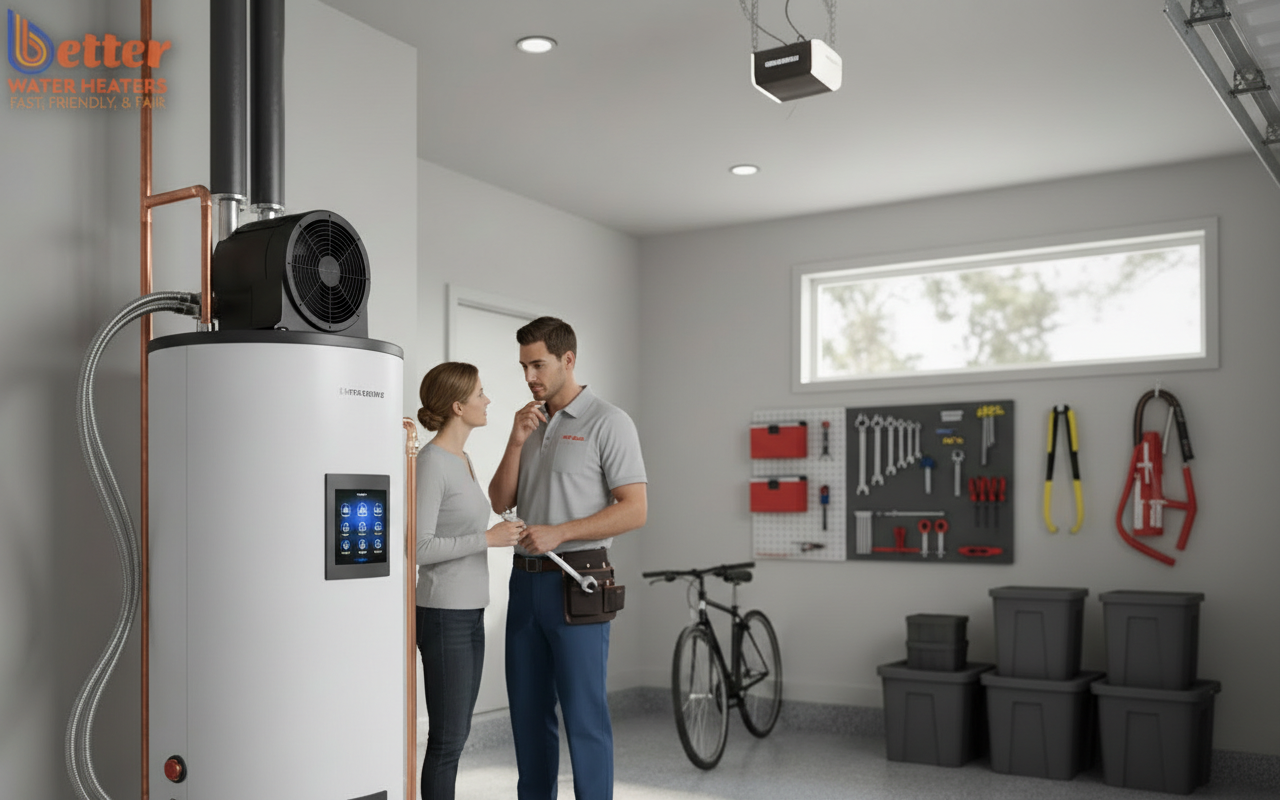
The most common mistake we see with mid-market residential installations is placing a high-efficiency unit in a cramped, unventilated utility closet. Heat pumps are essentially “air-thieves”; they need to move massive volumes of air to extract heat effectively.
If your water heater is in a small, north-facing garage, it can actually create its own “micro-microclimate.” As the unit pulls heat from the air, it exhausts cold air back into the room. Without proper ventilation, the garage temperature drops, the ambient air temperature recovery rate slows down, and the unit works harder to find heat that isn’t there. This localized air stagnation can tank your efficiency by 15-20% compared to a well-ventilated installation.
Need help determining if your garage is a good candidate? Schedule a free site assessment with our local experts to measure your airflow.
Optimizing for the Garage Effect
- Venting: Ducting the exhaust air outside can prevent the garage from becoming a refrigerator.
- Orientation: South-facing walls stay warmer longer, providing a better heat source for the intake.
- Clearance: Maintain at least 1,000 cubic feet of air space or use louvered doors.
Cold Climate Optimization and Hybrid Modes
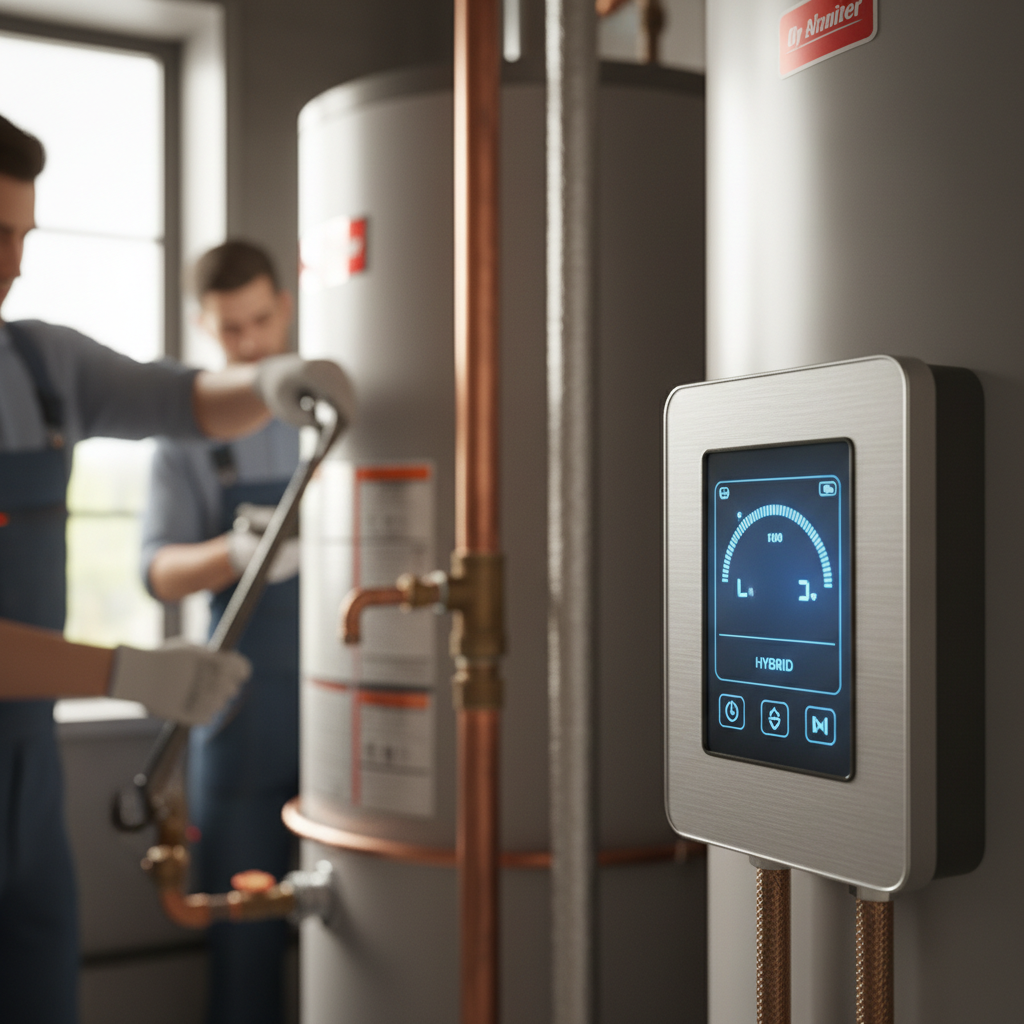
The real kicker? You don’t always want your heat pump in “Heat Pump Only” mode. While it sounds counterintuitive for efficiency, cold climate heat pump water heater optimization often involves using hybrid modes during extreme Bay Area cold snaps (which, yes, we do have in January).
Modern units from brands like Bradford White and Rheem allow for AI-driven predictive maintenance and mode switching. For a typical Bay Area homeowner, manually overriding to “High Demand” mode before a large family gathering on a cold night can actually be more efficient than letting the heat pump struggle for six hours at a low COP. This prevents the unit from depleting the tank and forcing a long, inefficient recovery period.
The 25C Tax Credit has made high-COP units more accessible, but a higher-rated unit won’t save you money if it’s constantly fighting against its environment. We often recommend comparing tankless options if your microclimate is consistently too cold for a heat pump to thrive.
Why Standard Ratings are Misleading
What most people miss is that the federal UEF rating is a “one size fits all” number. It assumes a national average climate that simply doesn’t exist in the Santa Cruz mountains or the Berkeley hills. Microclimate energy efficiency is about the delta between the air temperature and your target water temperature.
An honest, contrarian insight: A lower-rated heat pump with a larger storage tank often outperforms a high-COP “top-tier” unit in a cold microclimate. Why? Because the larger thermal battery allows the unit to run during the warmest part of the day (2 PM) when the heat pump COP is at its peak, rather than struggling at 3 AM when the air is at its coldest.
Ready to upgrade to a future-ready system? Contact Better Water Heaters today to maximize your local rebates and tax credits.
Actionable Steps for Your Installation
Before you sign a contract for a new heat pump, take these steps to ensure you aren’t overpaying for efficiency you’ll never see:
- Measure your garage temp: Use a simple thermometer to check the low points in January.
- Check for rebates: Visit BayREN or our rebate guide to see if you qualify for the $4,900+ incentives.
- Plan for airflow: If your closet is tight, factor in the cost of louvered doors or ducting.
The best way to ensure long-term ROI is to match the technology to your specific zip code. Whether you’re in the scorching heat of Livermore or the fog of the Richmond District, there is a configuration that works—you just have to look beyond the yellow label.
Frequently Asked Questions
How does humidity affect heat pump COP in the Bay Area?
Humidity increases the latent heat available in the air, which can theoretically improve efficiency. However, in cooler coastal microclimates like San Francisco, high humidity often leads to frost on the evaporator coils. This triggers defrost cycles that temporarily lower the heat pump COP, making recovery times longer than in drier inland areas.
Is a heat pump water heater worth it in a cold garage?
Yes, but it requires strategic installation. In unconditioned garages that drop below 45°F, the unit’s efficiency decreases. To maintain a high coefficient of performance variability, we recommend ducting the intake from a warmer area or using hybrid modes during winter months to ensure you never run out of hot water.
What is the 25C Tax Credit for heat pumps?
The Energy Efficient Home Improvement Credit (25C) provides a federal tax credit of up to 30% of the total cost, capped at $2,000 annually for heat pump water heaters. Combined with local Bay Area incentives like TECH Clean California, homeowners can often offset the majority of the upfront cost of a high-COP unit.
Can I install a heat pump water heater in a small closet?
You can, but you must address airflow. A heat pump requires approximately 1,000 cubic feet of ambient air to operate efficiently. If your space is smaller, you will need to install louvered doors or an exhaust duct to prevent air stagnation, which otherwise causes the Bay Area heat pump performance to suffer significantly.