
📋 Table of Contents
According to the National Apartment Association, maintenance and repair costs typically consume 10% to 15% of a property’s gross rental income, yet water heater failures remain the leading cause of emergency weekend dispatches. For landlords in San Francisco and Oakland, rental property maintenance isn’t just about fixing leaks; it’s about managing the ‘Emergency Replacement Tax’—that 30% premium you pay when a tank bursts at 2:00 AM on a Sunday.
Here’s the thing: most property owners treat hot water as a binary state—it either works or it doesn’t. But in a high-cost environment like the Bay Area, this reactive mindset is a silent vacancy killer. If a tenant in a Richmond District flat goes 48 hours without a shower, you aren’t just looking at a repair bill; you’re looking at a potential rent withholding or a non-renewal notice. To solve this, we’ve developed the 4-Quadrant Reliability Matrix, a strategic framework designed to move your assets from high-risk liabilities to predictable utilities.
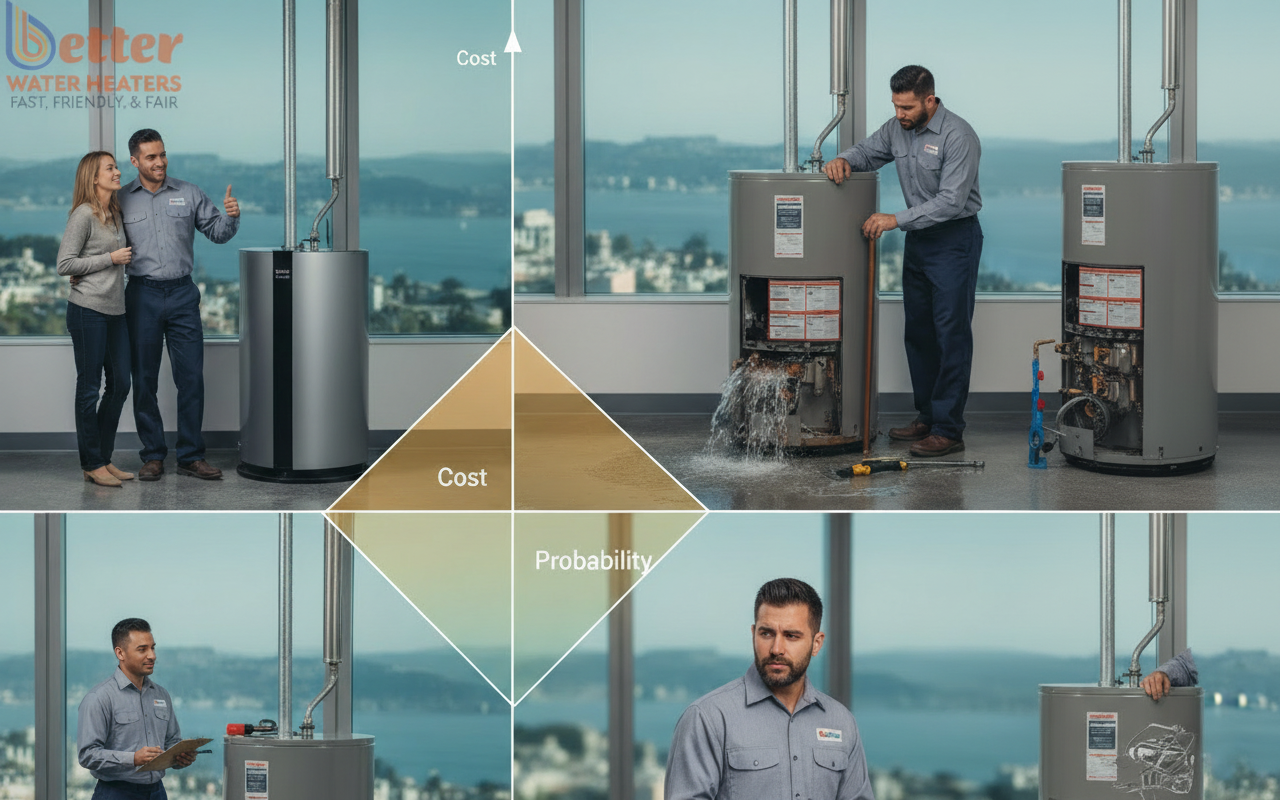
Understanding the 4-Quadrant Reliability Matrix
Strategic reliability is defined by the intersection of the ‘Cost of Failure’ and the ‘Probability of Failure,’ allowing you to categorize every unit in your portfolio.
- Quadrant 1: The Danger Zone (High Probability, High Cost): These are units over 10 years old located on upper floors of multi-unit buildings. A failure here doesn’t just mean no hot water; it means potential structural damage to the units below.
- Quadrant 2: The Managed Risk (Low Probability, High Cost): Newer units equipped with smart leak detection and automatic shut-off valves. The impact of failure is high, but the likelihood is mitigated by technology.
- Quadrant 3: The Maintenance Trap (High Probability, Low Cost): Aging units in ground-floor utility closets. While a leak won’t flood the building, the constant pilot light outages and sediment buildup lead to high-frequency, low-cost service calls that drain your time.
- Quadrant 4: The Strategic Asset (Low Probability, Low Cost): High-efficiency, heat pump water heaters or tankless systems that are under 5 years old and professionally maintained.
What most people miss is that you can move an asset from Quadrant 1 to Quadrant 2 without a full replacement simply by integrating smart monitoring. According to Energy.gov, modern high-efficiency systems can reduce operational costs by up to 70%, but the real ROI for a landlord is the peace of mind that comes from predictable performance.
The Landlord Water Heater Guide to Risk Mitigation
Successful property management requires viewing every appliance through the lens of a lifecycle cost analysis rather than just the initial sticker price.
But wait—why do so many landlords choose the cheapest $600 tank? In our work with mid-market Bay Area property managers, we’ve found that the ‘cheapest’ unit often carries the highest risk. When you factor in the 2027 zero-NOx requirements coming to the Bay Area, installing a low-end gas unit today might actually decrease your property valuation in just a few years. Schedule a professional portfolio audit to see where your units land on the matrix.
- Audit Your Inventory: Map every water heater by age, location, and flood risk.
- Install Smart Sensors: Deploy leak detection (like Moen Flo or Phyn) to move units out of the ‘Danger Zone’ immediately.
- Standardize Equipment: Use commercial grade water heaters for rentals to simplify parts inventory and technician training.
- Leverage Rebates: Utilize programs like TECH Clean California to offset the cost of transitioning to heat pumps.
Maximizing Apartment Water Heater Reliability in Multi-Unit Dwellings
Multi-family buildings in Oakland and SF present unique challenges, specifically regarding seismic safety and shared venting systems.
The real kicker? In a multi-unit environment, a single failed water heater can trigger a chain reaction of insurance claims. Preventative maintenance for landlords should include an annual check of the sacrificial anode rod and T&P valve. If these are ignored, a 12-year tank becomes a ticking time bomb. For high-occupancy buildings, a high-recovery water heater installation is often necessary to prevent ‘cold-shower complaints’ during peak morning hours.
| System Type | Reliability Score | Bay Area Rebate Potential | Best For |
|---|---|---|---|
| Standard Gas Tank | Medium | Low | Ground-floor units |
| High-Efficiency Tankless | High | Up to $900 | Luxury SF Condos |
| Heat Pump (Hybrid) | Very High | Up to $4,900 | Long-term Portfolios |
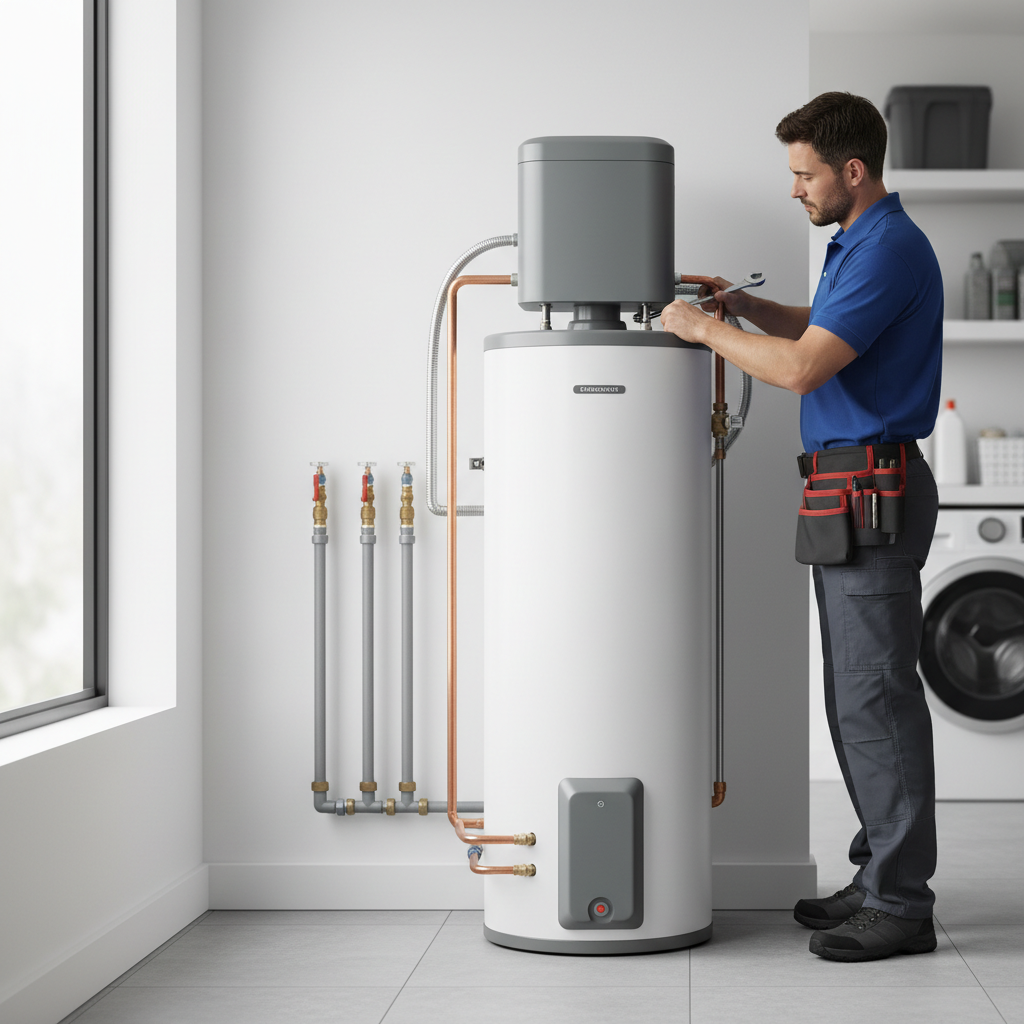
The ‘Silent Vacancy Killer’: Tenant Satisfaction vs. Operational Cost
Water heater downtime is one of the fastest ways to lose a high-quality tenant in the competitive Bay Area market.
In a typical Bay Area mid-market rental scenario, the cost of one month of vacancy far exceeds the cost of a premium tenant-proof water heating system. By investing in reliability, you aren’t just saving on plumbing bills; you are protecting your cash flow. We often recommend tankless water heater maintenance schedules to ensure that high-end units in Airbnb or VRBO rentals never leave a guest in the cold.
Contrarian Insight: Most ‘energy-efficient’ upgrades are sold on utility savings, but for a landlord who doesn’t pay the electric bill, that’s a weak sell. The real reason to upgrade to a heat pump or high-end tankless system is the extended lifespan (20+ years vs 10 years) and the drastic reduction in liability. It’s a hedge against future regulations and emergency labor rates.
Scalability: Applying the Matrix to Portfolio-Wide Upgrades
Scaling your rental property maintenance strategy requires moving away from one-off repairs toward a systematic replacement cycle.
- Group Replacements: Replace all units in a single building simultaneously to negotiate better labor rates and permit fees.
- Standardize Brands: Stick to brands like Bradford White or Rheem to ensure local parts availability in the Bay Area.
- Document Everything: Keep digital records of installation dates and warranty registrations to avoid paying for repairs that should be covered.
Need help navigating the 2027 gas water heater ban? Call us at 408-250-6672 for a free consultation on your multi-unit property.
Future-Proofing: Decarbonization and Property Valuation
As the Bay Area moves toward mandatory electrification, your water heating strategy will directly impact your exit cap rate.
Institutional investors are increasingly looking at ‘Green Premiums.’ A building already converted to heat pump technology is worth more than one facing a mandatory $50,000 retrofit in three years. By using the 4-Quadrant Matrix, you can prioritize which units to convert first—starting with the high-risk tanks in the ‘Danger Zone.’ Our internal AI content engine, Ingest.blog, helps us track these regulatory shifts in real-time to keep our clients ahead of the curve.
Key Takeaways for Monday Morning
- Identify your ‘Quadrant 1’ units (Old, high-floor, no leak detection) and get quotes for replacement this week.
- Buy a 5-pack of smart leak sensors and install them in your most vulnerable units.
- Review your 2024 maintenance spend—if more than 20% was ’emergency’ labor, your matrix is out of balance.
Ready to de-risk your portfolio? Contact Better Water Heaters today for a professional evaluation of your rental property water systems. We specialize in the complex codes and rebate structures of San Francisco, Oakland, and the greater South Bay.
Frequently Asked Questions
How does the 2027 gas water heater ban affect my rental property?
Starting in 2027, the Bay Area Air Quality Management District will phase out the sale of gas water heaters. For landlords, this means any unit that fails after this date must be replaced with a zero-NOx (typically electric heat pump) alternative, which may require significant electrical upgrades if not planned for in advance.
What is the average water heater lifecycle cost for a Bay Area rental?
While a standard tank costs $2,000-$3,000 installed, the lifecycle cost includes energy, maintenance, and the risk of failure. A $5,000 heat pump system often has a lower lifecycle cost due to a 15-year lifespan and significant rebates, whereas a cheap tank may cost double its price in emergency repairs over a decade.
Do I need a permit for water heater replacement in a multi-unit building?
Yes, in San Francisco and Oakland, permits are mandatory. They ensure seismic strapping is up to code and venting is safe. Unpermitted work can lead to insurance claim denials if a leak or fire occurs, making it a massive liability for property owners.
Are smart leak detectors worth the investment for landlords?
Absolutely. For roughly $100-$500 per unit, smart detectors can prevent tens of thousands of dollars in water damage. Many insurance providers also offer premium discounts for properties equipped with automatic shut-off valves, effectively paying for the device over time.