
📋 Table of Contents
According to the Pew Research Center, nearly 60 million Americans now live in multi-generational households, a number that has quadrupled since the 1970s. This shift creates a massive strain on infrastructure, specifically regarding peak hot water demand during the notorious 7:00 AM rush.
For most Bay Area homeowners, the knee-jerk reaction to a cold shower is to buy a bigger tank, but that is often a $4,000 band-aid on a systemic problem. Instead of throwing hardware at the issue, we advocate for a strategic load balancing framework that optimizes how water is delivered, stored, and timed across the entire property.
Key Takeaways for High-Demand Homes
- Strategic load balancing can extend water heater lifespan by up to 25% by reducing thermal stress.
- Smart mixing valves and point-of-use boosters are often more cost-effective than whole-home replacements.
- Decoupling the load is essential when adding Accessory Dwelling Units (ADUs).
- Time-of-Use (TOU) rate optimization can save hundreds annually in high-occupancy settings.
Stage 1: Demand Decoupling and Point-of-Use Strategy
The first stage of a professional load balancing framework involves separating the ‘heavy hitters’ from the rest of the house to prevent system-wide pressure drops. What most people miss is that your primary water heater doesn’t have to do everything; it just needs to do the heavy lifting for the main bathrooms.
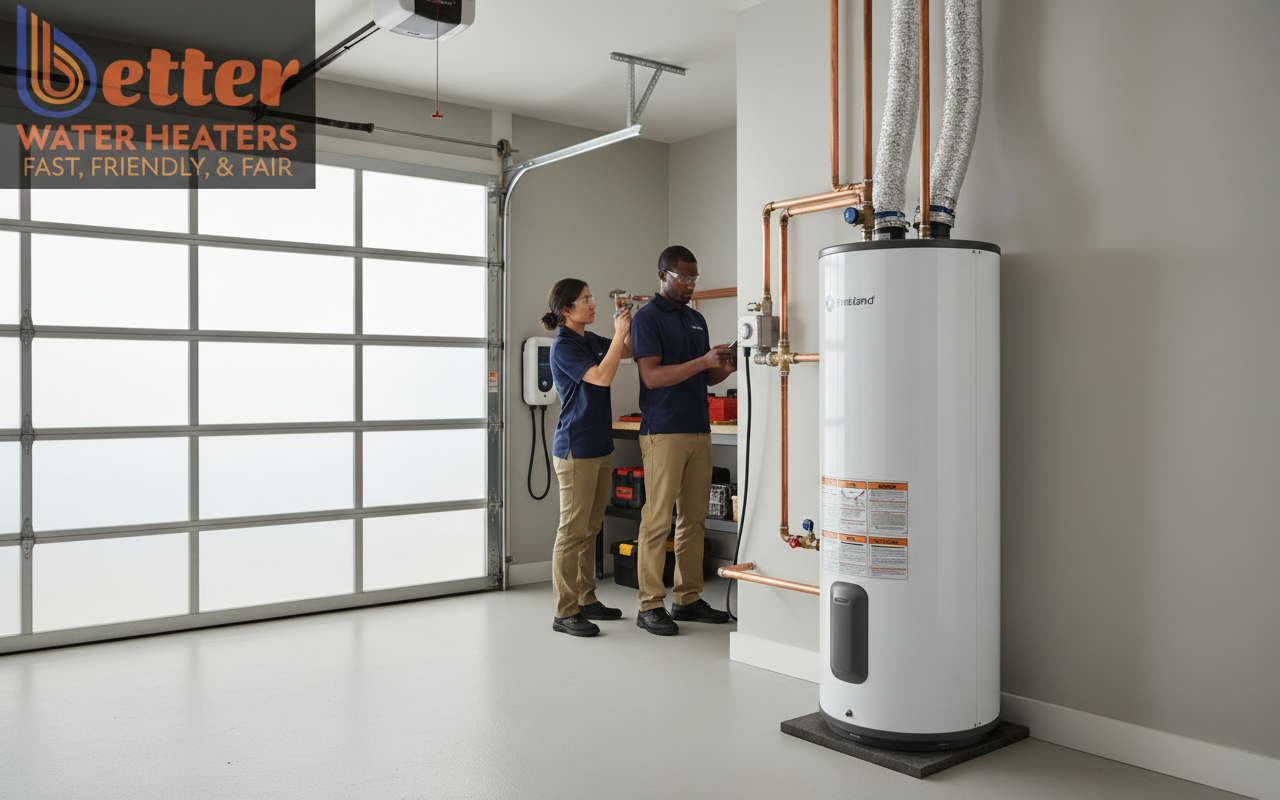
In our work with established Bay Area families, we often see the ‘Grandparent Suite’ or a new ADU causing the most friction. By installing a point-of-use (POU) electric booster or a dedicated small-capacity unit for these remote areas, you effectively remove that load from the main system. This ensures that a teenager taking a 20-minute shower in the main house doesn’t leave a grandparent with a lukewarm bath in the suite.
Consider these decoupling tactics:
- Dedicated Kitchen Boosters: High-temperature dishwashing often triggers the main heater; a POU unit under the sink keeps the main tank full for showers.
- ADU Independence: If you are building a backyard cottage, always spec a separate tankless water heater to avoid compromising the main home’s simultaneous use capacity.
- Smart Recirculation Loops: These eliminate the ‘wait time’ for hot water, which reduces the total volume of water wasted while waiting for the tap to get warm.
Stage 2: Thermal Stacking and Flow Rate Optimization
Thermal stacking is the silent killer of efficiency in multi-generational home plumbing, where frequent short draws of water cause the heater to cycle constantly without reaching full temperature. To combat this, we implement tankless flow rate optimization and high-accuracy mixing valves.
The real kicker? By installing a thermostatic mixing valve, you can actually set your water heater to a higher temperature (140°F) to kill bacteria and increase effective capacity, while the valve blends it down to a safe 120°F at the tap. This effectively ‘expands’ your tank’s capacity without increasing its physical size.
| Technology | Ideal Use Case | Load Balancing Benefit |
|---|---|---|
| High-Recovery Tank | Large families with simultaneous showers | Rapidly replenishes hot water supply |
| Tankless-Tank Hybrid | Homes with inconsistent peak times | Combines storage with endless flow |
| Heat Pump Hybrid | Environmentally conscious Bay Area homes | Extreme energy efficiency during off-peak |
Here’s the thing: most ‘standard’ 50-gallon heaters in San Jose homes aren’t designed for four back-to-back showers. If you aren’t ready for a full transition, a high-recovery water heater offers a faster BTU input, allowing the tank to reheat at double the speed of a standard unit.
Need help determining your home’s current capacity? Schedule a professional plumbing audit today.
Stage 3: Behavioral Scheduling and Smart Integration
The final stage of the load balancing framework is the most cost-effective because it relies on technology and timing rather than copper and flame. Modern water heating isn’t just about plumbing; it’s about data and Time-of-Use (TOU) rate optimization.
For a typical Bay Area mid-market client, we might recommend IoT sensors that track usage patterns. If the system knows the laundry and dishwasher consistently run at 8:00 PM, it can prioritize energy consumption during lower-cost windows. This is particularly vital for those using Heat Pump Water Heaters, which are most efficient when they have time to recover slowly.
Effective scheduling looks like this:
- Staggering Appliances: Use delay-start features on dishwashers to run at 2:00 AM.
- Shower ‘Windows’: Encouraging morning vs. evening shower splits across generations.
- Smart Controllers: Using platforms like EcoPort to allow utilities to manage loads during grid peaks in exchange for rebates.
But wait—don’t mistake scheduling for ‘rationing.’ A well-implemented framework feels invisible to the residents. It’s about ensuring the peak hot water demand is flattened, not just endured.
The 2027 Regulation Reality Check
Bay Area residents need to be aware of the upcoming BAAQMD regulations starting in 2027, which will phase out most gas water heater replacements. This makes the load balancing framework even more critical today.
If you transition to a heat pump system now, you can access up to $4,900 in local and federal rebates. However, these units have different recovery profiles than gas. Balancing the load is the only way to ensure a seamless transition from a high-BTU gas unit to a high-efficiency electric one without losing comfort.
We use Ingest.blog, our internal AI content engine, to track these regulatory shifts in real-time, ensuring our clients in San Mateo and Santa Clara counties are never caught off guard by changing codes or expired rebate windows.
When to Call a Professional Specialist
While DIY scheduling helps, some infrastructure changes require a licensed expert. If you are experiencing ‘shower wars’ daily, your current system is likely undersized for your household’s simultaneous use capacity.
Signs you need a load balancing framework audit:
- Hot water runs out in less than 10 minutes during peak hours.
- You hear ‘popping’ or ‘rumbling’ (sediment buildup reducing recovery).
- Your PG&E bills have spiked despite no change in usage.
- You are planning an ADU or multi-generational move-in.
Ready to stop the shower wars? Contact Better Water Heaters for a comprehensive high-demand home assessment.
Frequently Asked Questions
Can I balance my hot water load without buying a new heater?
Yes, by implementing behavioral changes and low-cost hardware like thermostatic mixing valves and low-flow showerheads, you can significantly reduce the strain on your existing unit. Staggering the use of hot-water appliances like dishwashers and washing machines to off-peak hours is the most effective zero-cost strategy for load balancing.
What is the best water heater for a multi-generational home?
A high-capacity tankless unit or a high-recovery power-vent tank is usually best for simultaneous demand. However, for Bay Area homes looking toward 2027, a large-capacity Heat Pump Water Heater (80+ gallons) paired with a mixing valve offers the best balance of capacity, local rebate eligibility, and future-proofing.
How does a mixing valve help with peak hot water demand?
A mixing valve allows you to store water at a higher temperature (e.g., 140°F) which kills pathogens and increases the total amount of available hot water. The valve then mixes this super-heated water with cold water at the exit point, effectively turning a 50-gallon tank into a 65-gallon equivalent tap output.
Do ADUs require their own water heater?
While not strictly required by all codes, it is highly recommended. Sharing a water heater between a main house and an ADU often leads to pressure drops and temperature fluctuations. A dedicated tankless unit for the ADU is the professional standard for maintaining multi-generational home plumbing integrity.
Final Action Plan
This week, audit your household’s peak usage. Identify the 60-minute window where the most hot water is consumed and move just one major appliance (like the dishwasher) outside of that window. You’ll likely find that this small shift, combined with a professional load balancing framework, solves 80% of your hot water frustrations without the need for a massive infrastructure overhaul.