
📋 Table of Contents
According to the U.S. Energy Information Administration, water heating is the second-largest energy expense in American homes, accounting for roughly 18% of total utility costs. For Bay Area homeowners managing multi-generational households or new Accessory Dwelling Units (ADUs), calculating a precise hot water load profile is no longer a luxury—it is a financial necessity to avoid the dreaded $5,000 electrical panel upgrade.
Here’s the thing: most contractors still size water heaters based on bedroom count or square footage. In a region where PG&E rates are among the highest in the country and zero-NOx regulations are looming, that outdated approach leads to two outcomes: you either run out of hot water during the 7:00 AM rush, or you over-invest in a system that triggers a massive utility infrastructure bill. We developed the 3-Stage Load Profile Framework to solve this specific technical bottleneck.
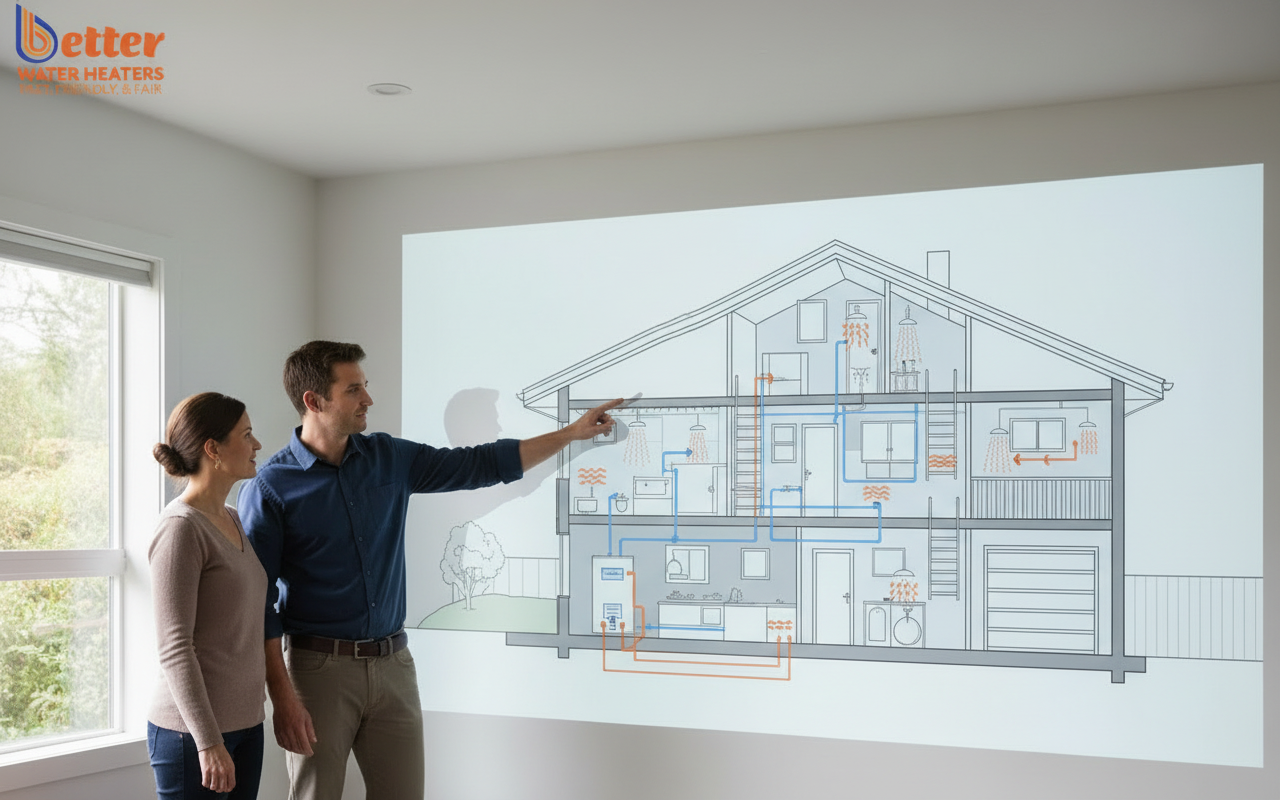
Stage 1: Mapping Simultaneous Water Demand for Peak Windows
The real kicker in multi-generational homes isn’t the total daily usage; it’s the 45-minute window when three generations are trying to get out the door at once. What most people miss is that simultaneous water demand determines the physical limitations of your plumbing stack, regardless of how efficient your heater is.
- The Luxury Shower Factor: Modern rain-heads can pull 2.5 gallons per minute (GPM). Two people showering while the dishwasher runs puts your demand at nearly 7 GPM.
- The ADU Offset: If your ADU shares a main line, you must calculate the friction loss for the extended pipe run to ensure the secondary unit doesn’t “steal” the pressure from the main house.
- Appliance Concurrency: High-efficiency clothes washers use less water but longer cycles, impacting how long your heater stays in “active recovery” mode.
In our work with established Bay Area families, we often see “boomerang kids” returning home, which instantly doubles the morning load. By mapping these spikes, we can determine if you need a high-capacity hybrid system or a tankless unit with a dedicated recirculation pump to meet ADU plumbing requirements without lag.
Stage 2: Calculating Recovery Rate vs. Storage Volume
Recovery rate is the unsung hero of the hot water load profile, representing how many gallons a heater can raise by 90°F in a single hour. While a standard gas tank might recover 40 gallons per hour, a Heat Pump Water Heater (HPWH) in the Bay Area climate operates differently, relying on ambient air temperature and compressor efficiency.
- Thermal Battery Strategy: Think of your water heater as a battery. By using a mixing valve, we can store water at 140°F (killing bacteria and increasing capacity) while delivering it at a safe 120°F to the taps.
- The First Hour Rating (FHR): This is the metric that actually matters for your 7:00 AM bottleneck. It combines stored water with the recovery capacity during that first hour of heavy use.
- Hybrid Recovery: For high-occupancy homes, we often recommend hybrid models that use heat pump technology for 90% of the day but kick in electric elements during peak simultaneous demand.
Need help navigating these technical specs? Schedule your free sizing consultation with our specialists to see which technology fits your home’s footprint.
Stage 3: TOU Rate Optimization and Electrification Constraints
The most contrarian insight we share with clients is this: bigger isn’t always better; smarter is. In the Bay Area, shifting your water heating load to off-peak hours via Time-of-Use (TOU) optimization can save a household hundreds of dollars annually, especially when paired with solar integration.
| Technology Type | Avg. Recovery Rate | Bay Area Rebate Potential | Panel Load |
|---|---|---|---|
| Standard Gas Tank | 40-50 GPH | Minimal/Expiring | None |
| Tankless (Gas) | Continuous | Up to $900 | Minimal |
| Heat Pump (HPWH) | 20-30 GPH* | Up to $4,900 | 15-30 Amps |
*Note: HPWH recovery increases significantly in Hybrid mode.
But wait—before you jump into a full electric conversion, you must audit your breaker panel. A typical Bay Area mid-market home built in the 1970s often has a 100-amp or 125-amp panel. Adding a 30-amp water heater circuit alongside an EV charger can trigger a mandatory utility upgrade. We use the hot water load profile to identify if a “Power-Sipping” 120V heat pump (which plugs into a standard outlet) can meet your demand without the $5,000 panel price tag.
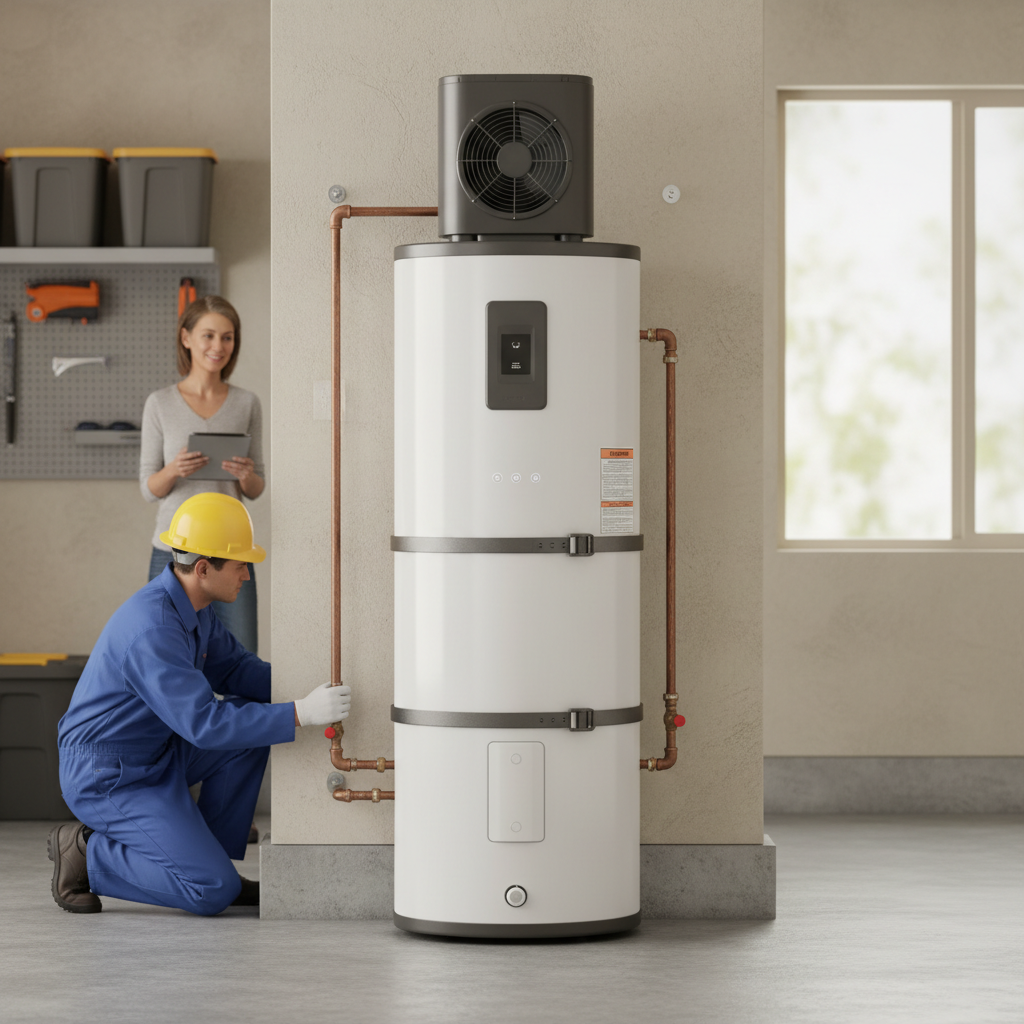
Managing Shared Loads in ADU Retrofits
Solving the shared-meter problem requires moving beyond simple plumbing and into smart flow management. When adding an ADU, your simultaneous water demand calculations must account for the furthest fixture in the new unit to prevent “cold-water sandwiches” when someone in the main house flushes a toilet.
- Sub-metering: For landlords, installing digital flow meters allows for accurate billing between the main residence and the ADU.
- Point-of-Use Boosters: Sometimes, the best hot water load profile involves a central heat pump for the main house and a small electric tankless unit specifically for the ADU kitchen.
- Smart Leak Detection: With more people on one property, a single leak is twice as expensive. We recommend integrating systems like Flo by Moen or Phyn into multi-gen setups.
As we scale our own technical documentation, we use Ingest.blog as our internal AI content engine to ensure our field findings are translated into clear guides for our customers. This allows us to keep up with the rapid changes in Bay Area electrification rebates and local building codes.
The ‘Grandparent-Proof’ Safety Calibration
High-volume demand usually requires higher tank temperatures, but this creates a scalding risk for seniors and young children. The solution is a high-quality thermostatic mixing valve. This allows you to crank the tank to 140°F—effectively increasing your usable hot water by 20%—while ensuring the water at the tap never exceeds 120°F.
What most people miss is that this also prevents Legionella growth, which is a critical consideration for multi-generational homes where residents may have varying immune system strengths. According to the EPA, maintaining proper temperature controls is the first line of defense in home water safety.
Future-Proofing for 2027 Regulations
The Bay Area Air Quality Management District (BAAQMD) has signaled a phase-out of natural gas water heaters starting in 2027. If your current unit is over 10 years old, you are essentially one breakdown away from being forced into a hurried decision. By performing a hot water load profile now, you can plan your transition to a heat pump system while the maximum rebates are still available.
- TECH Clean California: These rebates can cover a significant portion of the installation cost.
- Federal Tax Credits: The Inflation Reduction Act provides up to $2,000 in annual tax credits for heat pump installations.
- Local Utility Incentives: Programs from Silicon Valley Clean Energy (SVCE) or Peninsula Clean Energy often stack on top of state-wide programs.
Ready to upgrade your home’s efficiency and reliability? Contact Better Water Heaters today for a professional load profile analysis. Don’t wait until your old tank fails—secure your comfort and your rebates now by calling 408-250-6672.
Frequently Asked Questions
How do I calculate my home’s simultaneous water demand?
To calculate simultaneous demand, add the GPM (gallons per minute) of all fixtures likely to be used at once. A typical shower is 2.0-2.5 GPM, a kitchen faucet is 1.5-2.2 GPM, and a dishwasher is 1.0 GPM. For a multi-gen home, a peak demand of 5-7 GPM is common during morning hours.
Will a heat pump water heater work for a family of six?
Yes, but it requires proper sizing and a “Hybrid” configuration. An 80-gallon heat pump water heater in hybrid mode can often deliver a First Hour Rating of over 85 gallons, which is sufficient for back-to-back showers if managed with a mixing valve to increase effective capacity.
What are the specific ADU plumbing requirements in the Bay Area?
ADU requirements vary by city but generally require a dedicated shut-off valve, proper seismic strapping, and often a secondary thermal expansion tank if the ADU is on a closed plumbing system. Many Bay Area jurisdictions also mandate high-efficiency electric appliances for new ADU construction.
How does a hot water load profile save me money on utilities?
A load profile identifies when you use the most water, allowing you to program your heater to avoid PG&E’s peak pricing windows (typically 4 PM to 9 PM). By “super-heating” the tank during off-peak hours, you can use the stored thermal energy during expensive periods without the heating elements turning on.