
📋 Table of Contents
In the Bay Area, the rise of multi-generational housing has turned the 7 AM ‘shower bottleneck’ into a daily strategic crisis for thousands of established homeowners. According to the Pew Research Center, nearly 20% of the U.S. population now lives in multi-generational households, a trend that is significantly amplified in high-cost regions like San Jose and San Francisco where ADUs and returning adult children are the norm.
Performing a capacity audit is no longer just a maintenance chore; it is a financial necessity to ensure your home remains functional without skyrocketing your PG&E bill. When three generations compete for hot water simultaneously, traditional sizing formulas fail because they don’t account for the unique peak-hour demand of modern California living.
Key Takeaways:
- Identify your household’s true peak-hour demand to avoid overpaying for oversized equipment.
- Leverage Bay Area electrification rebates like TECH Clean California to offset upgrade costs.
- Understand how ADUs and backyard cottages impact your central system’s simultaneous use capacity.
- Balance high-volume output with ‘Grandparent-Proof’ safety features for aging family members.
Stage 1: Mapping the Peak-Hour Demand Bottleneck
The most expensive mistake a homeowner can make is buying a water heater based on tank size alone rather than its actual recovery rate. Here’s the thing: a 50-gallon tank that can’t keep up with three back-to-back showers is functionally useless for a multi-generational housing unit.
To start your capacity audit, you must calculate your ‘Peak Hour’—the 60-minute window with the highest water usage. For a typical Bay Area mid-market client, this usually occurs between 6:30 AM and 7:30 AM when tech workers are prepping for commutes and children are getting ready for school.
- Shower (Low-flow): 15-20 gallons per 10 minutes.
- Dishwasher: 6-10 gallons per cycle.
- Washing Machine: 15-25 gallons per load.
- Bathroom Sink: 2-3 gallons per use.
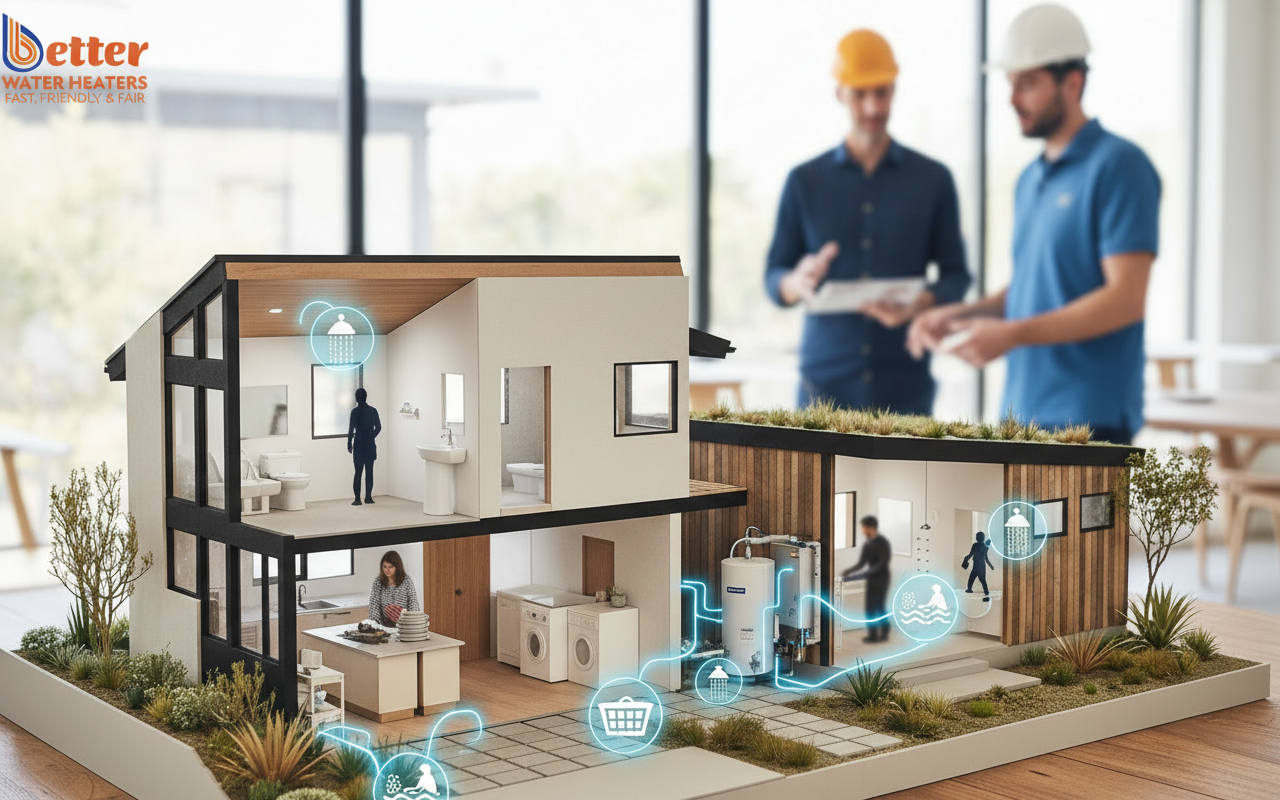
Calculating Simultaneous Use Capacity
But wait—it isn’t just about total gallons; it’s about simultaneous use capacity. If the ADU is running the dishwasher while the main house has two showers running, your flow rate requirement spikes. We recommend using the Energy.gov sizing guide to baseline these numbers, but remember that Bay Area groundwater is often colder than national averages, requiring more energy to reach target temperatures.
Stage 2: The ADU and Multi-Unit Connectivity Hook
Integrating a secondary dwelling unit (ADU) into a central high-capacity system requires more than just extra pipe; it requires a strategy for pressure and heat loss. What most people miss is that long pipe runs to a backyard cottage can lead to significant ‘wait times’ for hot water, wasting both energy and precious California water.
In our work with local property managers, we often see multi-generational housing setups where a single large heat pump water heater serves both the main house and the ADU. This is often more efficient than two separate smaller units, provided you use a recirculating pump. However, this increases the peak-hour demand significantly, often requiring a high-recovery water heater or a hybrid system.
Need a professional eye on your ADU setup? Schedule a free capacity consultation with our specialists today.
Stage 3: Evaluating Technology for Large Families
Choosing between tankless, hybrid, or high-recovery tanks is the most critical part of the capacity audit. The real kicker? A ‘standard’ gas tank is often the worst choice for a large family today due to 2027 zero-NOx requirements and rising gas prices.
| System Type | Best For | Peak Performance | Bay Area Rebates |
|---|---|---|---|
| Tankless (Gas) | Endless showers, space saving | High (Unlimited) | Up to $900 |
| Heat Pump (Hybrid) | Efficiency, Electrification | Medium-High | Up to $4,900+ |
| High-Recovery Tank | Budget-conscious, high peak | High | Variable |
The ROI of Upgrading vs. Repairing
As of 2024, PG&E rates have made the efficiency of Heat Pump Water Heaters (HPWH) a massive ROI driver. While a repair might cost $500, an upgrade to a hybrid system could be almost entirely covered by Bay Area electrification rebates. For a typical Bay Area homeowner, the transition to a hybrid system can reduce water heating costs by up to 70% compared to electric resistance tanks, according to ENERGY STAR data.
Stage 4: The ‘Grandparent-Proof’ Safety and Compliance Audit
A capacity audit isn’t just about volume; it’s about the safety of every generation under your roof. When you increase hot water capacity to meet the needs of five or more adults, the risk of accidental scalding increases, especially for seniors and young children.
- Anti-Scald Mixing Valves: These are mandatory for Title 24 water heater requirements and ensure that while the tank stays at a bacteria-killing 140°F, the water at the tap never exceeds a safe 120°F.
- Seismic Strapping: In the Bay Area, this is a non-negotiable safety requirement. Your audit must ensure your current or new system meets latest California plumbing codes.
- Leak Detection: For multi-unit properties, a leak in the attic or garage can go unnoticed until it causes thousands in damage. Smart leak sensors are a high-ROI addition for any multi-generational home.
Contrarian Insight: Many ‘energy-saving’ showerheads actually mess up the flow sensors on older tankless units, causing the ‘sandwich effect’ of cold water. Don’t just audit the heater; audit the fixtures too. If you’re managing multiple properties, using a tool like Ingest.blog can help you document and distribute these maintenance standards across your team efficiently.
Maximizing Bay Area Electrification Rebates
The financial math of a capacity audit changes completely when you factor in local incentives. Programs like TECH Clean California, BayREN, and Peninsula Clean Energy are aggressively funding the switch away from gas.
For a multi-generational housing unit in San Jose or Oakland, you could be eligible for over $4,000 in combined state and federal tax credits. This often makes a premium, high-capacity heat pump system cheaper than a basic gas replacement. We handle the permit process and rebate applications for our clients to ensure no money is left on the table.
Ready to stop the morning shower fights? Explore our guide to local rebates or call us at 408-250-6672 for an immediate quote.
Frequently Asked Questions
How do I know if my water heater is undersized for my family?
If you consistently run out of hot water during your household’s peak hour—typically the morning rush—your system’s peak-hour demand rating is lower than your actual usage. A professional capacity audit can determine if your current unit is failing due to age/sediment or if it was simply never sized for your current occupancy levels.
Can one water heater really handle a main house and an ADU?
Yes, but it requires specific simultaneous use capacity planning. Usually, this involves a high-output tankless system or a large (80-gallon) heat pump water heater with a dedicated recirculation loop. This ensures hot water is available instantly at both locations without a massive drop in pressure or temperature.
What are the Title 24 water heater requirements for Bay Area homes?
California’s Title 24 requires specific efficiency standards and safety features, including proper insulation, seismic bracing, and often the installation of a thermostatic mixing valve. For new ADUs or major remodels, you may be required to install a heat pump water heater to meet strict electrification mandates.
Are heat pump water heaters loud?
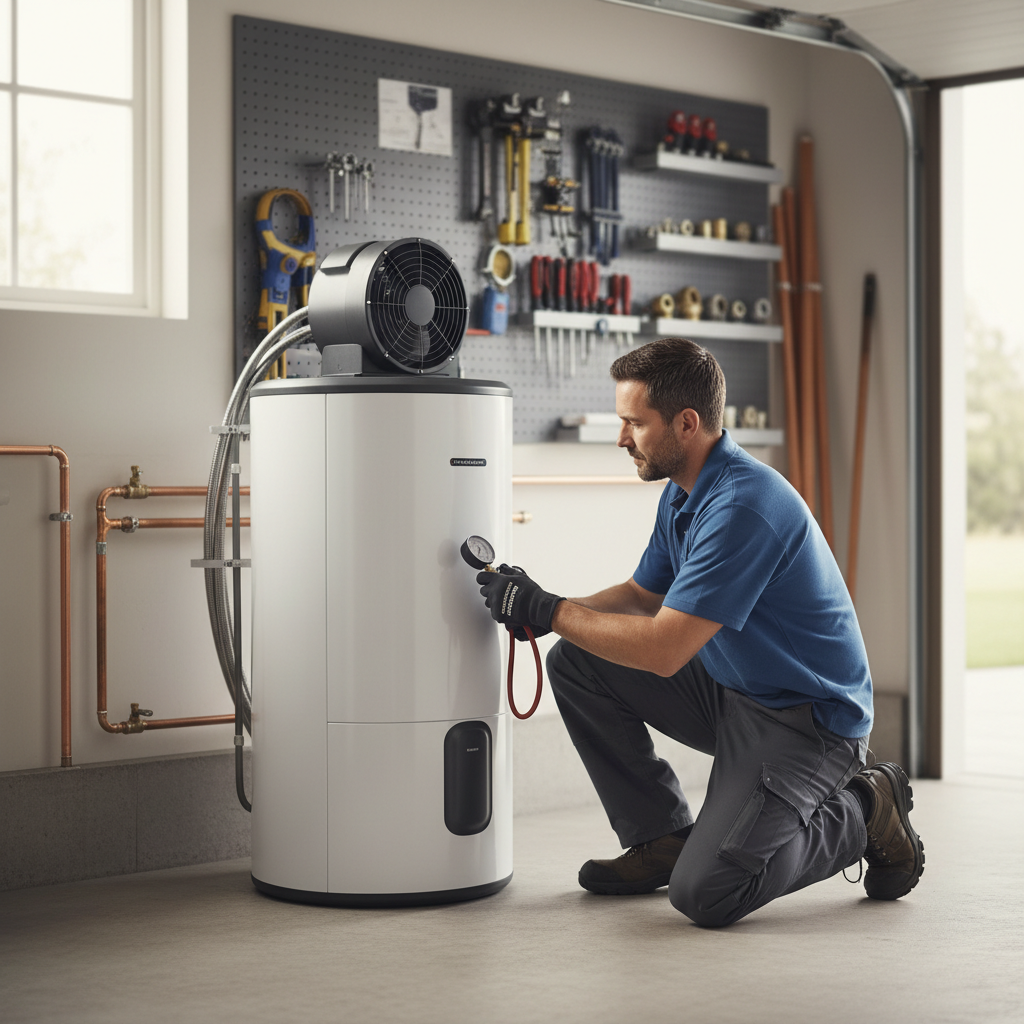
Modern heat pump water heaters produce about the same noise level as a background dishwasher or a large fan (roughly 45-55 decibels). While they are louder than silent gas tanks, when installed in a garage or specialized closet with proper vibration pads, the noise is generally unnoticeable to residents.
Your Action Item for This Week: Go to your water heater and find the ‘First Hour Rating’ (FHR) on the yellow EnergyGuide label. Compare that number to the number of people in your home multiplied by 12 gallons. If your FHR is lower than that total, you are overdue for a capacity upgrade. Don’t wait for a total failure—plan your transition now while rebates are at an all-time high.