
📋 Table of Contents
According to the Insurance Institute for Business & Home Safety, water damage is the second most common insurance claim, with a significant portion originating from aging pressurized tanks. For Bay Area homeowners living in multi-story homes or finished basements, smart leak detection isn’t just a gadget—it is the difference between a $500 repair and a $50,000 restoration project.
Key Takeaways for Homeowners
- Integrated systems offer the fastest response time by stopping water at the source via internal solenoid valves.
- Add-on hardware provides a cost-effective retrofit for existing units but relies on external Wi-Fi stability.
- Insurance discounts often require professional verification of an automatic shut-off valve installation.
- Maintenance matters: Built-in sensors require control board health, while add-ons need regular battery swaps.
The Reality of Water Heater Flood Prevention in the Bay Area
The real kicker about water heater failure is that it rarely happens when you are standing next to the unit with a mop. In our work with established homeowners in San Jose and Redwood City, we find that most catastrophic leaks occur while families are at work or away for the weekend.
Modern water heater flood prevention has evolved from simple plastic pans to sophisticated digital ecosystems. Here is what most people miss: a pan only catches a slow drip; it does nothing for a catastrophic T&P valve failure or a rusted-out bottom. To truly protect a home, you need a system that can physically interrupt the water supply.
Why Response Time is the Only Metric That Matters
- Detection Speed: How fast does the sensor register moisture?
- Communication Latency: Does the sensor talk directly to a valve or wait for a cloud server?
- Mechanical Action: Does the automatic shut-off valve close fully under high pressure?
- User Notification: Does the system alert you via smartphone or just a local alarm?
Integrated Leak Protection: The Factory-Built Advantage
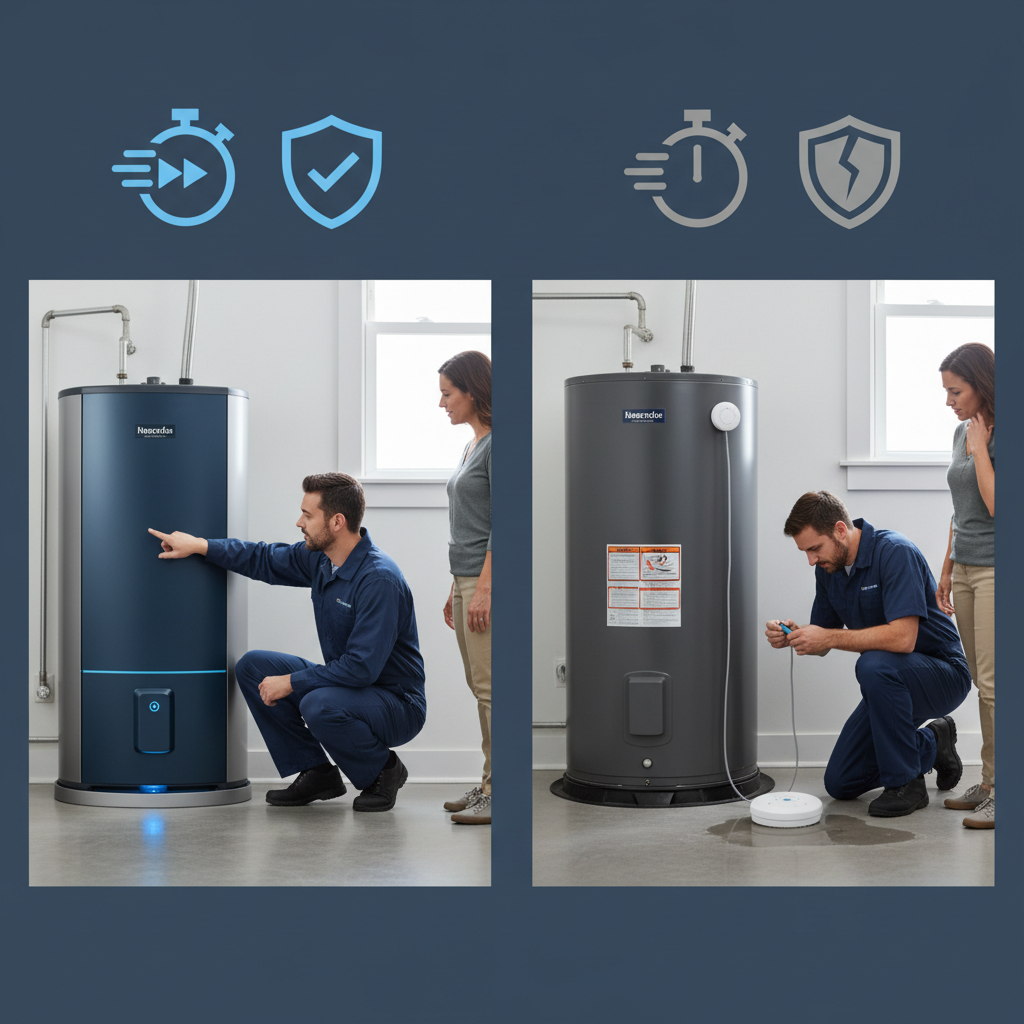
Integrated systems are engineered into the water heater’s brain, allowing for a seamless “detect-and-defend” response that add-ons struggle to match. Because these sensors are hardwired into the unit’s control board, they don’t suffer from the “sleep mode” delays common in battery-powered pucks.
For example, high-end models from brands like Rheem (EcoNet) or Bradford White often include factory-installed automatic shut-off valves. When the internal sensor detects even a teaspoon of water in the base, it triggers a solenoid valve that cuts the cold water intake instantly. This is a massive win for property managers handling multi-unit buildings where a leak on the third floor can ruin three separate apartments.
- Pros: No batteries to change, faster response time, often qualifies for highest insurance credits.
- Cons: If the main control board fails, the leak detection may go dark as well.
- Best for: New installations in high-value areas (attics, second floors, finished closets).
If you’re considering an upgrade, you can check out our guide on heat pump water heater options to see which models include these features natively.
Add-on Leak Detection: Retrofitting for Peace of Mind
You don’t necessarily need to replace a perfectly good 5-year-old water heater just to get smart leak detection. Aftermarket systems like Flo by Moen or Phyn offer incredible ultrasonic leak detection technology that monitors the entire home, not just the water heater.
But wait—there’s a catch. Most DIY add-on sensors are just “listeners.” They beep or send a push notification but can’t stop the water. To get true water heater flood prevention, you must install a motorized ball valve on the intake line. In our experience with mid-market Bay Area clients, these are fantastic for older homes where the plumbing layout is accessible.
Comparing the Two Approaches
| Feature | Integrated System | Add-on Retrofit |
|---|---|---|
| Time to Shut-off | < 5 Seconds | 15-45 Seconds (Cloud Dependent) |
| Installation Cost | Included in Unit Price | $400 – $1,200 + Labor |
| Power Source | Hardwired | Battery or Plug-in |
| Ease of Reset | Digital (App/Panel) | Manual/App |
Need help deciding which hardware fits your current plumbing? Schedule a free consultation with our specialists to evaluate your home’s risk profile.
The ‘Hidden Cost’ Analysis: Maintenance vs. Reliability
The most honest, contrarian insight we can offer is this: the most expensive system is the one you stop maintaining. Integrated sensors are often “set and forget,” but they can be prone to false positives in high-humidity Bay Area basements. If a sensor gets dirty or corroded, it might shut off your hot water while you’re in the shower just because the air is damp.
Conversely, universal “pucks” used in add-on systems are easy to move and clean, but they are notorious for having dead batteries exactly when the tank fails. According to Energy.gov, regular maintenance is the primary way to extend appliance life, and that includes testing your smart leak sensor reliability annually.
Maintenance Checklist for Leak Systems
- Quarterly: Check the app status to ensure the gateway is online.
- Bi-Annually: Wipe down sensors to remove dust or mineral buildup from hard water.
- Annually: Manually trigger the automatic shut-off valve to ensure the motor hasn’t seized.
Insurance Compliance and the 5-Year Outlook
Insurance providers like State Farm and Liberty Mutual are increasingly offering premium discounts or even mandating smart leak detection for homes with water heaters located in “vulnerable” areas. However, not all systems qualify. Most insurers require a system that includes an automatic shut-off valve; a simple Wi-Fi alarm usually isn’t enough to trigger the discount.
As we look toward the 2027 California regulations on gas water heaters, integrated smart leak detection is becoming the industry standard. Manufacturers are moving away from mechanical thermostats toward fully digital interfaces, making built-in protection cheaper and more reliable than ever before. For a deeper look at these upcoming changes, see our post on Bay Area water heater regulations.
The real kicker? In five years, you likely won’t be able to buy a high-efficiency unit without these features. Choosing an integrated system now is simply future-proofing your home against both water damage and upcoming code requirements.
The Verdict: Which Should You Choose?
What most people miss is that the “best” system depends entirely on your home’s architecture. If your water heater is in the garage where a leak just runs out the door, a simple add-on alarm is sufficient. But if your unit is in a second-floor closet or a finished utility room, an integrated integrated leak protection system is non-negotiable.
Ready to protect your home from unexpected flooding? Contact Better Water Heaters today for a pro-grade installation that meets all local Bay Area codes and insurance requirements. Whether you need a water heater repair or a full smart system upgrade, we’ve got you covered.
Frequently Asked Questions
Do smart leak detectors require a monthly subscription?
Most integrated systems from manufacturers do not require a subscription for basic shut-off functionality. However, some third-party add-on brands like Moen or Phyn offer premium tiers for advanced water usage analytics. For basic water heater flood prevention, a one-time hardware purchase is typically all you need.
Will a smart shut-off valve work during a power outage?
It depends on the model. Many integrated systems have a capacitor or small battery backup to close the valve once if power is lost. DIY add-on valves that plug into a wall outlet will not function during a blackout unless they are connected to a UPS (Uninterruptible Power Supply).
Can I install an automatic shut-off valve myself?
While some Wi-Fi sensors are DIY-friendly, installing an automatic shut-off valve requires cutting into your main water line. In the Bay Area, this typically requires a permit and professional installation to ensure it meets seismic strapping and plumbing codes. Professional installation also ensures your insurance company accepts the upgrade for premium discounts.
How do I stop false alarms from my leak sensor?
False positives are usually caused by high humidity or placing the sensor too close to a drain. Ensure your water heater closet is well-ventilated. If using an integrated leak protection system, ensure the base pan is dry and free of dust, which can sometimes bridge the sensor contacts and trigger a false shut-off.