
📋 Table of Contents
- The Microclimate Challenge: Why Location Matters in SF
- Heat Pump vs. Tankless: Recovery Times and Instant Delivery
- Navigating BAAQMD Regulations and the 2027 Gas Ban
- The Fog-Belt Thermodynamics: Does Humidity Hurt?
- Grid Reliability and Winter Storm Outages
- Final Verdict: Which is Best for Your SF Home?
- FAQs
According to the U.S. Department of Energy, water heating is the second largest energy expense in most homes, accounting for roughly 18% of utility bills. In the unique microclimates of San Francisco, choosing between Heat Pump vs. Tankless systems isn’t just about efficiency—it’s about how 50-degree dampness in the Sunset District impacts your morning shower.
The Microclimate Challenge: Why Location Matters in SF
Your neighborhood’s average humidity and temperature play a massive role in how your water heater breathes and performs. Here is the reality: a heat pump installed in a sunny Mission District garage will technically outperform one fighting the heavy moisture of the Richmond or Outer Sunset.
- Fog Belt Humidity: High humidity actually contains more thermal energy, but it can lead to faster frost cycles on heat pump evaporators.
- Ambient Temperature: Heat pumps extract heat from the air; when the “June Gloom” keeps temps at 52°F, the unit works harder than a tankless gas system.
- Corrosion Factors: Coastal salt air in the fog belt requires units with high-quality protective coatings to prevent premature failure.
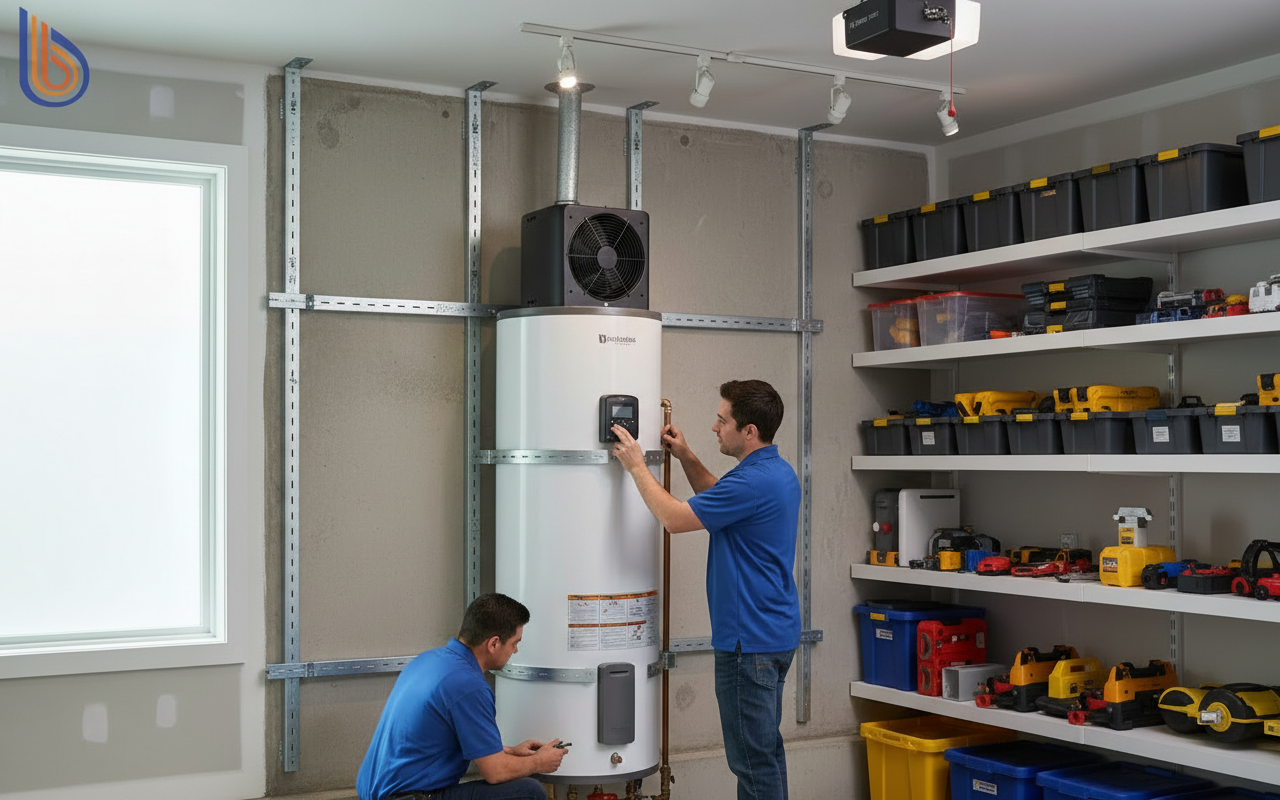
But wait—don’t count the heat pump out just yet. Modern Energy Star 5.0 heat pump ratings show these units are increasingly resilient in cooler, damp climates. In our work with established homeowners in the Sea Cliff area, we’ve seen that properly sized hybrid systems can still maintain high efficiency despite the mist.
Heat Pump vs. Tankless: Recovery Times and Instant Delivery
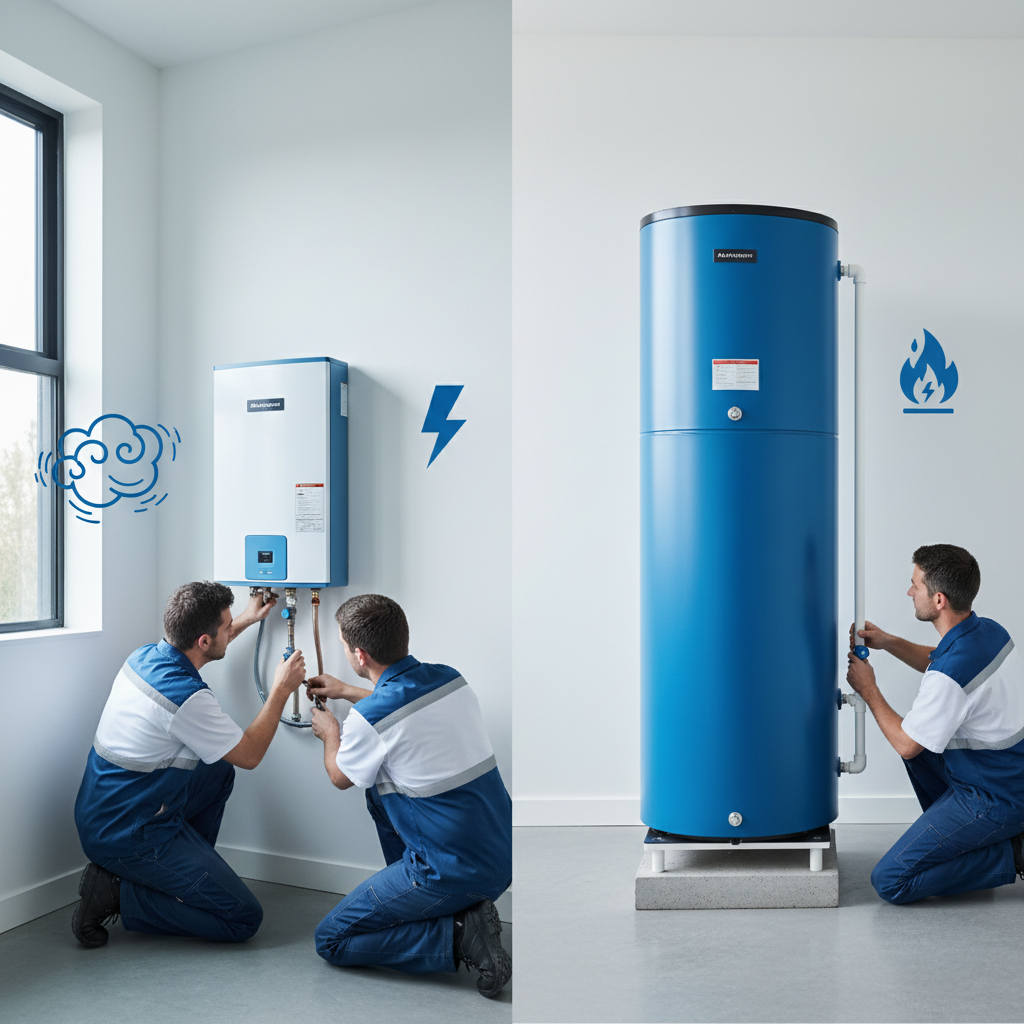
The real kicker is the difference between “endless” and “efficient” when the fog rolls in. Tankless systems provide hot water on demand by firing high-BTU gas burners, while heat pumps rely on a storage tank and a slower heat exchange process.
What most people miss is that high humidity in the fog belt can actually help heat pump efficiency in some scenarios because moist air carries more heat than dry air. However, the recovery time—the time it takes to reheat the tank after a long shower—is significantly longer for a heat pump than the instant recovery of a tankless unit.
| Feature | Tankless Gas | Heat Pump (Hybrid) |
|---|---|---|
| Hot Water Delivery | Instant / Endless | Stored / Limited by Tank |
| Fog Belt Performance | Unaffected by ambient air | Varies by humidity/temp |
| Energy Source | Natural Gas | Electricity |
| Expected Lifespan | 20+ Years | 10-15 Years |
For a typical Bay Area mid-market client with a family of four, a tankless system often wins on pure convenience. But for those looking to future-proof against upcoming BAAQMD water heater regulations, the heat pump is the strategic choice.
Space-Saving Wars in SF Victorians
San Francisco homes are notorious for cramped basements and utility closets. A tankless unit is roughly the size of a suitcase and mounts on the wall, freeing up floor space. Conversely, a heat pump requires a larger footprint and at least 700-1,000 cubic feet of air space to operate efficiently without chilling the room too much.
Need help deciding which fits your space? Schedule a free site assessment with our specialist team today.
Navigating BAAQMD Regulations and the 2027 Gas Ban
The Bay Area Air Quality Management District (BAAQMD) has set a clear timeline: starting in 2027, the sale and installation of traditional gas water heaters will be phased out. This makes the Heat Pump vs. Tankless debate even more critical for current homeowners.
Here’s the thing: while tankless gas units are incredibly efficient, they are still gas-powered. If you install one today, you are likely set for 20 years, but you may face higher carbon taxes or limited repair parts toward the end of its life. Transitioning to a heat pump now allows you to take advantage of massive SF electrification rebates.
- TECH Clean California: Offers thousands in incentives for switching from gas to heat pump.
- HEEHRA Rebates: Federal point-of-sale discounts for low-to-moderate income households.
- BayREN: Local Bay Area incentives that can be layered with federal tax credits.
As of 2024, the total available incentives can exceed $4,000, significantly offsetting the higher upfront cost of heat pump technology. We use our internal rebate tracking to ensure our clients never leave money on the table.
The Fog-Belt Thermodynamics: Does Humidity Hurt?
One honest, contrarian insight we’ve noticed: homeowners in the Sunset often worry that the damp air will “clog” their heat pump. In reality, heat pump efficiency in humidity is often higher than in bone-dry climates like Phoenix. The latent heat in San Francisco’s moist air provides plenty of energy for the refrigerant to absorb.
The real enemy isn’t the humidity; it’s the hybrid water heater coastal corrosion. Salt-laden fog can degrade the aluminum fins on the heat pump’s evaporator coil. If you live within a mile of Ocean Beach, choosing a unit with an epoxy-coated coil or a “coastal-rated” exterior is non-negotiable for longevity.
In our work with property managers in the Richmond district, we emphasize annual maintenance to rinse away salt deposits. This small step can add 5 years to the life of the appliance.
Grid Reliability and Winter Storm Outages
San Francisco winters bring more than just fog; they bring wind storms that can knock out power. A tankless gas water heater still requires a small amount of electricity to trigger the igniter and control board. Without a battery backup, neither a heat pump nor a tankless unit will provide hot water during a blackout.
- Tankless: Can be easily powered by a small portable power station (like a Jackery or EcoFlow).
- Heat Pump: Requires a significant amount of power to run the compressor, usually necessitating a home battery system like a Tesla Powerwall.
- Hybrid Advantage: Some heat pumps have a “standard electric” mode, though this is even more power-hungry.
For homeowners concerned about grid stability, the tankless system is much easier to keep running on a budget-friendly backup power source. To stay ahead of these technical shifts, we occasionally use ingest.blog, our internal AI content engine, to monitor the latest energy grid updates and policy changes.
Final Verdict: Which is Best for Your SF Home?
The Heat Pump vs. Tankless decision comes down to your priorities. If you have a large family and limited space in a Sunset District Victorian, the tankless gas unit offers unparalleled performance today. However, if you are looking to maximize ROI and comply with BAAQMD water heater regulations, the heat pump is the future-proof winner.
Take Action This Week: Check your current water heater’s manufacture date. If it’s older than 10 years, you are on borrowed time. Mapping out your electrical panel capacity now will save you from an emergency decision when the tank eventually leaks.
Ready to upgrade your home’s performance? Contact Better Water Heaters for an expert consultation tailored to your specific SF microclimate.
Frequently Asked Questions
How does San Francisco fog affect heat pump recovery time?
While high humidity provides more latent heat for the system to extract, the consistently cool temperatures in the fog belt (50-55°F) mean the heat pump operates in its less efficient range more often than in warmer climates. This results in a slightly slower recovery time compared to installations in the East Bay or South Bay.
Are tankless water heaters still legal in San Francisco?
Yes, tankless gas water heaters are currently legal and widely installed. However, the BAAQMD has passed regulations that will phase out the sale of natural gas water heaters starting in 2027. Installing a tankless unit now is a viable 20-year solution, but you won’t be able to replace it with another gas unit after the deadline.
What are the electrical requirements for switching to a heat pump?
Most heat pumps require a dedicated 240V circuit, which may necessitate an electrical panel upgrade if your current panel is full or rated under 100 amps. This is a common hurdle in older San Francisco homes and should be factored into your total installation cost and rebate calculations.
Do I need a permit for a water heater replacement in SF?
Yes, San Francisco plumbing permits are required for all water heater replacements. This ensures the unit is properly vented (for gas) or wired (for electric) and meets California’s strict seismic strapping codes to prevent tipping during an earthquake.