
📋 Table of Contents
According to the National Trust for Historic Preservation, older homes are often more inherently sustainable than new builds, yet 100-year-old structures present unique technical hurdles during modern electrification. When you’re managing a historic home water heater upgrade in neighborhoods like San Francisco’s Pacific Heights or Oakland’s Rockridge, the challenge isn’t just the unit—it’s the century-old skeleton supporting it.
Key Takeaways for Bay Area Homeowners
- Structural Integrity: Modern 80-gallon heat pump tanks weigh significantly more than vintage units, often requiring floor joist reinforcement.
- Venting Compliance: Switching to high-efficiency gas requires navigating strict chimney venting requirements in historic districts.
- Electrical Readiness: Most Victorian-era panels need a 240V circuit upgrade to support modern hybrid technology.
- Rebate Savings: Bay Area residents can access up to $4,900 in incentives through BayREN and federal credits.
Stage 1: The Infrastructure and Structural Load Audit
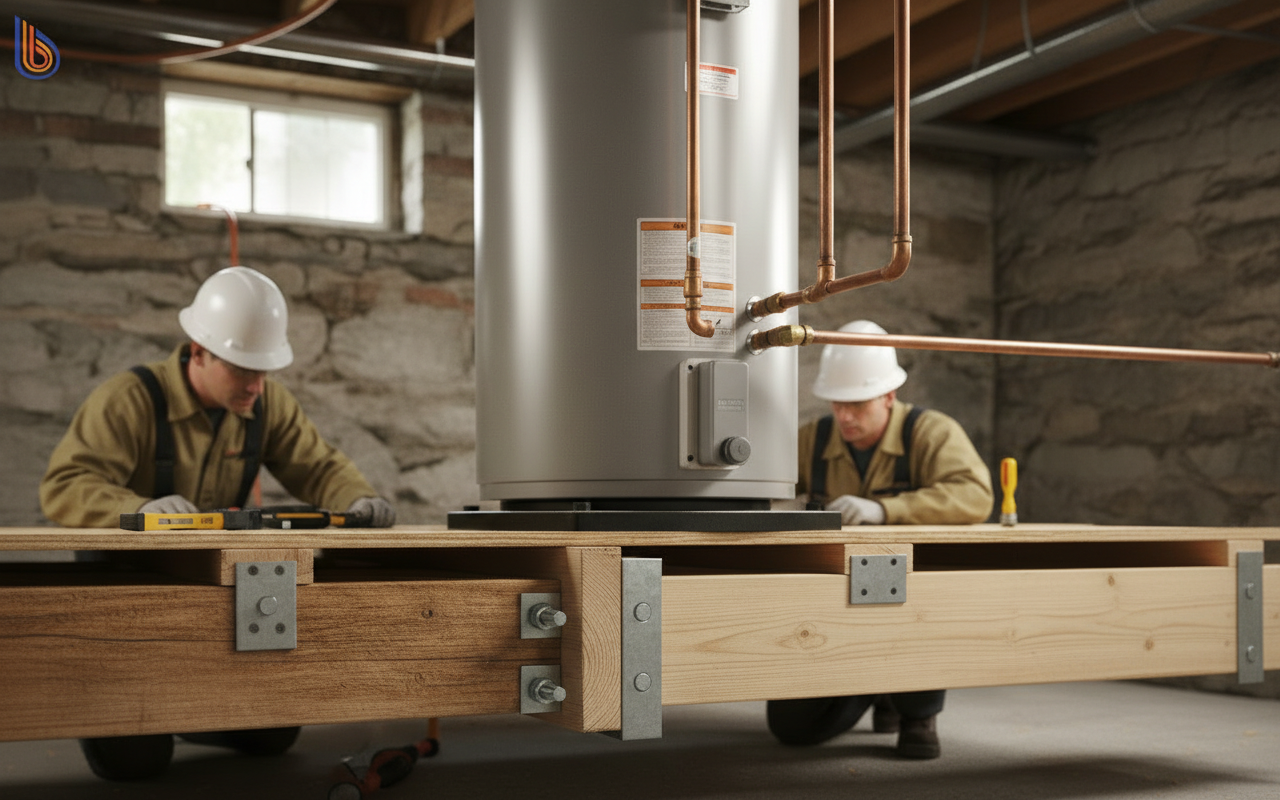
The real kicker is that a full 80-gallon hybrid water heater can weigh over 1,000 pounds when filled, which is far more than the original 1920s architecture was designed to hold in a concentrated square footage. Before you even select a model, you must determine if your basement or utility closet can handle the physical burden.
In our work with established homeowners in San Francisco, we frequently see original redwood mudsills and joists that have softened over a century of moisture exposure. If you are moving from a compact 30-gallon tank to a high-capacity heat pump system, floor joist reinforcement is not optional; it is a safety requirement. We recommend a structural assessment to ensure the dead load of the new system won’t cause floor deflection or structural cracking in the rooms above.
- Check for Dry Rot: Inspect the installation site for any signs of fungal decay or termite damage in the subflooring.
- Verify Joist Spacing: Standard 16-inch or 24-inch on-center spacing may require sistering (doubling up) joists for heavy tanks.
- Leveling the Surface: Historic basements often have sloped concrete or dirt floors that require a new, level seismic pad.
But wait—don’t forget the electrical side. Most historic home water heater installations were originally powered by small gas lines. Transitioning to a heat pump model typically requires a dedicated 30-amp, 240-volt circuit. If your home still runs on a 100-amp Federal Pacific or Zinsco panel, you are looking at a mandatory panel upgrade before the water heater can even be plugged in.
Stage 2: Navigating Chimney Venting and Title 24 Compliance
What most people miss is that high-efficiency condensing water heaters create acidic condensate and cooler exhaust, which can literally dissolve the mortar in an unlined historic brick chimney. If you are sticking with gas but upgrading to a high-output system, you must address chimney venting requirements to prevent carbon monoxide backdrafting and structural damage.
California’s Title 24 energy compliance standards are particularly strict for Bay Area renovations. For homes in historic districts, you cannot simply punch a PVC vent through a Victorian facade. You often have to route vents through existing chimney stacks using specialized UL-listed stainless steel liners. This preserves the exterior aesthetic while meeting modern safety codes.
| Venting Type | Historic Home Compatibility | Estimated Cost Impact |
|---|---|---|
| Atmospheric Vent | Original to most old homes; low efficiency. | $0 (Existing) |
| Power Vent | Requires new wall penetration; check HOA/Preservation rules. | $500 – $1,200 |
| Chimney Liner | Best for preservation; protects historic masonry. | $800 – $2,500 |
Here’s an honest, contrarian insight: Many contractors will tell you to just go tankless to save space in a narrow basement. However, in many 100-year-old San Francisco homes, the gas service line entering the house is only 1/2-inch wide. A tankless unit requires a 3/4-inch or 1-inch line. Replacing that line all the way to the street can cost more than the water heater itself. Sometimes, a high-efficiency tank is actually the smarter financial move.
Need a professional eye on your venting? Schedule a site inspection with our experts to avoid costly permitting delays.
Stage 3: Seismic Readiness and Preservation Standards
In the Bay Area, seismic safety is the non-negotiable price of admission for any renovation. For a historic home water heater, this is complicated by the fact that many older utility closets are narrow, tall, and lack the structural backing needed for standard seismic strapping for water heaters.
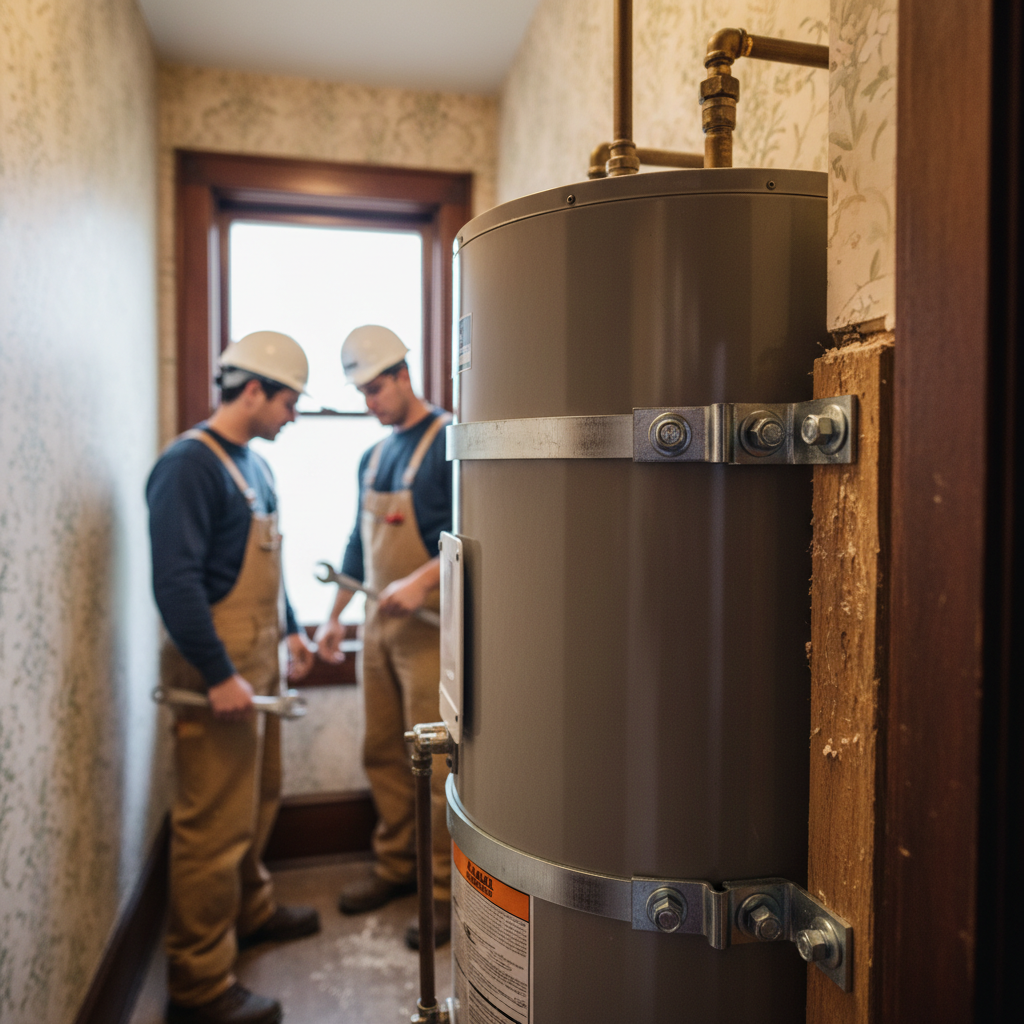
California plumbing code requires two straps—one in the upper third and one in the lower third of the tank—anchored into solid blocking. In a typical Victorian-era home, you might find lath and plaster walls with irregular stud spacing. You cannot simply screw a strap into plaster; you must open the wall and install solid 2×4 or 2×6 blocking to ensure the tank doesn’t become a 1,000-pound wrecking ball during an earthquake.
- Identify Load-Bearing Studs: Use a deep-scan stud finder to locate the original Douglas Fir framing.
- Install Structural Blocking: Add horizontal bracing between studs to provide a secure anchor point for straps.
- Clearance Requirements: Ensure the unit maintains the 2-inch to 6-inch clearance from combustibles required by modern fire codes.
The real kicker? If your home is on a local historic register, even internal changes like moving a water heater to a different room might require a Certificate of Appropriateness. Always check with the San Francisco Planning Department or the Oakland Cultural Heritage Survey before altering the footprint of your mechanical systems.
Ready to modernize without the headache? Explore our guide to Bay Area rebates to see how much you can save on your historic retrofit.
Common Pitfalls in Older Plumbing Systems
Beyond the heater itself, the “Old Pipe” risk is real. Before installing a high-pressure modern system, we recommend a pressure test on your existing galvanized pipes. Older pipes often have internal scale buildup; the increased flow from a new historic home water heater can sometimes dislodge this sediment, leading to clogs in your high-end bathroom fixtures. We use tools like our internal AI content engine to track these common failure patterns across thousands of local installs to better advise our clients.
FAQs: Historic Home Water Heater Upgrades
Can I install a heat pump water heater in a small San Francisco basement?
Yes, but you must account for air volume. Heat pump water heaters require approximately 1,000 cubic feet of air to operate efficiently. In cramped historic basements, we often install louvered doors or duct the intake and exhaust to ensure the unit doesn’t “freeze” the room and lose efficiency.
Is floor joist reinforcement always necessary for 80-gallon tanks?
Not always, but it is highly recommended for homes built before 1940. A full 80-gallon tank weighs roughly 1,000 lbs. If your joists show any signs of sagging, moisture damage, or are spaced wider than 16 inches, reinforcing the floor ensures long-term structural safety and prevents ceiling cracks below.
What are the specific chimney venting requirements for historic districts?
In most Bay Area historic districts, exterior wall penetrations for vents are restricted. You generally must use the existing chimney stack with a stainless steel liner. This prevents the corrosive exhaust of modern high-efficiency units from damaging the historic masonry and mortar of your chimney.
Are there special rebates for historic home energy upgrades?
While there aren’t “historic-only” rebates, older homes benefit most from programs like BayREN and the TECH Clean California initiative. Because these homes are often transitioning from inefficient old gas models to heat pumps, they qualify for the maximum rebate tiers, often totaling over $4,000 in savings.
Modernizing a historic home doesn’t have to mean compromising its soul. By addressing floor joist reinforcement, chimney venting requirements, and seismic safety early, you can enjoy 21st-century efficiency in your 19th-century masterpiece. Don’t leave your home’s safety to chance—work with specialists who understand the unique quirks of Bay Area architecture.
Don’t wait for a leak to compromise your historic floorboards. Contact Better Water Heaters today for a comprehensive structural and technical audit of your home’s hot water system.