
📋 Table of Contents
According to the U.S. Department of Energy, water heating is the second largest energy expense in most homes, accounting for roughly 18% of your total utility bill. For homeowners in San Jose or San Francisco, where Bay Area utility rates frequently track 80% higher than the national average, the “cheap” $1,500 tank installation often becomes a $10,000 liability over its decade-long life.
Understanding water heater lifecycle costs requires moving past the contractor’s quote and looking at the long-game financial impact. Most homeowners treat a water heater failure as an emergency purchase, which leads to reactive spending and missed rebate opportunities. By applying a strategic framework, you can shift from a victim of appliance failure to a savvy asset manager of your home infrastructure.
Key Takeaways for Bay Area Homeowners
- Operational Alpha: High-efficiency units can save over $500 annually in PG&E costs.
- Rebate Maxing: Local programs like TECH Clean California offer up to $4,900 in incentives.
- Depreciation Hedge: Quality tankless systems last 2x longer than traditional tanks.
- Future-Proofing: 2027 regulations will make gas-to-electric transitions mandatory for many.
Quadrant 1: Capital Expenditure (The Upfront Reality)
The first quadrant covers the immediate check you write, but the real kicker is that labor and permitting now often exceed the cost of the unit itself. In the Bay Area, specialized labor rates have risen significantly, meaning the complexity of your installation (like moving a unit from a closet to a garage) can swing your Total Cost of Ownership (TCO) by thousands.
What most people miss is that the Inflation Reduction Act (IRA) has fundamentally changed the math on capital expenditure. While a Heat Pump Water Heater (HPWH) has a higher sticker price, the combination of federal tax credits and local rebates can bring the net cost below that of a standard gas tank. We often see a typical Bay Area mid-market client qualify for enough incentives to offset 60-80% of the premium for high-efficiency tech.
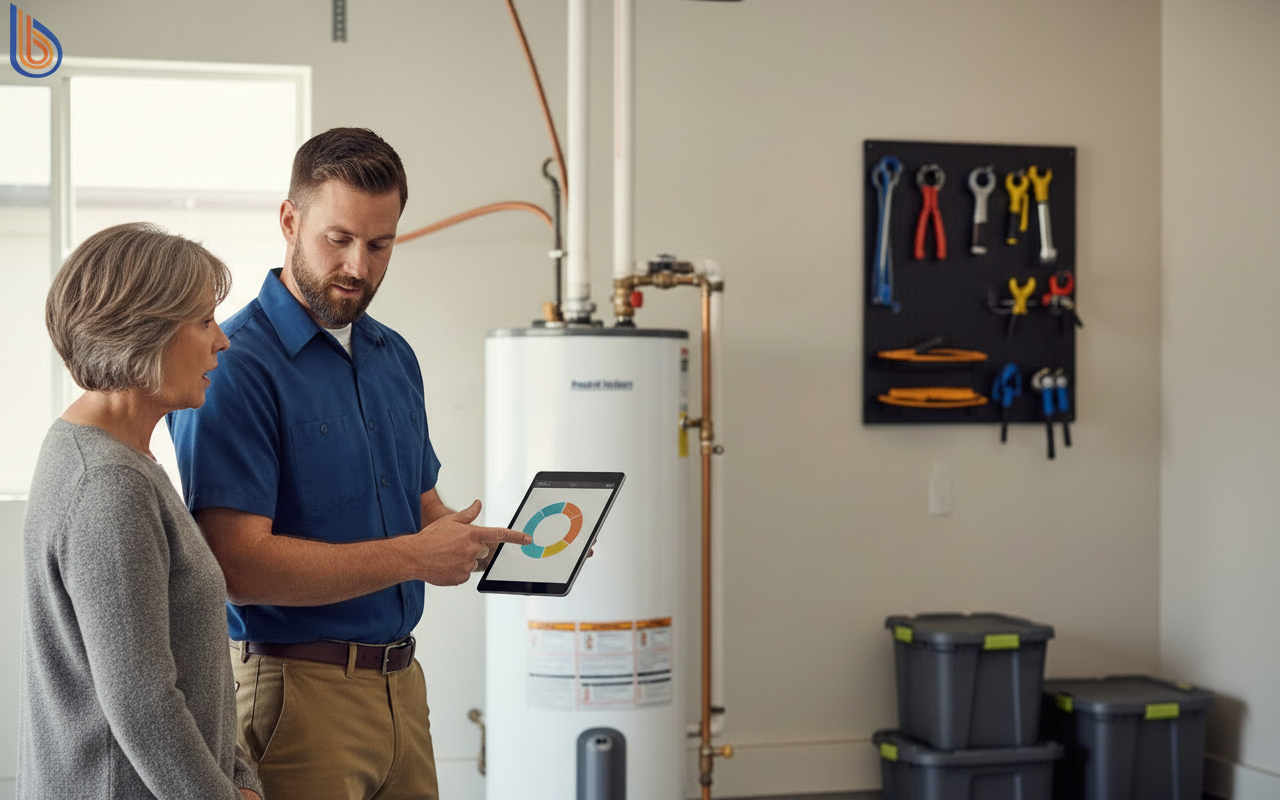
- Permitting Costs: Bay Area cities require strict seismic strapping and Title 24 compliance.
- Infrastructure Upgrades: Transitioning to electric may require a sub-panel or 240V circuit.
- Disposal Fees: Professional removal of old units is a small but fixed cost.
Quadrant 2: Operational Expenditure (Utility Rate Volatility)
Operational costs are where the “sticker price trap” snaps shut, especially as natural gas prices remain volatile compared to the steady efficiency of electric heat pumps. When evaluating water heater lifecycle costs, you must factor in the Uniform Energy Factor (UEF) rating, which measures how much energy actually goes into heating your water versus being wasted.
Here’s the thing: A standard gas water heater might have a UEF of 0.60, while a modern Heat Pump model can hit 3.50 or higher. This means for every unit of energy you pay for, the heat pump delivers 3.5 units of heat by moving energy from the air rather than creating it. In a high-cost environment like San Mateo or Palo Alto, this efficiency is your only real defense against rising Bay Area utility rates.
| System Type | Avg. Install Cost | Annual Energy Cost (Local) | Expected Lifespan |
|---|---|---|---|
| Standard Gas Tank | $2,200 – $3,200 | $450 – $650 | 10-12 Years |
| Tankless (Gas) | $4,500 – $6,500 | $300 – $450 | 20+ Years |
| Heat Pump (Hybrid) | $5,000 – $8,000 | $150 – $250 | 13-15 Years |
Need help navigating these numbers? Schedule a free consultation with our specialists to see which quadrant your current system falls into.
Quadrant 3: Maintenance and Reliability (The Hidden Tax)
Maintenance is the most ignored variable in appliance depreciation, yet it dictates whether your system lasts 8 years or 18. Many homeowners view maintenance as an optional expense, but in the Bay Area, our water hardness levels can lead to rapid scale buildup in tankless heat exchangers.
The real insight? The cost of specialized labor for a single emergency Sunday repair in Redwood City can equal three years of preventative maintenance. We recommend a strict anode rod maintenance schedule for tanks and annual descaling for tankless units. If you ignore these, you aren’t just risking a cold shower; you are accelerating the depreciation of a $5,000 asset.
- Tankless Descaling: Essential for maintaining the high-efficiency heat exchange.
- Thermal Expansion Tanks: Now a code requirement that prevents pressure damage to your plumbing.
- Smart Monitoring: Systems like EcoNet can alert you to leaks before they destroy your flooring.
Quadrant 4: Residual Value and Opportunity Cost
The final quadrant looks at the end-of-life scenario and how your water heater impacts your home’s resale value. In a competitive real estate market like Sunnyvale or Mountain View, savvy buyers and inspectors look for “future-proofed” homes. An aging gas heater is a red flag; a high-efficiency HPWH is a selling point that signals the home is ready for 2027 decarbonization mandates.
But wait—there is also the “Opportunity Cost” of space. In many Bay Area condos or smaller homes, switching to a tankless unit recovers 9-12 square feet of floor space. At current San Francisco price-per-square-foot levels, that “closet” you just gained is technically worth thousands of dollars in usable real estate. That is a factor you won’t find on a standard spec sheet.
What most people miss: The Levelized cost of hot water—the total cost divided by the gallons produced—is always lowest on systems with the longest lifespans. Investing in a 20-year tankless system prevents the “double-install” cost of replacing two 10-year tanks over the same period.
The Repair vs. Replace Decision Matrix
When does it make financial sense to stop repairing and start replacing? As a general rule, we use the “50% Rule”: if a repair costs 50% of the price of a new unit, or if the unit is past 75% of its expected lifespan, replacement is the mathematically superior choice. This prevents you from throwing “good money after bad” on an asset that is already deep into its appliance depreciation curve.
For our clients managing multiple properties or those who are simply time-poor, we often suggest proactive replacement at year 10. The peace of mind knowing you won’t deal with a 2:00 AM flood is a non-monetary ROI that high-net-worth homeowners value more than the final $500 of utility savings.
Ready to upgrade to a system that actually pays you back? Explore our Heat Pump options and see how much you can save on your monthly bill.
Conclusion: Your Monday Morning Action Plan
Don’t wait for a leak to start your evaluation. This week, take five minutes to locate your water heater’s manufacture date (usually on the rating plate) and check your last PG&E bill. If your unit is over 8 years old and your gas therms are spiking, you are likely in the “High Risk, High Cost” quadrant. Use our water heater specialists to map out a replacement plan before the 2027 regulations limit your choices and local rebates expire.
Frequently Asked Questions
How do Bay Area utility rates affect my choice?
Because local electricity and gas rates are significantly higher than the national average, the “payback period” for high-efficiency units is much shorter here. A heat pump that might take 10 years to pay for itself in the Midwest often reaches the break-even point in just 3-5 years in the Bay Area due to massive energy savings.
Are Inflation Reduction Act rebates actually available now?
Yes, as of 2024-2025, federal tax credits (25C) offer up to $2,000 for heat pump water heaters. When combined with local Bay Area incentives like those from BayREN or TECH Clean California, many homeowners see thousands of dollars in direct cost reductions, making high-efficiency the logical financial choice.
What is the typical lifespan of a tankless water heater?
A high-quality tankless unit from brands like Rinnai or Navien typically lasts 20-25 years with proper maintenance. This is double the lifespan of a traditional tank, which usually fails between 10-12 years due to internal corrosion. This longevity is a core component of reducing your long-term water heater lifecycle costs.
Do I really need to descale my water heater?
If you live in an area with hard water, such as parts of the East Bay or South Bay, descaling is mandatory. Mineral buildup acts as an insulator, forcing your heater to work harder and eventually causing the heat exchanger to crack. Annual maintenance preserves your warranty and ensures the unit operates at its rated efficiency.