
📋 Table of Contents
According to the 2024 State of the Water Heater Industry report, nearly 85% of residential water heater replacements occur as an emergency after a catastrophic failure. For a Bay Area property owner, this reactive approach isn’t just a headache—it’s a direct hit to your water heater ROI for landlords that can cost thousands in lost rebates and premium labor fees.
Key Takeaways:
- Emergency replacements often cost 30-40% more due to after-hours labor and expedited permits.
- Planned transitions to heat pump technology unlock up to $4,900 in TECH Clean California and federal incentives.
- Proactive replacement mitigates the risk of tenant rent withholding and water damage insurance claims.
- New BAAQMD regulations are phasing out gas units, making planned electric upgrades a necessity, not an option.
The Real Cost of the ‘Friday Night Leak’
Waiting for a unit to burst before replacing it is the single most expensive way to manage a rental property’s plumbing infrastructure. When a tank fails at 11:00 PM on a weekend, your rental property water heater strategy shifts from ROI optimization to pure damage control.
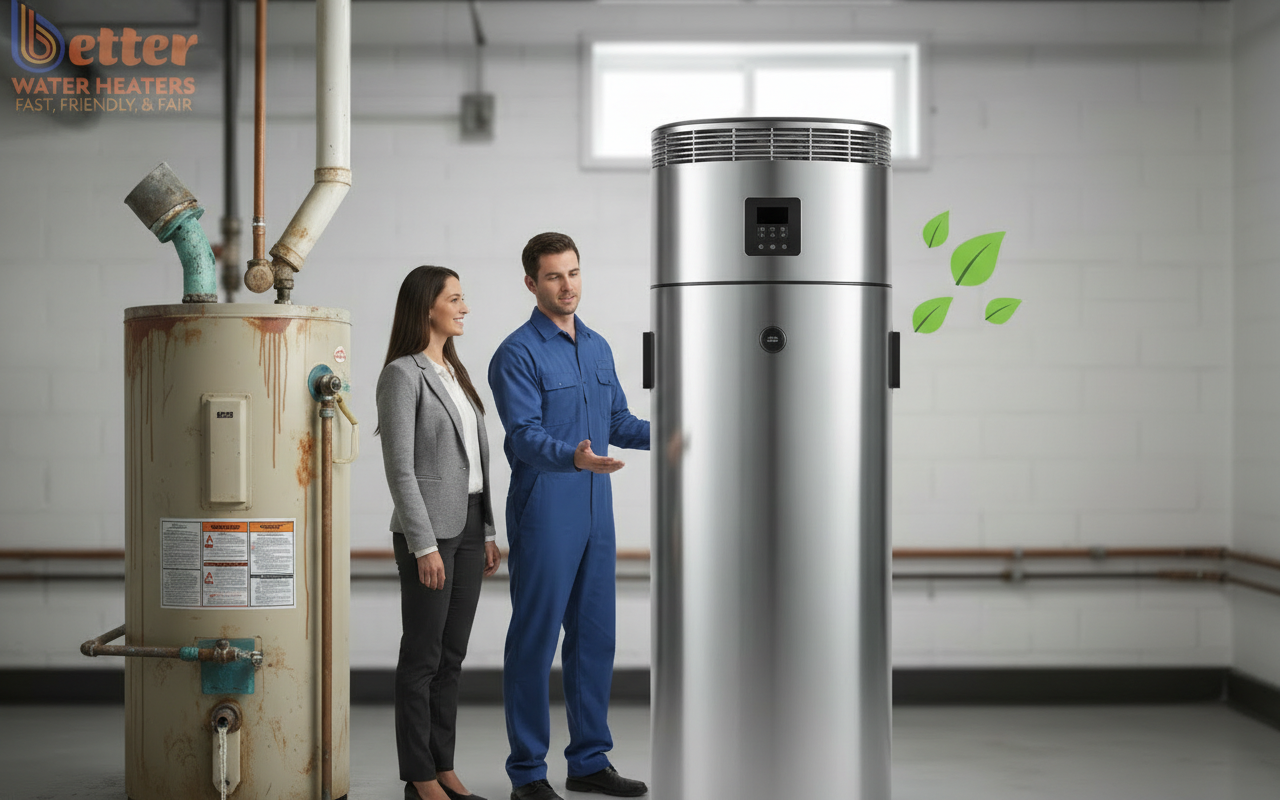
Here’s the thing: emergency plumbing costs vs planned installations are never an apples-to-apples comparison. In a typical Bay Area mid-market rental scenario, an emergency tech has to prioritize speed over efficiency, often installing whatever is currently on the truck rather than the most cost-effective long-term solution.
The financial impact of an emergency includes:
- Premium Labor Rates: Weekend and holiday service calls in cities like San Jose or San Francisco frequently carry a 50% to 100% markup.
- Expedited Permit Fees: Many Bay Area municipalities charge extra for “walk-in” or emergency permit processing to ensure compliance with California seismic strapping codes.
- Missed Rebates: Programs like TECH Clean California often require pre-approval or specific equipment that isn’t always available for same-day emergency installs.
Comparing the Numbers: Emergency vs. Planned
The best way to visualize the hit to your bottom line is to look at the hard data comparing a reactive gas replacement to a planned heat pump upgrade. While the upfront cost of a heat pump is higher, the net cost after incentives is often lower than an emergency gas repair.
| Expense Factor | Emergency (Gas) | Planned (Heat Pump) |
|---|---|---|
| Unit & Installation | $2,800 – $3,500 | $5,000 – $7,500 |
| Emergency Labor Premium | $500 – $900 | $0 |
| Available Rebates (Avg) | $0 | ($3,100 – $4,900) |
| Net Landlord Cost | $3,300 – $4,400 | $1,900 – $2,600 |
But wait—those numbers don’t even account for the 2024 federal tax credits under the Inflation Reduction Act, which can provide an additional 30% credit (up to $2,000) for high-efficiency heat pump installs. If you’re managing multiple units, the water heater ROI for landlords becomes undeniable when you scale these savings across a portfolio.
Tenant Retention and Legal Requirements
In California, providing hot water is a fundamental requirement of the “implied warranty of habitability.” If a water heater fails and isn’t repaired within a reasonable timeframe (usually 24-48 hours), tenants may have the legal right to withhold rent or use “repair and deduct” remedies.
The real kicker? In a high-rent market like the Peninsula or South Bay, a disgruntled tenant who loses hot water for three days is a high churn risk. Replacing a tenant costs significantly more in vacancy loss and turnover repairs than the cost of a proactive water heater upgrade. We often see this in our work with Silicon Valley property managers where tenant satisfaction is directly tied to appliance reliability.
Consider these legal and operational risks:
- Rent Abatement: You may owe the tenant a pro-rated refund for every day they are without hot water.
- Insurance Premiums: A single major leak can lead to a water damage claim that spikes your property insurance for years.
- Compliance Deadlines: The BAAQMD (Bay Area Air Quality Management District) has set a 2027 deadline to phase out NOx-emitting gas water heaters.
Need to stabilize your rental portfolio? Schedule a free multi-unit assessment with our experts to map out your transition before the next emergency hits.
The Regulatory Clock: BAAQMD and SB 1237
What most people miss is that the choice to stay with gas is rapidly disappearing. California’s push toward decarbonization means that an emergency replacement in 2026 might legally require an electric transition anyway—but without the benefit of a planned electrical panel upgrade if one is needed.

By planning your rental property water heater strategy now, you can coordinate with an electrician to ensure your panel is ready for the increased load of a heat pump. In an emergency, you don’t have that luxury. You might find yourself unable to install a new gas unit due to local bans, yet unable to install electric because your panel is maxed out—leaving your tenants in the cold for over a week while you scramble for an electrical permit.
The Contrarian View: Why ‘If It Ain’t Broke’ is a Financial Trap
Conventional wisdom says to run appliances until they die. In the world of Bay Area real estate, that is a high-stakes gamble with bad odds. Modern tanks are designed to last 10-12 years; if yours is 15 years old, you aren’t “saving money,” you are carrying an unhedged liability.
Think of it like this: You are essentially paying a “delay tax” in the form of higher utility bills (for your tenants) and missed capital improvement incentives. Transitioning to a heat pump today allows you to market your property as “green” and “energy-efficient,” which is a major draw for the modern Bay Area workforce. According to Rewiring America, heat pumps are 3-4 times more efficient than traditional electric or gas units.
Maximizing Your ROI This Week
To truly optimize your water heater ROI for landlords, you need to move from reactive maintenance to strategic asset management. This doesn’t mean replacing every unit tomorrow, but it does mean having a plan.
- Audit Your Ages: Check the manufacture date on every unit in your portfolio. If it’s over 10 years old, it’s in the “red zone.”
- Install Smart Leak Detectors: For less than $100, these devices can alert your phone the second a drip starts, turning a potential emergency into a scheduled Monday morning service call.
- Pre-Qualify for Rebates: Check the available Bay Area water heater rebates 2024 list to see which properties qualify for the highest incentives.
At Better Water Heaters, we specialize in helping landlords navigate the transition from aging gas infrastructure to future-ready heat pump systems. We handle the permits, the rebate paperwork, and the tenant coordination so you can focus on your bottom line.
Ready to stop playing ‘Water Heater Roulette’? Contact us today for a professional evaluation of your property’s hot water systems. We’ll help you build a replacement schedule that maximizes your tax credits and eliminates the 2:00 AM emergency call.
Frequently Asked Questions
How much more does an emergency water heater replacement cost in San Francisco?
On average, emergency replacements in the San Francisco area cost between $500 and $1,200 more than planned installations. This premium covers after-hours labor, same-day delivery fees, and expedited permit processing necessitated by the urgent need to restore hot water for tenants and satisfy habitability laws.
What are the current landlord legal requirements for hot water in California?
California Civil Code Section 1941.1 requires landlords to provide “hot and cold running water furnished to appropriate fixtures.” Hot water must be maintained at a minimum temperature (typically 120°F) and must be available at all times. Failure to provide this can lead to legal claims and rent withholding.
Can I still get rebates if my water heater has already failed?
It is difficult. Most Bay Area water heater rebates, like TECH Clean California, require the contractor to be enrolled in the program and often involve a verification process that is hard to complete during a same-day emergency. Planning your replacement ensures you meet all criteria for the maximum $4,900+ in incentives.
What is the typical lifespan of a commercial-grade water heater in Oakland?
In the Bay Area, due to varying water hardness, a commercial or high-capacity residential tank typically lasts 8 to 12 years. Units in Oakland and the East Bay may experience faster sediment buildup. Regular flushing can extend this, but once a tank hits year 10, the risk of sudden failure increases significantly.