
📋 Table of Contents
Owning a 1920s bungalow in neighborhoods like Rockridge or Willow Glen is a lesson in architectural character, but it often comes with a hidden “mechanical conflict” when attempting modern upgrades. According to the U.S. Department of Energy, historic homes can be up to 30% less energy-efficient than modern builds, yet forcing high-tech appliances into century-old infrastructure without a mechanical compatibility audit can lead to catastrophic system failures.
Key Takeaways:
- Identify if your 1920s electrical panel can handle the 30-amp requirement of modern heat pumps.
- Understand the “Chimney Orphan” risk when abandoning masonry flues.
- Evaluate structural load-bearing capacity for high-capacity modern tanks.
- Assess galvanized pipe compatibility with high-efficiency flow rates.
1. The Electrical Load & Panel Capacity Framework
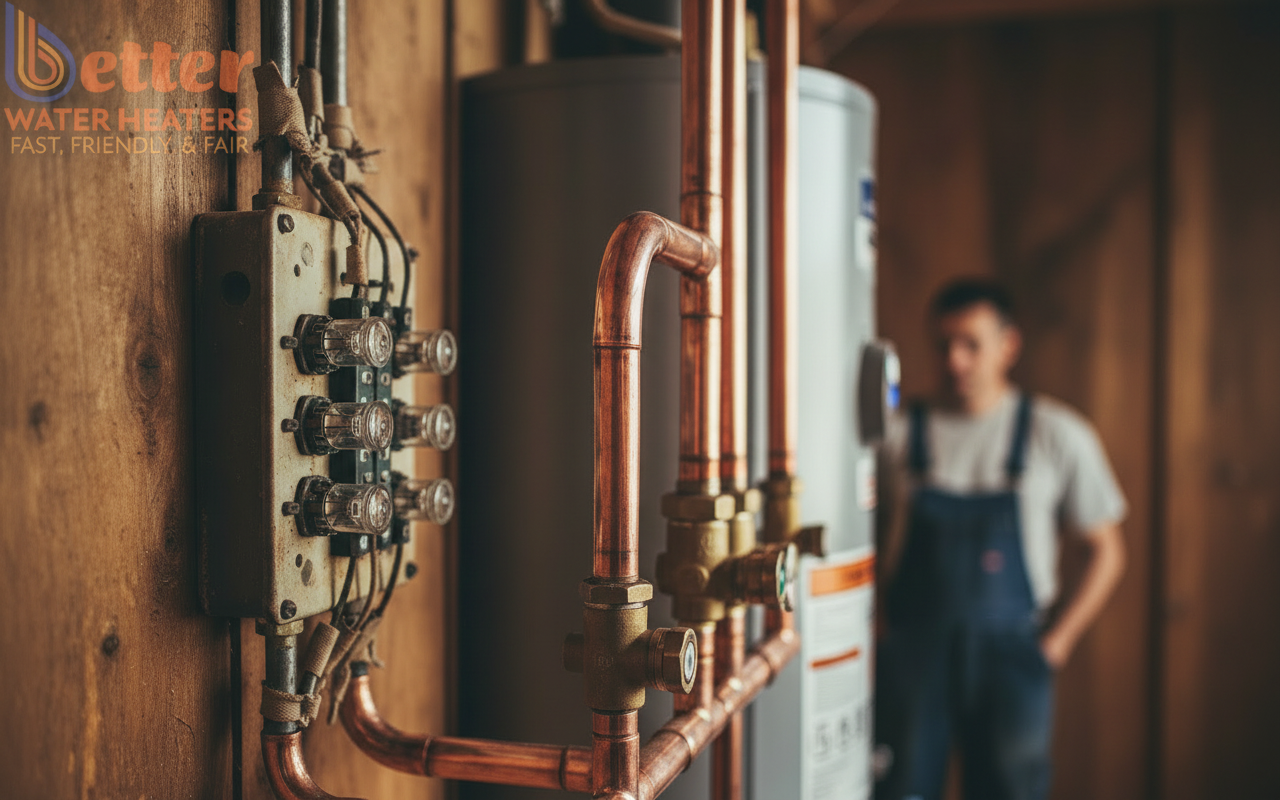
The real kicker for most bungalow owners is that a 1920s electrical system was designed for a few lightbulbs and a radio, not a 240V heat pump water heater. Before you commit to a bungalow water heater upgrade, you must determine if your existing service can absorb the additional amperage without triggering a mandatory (and expensive) main panel upgrade.
In our work with established Bay Area homeowners, we frequently find that “knob and tube” remnants or 100-amp Federal Pacific panels create immediate roadblocks. A mechanical compatibility audit starts with the panel because if the “fuel source” isn’t stable, the appliance won’t perform. Here is what we look for:
- Remaining Circuit Capacity: Does the panel have physical space for a double-pole breaker?
- Service Entrance Rating: Is your home receiving 100, 125, or 200 amps from the utility?
- Safety Hazards: Presence of ungrounded circuits or recalled panel brands.
If you’re unsure about your current capacity, schedule a professional electrical assessment to avoid mid-installation surprises.
2. Venting Integrity and the ‘Chimney Orphan’ Problem
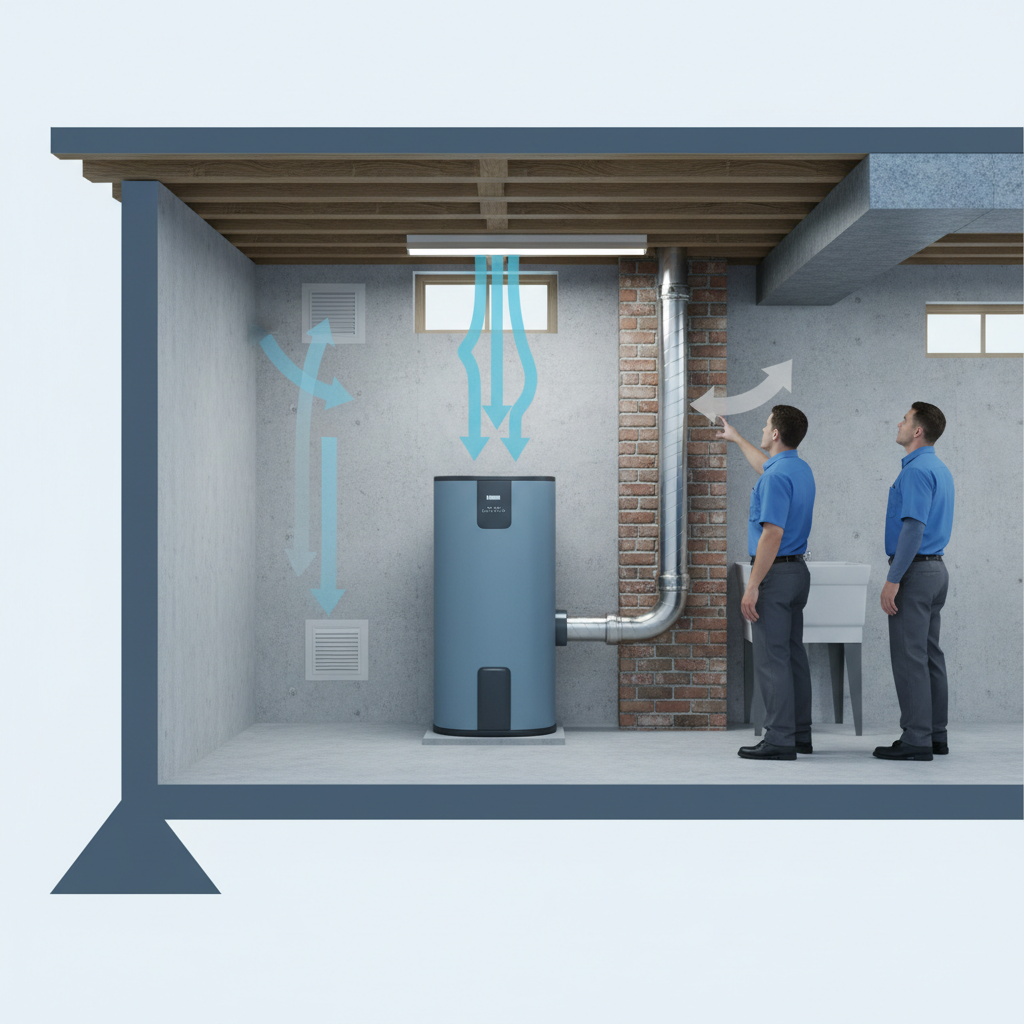
What most people miss when switching from a gas unit to an electric heat pump is that the remaining gas appliances (like your vintage floor furnace) may no longer have the “draft power” to exhaust safely. When you remove a large water heater from a shared masonry chimney, the chimney becomes oversized for the remaining small appliances—a condition known as a “chimney orphan.”
Modern masonry chimney venting codes are strict because improper drafting leads to carbon monoxide backdrafting. A vintage home plumbing audit must include a draft test to ensure your 1920s flue isn’t a safety liability. Consider these factors:
- Liner Condition: Most 1920s chimneys lack clay or metal liners, leading to moisture degradation.
- Vent Sizing: Ensuring the flue diameter matches the remaining BTUs of your heating system.
- Power Venting Options: Transitioning to PVC venting through a side wall if the chimney is compromised.
| Feature | 1920s Standard | 2024 Requirement |
|---|---|---|
| Venting Material | Unlined Masonry | B-Vent or Power-Vented PVC |
| Electrical | 30-60 Amp Service | 200 Amp (Recommended for HPWH) |
| Pipe Material | Galvanized Steel | L-Type Copper or PEX-A |
3. Structural Load and Floor Joist Resilience
Here’s a contrarian insight: modern high-efficiency tanks are often significantly heavier and larger than their predecessors due to increased insulation requirements. A 1920s redwood floor joist may have survived a century, but adding a 500-pound water heater to a localized spot in a cramped utility room requires a structural mechanical compatibility framework check.
We’ve seen cases where a typical Bay Area mid-market client attempted a DIY install, only to notice floor sagging three months later. The bungalow mechanical audit must evaluate the “dead load” capacity of the installation site. When retrofitting for resilience, we look at:
- Joist Spacing: 1920s homes often have irregular spacing that lacks modern shear strength.
- Moisture Damage: Existing dry rot in crawlspaces that compromises load-bearing integrity.
- Seismic Strapping: California code requires specific anchoring that 1920s lath-and-plaster walls can rarely support without blocking.
Need a hand navigating these structural requirements? Check out our guide on local Bay Area seismic codes.
4. Galvanized Pipe Compatibility and Lead Mitigation
The real kicker? You can buy the most expensive Rinnai or Rheem unit on the market, but if it’s pushing water through 100-year-old galvanized pipes, your water quality and pressure will remain subpar. A historic home plumbing retrofit isn’t complete without addressing the internal corrosion common in galvanized pipe compatibility assessments.
What most homeowners don’t realize is that modern high-efficiency units are sensitive to the sediment flakes that old steel pipes shed. This can clog heat exchangers in tankless units or foul the sensors in heat pumps. During our mechanical compatibility audit, we use the following criteria:
- Flow Rate Testing: Does the old piping allow for the 5+ GPM required for modern multi-fixture use?
- Dielectric Union Integrity: Preventing accelerated electrolysis where new copper meets old steel.
- Lead Identification: Checking for lead-soldered joints that may have been added during 1950s-era repairs.
To ensure your new system lasts its full 15-25 year lifespan, we often recommend a “point-of-entry” repipe for the mechanical room itself. This isolates your high-tech investment from the aging infrastructure of the rest of the home.
Future-Proofing Your Bungalow for 2027 Regulations
The Bay Area Air Quality Management District (BAAQMD) has signaled a phase-out of gas water heaters starting in 2027. This makes the mechanical compatibility audit a “Future-Proofing Roadmap” rather than just a maintenance chore. By identifying your electrical and structural limitations now, you can phase your upgrades rather than facing a $15,000 emergency bill when your old tank finally gives out.
Wait—before you rush out to buy a unit, remember that many 1920s basements in the Bay Area have poor drainage. Modern high-efficiency units produce condensate (water) that must be pumped out. If your bungalow doesn’t have a floor drain or sump, you’ll need a condensate pump integrated into your mechanical compatibility framework.
At Better Water Heaters, we utilize advanced diagnostic tools to ensure your historic home remains a sanctuary, not a money pit. Using our internal AI content engine, Ingest.blog, we stay updated on every local rebate and regulation change across San Jose and the Peninsula to give you the most accurate advice possible.
Final Steps for Homeowners
Don’t let a “simple” replacement turn into a structural renovation. This week, take a flashlight into your utility room and check for these three red flags: rusted galvanized unions, scorched venting at the chimney base, and a fuse box instead of a breaker panel. If you see any of these, it’s time for a professional mechanical compatibility audit.
Ready to upgrade without the headache? Contact Better Water Heaters today for a comprehensive bungalow mechanical assessment.
Frequently Asked Questions
Can a 1920s bungalow support a heat pump water heater?
Yes, but it usually requires a dedicated 30-amp, 240V circuit and sufficient cubic footage for airflow. Our mechanical compatibility audit evaluates your basement or garage volume to ensure the heat pump can “breathe” and operate efficiently without cooling your home excessively during winter months.
What is the ‘Chimney Orphan’ problem in historic homes?
When you replace a gas water heater with an electric one, the remaining gas appliances (like a furnace) may not generate enough heat to push exhaust up a large, cold masonry chimney. This can cause toxic gases to linger. We solve this by installing a chimney liner or alternative venting.
Is it worth keeping galvanized pipes during a water heater upgrade?
Generally, no. Old galvanized pipes are often restricted by 70-80% due to internal rust. Installing a high-efficiency bungalow water heater upgrade on old pipes often leads to poor performance and premature tank failure. We recommend at least a partial repipe of the mechanical area.
How much space does a modern water heater need in a small bungalow?
Modern tanks are wider due to thicker insulation (required by the NAECA). You may need up to 2-4 additional inches of clearance compared to your 1990s-era tank. Our audit measures your access points to ensure the new unit can actually fit through narrow 1920s doorways.