
📋 Table of Contents
According to the U.S. Department of Energy, water heating is the second largest energy expense in most homes, accounting for roughly 18% of utility bills. In the high-demand environment of a multi-generational Bay Area household, the frustration isn’t just the cost—it’s the dreaded ‘Cold Shower Gap’ when the thermal recovery rate fails to keep up with back-to-back morning routines.
Most homeowners focus entirely on tank capacity (the ‘gallons’ on the sticker), but that is a secondary metric for performance. If you have four adults showering between 6:30 AM and 7:30 AM, the speed at which your system can reheat water—the thermal recovery rate—is the only number that actually determines your comfort. This is especially critical as San Francisco and San Jose move toward 2027 zero-NOx regulations, forcing a shift from gas to electric heat pump systems.
Key Takeaways for High-Occupancy Homes:
- Recovery rate matters more than tank size for back-to-back usage.
- Bay Area groundwater temperatures (averaging 55°F-60°F) significantly impact heating speed.
- Heat pump hybrids require a ‘Thermal Buffer’ strategy to match gas performance.
- Local rebates can offset up to $4,900 of the cost for high-efficiency upgrades.
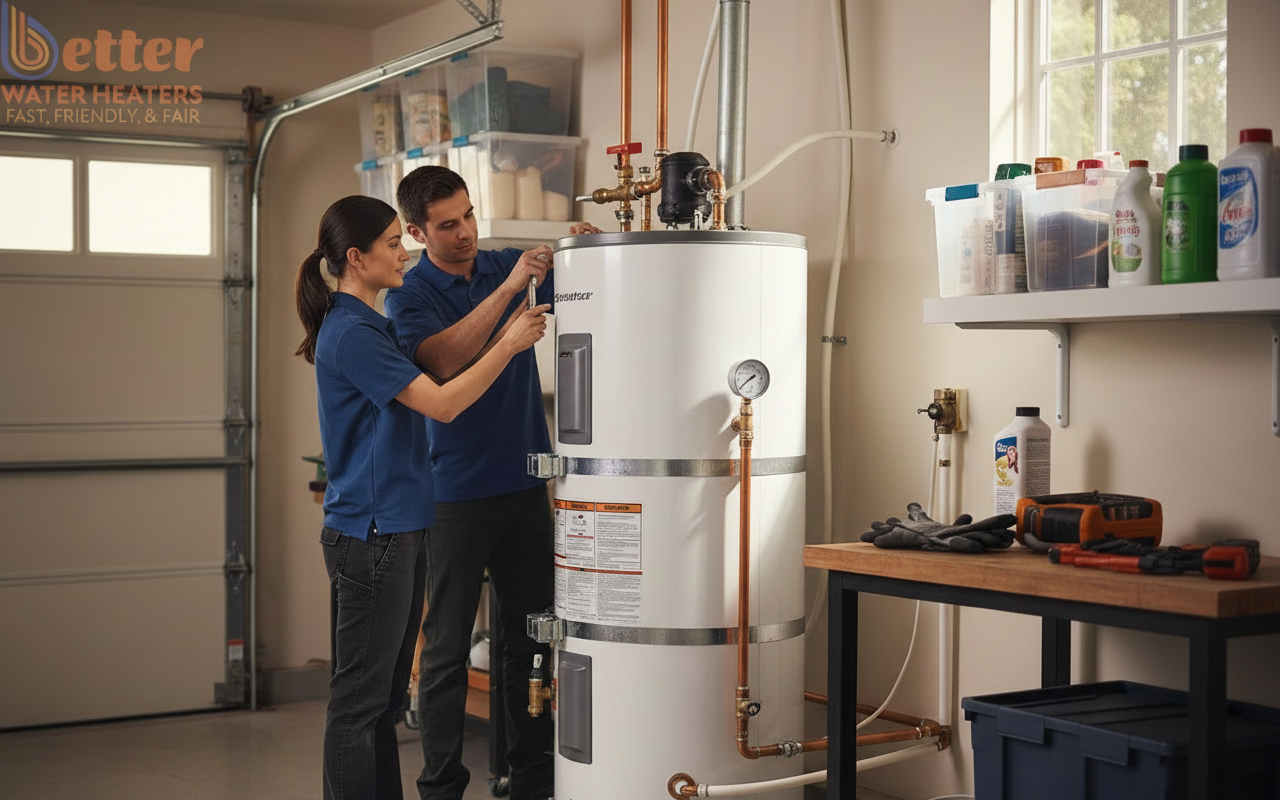
Step 1: Calculating Your Real-World High-Demand Hot Water Needs
The first step in our framework is moving past the ’50-gallon standard’ and calculating your peak hour demand. What most people miss is that a 50-gallon tank only provides about 35 gallons of usable hot water before the incoming cold water drops the temperature below a comfortable threshold.
In our work with established families in the Peninsula, we often see ‘First Hour Rating’ (FHR) ignored during the sales process. The FHR is a combination of the tank’s capacity and its thermal recovery rate. To calculate your needs, use this framework:
- Shower (2.5 GPM for 10 mins) = 25 Gallons
- Dishwasher cycle = 6 Gallons
- Clothes washer = 20 Gallons
If these happen simultaneously, a standard electric tank will fail. For example, a typical 50-gallon electric heater has a thermal recovery rate of only 20-22 gallons per hour at a 90°F rise. If you use 40 gallons in 30 minutes, you are looking at a 45-minute wait for the next person. For high-demand hot water, you need a system that mimics the 40+ GPH recovery of gas or utilizes a larger storage buffer.
Step 2: Accounting for the ‘Golden Gate Chill’ and Climate Variables
Incoming water temperature is the ‘silent killer’ of recovery speeds in coastal cities like Pacifica or Daly City. While a manufacturer might boast a high thermal recovery rate, those stats are often based on a 70°F incoming water temperature—a luxury we rarely have in Northern California.
The real kicker? In the winter, Bay Area groundwater can drop to 50°F. If your goal is a 120°F shower, your heater has to work 20% harder than it would in a warmer climate. This ‘temperature rise’ requirement directly slows down your water heater sizing calculations.
- Coastal Zone: Higher humidity, colder groundwater, requires higher BTU/kW input.
- Inland (San Jose/Livermore): Variable temperatures; systems in uninsulated garages face higher standby loss.
- Victoria/Historic Homes: Often have uninsulated pipes, leading to ‘thermal stacking’ issues.
Need a professional eye on your specific home layout? Schedule your free Bay Area home assessment to get a precision sizing report.
Step 3: Integrating Thermal Buffers and Hybrid Technology
To solve the recovery lag in high-occupancy homes without skyrocketing PG&E bills, we recommend the ‘Thermal Buffer’ strategy. This involves using a high-capacity hybrid heat pump water heater (HPWH) or a tankless-to-tank configuration. Hybrid systems are the future of multi-family hot water solutions because they offer three modes: Efficiency, Hybrid, and High Demand.
Here is a comparison of how different technologies handle recovery for a 4-person household:
| System Type | Recovery Speed | Operating Cost | Bay Area Rebate Eligibility |
|---|---|---|---|
| Standard Electric Tank | Slow (21 GPH) | High | None |
| Tankless (Gas) | Instant/Infinite | Medium | None (Phasing out) |
| Hybrid Heat Pump | Variable (High in Boost) | Lowest | Up to $4,900+ |
But wait—here is a contrarian insight: Tankless isn’t always the ‘infinite’ solution people claim. In many East Bay homes with older 1/2-inch gas lines, the cost to upgrade the infrastructure for a high-output tankless unit often outweighs the energy savings. In these cases, a hybrid heat pump installation with an 80-gallon tank acts as a massive ‘thermal battery,’ providing more than enough FHR for the tech-sector morning rush without needing a gas line overhaul.
Navigating Bay Area Electrification Rebates
Upgrading for a better thermal recovery rate is currently subsidized at record levels. Programs like TECH Clean California and local initiatives from Peninsula Clean Energy or Silicon Valley Clean Energy are designed to push homeowners toward heat pumps. For a typical Bay Area mid-market client, these incentives can cover nearly 50% of the total project cost.
What most people miss is that these rebates often require specific water heater sizing and professional installation to qualify. You cannot simply swap a unit and expect a check. You must ensure the unit meets the Tier 3 or Tier 4 NEEA ratings.
- Federal Tax Credit (25C): Up to $2,000 for qualifying heat pumps.
- TECH Clean CA: Varies by zip code, often $1,000-$3,100.
- Local Utility Rebates: Additional $500-$1,000 depending on your provider.
The Role of Smart Monitoring in Recovery Management
In the Silicon Valley landscape, smart home integration isn’t just a gimmick—it’s a tool for managing high-demand hot water. Modern systems from brands like Rheem or AO Smith include leak detection and ‘Demand Response’ modes. These allow the heater to ‘pre-heat’ the tank during off-peak utility hours when electricity is cheaper, effectively turning your water heater into a cost-saving thermal storage unit.
If you’re managing multiple units or an ADU, this remote monitoring is a lifesaver. You can see the thermal recovery rate in real-time and adjust for guests or high-usage periods via an app. At Better Water Heaters, we utilize advanced diagnostic tools to ensure these smart features are calibrated to local PG&E Time-of-Use (TOU) rates. For those building out comprehensive digital strategies for their properties, we even use Ingest.blog to keep our clients updated on the latest firmware and rebate changes.
When to Call a Water Heater Specialist
Determining your thermal recovery rate isn’t just about math; it’s about safety and code compliance. In the Bay Area, seismic strapping and proper venting are non-negotiable. If your current heater is over 10 years old and you’ve noticed the water takes longer to get hot than it used to, sediment buildup is likely killing your efficiency.
Don’t wait for a flood to upgrade your multi-family hot water solutions. A proactive replacement allows you to choose the best technology rather than being forced into an emergency ‘whatever is in stock’ purchase. Learn more about our installation process and how we handle everything from permits to rebate paperwork.
Key Takeaway for This Week
Check the ‘First Hour Rating’ on your current water heater’s yellow EnergyGuide label. If that number is lower than your family’s peak-hour usage (calculated in Step 1), you are guaranteed to experience cold showers. Contact a specialist this week to discuss a high-recovery hybrid upgrade while the $4,900+ in rebates are still fully funded.
Frequently Asked Questions
What is a good thermal recovery rate for a 4-person home?
For a typical 4-person Bay Area home, you should look for a system with a First Hour Rating (FHR) of at least 65-75 gallons. This ensures that even with back-to-back showers and a laundry load, the thermal recovery rate can keep up with the 55°F incoming groundwater common in our region.
How do heat pump water heaters compare in recovery speed?
In ‘Economy’ mode, heat pumps recover slower than gas. However, in ‘Hybrid’ or ‘High Demand’ mode, they engage electric elements to match or exceed the recovery speed of standard electric tanks. Proper water heater sizing is key; we often recommend bumping up to an 80-gallon tank to provide a larger thermal buffer.
Are there specific rebates for San Jose or San Francisco residents?
Yes, Bay Area residents have access to some of the highest incentives in the country. Between the TECH Clean California program, the Federal 25C tax credit, and local utility programs, you can often find over $4,000 in Bay Area electrification rebates to offset the cost of a high-efficiency system.
Will low-flow showerheads help my recovery rate?
Absolutely. Moving from a 2.5 GPM to a 1.75 GPM showerhead reduces the demand on your tank by 30%. This effectively ‘boosts’ your thermal recovery rate by allowing the heater to maintain a higher temperature for longer periods during heavy usage.
Does hard water affect recovery time?
Yes, especially in areas like San Jose or Fremont with higher mineral content. Sediment builds up at the bottom of the tank, acting as an insulator between the burner/element and the water. This significantly slows down the thermal recovery rate and can lead to premature tank failure.