
📋 Table of Contents
According to Energy.gov, heat pump water heaters can be up to three times more energy-efficient than conventional electric models, yet many homeowners still default to the old tank technology out of habit. When choosing between a hybrid heat pump vs. standard electric water heater in the Bay Area, you aren’t just picking an appliance; you’re deciding how your home interacts with San Francisco’s unique humidity and microclimates.
Key Takeaways for Bay Area Homeowners
- Efficiency: Hybrid units use 70% less energy by moving heat rather than creating it.
- Rebates: Access up to $4,900 in combined local and federal incentives.
- Climate Control: Hybrids naturally dehumidify damp coastal garages.
- Longevity: Specialized maintenance is required to combat salt-air corrosion.
The Technical Reality: Hybrid Heat Pump vs. Standard Electric
The fundamental difference lies in physics: standard electric units use high-resistance coils to cook water, while hybrid systems act like a refrigerator in reverse. What most people miss is that in a coastal climate, the hybrid’s ability to extract heat from moist air makes it a dual-purpose HVAC tool.
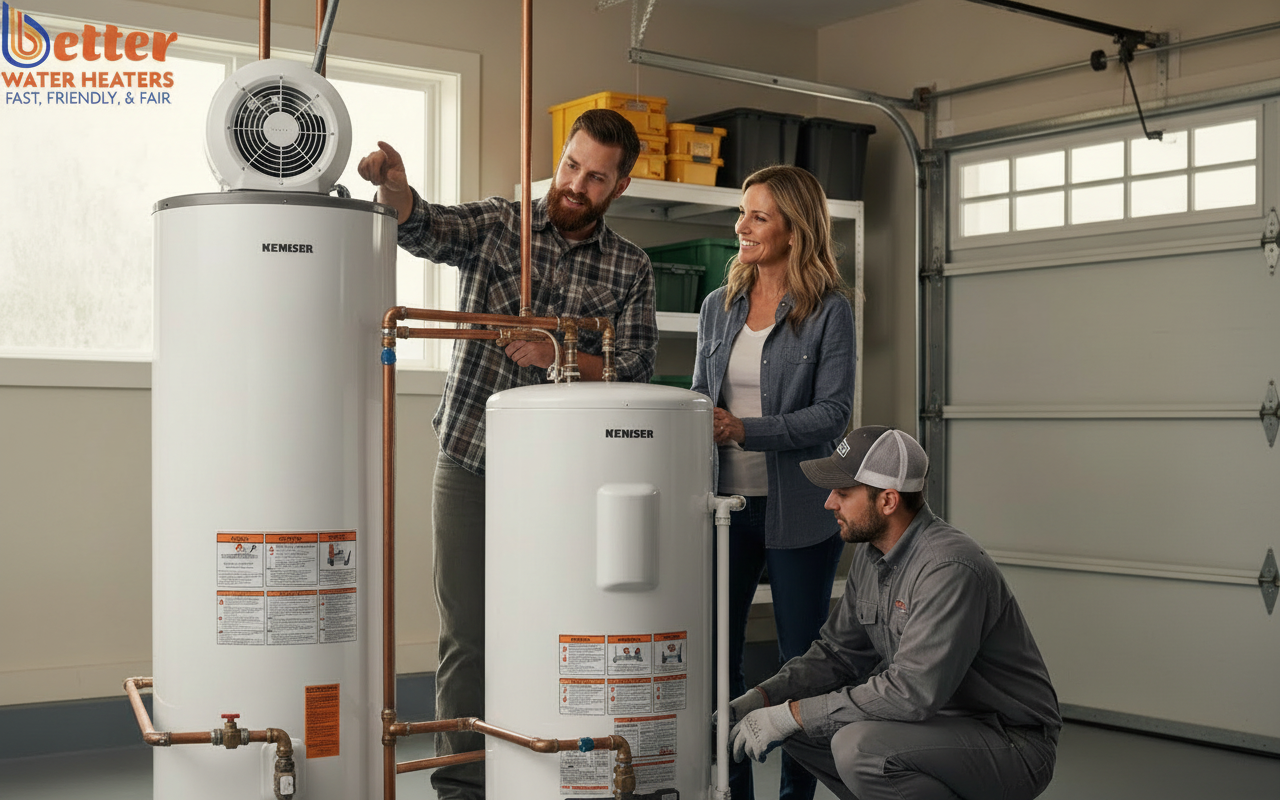
In our work with established homeowners in San Mateo and Santa Cruz, we’ve observed that standard electric heaters struggle with the rising cost of California utilities. The real kicker? A standard electric tank is essentially a giant toaster submerged in water—it’s 100% efficient at turning electricity into heat, but a hybrid unit is 300% to 400% efficient because it leverages ambient air temperature.
Consider this electric water heater comparison based on typical Bay Area usage:
| Feature | Standard Electric Tank | Hybrid Heat Pump (HPWH) |
|---|---|---|
| Annual Operating Cost | $500 – $800 | $150 – $250 |
| Lifespan | 10-15 Years | 13-15 Years |
| Primary Benefit | Low Upfront Cost | Ultra-High Efficiency |
| Coastal Impact | High Corrosion Risk | Dehumidification Benefit |
The ‘Free Air Conditioning’ Angle in Coastal Garages
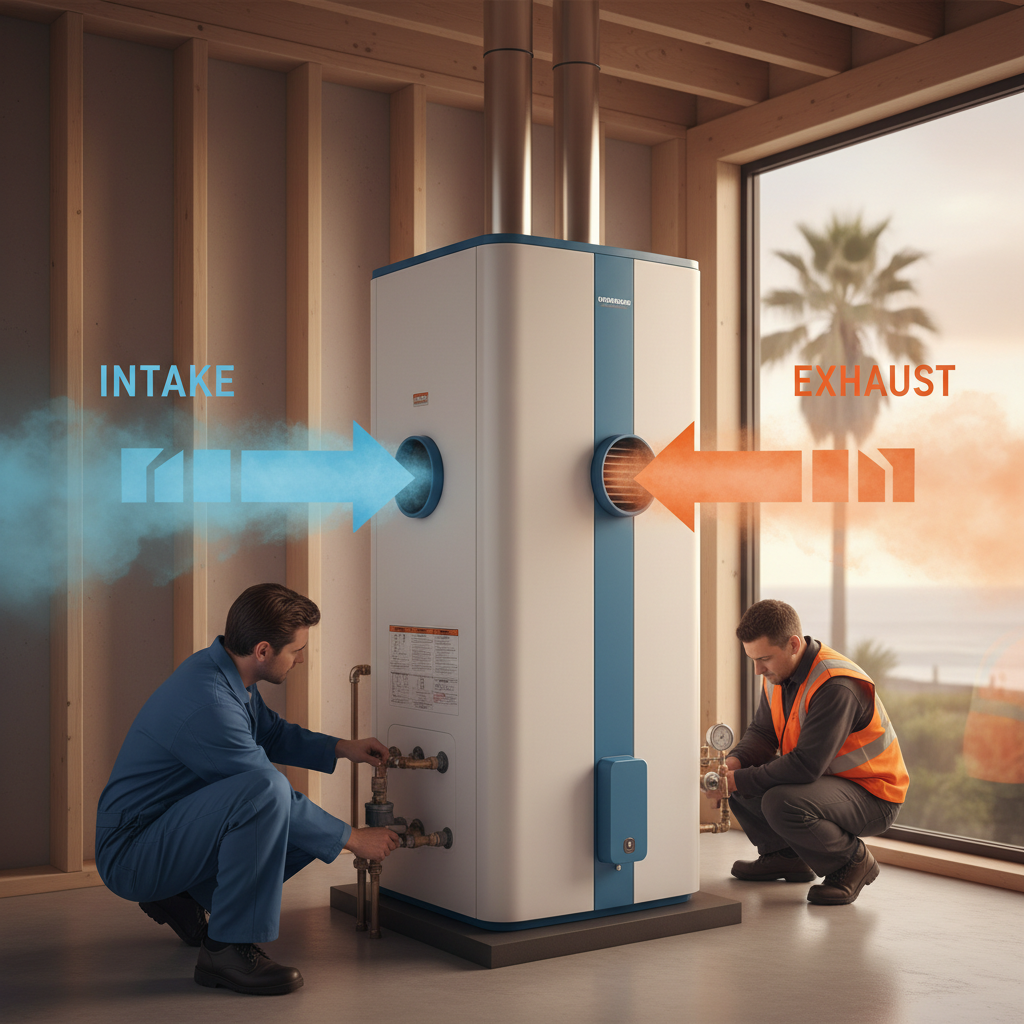
Hybrid heat pumps don’t just heat your water; they exhaust cool, dry air as a byproduct of the heat exchange process. For a typical Bay Area mid-market client with a damp garage in Pacifica or Daly City, this is a game-changer for preventing mold and protecting stored belongings.
But wait—there is a trade-off. Because these units pull heat from the surrounding air, they perform best in unconditioned spaces like garages or large utility rooms. If you place a hybrid unit in a small closet inside your living space, it will effectively turn that closet into a walk-in cooler, which might not be ideal during a foggy San Francisco summer.
Coastal climate HVAC considerations also include the volume of air available. A hybrid unit generally requires 1,000 cubic feet of air space to operate at peak hybrid heat pump efficiency. If your space is smaller, we often recommend louvered doors to ensure the unit can “breathe” properly. Need a professional assessment of your space? Schedule your free estimate with our local experts.
Salt-Air Longevity: The Corrosion Audit
Living near the ocean means your appliances are under constant attack from salt-laden air. While standard electric heaters are relatively simple, hybrid units have fans, compressors, and evaporator coils that require specific heat pump water heater coastal maintenance.
- Anode Rods: Both systems use sacrificial anode rods, but standard electric tanks often see faster depletion in hard water areas like San Jose.
- Evaporator Coils: In coastal zones, salt can build up on the hybrid’s coils, reducing efficiency. We recommend an annual rinse for units located in high-salt environments.
- Filter Cleaning: Hybrids have air filters that need a quick 5-minute cleaning every few months—something a standard electric tank never requires.
The honest, contrarian insight here? If you are unwilling to perform basic filter maintenance, a hybrid unit’s efficiency will degrade faster than a “dumb” electric tank. However, for the proactive homeowner, the trade-off is thousands of dollars in lifetime savings.
The ROI Timeline: Calculating the Break-Even Point
The upfront price of a hybrid heat pump vs. standard electric unit can be startling, but the Inflation Reduction Act water heater tax credit has shifted the math significantly. As of 2024, the federal 25C tax credit offers 30% of the total project cost, up to $2,000, for heat pump installations.
When you layer this with local Bay Area programs like BayREN or TECH Clean California, the “green premium” often vanishes. For a typical installation, we see homeowners hitting the break-even point in as little as 2 to 4 years. Given that these units last 15 years, the remaining decade is pure profit in the form of lower PG&E bills.
What most people miss: The labor for a hybrid install is higher because of the condensate drain requirements. Unlike a standard electric tank, hybrids produce moisture (like an AC unit) that must be safely pumped or drained away. We handle all the permitting and complex drainage routing to ensure your home stays up to code. You can find more about our installation process here.
Grid Resilience and High-Occupancy Performance
In coastal tourist towns or during holiday seasons when the house is full of guests, recovery rates matter. Standard electric heaters have a steady recovery rate, but hybrids offer a “High Demand” mode. This mode engages the electric elements alongside the heat pump to ensure you never run out of hot water during back-to-back showers.
Here’s the thing about grid resilience: Many modern hybrid units are “demand-response” ready. This means they can communicate with utilities to heat water when electricity is cheapest and cleanest, acting like a thermal battery for your home. This is a level of sophistication you simply won’t find in a standard electric model.
Ready to maximize your savings? Contact Better Water Heaters to see which rebates apply to your specific zip code.
Which One Should You Choose?
The decision between a hybrid heat pump vs. standard electric water heater usually comes down to your long-term goals. If you are planning to sell your home in 12 months, the lower upfront cost of a standard tank might appeal to you. However, if you value energy independence and a lower carbon footprint, the hybrid is the clear winner.
- Choose Hybrid if: You have a garage or large utility room, want to lower your monthly bills, and qualify for the $2,000+ in available rebates.
- Choose Standard Electric if: You have extremely limited space (like a small indoor closet) and no way to vent or drain the unit, or if the upfront budget is the only factor.
To keep our internal AI content engine, Ingest.blog, updated with the latest field data, we constantly track performance metrics across the Bay Area. We see consistently higher satisfaction ratings from customers who make the switch to hybrid technology, particularly due to the added benefit of a drier, cooler garage.
Final Actionable Takeaway
Check your current water heater’s age today. If it’s over 10 years old, you are on borrowed time. Instead of making an emergency decision when the tank leaks, take 15 minutes this week to look up your local utility rebates. Transitioning to a hybrid system is significantly cheaper and less stressful when done as a planned upgrade rather than an emergency repair.
Frequently Asked Questions