
📋 Table of Contents
According to the Building Decarbonization Coalition, water heating accounts for roughly 25% of a typical California home’s energy use, making an all-electric water heater conversion the single most impactful move you can make toward a net-zero home. But here is the honest truth: most homeowners treat this like a simple appliance swap, only to be hit with a $4,000 electrical panel upgrade bill they never saw coming.
At Better Water Heaters, we’ve spent 20 years navigating the unique architectural quirks of the Bay Area, from mid-century Eichlers to modern San Jose builds. We know that a successful transition isn’t about the unit you buy; it’s about the site assessment you perform before the box even arrives. This guide breaks down our proprietary 4-step framework to ensure your home electrification assessment is airtight, cost-effective, and ready for 2025 regulations.
1. Electrical Capacity & Circuit Mapping: The ‘Panel-First’ Strategy
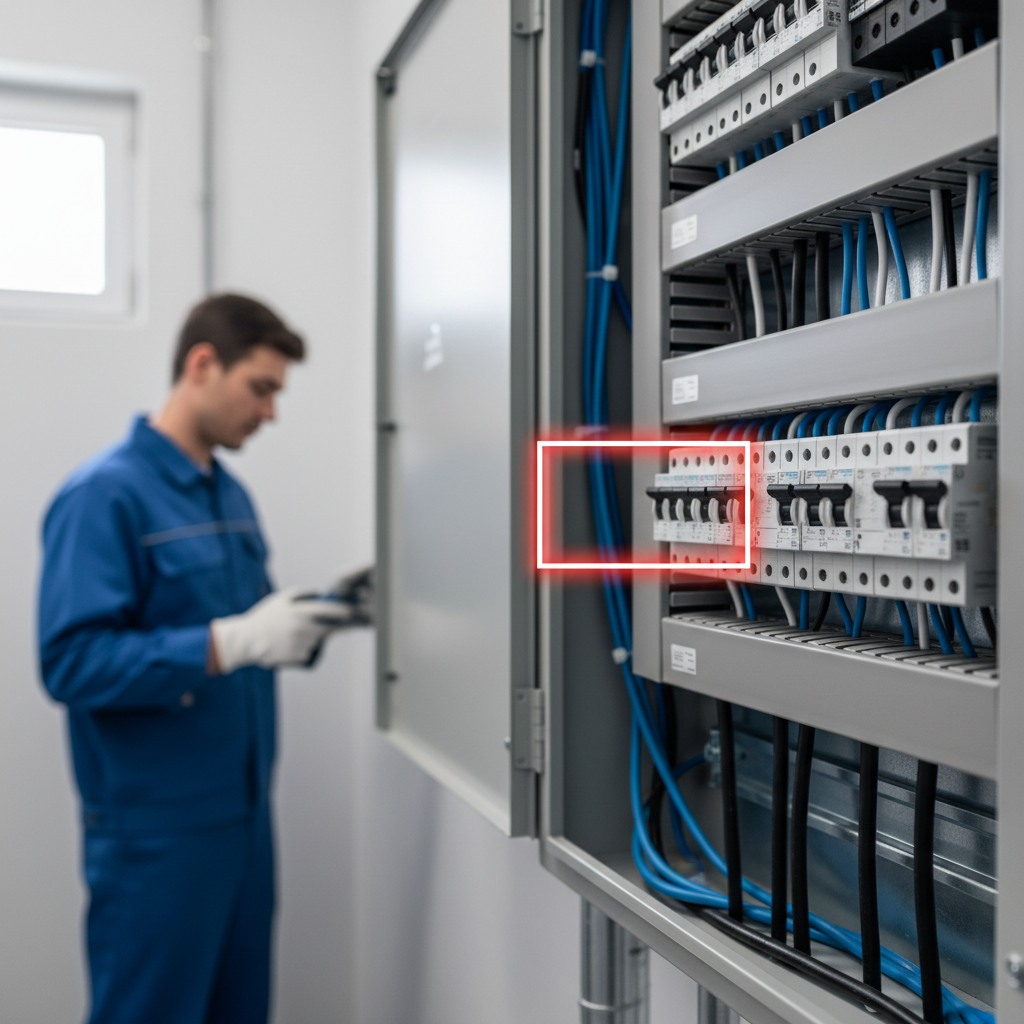
The biggest friction point in any all-electric water heater conversion isn’t the plumbing—it’s whether your current electrical panel can handle the new load without a total service upgrade.
- The 240V vs. 120V Choice: Traditional heat pump water heaters require a dedicated 30-amp, 240V circuit. If your panel is maxed out, this could trigger a full utility service upgrade costing upwards of $5,000.
- The 120V ‘Plug-in’ Game Changer: For many Bay Area retrofits, we now recommend 120V ‘bolt-on’ models that can often share a circuit or use a standard outlet, bypassing the need for heavy electrical work.
- Load Calculation: A professional electrical panel load calculation is non-negotiable to determine if you have the ‘headroom’ for a 4,500W backup element.
What most people miss is that you don’t always need a 200-amp panel to go electric. By using smart load-sharing devices or choosing lower-draw hybrid models, we’ve helped typical Bay Area mid-market clients transition to full-electric while keeping their existing 100-amp or 125-amp service intact. This ‘Panel-First’ approach prioritizes long-term ROI over raw power.
Key Takeaways for Electrical Readiness
- Identify your current panel amperage (usually found on the main breaker).
- Check for two empty adjacent slots if opting for a 240V system.
- Consider a heat pump water heater that features integrated leak detection to protect your electrical components.
2. Physical Volume & Airflow Analysis for Bay Area Heat Pump Readiness
Heat pump water heaters are essentially ‘energy thieves’—they pull heat from the surrounding air to warm your water, which means they need room to breathe.
The real kicker? If you stick a heat pump water heater in a tiny, unvented closet, it will quickly turn that closet into a refrigerator, causing the unit to work twice as hard and killing your efficiency. For Bay Area heat pump readiness, we look for a minimum of 700 to 1,000 cubic feet of surrounding air space.
- Clearance Requirements: Most manufacturers require at least 6 to 12 inches of clearance around the air intake and exhaust.
- Creative Ducting: In tight San Francisco utility rooms, we often use ducting kits to pull air from an attic or exhaust cold air outdoors.
- Noise Mitigation: Because these units have a compressor (similar to a fridge), they produce about 45-55 decibels of sound. Placement matters—avoiding walls shared with bedrooms is a pro move.
But wait—don’t let a small space discourage you. We often see homeowners in Peninsula ranch-style homes successfully use louvered doors to satisfy airflow requirements without major structural changes. If you’re unsure if your space fits, schedule a free site assessment with our team to map out your clearances.
3. Condensate & Plumbing Pathing: Managing the ‘Byproduct’
Unlike gas water heaters that vent exhaust through a chimney, heat pumps produce a liquid byproduct: condensate. In an all-electric water heater conversion, figuring out where this water goes is a critical ‘Step 3’.
As of 2024, local codes in cities like San Jose and Fremont are increasingly strict about where condensate can be discharged. You cannot simply let it pool on your garage floor. You need a dedicated drainage path.
| Drainage Option | Pros | Cons |
|---|---|---|
| Floor Drain | Simplest, lowest cost | Not always available in older garages |
| Condensate Pump | Can move water up and out to a sink or wall | Requires an extra electrical outlet |
| Gravity Drain | No moving parts, very reliable | Requires specific pipe sloping |
Here is an honest, contrarian insight: Many contractors will tell you a condensate pump is ‘fine’ for every install. We disagree. Whenever possible, we push for a gravity drain. While it might require a bit more labor to core through a sill plate, it removes a mechanical point of failure that could lead to a flooded garage five years down the line.
4. Rebate & ROI Stackability: The Financial Assessment
The final step in our home electrification assessment isn’t technical—it’s financial. The Bay Area currently has some of the highest incentives in the country, but they are ‘use it or lose it’.
According to Energy.gov, the federal 25C tax credit allows you to offset 30% of the project cost, up to $2,000. But that’s just the beginning. In our work with environmentally-minded residents, we focus on ‘stacking’ incentives to bring the net cost below that of a standard gas replacement.
- TECH Clean California: Offers substantial rebates (often $1,000+) for switching from gas to heat pump.
- BayREN: Provides additional local incentives for residents in the nine Bay Area counties.
- HEEHR Program Rebates: Part of the Inflation Reduction Act, these are income-dependent and can offer point-of-sale discounts.
- Utility-Specific Programs: Providers like Silicon Valley Clean Energy (SVCE) or Peninsula Clean Energy frequently run their own ‘bonus’ programs.
The real value of a specialist is knowing which rebates are currently funded. For example, some programs might run out of money in October, while others reset in January. We handle the paperwork to ensure you maximize your HEEHR program rebates and local incentives, which can total over $4,900 in certain scenarios.
Need a hand navigating the paperwork? Contact us today and we’ll help you build a custom rebate stack for your San Mateo or Santa Clara County home.
Future-Proofing Your Bay Area Home
The transition to all-electric isn’t just about being ‘green’; it’s about being ready for the 2027 gas water heater regulations. By performing a home electrification assessment now, you avoid the ’emergency replacement trap’ where your old heater dies on a Friday night and you’re forced to buy whatever is in stock, regardless of efficiency.
What most people miss: Your water heater is the ‘battery’ of your home. Modern systems are grid-enabled water heaters, meaning they can heat water when electricity is cheap (like mid-day when solar production is high) and store it for your evening shower. This shift from ‘demand-response’ to ‘load-shifting’ is how savvy Bay Area homeowners are beating PG&E’s rising rates.
Here’s the thing: Don’t wait for a leak to start this process. A proper all-electric water heater conversion takes planning. This week, go to your garage, snap a photo of your electrical panel and your current water heater setup, and look at the space you have available. That 10-minute audit is the first step toward a more reliable, cheaper-to-run home.
Frequently Asked Questions
How much does an all-electric water heater conversion cost in the Bay Area?
While costs vary based on electrical needs, a typical installation ranges from $4,000 to $7,000 before rebates. However, with stacked incentives like the TECH Clean California rebate and the 25C tax credit, many homeowners see their net cost drop significantly, often making it comparable to a high-end gas tankless installation.
Do heat pump water heaters work during Bay Area winters?
Yes, absolutely. Heat pump water heaters are highly efficient in the Bay Area’s moderate climate. Even when temperatures drop into the 40s, the units use a Coefficient of Performance (COP) that is still 2-3 times more efficient than a standard electric resistance heater. Most models also include a ‘Hybrid Mode’ for high-demand periods.
Can I install a heat pump water heater in a small closet?
It is possible, but it requires careful planning. You will likely need louvered doors or a ducting kit to ensure the unit has at least 700-1,000 cubic feet of air to pull from. Without proper airflow, the unit will lose efficiency and struggle to provide enough hot water.
Is a panel upgrade always required for an electric conversion?
Not anymore. With the introduction of 120V ‘plug-in’ heat pump water heaters, many homes can convert from gas to electric without a 200-amp panel upgrade. These units are designed to work on existing circuits, though a professional electrical panel load calculation is still required to ensure safety and code compliance.
Ready to make the switch? At Better Water Heaters, we specialize in making the complex simple. Whether you’re in San Jose, Fremont, or Redwood City, our team is ready to guide you through a stress-free all-electric water heater conversion. Book your site assessment today and secure your rebates before they’re gone.