
📋 Table of Contents
According to the U.S. Department of Energy, water heating is the second largest energy expense in most homes, yet most homeowners wait for a catastrophic leak before considering an upgrade. In the high-stakes Bay Area real estate market, an emergency water heater replacement isn’t just an inconvenience—it is a strategic financial error that often costs homeowners thousands in forfeited incentives.
Key Takeaways for Bay Area Homeowners
- Rebate Forfeiture: Emergency installs often bypass TECH Clean California and HEEHRA rebates (up to $4,900) due to lack of pre-approval time.
- The Panic Premium: Weekend and after-hours emergency labor in the Bay Area can carry a 30% markup over scheduled installs.
- Technology Lock-in: Sudden failures often force a “like-for-like” gas replacement, missing the 2027 transition to zero-NOx electric standards.
- Insurance Risks: Many carriers now deny claims for “gradual damage” if water heater failure signs were neglected.
The Financial Reality of an Emergency Water Heater Replacement
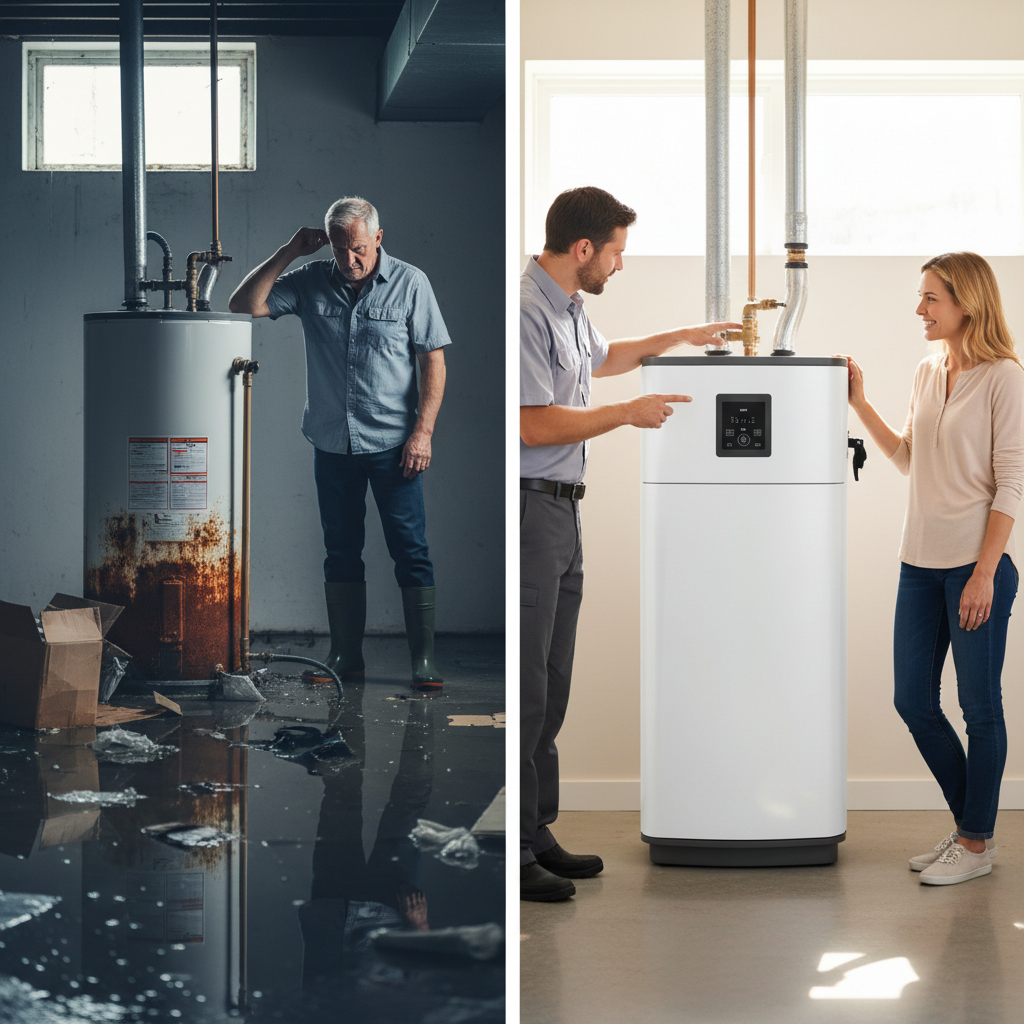
The real kicker is that the price tag on the invoice is only half the story when you are standing in two inches of water at 2:00 AM. Here’s the thing: when you are in crisis mode, you lose the power of choice, which is the most expensive thing to lose in a regulated market like San Jose or San Francisco.
In our work with established Bay Area homeowners, we consistently see that “panic buying” leads to a 20-30% higher total cost of ownership. You aren’t just paying for the unit; you are paying for the immediate availability of a technician and the expedited logistics of getting a permit on a Saturday. Furthermore, many high-efficiency units, like ultra-low NOx models required by the Bay Area Air Quality Management District, may not be sitting on a truck ready for an immediate swap.
Why “Waiting Until It Breaks” Is a $4,000 Mistake
- Rebate Disqualification: Programs like TECH Clean California often require specific site surveys or contractor bids to be registered before work begins.
- Limited Inventory: In an emergency, you get whatever is in the warehouse, not the Navien or Rheem model that actually fits your long-term energy goals.
- Structural Remediation: A slow leak in a vintage Oakland basement can lead to mold issues that a planned appliance upgrade would have caught months earlier.
Recognizing Water Heater Failure Signs Before the Flood
Early detection is the only way to shift from a reactive crisis to a strategic, data-driven home improvement project. What most people miss is that a water heater rarely fails without warning; it just gives signals that are easy to ignore until they aren’t.
If you notice your hot water has a metallic tang or a slight rust tint, your tank’s internal sacrificial anode rod has likely been depleted, leaving the steel tank vulnerable to corrosion. Similarly, popping or rumbling noises indicate sediment buildup that is literally cooking the bottom of your tank, a common issue in hard-water areas like Fremont and Sunnyvale. For more details on diagnostics, you can search our troubleshooting guides.
- Age: If your unit is over 10 years old, you are on borrowed time.
- Moisture: Any dampness around the base or the Temperature and Pressure (T&P) relief valve.
- Recovery Time: If it takes significantly longer to get hot water than it did two years ago.
Need a professional eye to evaluate your system? Schedule a professional inspection before a small drip becomes a big problem.
The Planned Appliance Upgrade: A Strategic Advantage
A planned upgrade allows you to treat your water heater like a high-performance asset rather than a hidden utility. This is where you maximize the 2024 California energy code updates and the transition toward electrification.
For a typical Bay Area mid-market client, a planned move to a Heat Pump Water Heater (HPWH) can unlock federal tax credits under the Inflation Reduction Act plus local utility rebates from providers like Peninsula Clean Energy or Silicon Valley Clean Energy. These incentives can total over $4,000, effectively bringing the net cost of a premium electric system below that of a standard gas unit. But wait—these programs almost always require a planned permit process that emergency installers simply don’t have time to navigate.
| Factor | Emergency Replacement | Planned Upgrade |
|---|---|---|
| Labor Cost | Premium (After-hours/Urgent) | Standard Competitive Rates |
| Rebate Eligibility | Often Disqualified | Maximizes Local & Federal Credits |
| Tech Options | Limited to Inventory on Hand | Full Range (Tankless, Heat Pump) |
| Permit Process | Rushed/Post-hoc | Compliant & Pre-approved |
The “Electrification Waitlist” and 2027 Regulations
The real kicker for Bay Area residents is the upcoming 2027 ban on gas water heater sales for many residential applications. If your gas heater fails in 2025 as an emergency, you will likely replace it with another gas unit to save time, effectively locking yourself into a fossil-fuel appliance for another 15 years.
By opting for a planned appliance upgrade now, you can address electrical panel requirements or circuit upgrades without the pressure of having no hot water for your family. We see many Series B startup founders and tech professionals in the Peninsula opting for smart-integrated heat pumps that allow them to shift energy usage to off-peak hours, a feature you’ll never find on an emergency-stock basic tank.
Pro-Tip: If you aren’t ready to swap yet, consider installing a smart leak detector like the Moen Flo or Phyn. It’s a small investment that acts as a bridge, giving you the 48-hour head start needed to turn an emergency into a planned project.
Insurance Denials: The Hidden Cost of Neglect
Here is a contrarian insight most plumbers won’t tell you: your homeowners insurance might not cover the damage from a water heater failure. Most policies specifically exclude “gradual seepage” or damage caused by lack of maintenance.
If an adjuster sees significant corrosion on the tank, they may argue that the water heater failure signs were present for months, classifying the flood as a maintenance issue rather than a sudden accident. This leaves you on the hook for both the emergency water heater replacement cost and the thousands in floor and drywall repairs. According to The Insurance Information Institute, water damage is one of the most common and costly home insurance claims, and negligence is a frequent reason for denial.
Don’t gamble with your deductible. Get a free quote for a proactive replacement today.
Frequently Asked Questions
How much more does an emergency water heater replacement cost in the Bay Area?
Typically, you can expect to pay 20% to 30% more for an emergency install. This includes after-hours labor premiums, expedited permit fees, and the loss of competitive bidding. More importantly, you lose access to rebates like TECH Clean California, which can be worth up to $4,800, making the total “opportunity cost” much higher.
What are the most common water heater failure signs I should look for?
The most common signs include knocking or popping sounds (sediment buildup), rusty or discolored water, moisture pooling around the base of the tank, and a noticeable decrease in hot water duration. If your unit is older than 10-12 years, these signs indicate an imminent failure that requires immediate attention.
Can I still get rebates if my water heater has already leaked?
It is significantly harder. Most high-value rebates require pre-approval or a specific heat pump conversion process that takes days to document. In a 24-hour emergency turnaround, it is nearly impossible to meet the administrative requirements of programs like HEEHRA or local CCA incentives, which often require an energy audit or specific contractor certifications.
Why are Bay Area water heater regulations stricter than other regions?
The Bay Area Air Quality Management District (BAAQMD) has implemented strict ultra-low NOx requirements to reduce nitrogen oxide emissions. Furthermore, new rules are phasing out gas appliances to meet California’s 2045 carbon neutrality goals. This means local homeowners face more complex permit requirements and specific equipment standards than homeowners in other states.
Take Action This Week
Your action item for Monday morning is simple: check the manufacture date on your water heater’s rating plate. If it was built before 2014, call a specialist to discuss a planned appliance upgrade. Taking control of the timeline now ensures you get the $4,900 in rebates you deserve, rather than a $2,000 labor bill you don’t. At Better Water Heaters, we specialize in helping Bay Area residents navigate this transition with transparency and local expertise. Contact us today to start your stress-free upgrade.