
📋 Table of Contents
According to the U.S. Geological Survey (USGS), there is a 72% probability of a magnitude 6.7 or greater earthquake striking the Bay Area by 2043. For most homeowners, a seismic safety audit is the only thing standing between a manageable tremor and a catastrophic house fire caused by a toppled water heater.
The real kicker? Most people think two metal straps are enough to satisfy the California water heater strapping code, but in a 6.0+ magnitude event, the straps are rarely the primary point of failure. It is the rigid copper piping and fixed gas lines that snap, leading to immediate flooding or explosive gas leaks. If you are an established homeowner in San Jose or a startup founder in a Redwood City rental, understanding the nuances of Bay Area plumbing safety is a prerequisite for financial and physical security.
Key Takeaways:
- Double-strapping is the legal minimum, but flexible connectors are the actual lifesavers.
- An unstrapped heater can lead to denied insurance claims after a disaster.
- The 2024 California Plumbing Code requires specific clearances and bracing for expansion tanks.
- Automatic seismic gas shut-off valves provide the highest level of fire prevention.
1. Beyond the Straps: The 2024 California Water Heater Strapping Code
The most dangerous misconception in Bay Area home maintenance is that “hand-tight” straps purchased from a big-box store constitute a professional seismic retrofit.
California law (Health and Safety Code Section 19211) is very specific: water heaters must be anchored, braced, or strapped to resist horizontal displacement. However, what most people miss is that the 2024 updates emphasize the structural integrity of the wall itself. If you’re mounting a heavy tank to thin drywall without hitting the studs, those straps will rip right out during a Hayward Fault shift.
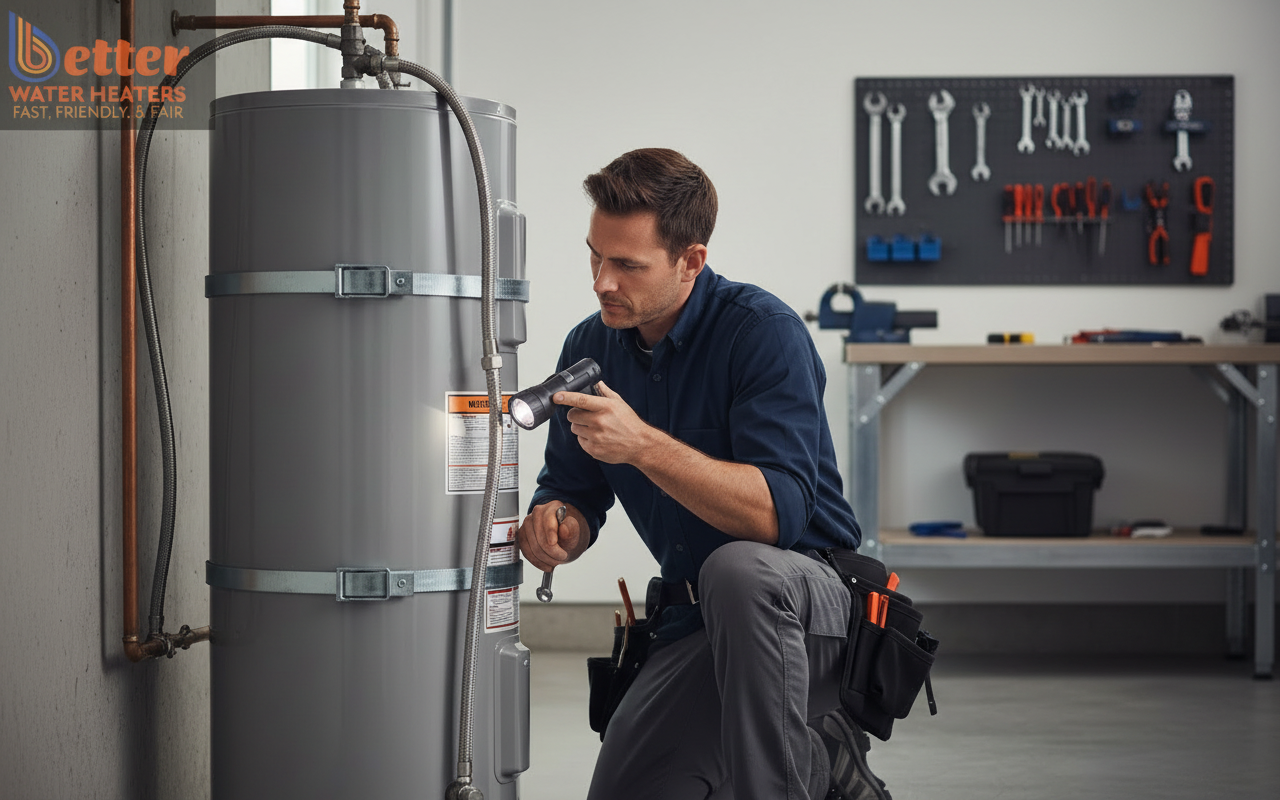
In our work with established Bay Area homeowners, we frequently see “DIY” straps that are either too loose or positioned incorrectly. To pass a seismic safety audit, your system must meet these criteria:
- The Two-Strap Rule: One strap in the upper one-third and one in the lower one-third of the tank.
- The 4-Inch Clearance: The lower strap must be at least 4 inches above the gas control valve to avoid interference.
- Structural Lag Bolts: Straps must be secured into the wall studs using 1/4″ x 3″ lag bolts and large washers.
2. Flexible Connectors: The Unsung Heroes of Bay Area Plumbing Safety
If the tank stays upright but the pipes snap, you still have a disaster on your hands; flexibility is the only way to survive the ground’s rolling motion.
The rigid copper pipes found in many older homes in Fremont or Berkeley are brittle. During an earthquake, the house moves one way, and the 500-pound water tank moves another. Without “flex lines,” the tension snaps the joints instantly. A comprehensive seismic safety audit prioritizes the installation of corrugated stainless steel connectors for both water and gas lines.
Consider these essential components for Bay Area plumbing safety:
- Corrugated Water Lines: These act like a spring, absorbing movement without losing their seal.
- Flexible Gas Connectors: Essential for preventing the #1 cause of post-earthquake fires.
- Flexible Sediment Traps: A newer requirement that ensures debris doesn’t clog your gas valve during micro-seismic activity.
Need a professional eye to check your connections? Schedule a professional safety inspection with our team today to ensure your home meets the latest standards.
3. Automatic Seismic Gas Shut-off Valve Installation
The most advanced protection you can give your home is a valve that thinks for itself when the earth starts shaking.
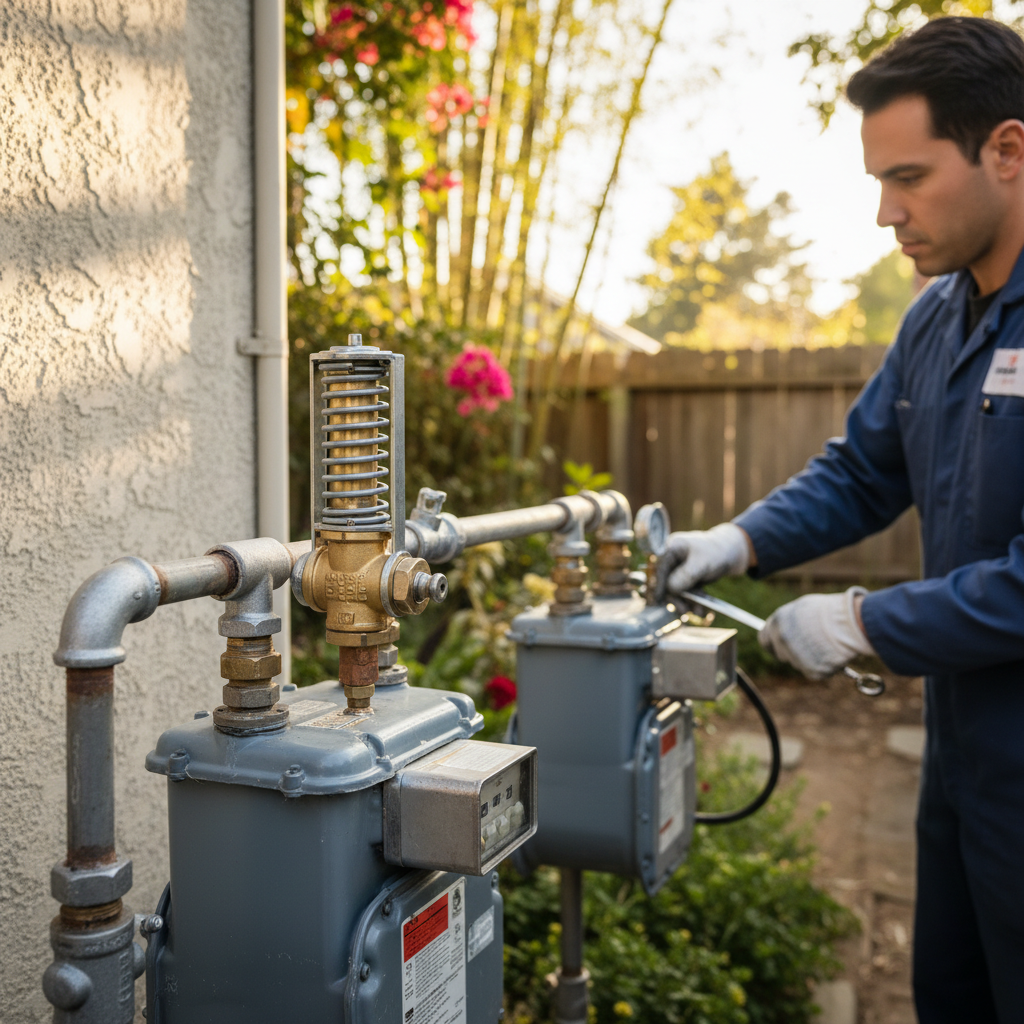
A seismic gas shut-off valve installation is often a requirement for real estate transfers in cities like San Francisco and Los Angeles, but it’s a smart move for any Bay Area resident. These valves are triggered by a 5.0+ magnitude vibration, instantly cutting off the fuel supply to your home. This prevents the “secondary disaster”—the fire that starts after the shaking stops.
| Feature | Standard Valve | Seismic Shut-off Valve |
|---|---|---|
| Activation | Manual only | Automatic (5.0+ Magnitude) |
| Fire Prevention | Low (requires human action) | High (instant response) |
| Insurance Benefit | None | Potential Premium Discounts |
| Code Compliance | Basic | Exceeds 2024 Standards |
But wait—here is an honest, contrarian insight: Not every home needs a seismic valve at the meter. If you have a tankless system with an internal solenoid shut-off, you might already have a layer of protection. However, for traditional tank systems, the external valve remains the gold standard for Hayward Fault home safety.
4. Expansion Tank Stability and Wall-Mounting Requirements
What most people miss is the “piggyback” appliance: the thermal expansion tank, which can become a dangerous projectile if not properly braced.
Since 2022, California codes have tightened around expansion tanks. These smaller tanks sit on top of your water heater and handle pressure changes. Because they are heavy when full of water, they cannot simply “hang” by their plumbing threads. A modern seismic safety audit checks for independent bracing or specialized mounting brackets that secure the expansion tank to the wall framing.
Common issues we find in mid-market Bay Area homes include:
- Expansion tanks supported only by thin copper piping.
- Lack of seismic strapping on the expansion tank itself.
- Corrosion at the connection point due to vibration-induced stress.
For more information on modern system components, you can view our comprehensive guide to tankless systems which often have different mounting requirements than traditional tanks.
5. The ‘Hidden Liability’: Insurance and Real Estate Compliance
In the Bay Area, an unstrapped water heater isn’t just a safety risk; it is a financial liability that can derail a home sale or void an insurance claim.
Insurance adjusters are increasingly looking for reasons to deny claims following natural disasters. If a post-quake fire is traced back to a water heater that didn’t meet earthquake strapping requirements, you may find yourself footing the bill for repairs. Furthermore, during the due diligence phase of a real estate transaction, a failed seismic safety audit is one of the most common “fix-it” items flagged by inspectors.
Here’s the thing: many homeowners try to save a few hundred dollars by doing it themselves, but a professional certification provides the paper trail you need for:
- Homeowners Insurance: Documented proof of seismic retrofitting.
- Real Estate Disclosures: Seamlessly passing the Natural Hazard Disclosure (NHD) requirements.
- Peace of Mind: Knowing that a 20-year expert verified the structural integrity of your installation.
At Better Water Heaters, we help our clients navigate these local regulations every day. If you’re managing a property or just moved into a new home, contact us for a free estimate on bringing your system up to code.
6. DIY vs. Professional Seismic Safety Audit: What’s the Difference?
While you can certainly check for the presence of straps yourself, a professional audit looks at the “systemic” risk of the entire plumbing stack.
A typical Bay Area mid-market client might notice their straps are tight, but they often overlook the flexible sediment traps or the age of the gas shut-off valve. Professionals use calibrated tools to ensure lag bolts are driven into the center of the stud, not just the edge, which would fail under the sheer force of a major quake. This level of detail is why Bay Area plumbing safety is best left to specialists who live and work in the shadow of the San Andreas fault.
Our internal AI content engine, Ingest.blog, helps us keep track of the latest regulatory changes from the California Energy Commission and local municipal codes so we can provide the most up-to-date advice to our customers.
Protect Your Home Before the Next Big One
The real kicker is that seismic retrofitting is one of the most affordable home improvements you can make, yet it protects your most valuable asset. Don’t wait for a tremor to tell you your straps were too loose or your pipes were too rigid. Take fifteen minutes this week to look at your water heater. If you see rigid copper pipes or only one strap, you are at risk.
Ready to secure your home? Book your 4-Point Seismic Safety Audit today and gain the peace of mind that comes with professional certification. Our experts serve the entire Bay Area, from San Jose to San Mateo, ensuring your hot water stays where it belongs—inside the tank.
Frequently Asked Questions
What are the legal earthquake strapping requirements in California?
California law requires all water heaters to be braced, anchored, or strapped to resist falling during an earthquake. This specifically means two straps—one in the upper third and one in the lower third of the tank—fastened securely to the wall studs with lag bolts. Failure to comply can lead to insurance claim denials and issues during home sales.
Does a tankless water heater need seismic strapping?
Tankless water heaters are wall-mounted and do not use traditional straps. However, they must be secured to a professional-grade mounting bracket anchored into wall studs or a masonry backing. They also require flexible water and gas connectors to account for building movement, which is a critical part of Bay Area plumbing safety.
How much does a seismic gas shut-off valve installation cost?
While prices vary based on your gas line size and location, a professional installation typically ranges from $300 to $600. This is a one-time investment that significantly reduces the risk of fire and may even qualify you for a discount on your homeowners insurance premium in high-risk zones.
Can I do a seismic safety audit myself?
You can perform a basic visual check for straps and leaks, but a professional seismic safety audit evaluates the structural integrity of the mounting surface, the flexibility of the connectors, and compliance with the 2024 California Plumbing Code. Professionals ensure that the installation will actually hold up under the unique stresses of a 6.0+ magnitude earthquake.