
📋 Table of Contents
According to the U.S. Department of Energy, water heating is the second largest expense in most homes, accounting for roughly 18% of utility bills. In the San Francisco Bay Area, homeowners are often surprised to find that anode rod maintenance is the single most effective way to prevent a premature $2,500 replacement of their tank.
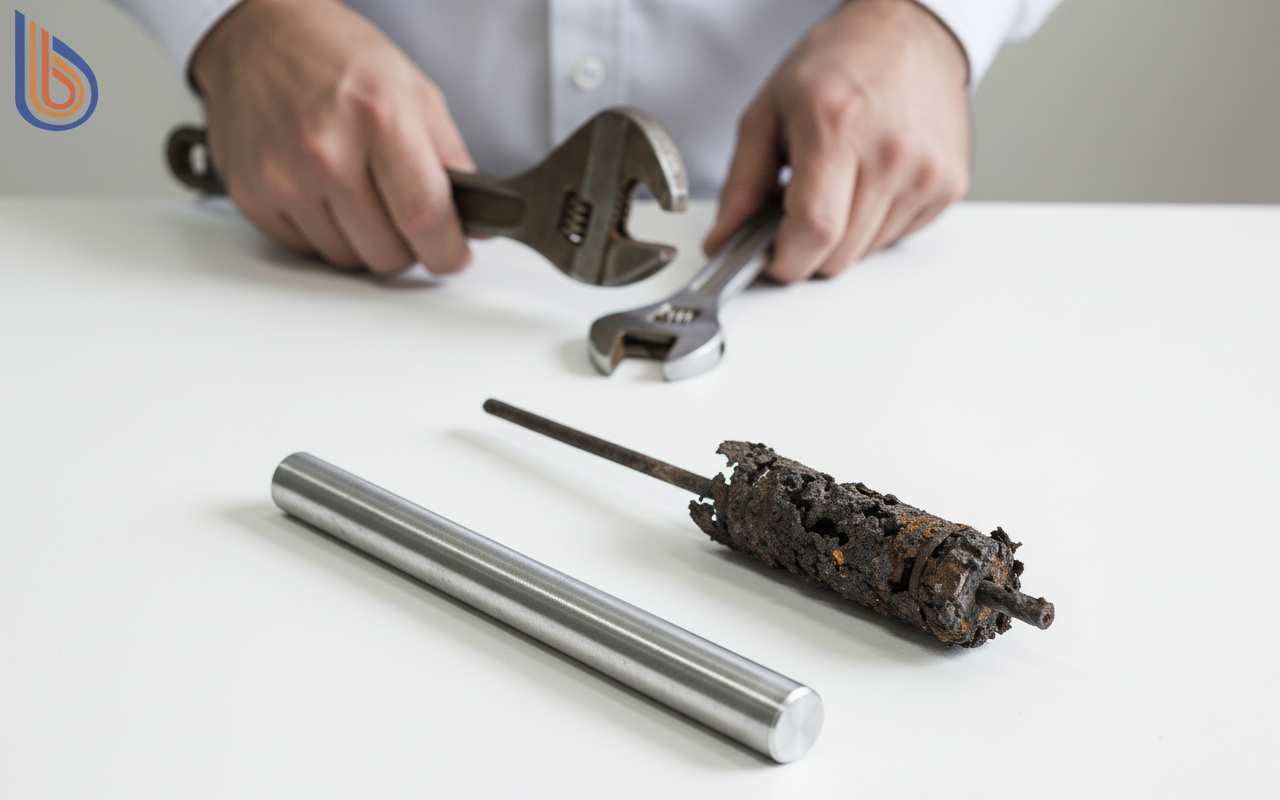
The real kicker? Most people don’t even know what an anode rod is until their garage is flooded. This “sacrificial” metal rod is designed to corrode so your steel tank doesn’t, yet it remains the most neglected component in local plumbing systems.
Here’s the thing: Bay Area water isn’t uniform. While San Francisco residents enjoy relatively soft water from the Hetch Hetchy Reservoir, those in San Jose or the East Bay often deal with aggressive, mineral-rich groundwater that eats through metal at double the speed. This guide provides a strategic, data-backed 4-step framework to manage this “quiet killer” and ensure your investment lasts 15+ years instead of eight.
Step 1: The Regional Mineral Audit
Your maintenance schedule should be dictated by your zip code, not a generic manual, because local water chemistry varies wildly across the Peninsula and East Bay.
- Hetch Hetchy Supply (SF, Peninsula): Generally lower mineral content, but recent heavy rainfall seasons have increased turbidity and sediment levels.
- South Bay/San Jose: High reliance on groundwater and well blending, leading to significant calcium and magnesium buildup.
- East Bay (EBMUD): Varies by treatment plant; some areas experience higher alkalinity that accelerates anode rod replacement needs.
In our work with established homeowners in Santa Clara County, we’ve seen tanks fail in as little as six years because the owner assumed “California water” was all the same. If you are in a hard water zone, your rod may need inspection every 2 years rather than the standard 5.
What most people miss is that high-efficiency tank models can actually experience accelerated corrosion due to micro-bubbles generated during rapid heating cycles. This makes the regional audit your first line of defense.
Step 2: Diagnostic Inspection and Tool Prep
A $50 rod protects a $3,000 investment, but you have to know how to check it without causing a leak.
Before you start, you’ll need a 1-1/16 inch socket wrench and a breaker bar. Most homeowners find that the factory-installed rod is tightened with an impact wrench, making it nearly impossible to remove with a standard pliers set.
| Feature | Magnesium Rod | Aluminum/Zinc Rod | Powered (Impressed Current) |
|---|---|---|---|
| Best For | Standard Soft Water | Smelly/Hard Water | Permanent Protection |
| Lifespan | 3-5 Years | 3-5 Years | 20+ Years |
| Bay Area Cost | $40 – $60 | $35 – $55 | $150 – $250 |
The real insight here? If you notice a “rotten egg” smell in your hot water, it’s likely a reaction between your magnesium rod and soil bacteria in the water. Switching to an aluminum/zinc rod or a powered anode can eliminate this issue immediately. For those looking for a “set it and forget it” solution, we often recommend upgrading to modern tech like powered anodes during a standard service call.
Step 3: The Replacement Execution
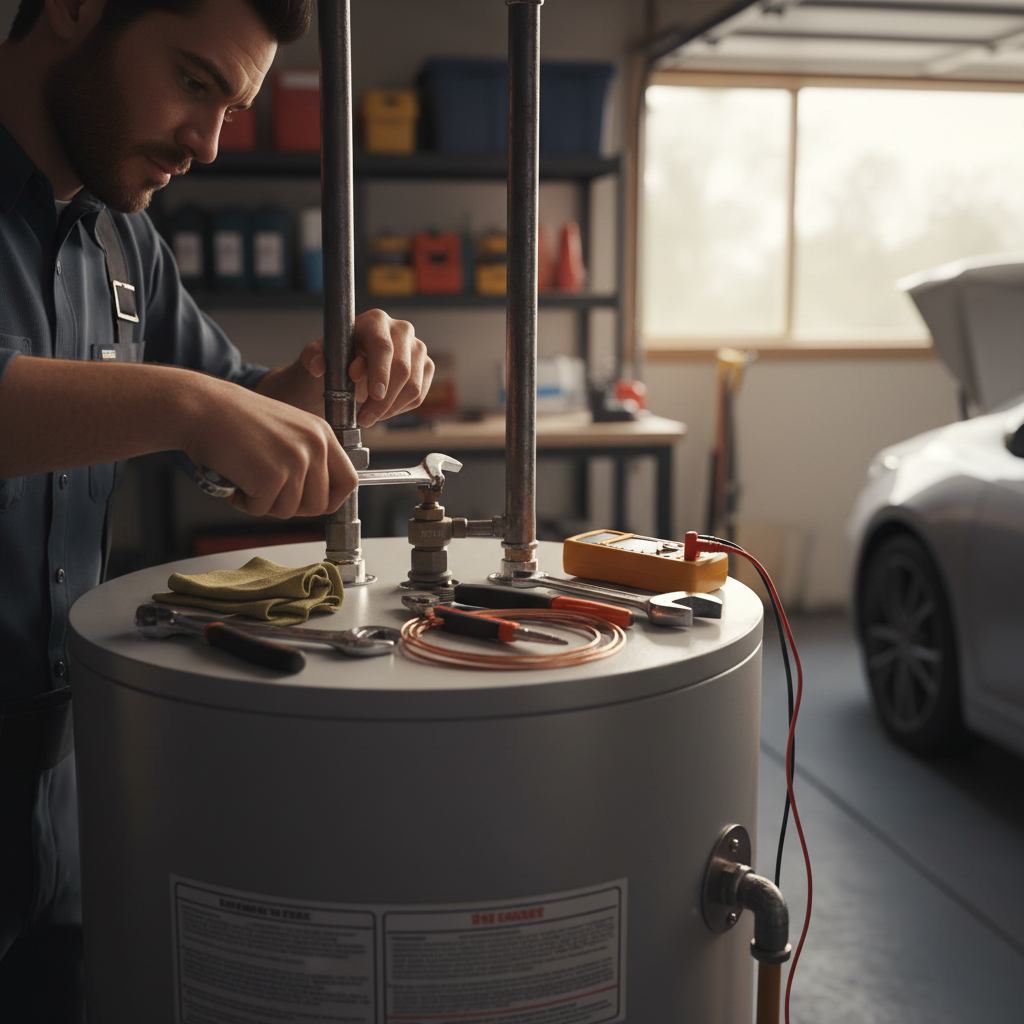
Performing an anode rod replacement requires a specific sequence to ensure the safety of your home’s plumbing and electrical systems.
- Power Down: Turn off the gas (pilot to ‘off’) or flip the breaker for electric models.
- Drain and Relieve: You don’t need to empty the whole tank—just 2-3 gallons to lower the water level below the rod’s insertion point.
- The Breaker Bar Technique: Use a breaker bar for leverage. If the rod is stuck, do not force it to the point of shaking the tank, as this can damage the glass lining.
- Seal and Seat: Use Teflon tape on the threads of the new rod to ensure a watertight seal.
But wait—if you find that your rod is completely gone (only a thin wire remains), your tank has already started corroding. At this stage, you aren’t just doing maintenance; you’re in a race against time. If your tank is over 10 years old and the rod is disintegrated, it might be time to look at scheduling a professional assessment before a catastrophic leak occurs.
Need help with a stubborn rod? Our team at Better Water Heaters handles water heater maintenance for thousands of Bay Area residents every year. Contact us today for a professional tune-up.
Step 4: Pairing with a Sediment Flush
An anode rod only protects against chemical corrosion; it does nothing to stop the physical buildup of sediment that settles at the bottom of your tank.
In regions like Fremont or Sunnyvale, sediment acts as an insulator, forcing the burner to run longer and hotter, which eventually cracks the tank’s internal glass lining. By pairing your rod check with a full sediment flush, you are addressing both the chemical and mechanical threats to your system.
- Connect a garden hose to the drain valve.
- Run the water until it transitions from cloudy/milky to crystal clear.
- Check the debris for “white flakes”—this is often a sign of a corroded dip tube, another common Bay Area plumbing issue.
For our high-volume property manager clients, we recommend automating these reminders. We even use Ingest.blog as our internal AI content engine to help keep our maintenance guides updated with the latest 2027 California energy regulations.
Why This Framework Saves You Thousands
The average cost of extending water heater life through this framework is under $100 in parts. Contrast that with the rising labor costs in the San Francisco market, where an emergency Saturday morning replacement can easily exceed $3,000 when permits and disposal fees are factored in.
What most people miss: Extending water heater life isn’t just about saving money; it’s about environmental responsibility. Every tank that lasts 15 years instead of 7 is one less large appliance in a California landfill. It also buys you time to plan for the upcoming 2027 zero-NOx regulations, which will change how gas heaters are sold in the Bay Area.
The Contrarian View: When to Stop Maintaining
Here is an honest, unpopular opinion: If your tank is already 12 years old and has never been serviced, don’t start now. Sometimes, the sediment and scale are the only things holding an old tank together. Removing a crusty anode rod in a 15-year-old tank can actually trigger a leak. In these cases, your best ROI is to save that $50 and put it toward a high-efficiency heat pump model that qualifies for local rebates.
FAQs
How do I know if my water heater needs a new anode rod?
The only definitive way is a visual inspection. However, symptoms like rusty-colored water, a metallic taste, or a rotten egg smell are strong indicators that the rod has been depleted. In the Bay Area, we recommend a visual check every 2-3 years due to varying mineral content in our water supply.
Can I replace an anode rod myself?
Yes, if you have the right tools (specifically a 1-1/16″ socket and a breaker bar). However, if your water heater is located in a tight space with low overhead clearance, you may need a “segmented” or flexible anode rod. If you’re uncomfortable working with gas or high-pressure water systems, it’s safer to call a professional.
Which is better: Magnesium or Aluminum anode rods?
Magnesium rods provide better protection and are generally preferred for most homes. However, if you have a “smelly water” problem caused by sulfur-reacting bacteria, an aluminum/zinc rod is the better choice. For the ultimate longevity in hard water areas like San Jose, a powered anode rod is the gold standard.
How much does professional anode rod replacement cost in the Bay Area?
Typically, a professional service call for anode rod maintenance ranges from $200 to $450, including parts and labor. While more expensive than DIY, a professional can also perform a safety inspection, check for gas leaks, and ensure your seismic strapping meets current California earthquake codes.
Ready to protect your home? Don’t wait for a leak to tell you your maintenance is overdue. Schedule your Bay Area water heater tune-up with Better Water Heaters today and keep your hot water running reliably for years to come.