
📋 Table of Contents
In the Bay Area, multi-generational households are the fastest-growing housing segment, yet most standard water heater installations aren’t designed to handle three showers running while the dishwasher cycles. According to Energy.gov, water heating is the second largest energy expense in the home, making the heat pump vs tankless debate a critical financial and lifestyle decision for large families.
Key Takeaways for Homeowners
- Tankless systems provide unlimited hot water but can struggle with flow rate if too many fixtures run at once.
- Heat pump systems offer massive energy savings and rebates but require strategic sizing to avoid cold showers during peak hours.
- The Hybrid Choice: For many Bay Area homes, an 80-gallon hybrid heat pump is the ‘sweet spot’ for balancing efficiency and capacity.
The Morning Rush: Performance Under Pressure
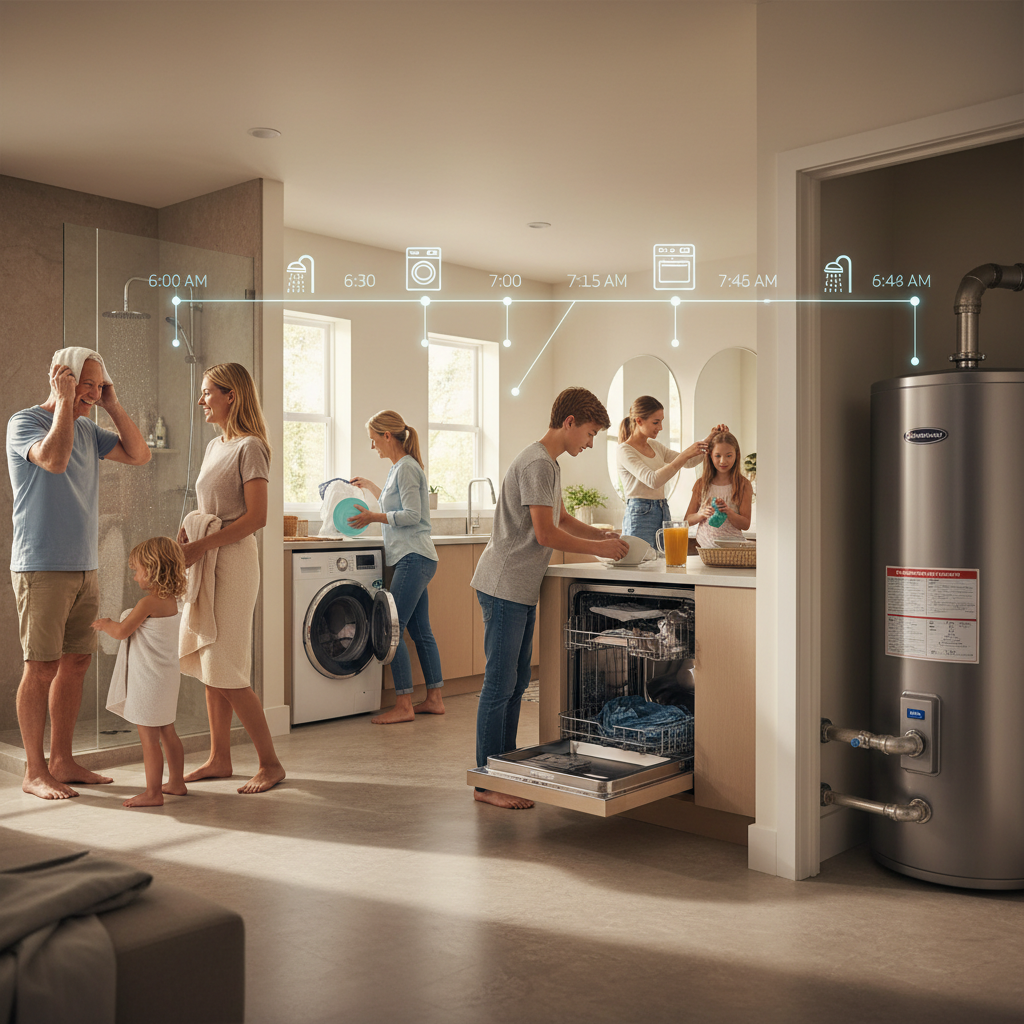
The real test of any water heater isn’t a single shower; it’s the 7:00 AM chaos when kids are getting ready for school and grandparents are starting their day. When comparing heat pump vs tankless performance, you have to look at ‘Peak Hour Demand’ versus ‘Continuous Flow.’
What most people miss is that a tankless unit doesn’t actually provide ‘infinite’ water in terms of volume—it provides it in terms of duration. If your household needs to run three showers simultaneously, a standard tankless unit might prioritize temperature over pressure, leading to a frustrating trickle. Conversely, a heat pump relies on its storage tank; once that 50 or 80 gallons is gone, you are at the mercy of the recovery rate.
| Performance Factor | Tankless (High-Efficiency) | Heat Pump (Hybrid) |
|---|---|---|
| Simultaneous Showers | 2-4 (depending on GPM) | 3-5 (until tank depletes) |
| Hot Water Duration | Unlimited | Limited to tank size |
| Recovery Time | Instant | 20-45 minutes (Hybrid mode) |
| Bay Area Rebates | Moderate | High (Up to $4,900+) |
In our work with established Bay Area families in neighborhoods like Los Gatos or Palo Alto, we often see that the ‘Grandparent Suite’ adds a layer of complexity. Seniors often prefer higher, more consistent temperatures, while high-volume laundry for kids demands sheer capacity. Balancing these needs requires high capacity water heaters that don’t fluctuate when a second tap opens.
Why Tankless Wins on Convenience for Large Families
If your primary pain point is ‘running out of hot water’ after the third person showers, tankless technology is the gold standard for endless hot water for large families. Because these units heat water on demand, there is no tank to empty. You could theoretically shower for five hours straight and the water would stay at 120 degrees.
But wait—there’s a caveat for multi-generational homes. The ‘simultaneous use’ factor is the biggest hurdle. A typical 199k BTU tankless unit can handle about 5-7 gallons per minute (GPM) in our moderate California climate. If you have a rain-head shower (2.5 GPM), a standard shower (2.0 GPM), and a dishwasher (1.5 GPM) all running, you are at the limit. For households with 5+ occupants, we often recommend installing two tankless units in parallel or a single ultra-high-output commercial-grade residential unit.
Need help calculating your family’s GPM requirements? Schedule a free capacity audit with our specialists today.
The Heat Pump Revolution: ROI and Environmental Impact
Heat pumps are the most efficient way to heat water because they move heat rather than creating it. For a Bay Area energy efficiency play, nothing beats a heat pump, especially with the 2027 gas water heater regulations looming. These systems are essentially a refrigerator running in reverse, pulling heat from the surrounding air and dumping it into the water tank.
The real kicker? The heat pump water heater tax credits 2024 and local incentives from programs like BayREN can bring the installation cost down significantly, sometimes making it cheaper than a standard tank replacement. For a typical Bay Area mid-market client, the energy savings alone can pay for the unit within 5-7 years.
- Efficiency: Heat pumps use 60-70% less electricity than standard electric tanks.
- Dehumidification: They naturally cool and dry the air in your garage or basement.
- Smart Grid Ready: Many models can be programmed to heat water when electricity rates are lowest.
Managing the ‘Hybrid’ Recovery Rate
One honest, contrarian insight: A heat pump in ‘Economy’ mode will 100% fail a family of six during the morning rush. To make a heat pump work for multi-gen homes, you must utilize the ‘Hybrid’ or ‘High Demand’ settings. This engages electric backup elements to increase the hybrid water heater recovery rate when the tank temperature drops rapidly.
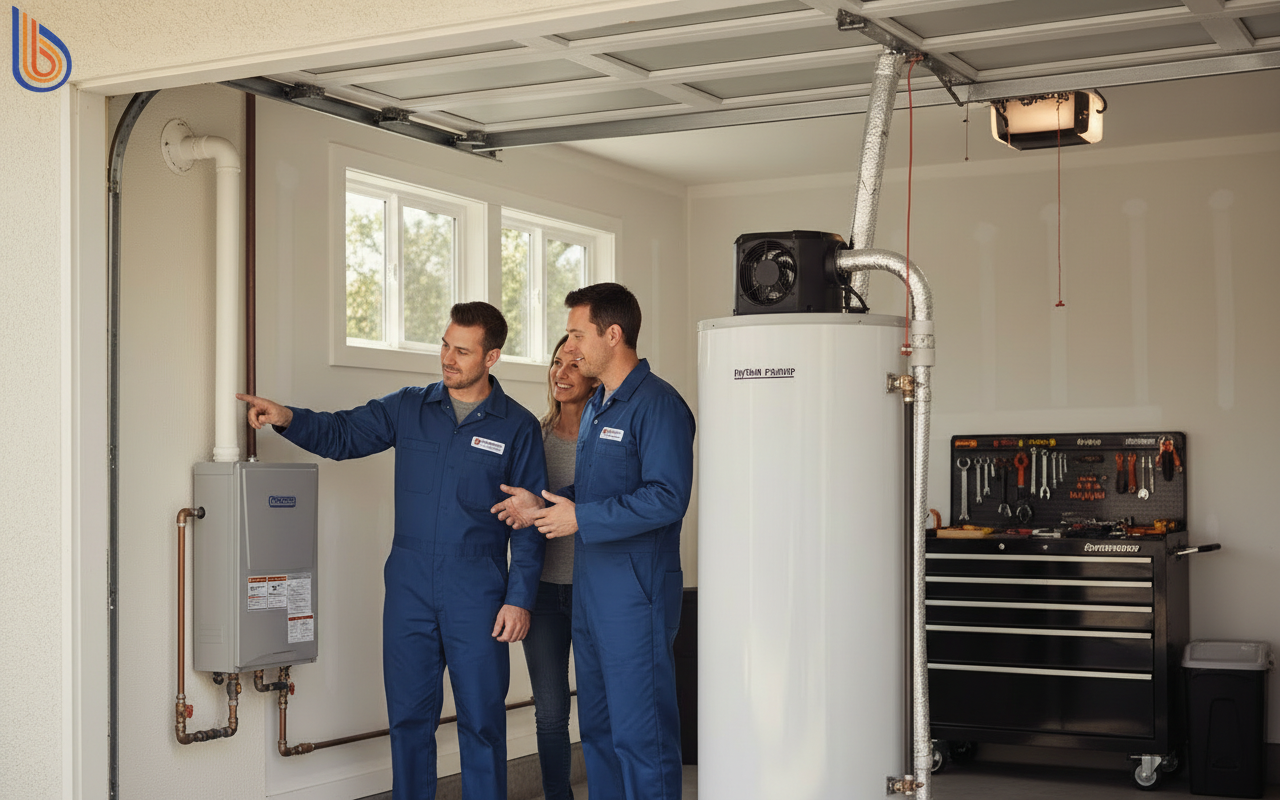
What most people miss is the noise and space trade-off. Heat pumps have a compressor on top, which makes a humming sound similar to a dishwasher. If your water heater is located in a closet next to a bedroom—common in some ADUs or split-level homes—this might be a deal-breaker. However, in a garage, it’s rarely an issue. For multi-generational home plumbing upgrades, we focus on placing these units where the ambient air can be utilized without disturbing the quiet of the home.
Space Savings and ADU Considerations
With the rise of Accessory Dwelling Units (ADUs) in the Bay Area, space is at a premium. This is where tankless units shine. They are about the size of a suitcase and can be mounted on the exterior of the home. This frees up valuable square footage inside the unit for storage or living space. If you’re managing a property with multiple units, the space-saving benefit of tankless often outweighs the energy rebates of a heat pump.
However, if you have solar panels, a heat pump is the logical choice. You can effectively ‘store’ your solar energy in the form of hot water, creating a highly sustainable loop that reduces your reliance on the grid. Here’s a tip: check your electrical panel first. A heat pump requires a dedicated 240V circuit, which may require an upgrade if you’re currently on gas.
Ready to see which system fits your home’s footprint? Explore our tankless installation guides or call us for a site visit.
Emergency Preparedness: Outages and Reliability
In the Bay Area, we have to think about Public Safety Power Shutoffs (PSPS). A gas tankless water heater still requires electricity to ignite and run the control board. Without a small battery backup, a tankless unit provides zero hot water during a blackout. A heat pump, while also reliant on electricity, at least holds a tank of hot water that will stay warm for 12-24 hours if insulated properly.
For families prioritizing resilience, we often discuss backup power options. A small UPS (Uninterruptible Power Supply) can keep a tankless unit running for days, whereas a heat pump would require a significant home battery system like a Tesla Powerwall to continue heating water. It’s a nuance that often gets overlooked until the lights go out.
Final Verdict: Which is Best for Your Family?
The choice between heat pump vs tankless ultimately comes down to your household’s specific ‘pain threshold.’ If your family prioritizes back-to-back luxury and has limited space, tankless is the winner. If you are focused on long-term ROI, environmental impact, and maximizing the $4,900+ in available rebates, the heat pump is the superior strategic choice.
Don’t guess on sizing for your multi-generational home. Our team at Better Water Heaters has over 20 years of experience navigating Bay Area codes and high-occupancy plumbing needs. Contact us today for a transparent, fixed-price quote and let’s get your hot water system future-ready.
Frequently Asked Questions
Is a heat pump water heater enough for a family of 6?
Yes, provided you size it correctly. For a family of six, we typically recommend an 80-gallon hybrid model. When set to ‘Hybrid’ mode, the unit combines the efficiency of the heat pump with the quick recovery of electric heating elements to ensure you don’t run out during peak usage hours.
Can I switch from gas tankless to a heat pump?
While possible, it is often a significant undertaking. You will need to run a new 240V electrical line to the location and ensure there is enough vertical clearance and airflow for the heat pump to operate efficiently. Most homeowners find it easier to stick with the existing fuel source unless they are undergoing a full home electrification project.
How much can I save with Bay Area heat pump rebates?
As of 2024, Bay Area homeowners can access up to $4,900 or more in combined incentives. This includes federal tax credits under the Inflation Reduction Act, BayREN rebates, and specific utility programs like those from CleanSymmetry or Peninsula Clean Energy. We handle the paperwork to ensure you maximize these savings.
Do tankless water heaters require more maintenance?
In the Bay Area, where hard water is common in many zones, tankless heaters should be flushed annually to remove scale buildup. Heat pumps require less frequent internal maintenance but do have an air filter that needs to be cleaned periodically to maintain efficiency. Regular service extends the life of both systems significantly.