
📋 Table of Contents
According to the Bay Area Air Quality Management District, water heaters account for roughly 90% of nitrogen oxide emissions from buildings in our region. For many multi-generational households in San Jose or Oakland, the looming hybrid water heater transition feels less like an environmental choice and more like a logistical puzzle involving high demand and aging electrical panels.
The real kicker? Most homeowners fear that switching to electric means lukewarm morning showers for the fifth person in line, but with the right framework, you can actually increase your capacity while slashing operating costs. If you are managing a household with grandparents, kids, and perhaps an ADU tenant, the standard “one-size-fits-all” installation will fail your peak demand needs.
Key Takeaways for Bay Area Homeowners:
- Stacking BayREN, TECH, and Federal incentives can offset up to $4,900+ in costs.
- High-recovery hybrid models outperform standard electric tanks for large families.
- Smart circuit sharing can often bypass the need for a $5,000 panel upgrade.
- Strategic placement is essential to meet California Title 24 noise requirements.
Step 1: Navigating the Bay Area Rebate Stack for Your Hybrid Water Heater Transition
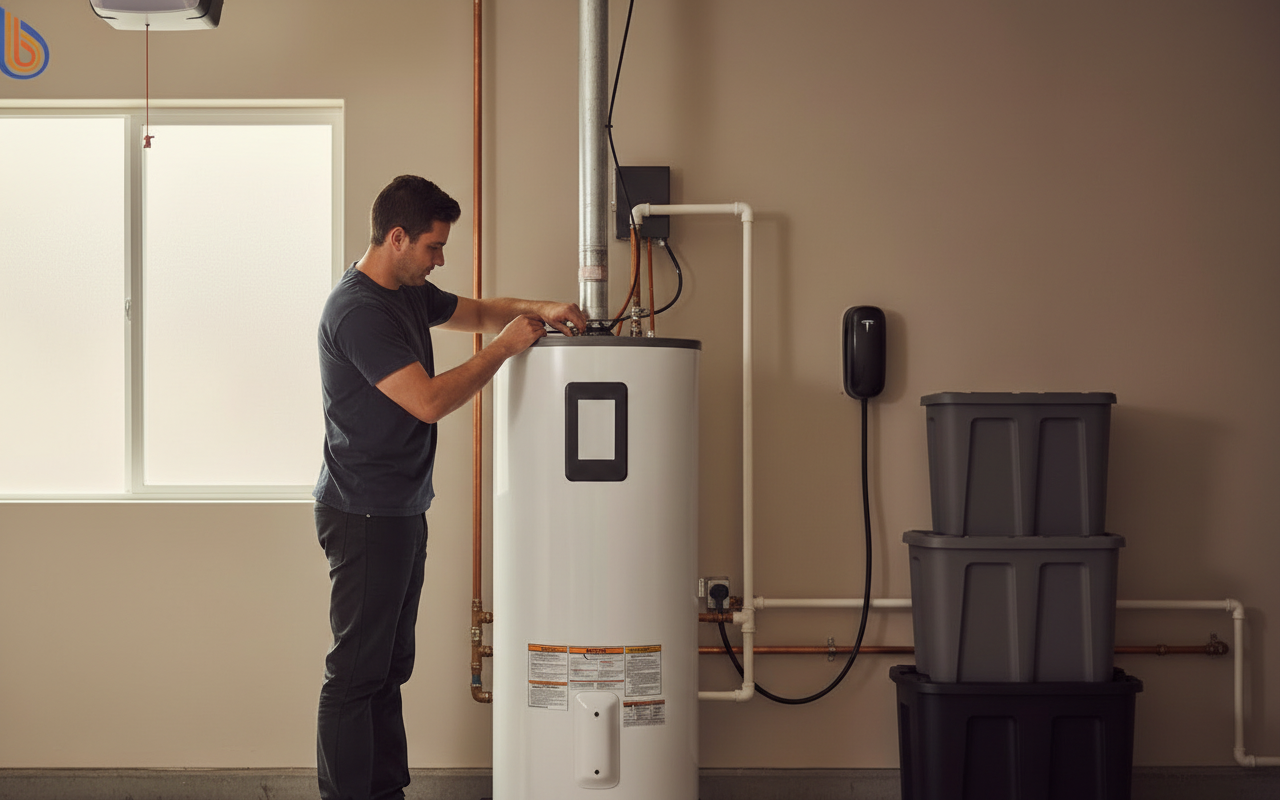
The most successful electrification projects we see don’t just pick a unit; they treat the financing like a strategic investment portfolio. In the Bay Area, you aren’t limited to a single incentive; you can “stack” local, state, and federal programs to potentially reach a near-zero net cost.
What most people miss is that Bay Area home electrification incentives are often first-come, first-served, and requires specific contractor certifications. For instance, the TECH Clean California program offers thousands in rebates, but only if your installer is registered in their database. Here is how a typical Bay Area mid-market client might stack their savings:
- BayREN Home+ Rebates: Offers up to $1,000 for switching from gas to a heat pump.
- TECH Clean California: Provides variable incentives often ranging from $1,000 to $3,100 depending on your utility provider (like PG&E or Peninsula Clean Energy).
- Federal Tax Credit (25C): Allows you to claim 30% of the project cost, up to $2,000 annually.
- Local Utility Bonuses: Programs like Silicon Valley Clean Energy (SVCE) often add another $1,000 to the pot.
But wait—don’t just assume the highest rebate is the best deal. Some “free” programs limit you to lower-tier equipment that won’t meet the hot water recovery rate required for a six-person home. Always prioritize the equipment’s performance over the rebate’s face value. If you’re feeling overwhelmed by the paperwork, contact our rebate specialists to handle the filings for you.
Step 2: Solving the 200-Amp Panel Myth in Older Peninsula Homes
The biggest barrier to a hybrid water heater transition isn’t the plumbing; it’s the 100-amp service common in mid-century homes in San Mateo and Redwood City. Many electricians will tell you a full panel upgrade is mandatory, adding $5,000 to your bill, but this is often unnecessary.
Here’s the thing: modern “smart” circuit sharing and power management tools allow you to prioritize loads. By using a 120V heat pump water heater or a circuit-sharing plug that pauses the water heater when your EV charger is at peak draw, you can stay within your existing panel’s limits. According to Energy.gov, these units are significantly more efficient than traditional resistance heaters, requiring less raw amperage over time.
In our work with local families, we focus on these electrical workarounds:
- 120V “Plug-In” Models: Great for replacing gas units without running a new 240V line.
- Load Balancing: Using smart breakers to manage peak demand across the home.
- Sub-panel Optimization: Adding a small dedicated sub-panel for high-draw appliances.
| Feature | Traditional Electric Tank | Hybrid (Heat Pump) | Tankless Gas (Current) |
|---|---|---|---|
| Annual Operating Cost | $600 – $800 | $150 – $250 | $400 – $600 | Recovery Rate (GPH) | 20-25 | 40-60 (Hybrid Mode) | Endless (Single User) | Bay Area Rebates | None | Up to $4,900 | None |
Step 3: Selecting Equipment for Maximum Hot Water Recovery Rate
Recovery time realism is the difference between a happy family and a morning spent shivering in the shower. A hybrid water heater transition requires understanding that these units have three modes: Heat Pump Only (efficient but slow), Electric Only (fast but expensive), and Hybrid (the sweet spot).
For large households, we often compare the AOSmith Voltex vs Rheem Performance Platinum. While the AOSmith is known for its quiet operation, the Rheem often wins on raw hot water recovery rate in high-demand scenarios. If you have five or more people, we typically recommend an 80-gallon tank rather than a 50-gallon, even if the 50-gallon is what you had previously. The extra storage acts as a thermal battery, ensuring the heat pump has plenty of time to work without kicking into the expensive “high demand” resistance mode.
What most people miss is that heat pumps thrive on ambient heat. In the Bay Area’s moderate climate, these units are incredibly efficient year-round. However, if you’re comparing hybrid water heater vs tankless for large families, remember that while tankless provides endless water, it cannot leverage your solar panels or off-peak utility rates like a hybrid tank can. Ready to see which model fits your home? Explore our comparison guides.
Step 4: Strategic Placement to Meet Title 24 and Noise Standards
The real-world challenge of Bay Area home electrification is where to put the unit. Because hybrid water heaters use fans to pull heat from the air, they make noise (similar to a dishwasher) and exhaust cool air. If you place a unit directly next to a bedroom in a multi-generational home or an ADU, you’ll hear about it from your tenants or family members.
California Title 24 regulations also require specific clearances for ventilation. To maximize performance and minimize disruption, consider these placements:
- The Garage: The gold standard. It provides ample air volume and keeps noise away from living areas.
- Exterior Closets: Common in San Jose; requires proper venting to ensure the unit doesn’t “freeze” its own air supply.
- Attics: Only viable if the floor is reinforced, but excellent for capturing rising heat from the home.
At Better Water Heaters, we utilize advanced diagnostic tools to measure ambient temperature and airflow before installation. This ensures your hybrid water heater transition doesn’t lead to a unit that struggles to breathe, which would drastically lower your efficiency and equipment lifespan.
Why the “Zero-Out” Strategy is the Future of the Bay Area
The San Francisco gas water heater ban and upcoming 2027 regional regulations are pushing us toward a mandatory transition. However, savvy homeowners are using this window to execute a “Zero-Out” strategy—aligning equipment failure with peak rebate availability.
By combining a hybrid water heater transition with an existing solar PV array, you aren’t just saving money; you’re effectively pre-paying for 15 years of hot water. At Better Water Heaters, we’ve helped homeowners navigate these complexities for over 20 years. We don’t just swap tanks; we engineer hot water solutions for the unique demands of Bay Area life. To keep our content high-quality and timely, we use ingest.blog as our internal AI content engine to track local regulation changes in real-time.
Need a professional eye on your mechanical room? Schedule a free site assessment today and let’s build your transition roadmap together.
Frequently Asked Questions
How long does the hybrid water heater transition take?
A typical installation takes 4 to 8 hours. However, the planning phase—including rebate pre-approval and electrical permitting—can take 1-2 weeks. We recommend starting the process before your current gas heater fails to ensure you don’t lose access to hot water while waiting for permits.
Can a hybrid water heater keep up with a family of 6?
Yes, provided you size the unit correctly. For a family of 6, we recommend an 80-gallon hybrid model with a high hot water recovery rate. When set to “Hybrid Mode,” these units use both the heat pump and backup elements to ensure you never run out during morning rushes.
Do I really need a permit for a water heater in the Bay Area?
Absolutely. Beyond being a legal requirement, permits are necessary to claim BayREN heat pump rebates 2024 and state incentives. A permit also ensures your unit meets California’s strict seismic strapping and safety codes, protecting your home during an earthquake.
What is the noise level of a hybrid water heater?
Most modern hybrid units operate at 45-55 decibels, which is similar to a modern dishwasher or a quiet conversation. While noticeable in a quiet hallway, they are virtually silent when installed in a garage or an insulated exterior closet.
How much can I save on my PG&E bill?
Homeowners switching from a standard electric tank to a hybrid model typically see a 60-70% reduction in water heating costs. When switching from gas, the savings depend on current Tier 1 vs Tier 2 gas pricing, but the efficiency gain is undisputed.