
📋 Table of Contents
According to the American Society of Sanitary Engineering (ASSE), water at 140°F can cause a third-degree burn in just five seconds, yet this is the exact temperature required to kill 99% of Legionella bacteria within 32 minutes. For many Bay Area homeowners, this creates a dangerous paradox: do you risk bacterial growth in a lukewarm tank, or do you risk a trip to the ER from a scalding tap? The solution isn’t found in a larger tank, but in a thermostatic mixing valve.
Key Takeaways for Homeowners
- The 140/120 Rule: Store water at 140°F to kill bacteria, but deliver it at 120°F to prevent burns.
- Capacity Boost: Using a mixing valve can effectively increase your available hot water by 20% or more.
- Code Compliance: Modern California plumbing codes often require ASSE 1017 certified valves for new installations.
- Health Protection: Prevents the growth of Legionnaires’ disease while eliminating the risk of accidental scalding.
The Biology vs. Safety Conflict: Why 120°F Isn’t Enough
Most people believe setting their water heater to 120°F is the gold standard for efficiency and safety, but from a biological standpoint, it’s a breeding ground. Here’s the kicker: Legionella bacteria, the cause of Legionnaires’ disease, thrives in stagnant water between 68°F and 122°F. If your tank is set to 120°F, water heater safety is actually compromised because the temperature differential at the bottom of the tank often dips into the danger zone.
By installing a thermostatic mixing valve, you can crank your tank up to 140°F—hot enough to keep the water sterile—while the valve automatically blends in cold water at the outlet to ensure the water reaching your faucets never exceeds a safe 120°F. This “bridge” between high-heat storage and low-heat delivery is the only way to satisfy both health and safety requirements simultaneously.
In our work with established homeowners in San Jose and Redwood City, we often see older systems where the thermostat is dialed down to avoid burning the grandkids. Unfortunately, this creates a “biofilm” issue inside the tank that shortens the appliance’s life and puts the family at risk for respiratory issues. Transitioning to a high-heat storage model with a professional valve installation is the professional standard for 2025.
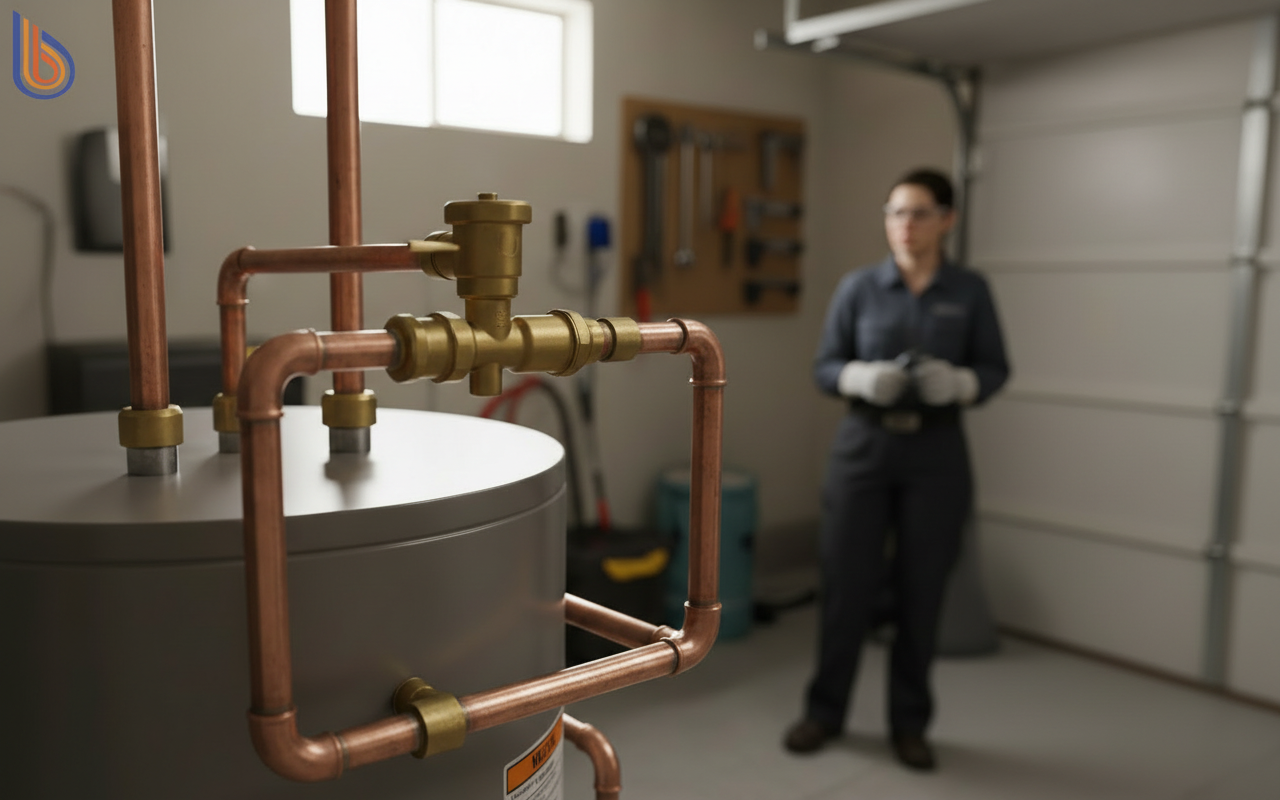
How a Thermostatic Mixing Valve Boosts Hot Water Capacity
A mixing valve is essentially a performance hack that lets a 50-gallon tank act like a 65-gallon tank without the extra footprint. When you store water at 140°F instead of 120°F, every gallon of water leaving the tank is much hotter than what you actually need at the showerhead. Because the valve mixes in a significant amount of cold water to bring that 140°F down to 120°F, you are drawing less total volume from the tank itself.
What most people miss is the math of “effective capacity”:
- Standard Setup: 50 gallons stored at 120°F = 50 gallons of 120°F water.
- Optimized Setup: 50 gallons stored at 140°F + cold water blending = approximately 60-65 gallons of 120°F water.
- The Result: You get roughly 20-30% more hot water capacity for the cost of a single plumbing component.
This is a game-changer for a typical Bay Area mid-market family with multiple teenagers or a high-flow master shower. Instead of spending $4,000+ on a larger tank or a complex tankless conversion, a $500–$800 valve installation provides the extra “stretch” needed for back-to-back showers. If you’re tired of the water going cold mid-shampoo, schedule an inspection to see if your system is a candidate for a capacity boost.
The ASSE 1017 Standard and Scald Protection
Not all valves are created equal, and using a cheap, non-certified part is one of the most common reasons for failed home inspections in Santa Clara County. To meet water heater safety codes, a valve must carry the ASSE 1017 certification, which ensures it can react instantly to pressure or temperature changes. If your cold water pressure drops (say, because a toilet flushed), a certified valve will immediately restrict the hot water flow to prevent a sudden surge of 140°F water from hitting your skin.
The real danger zone in DIY installations is failing to account for thermal layering. In many tanks, the water at the top is significantly hotter than the water at the bottom. A high-quality thermostatic mixing valve uses a wax-filled element that expands and contracts to maintain a precise output temperature regardless of these internal tank fluctuations. This is particularly critical for senior citizens or those with sensitive skin who may not be able to react quickly to temperature spikes.
| Feature | Standard Tank (No Valve) | Tank with Mixing Valve |
|---|---|---|
| Storage Temp | 120°F (Bacteria Risk) | 140°F+ (Bacteria Kill Zone) |
| Effective Capacity | 100% of tank volume | 120% to 130% of tank volume |
| Scald Risk | Moderate (Fluctuates) | Minimal (Valve Regulated) |
| Code Compliance | Basic | Advanced (Meets ASSE 1017) |
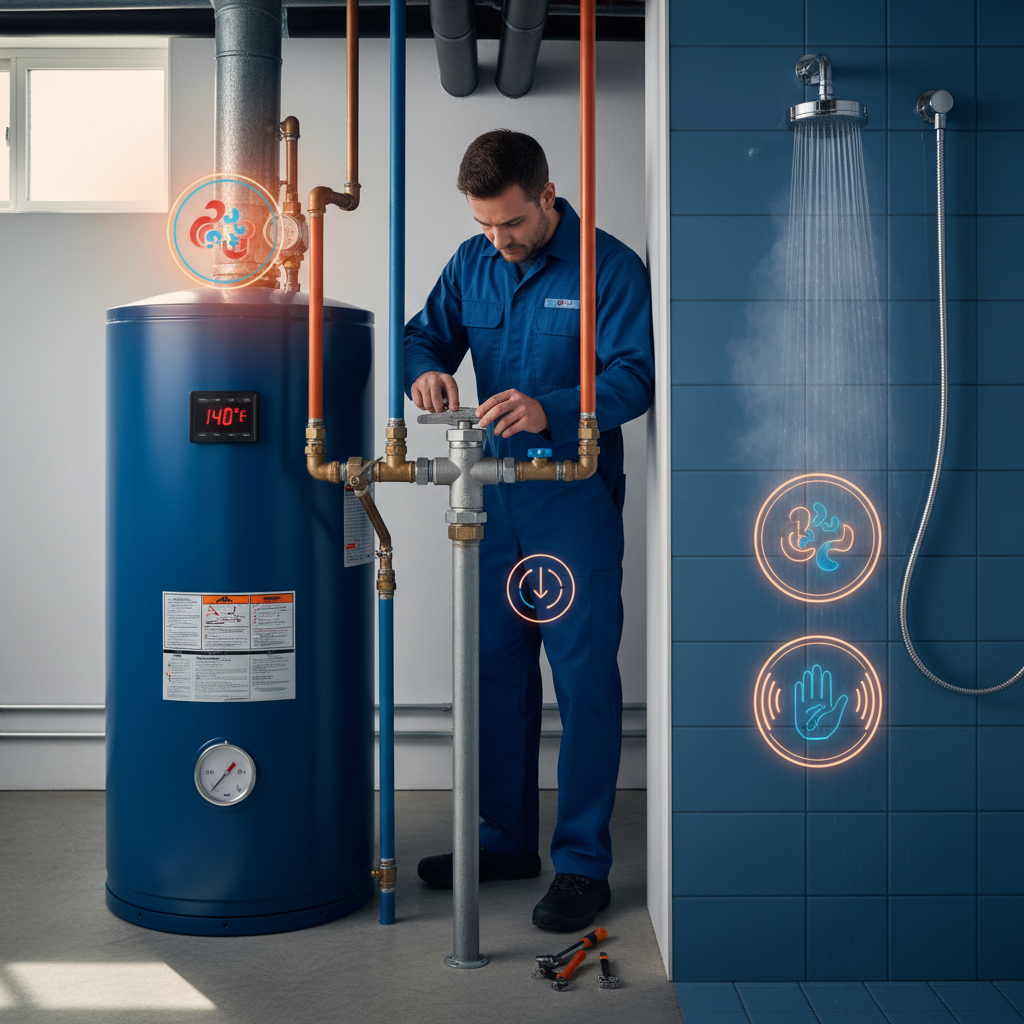
Energy Efficiency: Does Storing Water Hotter Cost More?
The contrarian truth that many “green” blogs won’t tell you is that storing water at 140°F does technically increase standby heat loss compared to 120°F. However, for most Bay Area homes, this cost is negligible—often less than $2–$3 per month—and is vastly offset by the increased utility of the system. According to Energy.gov, water heating accounts for about 18% of your home energy use, and the precision of a mixing valve can actually help you manage that more effectively by preventing the “over-heating” that occurs when people constantly adjust their shower valves to find a comfortable temp.
Furthermore, if you are transitioning to a high-efficiency heat pump water heater, a thermostatic mixing valve is almost mandatory. Heat pumps often have slower recovery times than gas units. By storing the water at a higher temperature during off-peak hours (when electricity is cheaper), you can “bank” more thermal energy and use the mixing valve to stretch that supply through the high-demand evening hours.
Here’s how to maximize the efficiency of this setup:
- Insulate the first 6 feet of hot and cold water pipes connected to the valve.
- Ensure your tank is properly wrapped if it’s located in an unconditioned garage.
- Verify that your expansion tank is correctly pressurized to handle the higher temperature ranges.
Common Installation Pitfalls and Local Regulations
In our experience with property managers in San Mateo and Alameda counties, the most common mistake is installing a point-of-use valve (at the sink) when a point-of-source valve (at the water heater) was needed. A point-of-source thermostatic mixing valve protects the entire home, ensuring that every fixture—from the kitchen sink to the laundry—is safe. It also simplifies maintenance, as you only have one device to service rather than five or six under different cabinets.
California plumbing codes are some of the strictest in the nation. Beyond just the valve, you must ensure your system has proper seismic strapping and a functional Temperature and Pressure (T&P) relief valve. If you’re curious about local requirements, you can browse our Bay Area regulation guides for city-specific permit info. For those managing multiple units, these valves are an essential liability shield against scald-related lawsuits.
At Better Water Heaters, we handle the technical heavy lifting, including the permit process and ensuring your installation is future-ready for the 2027 NOx regulations. If you’re ready to upgrade your home’s safety and capacity, get a free estimate today.
The 2025 Safety Checklist for Hot Water Systems
Don’t wait for a burst pipe or a bacterial outbreak to evaluate your system. This week, take ten minutes to perform these checks:
- Check the Dial: If your water heater is set to 120°F, ask yourself if you’re comfortable with potential bacterial growth.
- Test the Temp: Use a meat thermometer at your kitchen tap. If it exceeds 125°F, you are in the scald danger zone.
- Look for the Valve: Check the top of your water heater. If there isn’t a device connecting the hot and cold lines before they enter the house, you don’t have a mixing valve.
- Inspect for Leaks: Look for white calcium buildup around the fittings, which indicates a failing seal in an older valve.
If you’re interested in how we manage our own educational content and technical guides for the Bay Area, we use Ingest.blog as our internal AI content engine to ensure our advice remains sharp, accurate, and helpful for our customers. The real takeaway? Your water heater should work for you, not the other way around. By integrating a thermostatic mixing valve, you gain peace of mind, improved hygiene, and a significant boost in hot water capacity without the need for a costly tank replacement.
Frequently Asked Questions
Does a mixing valve reduce water pressure?
A properly sized, ASSE 1017 certified thermostatic mixing valve will not cause a noticeable drop in water pressure for standard residential homes. However, if you have a high-flow luxury shower system (over 10 GPM), you must ensure the valve is rated for high-flow capacity to avoid restrictions during peak use.
How long do thermostatic mixing valves last?
Most high-quality mixing valves last between 8 and 12 years. Their lifespan is largely dictated by water quality; in Bay Area regions with hard water, sediment and mineral scale can eventually interfere with the internal wax element. We recommend an annual check to ensure the output temperature remains consistent.
Can I install a mixing valve on an older gas water heater?
Yes, mixing valves can be retrofitted to almost any existing tank-style water heater, whether it is gas, electric, or heat pump. This is often the most cost-effective way to modernize an older home’s plumbing stack and bring it up to current water heater safety standards without replacing the entire unit.
What is the difference between a mixing valve and a tempering valve?
While the terms are often used interchangeably, a thermostatic mixing valve is generally more precise and reacts faster to temperature and pressure changes than a basic tempering valve. For residential water heater safety and scald prevention, a TMV (Thermostatic Mixing Valve) is the superior choice for consistent delivery.
Ready to stop worrying about the “hot water lottery” in your home? Call Better Water Heaters at (408) 250-6672 or book your service online. We specialize in Bay Area homes and can help you maximize your system’s performance today.