
📋 Table of Contents
According to the Building Performance Institute, nearly 20% of atmospherically vented combustion appliances in tightly sealed homes fail worst-case depressurization tests, leading to dangerous backdrafting. In the Bay Area, where we love our weather-stripped San Francisco Victorians and insulated East Bay bungalows, your venting audit for Bay Area mechanical closets is the only thing standing between high-efficiency performance and a carbon monoxide hazard.
Key Takeaways for Homeowners
- Airflow is Fuel: Modern units require specific cubic feet per minute (CFM) to operate safely.
- Code Compliance: California Title 24 and local Bay Area building codes have strict combustion air requirements.
- Future-Proofing: A venting audit today determines if you can transition to a heat pump water heater by 2027.
1. Why Your Mechanical Closet Venting Is Likely Outdated
Most utility closets in older Bay Area homes were designed for 1970s technology that literally ‘breathed’ the air from leaky windows and gaps under doors. Here’s the thing: as we’ve made our homes more energy-efficient with double-pane windows and thick insulation, we’ve accidentally suffocated our water heaters.
What most people miss is that mechanical closet venting isn’t just about letting exhaust out; it’s about letting fresh air in. When a water heater can’t find enough oxygen, it creates a vacuum. This can pull toxic exhaust gases back down the flue and into your living space—a phenomenon known as backdrafting.
In our work with established homeowners in San Jose and San Mateo, we often find ‘micro-closets’ where the water heater airflow requirements are ignored in favor of storage space. This isn’t just a performance issue; it’s a major violation of California Title 24 standards.
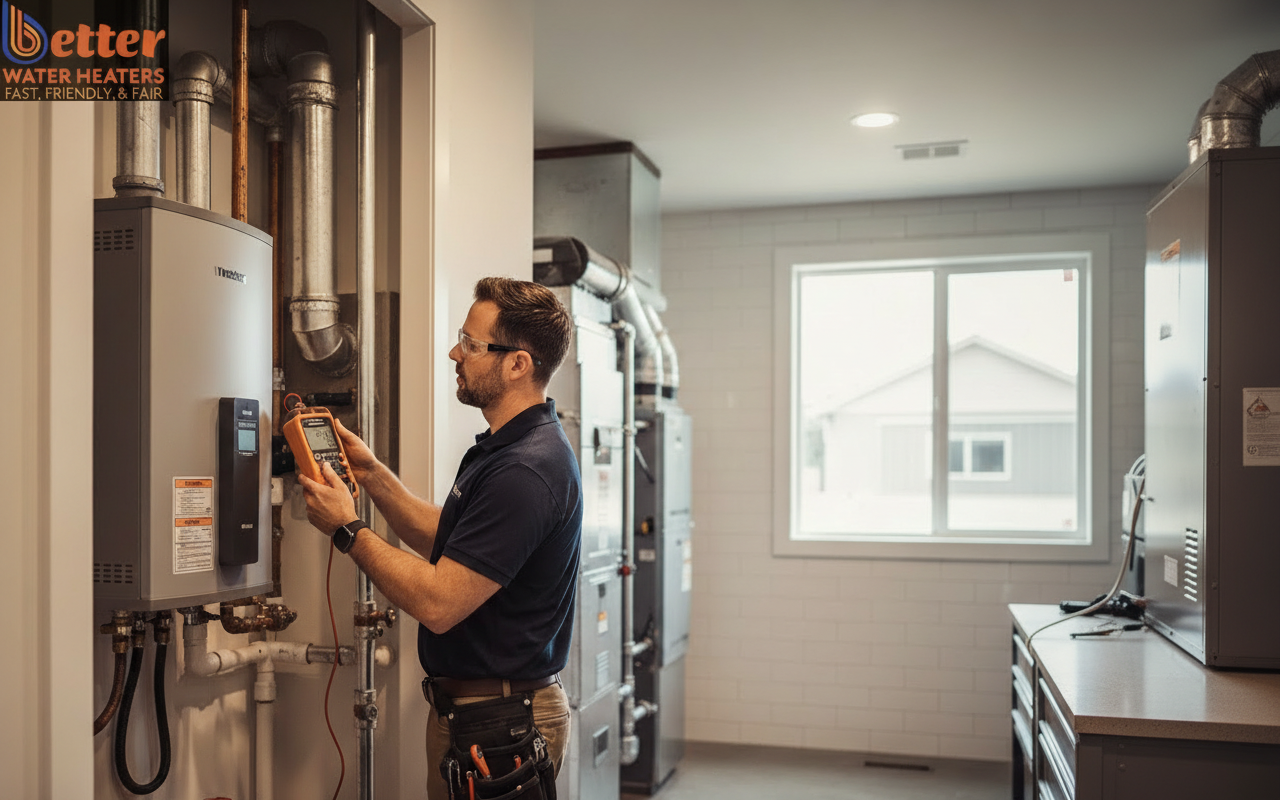
The Atmospheric vs. Power Venting Dilemma
- Atmospheric Venting: Relies on natural buoyancy (hot air rises). Common in older homes but highly susceptible to backdrafting in tight spaces.
- Power Venting: Uses a fan to push exhaust out. This is often the best solution for San Francisco ‘utility nooks’ where traditional vertical venting is impossible.
- Direct Venting: Pulls air from outside and pushes exhaust back out through a sealed pipe. The gold standard for safety in small closets.
2. The 3-Step Venting Audit for Bay Area Mechanical Closets
A proactive audit identifies if your current setup can handle a high-efficiency upgrade without expensive structural changes. By following this framework, you can diagnose issues before they become emergencies.
Step 1: Calculate the Volume vs. BTU Load
The California Plumbing Code generally requires 50 cubic feet of space for every 1,000 BTU/hour of the appliance’s input rating. For a typical 40,000 BTU gas water heater, you need 2,000 cubic feet of ‘unconfined’ space. Most Bay Area closets fail this immediately unless they have permanent openings to other rooms.
Step 2: Inspect for ‘The Hidden Killer’ (Backdrafting)
Look for physical signs of poor venting. Are there melted plastic rings on top of the water heater? Is there soot or corrosion around the draft hood? These are red flags that exhaust is spilling into your home rather than exiting the vent. If you see this, schedule a professional inspection immediately.
Step 3: Evaluate Clearance and Intake Paths
Modern high-efficiency units, especially Heat Pump Water Heaters (HPWH), have massive water heater airflow requirements. They don’t just need air for combustion; they need air to move heat. If your closet doesn’t have at least 1,000 cubic feet of air or a louvered door, a heat pump unit will freeze the closet and shut down.
| Venting Type | Min. Closet Size | Bay Area Code Ease | Efficiency Rating |
|---|---|---|---|
| Atmospheric | Large (Unconfined) | Difficult to permit new | Low (.58 – .62 UEF) |
| Power Vent | Small/Tight | High (Flexible) | Medium (.70+ UEF) |
| Heat Pump | Medium (with Louvers) | High (Incentivized) | Ultra-High (3.0+ UEF) |
Need a professional eye on your utility space? Get a free venting assessment from our Bay Area experts today.
3. Navigating Bay Area Building Codes and Permits
Every city from Palo Alto to Walnut Creek has slight variations in how they interpret the California Plumbing Code, especially regarding seismic strapping and venting clearances. The real kicker? If you replace a water heater without a permit, you may face issues during a home sale or, worse, an insurance claim denial if a fire or leak occurs.
But wait—permits aren’t just a tax. They ensure your mechanical closet venting meets the latest safety standards. For example, in many San Francisco Victorians, the ‘passive air intake vents’ installed in the 1920s are now blocked by modern siding or debris. A code-compliant audit will catch these ‘ghost’ vents that aren’t actually providing air.
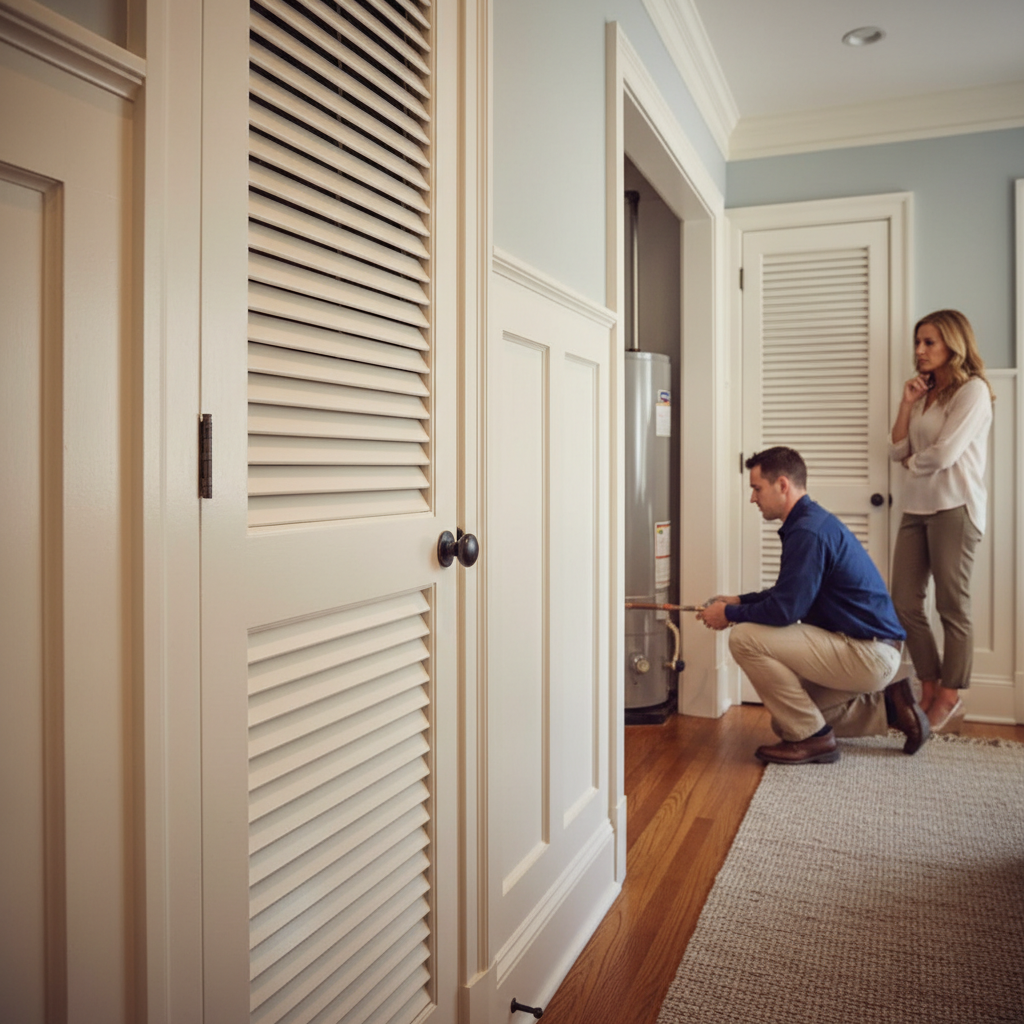
What we see with typical Bay Area mid-market clients is a desire to ‘hide’ the water heater behind solid doors for aesthetics. However, Bay Area building codes usually require louvered doors or two permanent openings (one high, one low) to ensure constant air exchange. If your contractor suggests ‘just leaving the door cracked,’ find a new contractor.
4. Future-Proofing for the 2027 Gas Phase-Out
The Bay Area Air Quality Management District (BAAQMD) has signaled a phase-out of NOx-emitting gas water heaters starting in 2027. This means your next water heater might have to be electric. If you perform a venting audit for Bay Area mechanical closets now, you can determine if your current closet can support a Heat Pump Water Heater.
Heat pumps require roughly 700 to 1,000 cubic feet of air to operate efficiently. If your closet is smaller than that, you’ll need to install ducting to pull air from a crawlspace or attic. Planning this retrofit now, while your gas heater is still working, saves you from a $5,000 ’emergency’ ducting job on a cold Saturday morning.
For those looking to document this transition or manage complex property portfolios, using tools like Ingest.blog, our internal AI content engine, helps us stay updated on the rapidly changing local rebate landscape across Santa Clara and Alameda counties.
5. Solving the ‘Micro-Closet’ Challenge
If you live in a dense urban area like Oakland or San Francisco, you likely have a ‘micro-closet.’ These spaces are too small for traditional combustion air requirements in California. The solution? Power venting or tankless conversions.
- Side-Wall Venting: Power-vented units can often vent out a side wall rather than through the roof, which is a lifesaver for multi-story buildings.
- Tankless Integration: Tankless units often use concentric venting (a pipe within a pipe) that handles both intake and exhaust, making them perfect for tiny closets.
- Louvered Modifications: Sometimes, simply replacing a solid door with a high-quality louvered door provides the necessary CFM to meet code.
The real surprise? Proper venting actually reduces ‘closet hum.’ When a unit is starved for air, the burners struggle, and the vibrations increase. A well-vented closet is a quiet closet.
When to Call a Professional
If you are unsure about your mechanical closet clearance, don’t guess. A professional audit uses a manometer to measure pressure changes when your furnace and water heater are both running. This is the only way to 100% guarantee safety in a modern, airtight home.
Ready to ensure your home is safe and code-compliant? Contact Better Water Heaters for a comprehensive safety audit. We’ve served the Bay Area for over 20 years and know exactly what local inspectors are looking for.
Frequently Asked Questions
What are the combustion air requirements for California water heaters?
California code generally requires 50 cubic feet of room volume per 1,000 BTU/hr of appliance input. If the room is smaller, you must provide permanent openings to the outdoors or other large rooms. This ensures the burner has enough oxygen to prevent carbon monoxide production.
Does a heat pump water heater need venting?
Unlike gas heaters, heat pumps don’t exhaust combustion gases, so they don’t need a traditional flue. However, they need significant ‘breathing room’ (usually 700-1,000 cubic feet) because they extract heat from the surrounding air. In small closets, they must be louvered or ducted to prevent the space from becoming a refrigerator.
How do I know if my water heater is backdrafting?
Common signs include soot near the draft hood, melted plastic caps on the water lines, or a ‘musty’ smell near the closet. You can also perform a simple test: hold a smoke pen or incense stick near the draft hood while the heater is running. If the smoke is blown away rather than sucked up the vent, you have a backdrafting issue.
Can I use a solid door on my water heater closet?
Only if the closet has dedicated air intake ducts from an attic, crawlspace, or exterior wall. If your closet relies on ‘indoor air’ for combustion, the door must be louvered or have specific air grilles installed at the top and bottom to meet Bay Area building codes.
Don’t wait for a red tag from a city inspector or a failing sensor. Audit your venting today to ensure your Bay Area home stays safe, efficient, and ready for the future of clean energy.