
📋 Table of Contents
According to the Insurance Institute for Business & Home Safety, water damage is the second most common insurance claim, with water heater failures costing homeowners an average of $4,419 per incident. For Bay Area homeowners, choosing between integrated leak detection and external automatic shut-off valves isn’t just a tech upgrade—it’s a critical decision for property preservation.
Key Takeaways for Homeowners
- Integrated systems excel at detecting internal tank weeping but often ignore supply line bursts.
- External shut-off valves provide whole-home protection but require professional installation to ensure reliability.
- Modern Insurance Trends: Many providers now offer premium discounts for verified smart leak detection system installations.
- The Layered Approach: The most resilient setup combines built-in tank diagnostics with a secondary whole-house shut-off.
The Performance Reality of Integrated Leak Detection
Built-in sensors are designed to catch the ‘slow death’ of a water heater before it becomes a swimming pool in your garage. These smart water heater features are typically found in premium models like the Rheem EcoNet or AO Smith smart series, where sensors sit in the internal base pan of the unit.
The real kicker? Integrated systems are often hardwired into the heater’s logic board. If the sensor detects moisture, it can shut off the gas or power and close an internal cold-water inlet valve. This is fantastic for internal tank failures, but it has a massive blind spot: it usually cannot stop a leak that starts at the flex lines or the temperature and pressure (T&P) relief valve if that water bypasses the internal pan.
In our work with Series B SaaS founders in Palo Alto, we often see a preference for these ‘all-in-one’ solutions because they seem simpler. However, relying solely on internal sensors is what we call a ‘Single Point of Failure’ risk. If the heater’s circuit board fries during a surge, your leak protection might vanish right when you need it most.
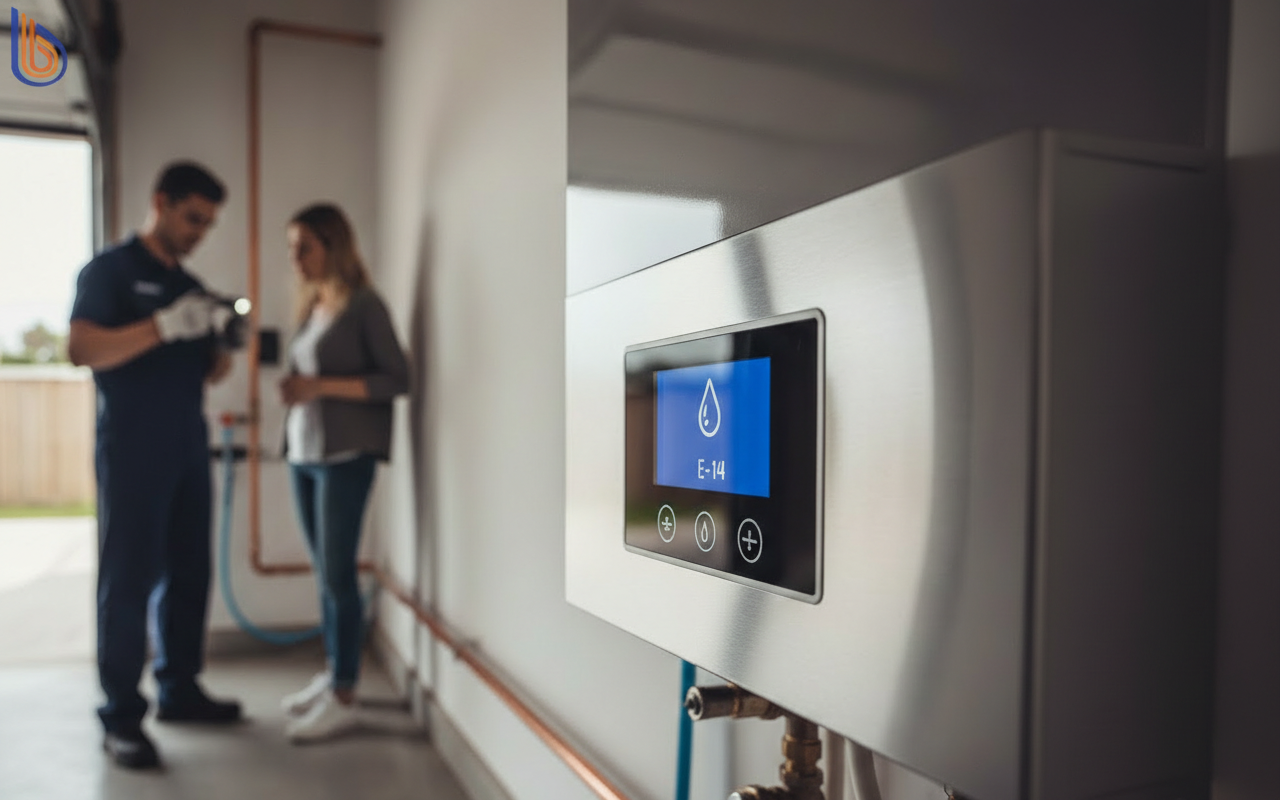
External Automatic Shut-off Valves: Whole-Home Warriors
External systems like Moen Flo or Phyn Plus monitor the actual flow of water through your pipes, not just the presence of puddles. These leak detection systems use ultrasonic sensors or pressure transducers to identify micro-leaks anywhere in the house, from the water heater to the upstairs guest bath.
- Active Monitoring: They ‘exercise’ the valve weekly to prevent mineral scale buildup, a common issue in hard-water areas like San Jose.
- Remote Control: You can shut off your water from an app while vacationing in Tahoe.
- Comprehensive Coverage: They protect the supply line before it reaches the water heater, which integrated sensors cannot do.
But wait—there is a trade-off. These systems require a Wi-Fi connection and a nearby power outlet. For a typical Bay Area mid-market client with an older home, this might mean minor electrical work during the installation process. If you’re unsure which fits your plumbing layout, you can schedule a free professional consultation to evaluate your home’s specific needs.
Performance Comparison: Integrated vs. External
When comparing these technologies, it helps to look at where they succeed and where they fail. We’ve broken down the performance metrics based on 20 years of field experience in the San Francisco Peninsula.
| Feature | Integrated Leak Detection | External Shut-off Valves |
|---|---|---|
| Detection Range | Internal Tank Only | Whole-Home Supply |
| Installation Cost | Included in Unit Price | $500 – $1,200 (Installed) |
| Insurance Discount | Occasionally | Highly Likely |
| Power Dependency | Heater Power Source | Dedicated Outlet + Wi-Fi |
| Response Time | Instant (at source) | 1-2 Minutes (algorithm based) |
The 2024 Insurance Shift: Why ‘Smart’ is No Longer Optional
The insurance industry is currently undergoing a massive shift regarding water heater flood protection. According to Insurance Information Institute data, the frequency of water damage claims has risen significantly, leading many carriers to mandate automatic shut-off valves for homes with heaters located in finished spaces or attics.
What most people miss is that a ‘smart’ sensor that only pings your phone isn’t enough for many modern policies. They want active mitigation—a mechanical valve that physically stops the flow. This is why we often recommend external valves for our clients; they meet the highest tier of insurance requirements and can actually pay for themselves through premium credits over 3-5 years.
Here’s the thing: if you are installing a new heat pump water heater to meet upcoming California regulations, these units have specific condensate drainage needs that can also trigger leak sensors if not maintained. Having a robust detection system is non-negotiable for these high-efficiency units.

The Contrarian View: Why ‘Smart’ Can Sometimes Be Stupid
Here is an honest, contrarian insight: Sometimes, the most ‘advanced’ integrated leak detection systems cause more headaches than they solve. We have seen instances where high-sensitivity sensors in the Bay Area’s humid coastal micro-climates trigger ‘false positives,’ shutting off a family’s hot water because of simple condensation or a heavy fog rolling through a vented garage.
The real issue with integrated tech is the ‘Proprietary Trap.’ If the sensor fails in a Rheem unit, you usually can’t just pop over to Home Depot and buy a generic replacement. You are at the mercy of the manufacturer’s parts supply chain. In contrast, external valves are brand-agnostic. If your Moen Flo acts up, your water heater still works; if your integrated sensor dies, your entire heater might lock out as a safety precaution.
Ready to secure your home? Contact Better Water Heaters today for a professional installation that brings your home up to the latest safety codes.
The Layered Defense: Our Expert Recommendation
For the absolute best protection, we recommend a ‘Hybrid’ approach. Use the smart water heater features built into your tank for immediate, localized diagnostics. These are great for telling you why the heater isn’t working. Then, back that up with a high-quality external smart leak detection system to protect the rest of your home’s infrastructure.
- Primary Defense: A whole-home shut-off valve installed at the main water riser.
- Secondary Defense: Integrated tank sensors for internal component monitoring.
- Physical Defense: A secondary drain pan with a dedicated sensor, especially for heaters located on second floors or in finished closets.
This strategy minimizes the ‘Single Point of Failure’ risk and ensures that whether it’s a tank leak or a burst pipe in the wall, your home remains dry. For more information on local regulations, check out our guide on Bay Area water heater codes.
FAQs About Leak Detection and Shut-off Valves
Do integrated leak sensors satisfy insurance requirements for discounts?
It depends on the carrier. Most major insurers, such as State Farm or Farmers, prefer a whole-home automatic shut-off valve because it protects more than just the water heater. Integrated sensors are often viewed as ‘localized protection,’ which may qualify for smaller discounts compared to whole-home systems like Moen Flo or Phyn.
Can I install an external shut-off valve on an older water heater?
Yes, external valves are excellent for retrofitting. In fact, adding a smart leak detection system to an older tank is a highly cost-effective way to extend your peace of mind while you save for a future high-efficiency upgrade. It provides a safety net for aging tanks that are more prone to sudden failure.
What happens to my shut-off valve if the Wi-Fi goes down?
Most professional-grade automatic shut-off valves are designed to function locally. While you might lose app notifications during an internet outage, the device’s internal logic will still trigger the mechanical shut-off if it detects a catastrophic flow event. Once Wi-Fi is restored, the system will sync and alert you of the action taken.
Are integrated sensors prone to false alarms?
They can be, particularly in dusty or high-humidity environments. Because integrated sensors sit at the very bottom of the unit, they can be triggered by heavy cleaning, floor mopping, or even high humidity in uninsulated Bay Area garages. Regular maintenance and keeping the area around your heater dry are essential for preventing these nuisance shut-offs.
Don’t wait for a puddle to tell you there’s a problem. Whether you’re looking to upgrade to a smart tank or want to retrofit your current system with whole-home protection, our team of experts is ready to help. At Better Water Heaters, we’ve spent two decades keeping Bay Area homes dry and efficient. Call us today at (408) 250-6672 to discuss your leak protection strategy.