
📋 Table of Contents
According to the Bay Area Air Quality Management District (BAAQMD), gas water heater installations will be phased out starting in 2027, making a heat pump manufacturer comparison essential for every local homeowner today. Navigating the shift from gas to electric isn’t just about picking a brand; it’s about matching a machine’s recovery rate to our unique coastal microclimates.
Key Takeaways:
- The 120V ‘Plug-and-Play’ models are game-changers for older SF and East Bay homes.
- Local serviceability is the #1 factor in long-term ROI for Bay Area residents.
- Rebates from PG&E and TECH Clean California can exceed $4,900.
- Rheem, AO Smith, and Mitsubishi dominate different quadrants of the market.
The 4-Quadrant Framework for Water Heater Brand Reliability
The most expensive water heater is the one your local technician can’t find parts for on a rainy Tuesday in January. To simplify your decision, we’ve mapped the major players across two axes: Installation Complexity (120V vs. 240V) and Long-Term Performance ROI.
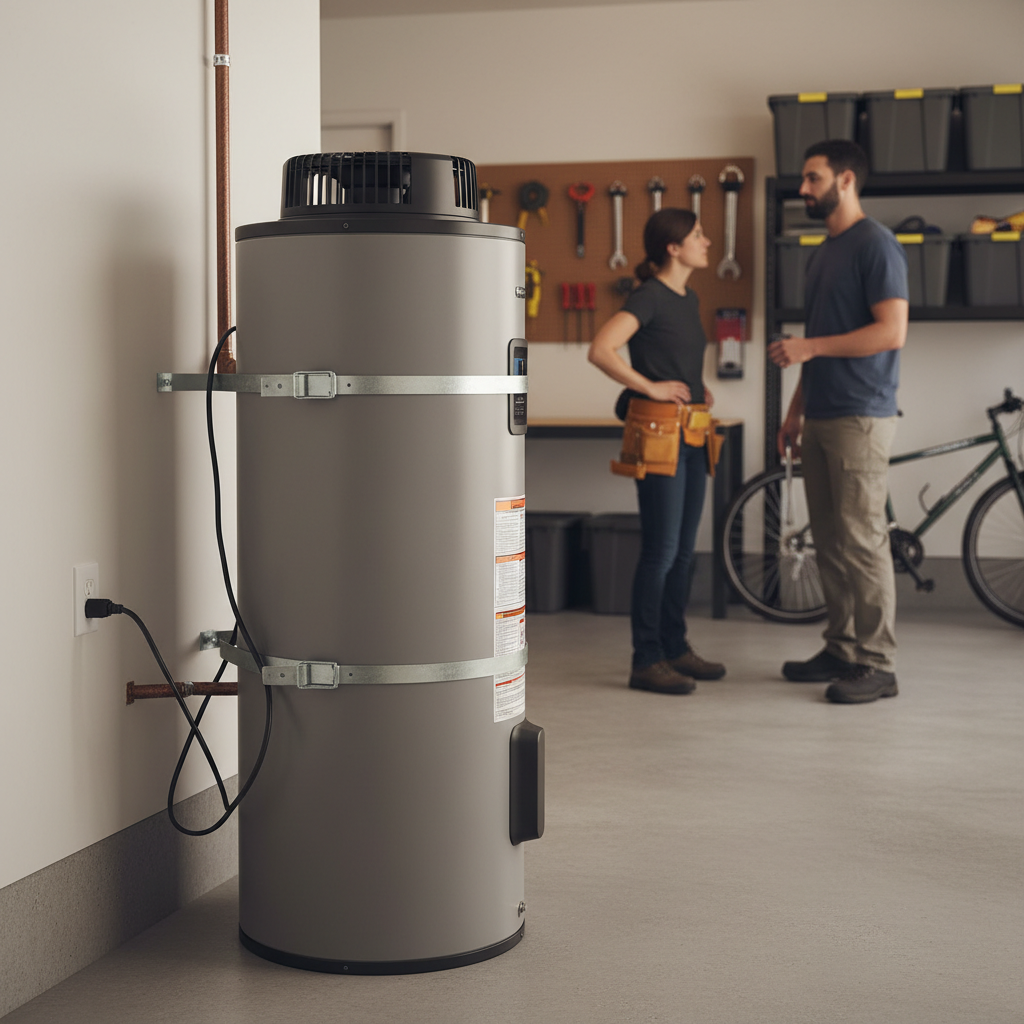
What most people miss: A high-efficiency unit that requires a $3,500 electrical panel upgrade often has a lower 10-year ROI than a slightly less efficient 120V ‘plug-and-play’ model. In our work with established homeowners in San Jose and Oakland, we’ve seen that ‘over-speccing’ the technology often leads to diminishing returns once installation labor is factored in.
- Quadrant 1: The Efficiency Leaders (High ROI, High Complexity) – Brands like the Rheem ProTerra 240V.
- Quadrant 2: The Retrofit Kings (High ROI, Low Complexity) – The 120V revolution, led by AO Smith and Rheem.
- Quadrant 3: The Budget Entry (Low ROI, Low Complexity) – Standard electric tanks (rarely recommended for Bay Area).
- Quadrant 4: The Niche Specialists (Variable ROI, High Complexity) – Split-systems like Mitsubishi/Sanden.
Why Local Serviceability Scores Matter
Here’s the thing: A brand can have a stellar national reputation but poor local support. We track ‘Serviceability Scores’ based on how quickly a San Mateo or Walnut Creek homeowner can get a proprietary sensor replaced. For instance, Energy Star data confirms high efficiency, but it doesn’t tell you that some European-designed heat pumps have a 3-week lead time for parts in California. For more on local options, check out our comparison of modern water heating technologies.
Best Heat Pump Water Heaters for Bay Area Microclimates
Bay Area weather is notoriously fickle, and heat pumps rely on ambient air temperature to move heat into your water. While a unit might perform perfectly in a sunny San Jose garage, that same model might struggle with frequent ‘defrost cycles’ in a foggy Sunset District basement.
The real kicker? Recovery rates—the speed at which your tank reheats after a morning of showers—drop significantly when temperatures dip below 45°F. For a typical Bay Area mid-market client, we recommend units with robust ‘Electric Heat’ backup modes to ensure you never run out of hot water during a cold snap.
| Feature | Rheem ProTerra | AO Smith Voltex | Mitsubishi (Split) |
|---|---|---|---|
| Recovery Rate | High (Hybrid) | Medium-High | Excellent (Cold) |
| Noise Level | 49-55 dBA | 51-55 dBA | Ultra Quiet (Ext) |
| 120V Option? | Yes | Yes | No |
If you are confused by these specs, you aren’t alone. Schedule a free consultation with our specialists to see which model fits your home’s footprint.
Rheem ProTerra vs AO Smith Voltex: The 120V Revolution
The 120-volt heat pump water heater is the most significant innovation for older Bay Area homes since the seismic strap. Most homes built before 1970 in the East Bay or San Francisco have 100-amp electrical panels that are already maxed out. A traditional 240V heat pump requires a dedicated 30-amp circuit, often triggering a $3,000+ panel upgrade.
But wait—the new 120V models from Rheem and AO Smith plug into a standard outlet. While the recovery rate is slower than their 240V counterparts, they are often the only viable path to meeting the 2027 BAAQMD water heater regulations without breaking the bank on electrical work.
The Noise vs. Efficiency Trade-off
In tight zero-lot-line properties in Redwood City or Berkeley, decibel levels matter. Most integrated heat pumps sound like a loud dishwasher. If your water heater closet is right next to a bedroom, we often take a contrarian view: we might recommend a split-system where the noisy compressor sits outside, even if the upfront cost is higher. We’ve found that many ‘high-efficiency’ reviews ignore the psychological cost of a humming compressor at 2:00 AM.
Maximizing PG&E Golden State Rebates and HEEHRA
Stacking incentives is the only way to make the 10-year ROI of a heat pump truly unbeatable. As of 2024, Bay Area homeowners can access up to $4,900 in total incentives when combining federal tax credits, TECH Clean California, and local utility programs. Navigating these programs is where most homeowners get stuck, as the paperwork can be as complex as the installation itself.
- Federal Tax Credit (25C): Up to $2,000 annually for heat pump installations.
- TECH Clean California: Direct-to-contractor incentives that lower your invoice immediately.
- BayREN: Local rebates specifically for 9-county Bay Area residents.
- Golden State Rebates: Instant coupons for specific energy-efficient models.
- Military/Senior Discounts: At Better Water Heaters, we offer additional savings for those who served.
Need help navigating the red tape? Contact us today and we will handle the rebate eligibility check for you.
Smart Grid Readiness and TOU Rate Shifting
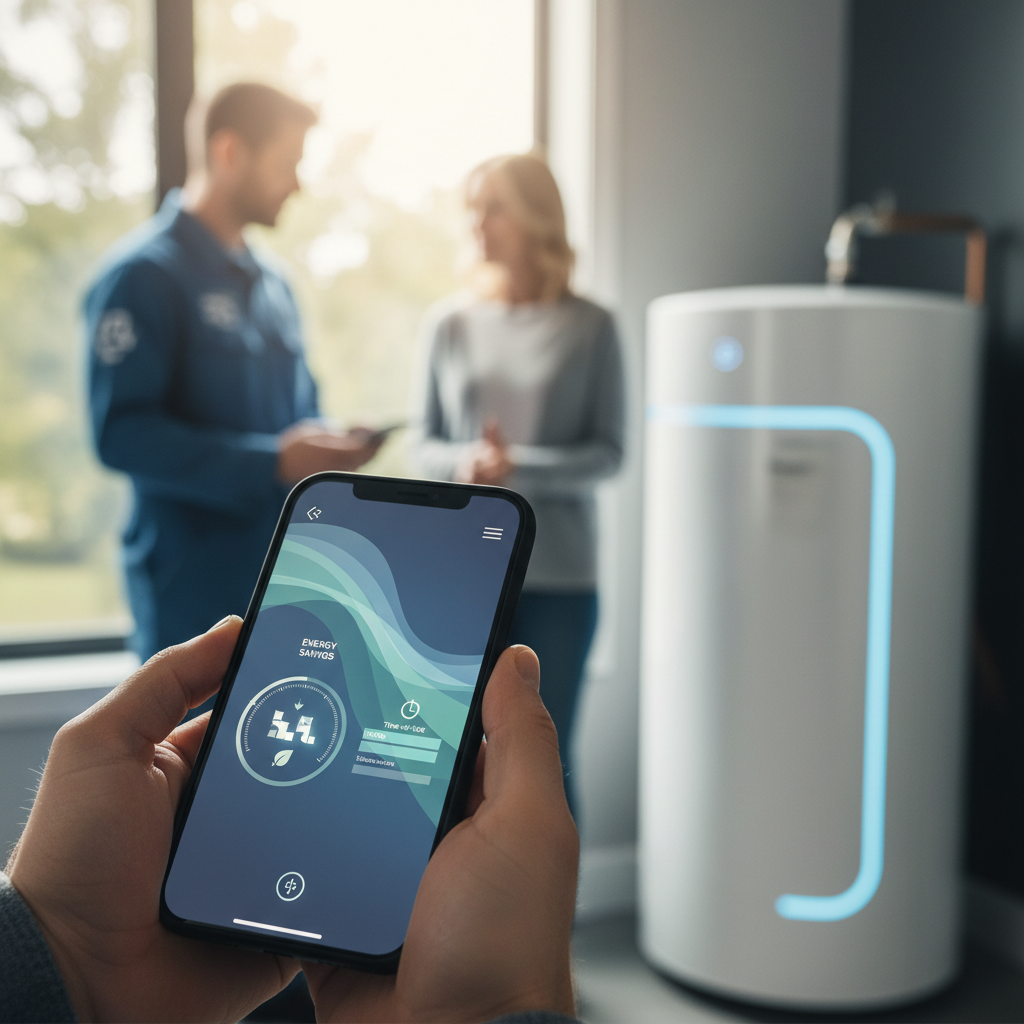
The Bay Area has some of the highest electricity rates in the country, especially during ‘Peak’ hours (4 PM – 9 PM). Modern manufacturers like Rheem and AO Smith now include ‘Smart Grid’ features that allow the water heater to do the heavy lifting during off-peak hours when solar production is high or rates are low.
What most people miss: Your water heater is essentially a thermal battery. By heating the water to a higher temperature at 2 PM and using a mixing valve to deliver it safely at 6 PM, you can save hundreds of dollars annually on PG&E bills. This integration is crucial for homes with existing solar and battery storage systems. For more maintenance tips to keep these smart systems running, see our water heater maintenance guide.
The Verdict: Which Manufacturer Should You Choose?
There is no ‘best’ brand—only the best brand for your specific zip code and home layout. If you have a 200-amp panel and a large family, the Rheem ProTerra 240V is hard to beat for recovery speed. If you live in an older home with a 100-amp panel, the AO Smith 120V Voltex is likely your best path to compliance and savings.
Ready to move forward? Don’t wait until your current gas heater leaks and you’re forced into an emergency decision. Schedule your free Bay Area home assessment this week to lock in current rebate levels before they change.
Frequently Asked Questions
How does the 2027 BAAQMD regulation affect me?
Starting in 2027, the Bay Area Air Quality Management District will prohibit the sale and installation of natural gas water heaters. This means when your current unit fails after 2027, you must replace it with a zero-NOx alternative, typically a heat pump. Upgrading now allows you to take advantage of current high rebate levels that may decrease as the mandate nears.
Will a heat pump water heater work in my cold garage?
Yes, modern heat pumps are designed to operate efficiently down to roughly 37°F-40°F. Since Bay Area temperatures rarely stay below freezing for long, these units perform exceptionally well here. In the rare event of extreme cold, the units have backup electric elements to ensure you always have hot water.
Is the 120V heat pump as good as the 240V version?
The 120V ‘plug-and-play’ models are excellent for skipping expensive electrical upgrades, but they do have a slower recovery rate. They are best suited for 1-3 person households or homes where hot water demand is spread out throughout the day rather than concentrated in one hour.
How much can I actually save with Bay Area rebates?
Depending on your utility provider and current equipment, many Bay Area homeowners qualify for $3,000 to $4,900 in total incentives. This includes the $2,000 Federal Tax Credit and various state and local programs like TECH Clean California and BayREN. We help our clients maximize these stacks to minimize out-of-pocket costs.