
📋 Table of Contents
In the Bay Area, where Victorian conversions meet aggressive electrification mandates, a single cold shower in Unit C can signal a thousand-dollar systemic failure. According to Energy.gov, water heating accounts for nearly 20% of a home’s energy use, yet in multi-unit complexes, up to 30% of that heat is often lost to uninsulated crawlspaces before it ever reaches a faucet.
For property owners and managers, thermal mapping isn’t just a diagnostic luxury; it is the strategic baseline for surviving the 2027 gas appliance phase-out. Whether you are managing a six-unit Edwardian in the Mission or a modern complex in San Jose, the goal is the same: equitable hot water delivery without blowing your electrical panel or your budget. This guide breaks down our proprietary 3-step framework for auditing and optimizing multi-unit water heating systems in our unique local climate.
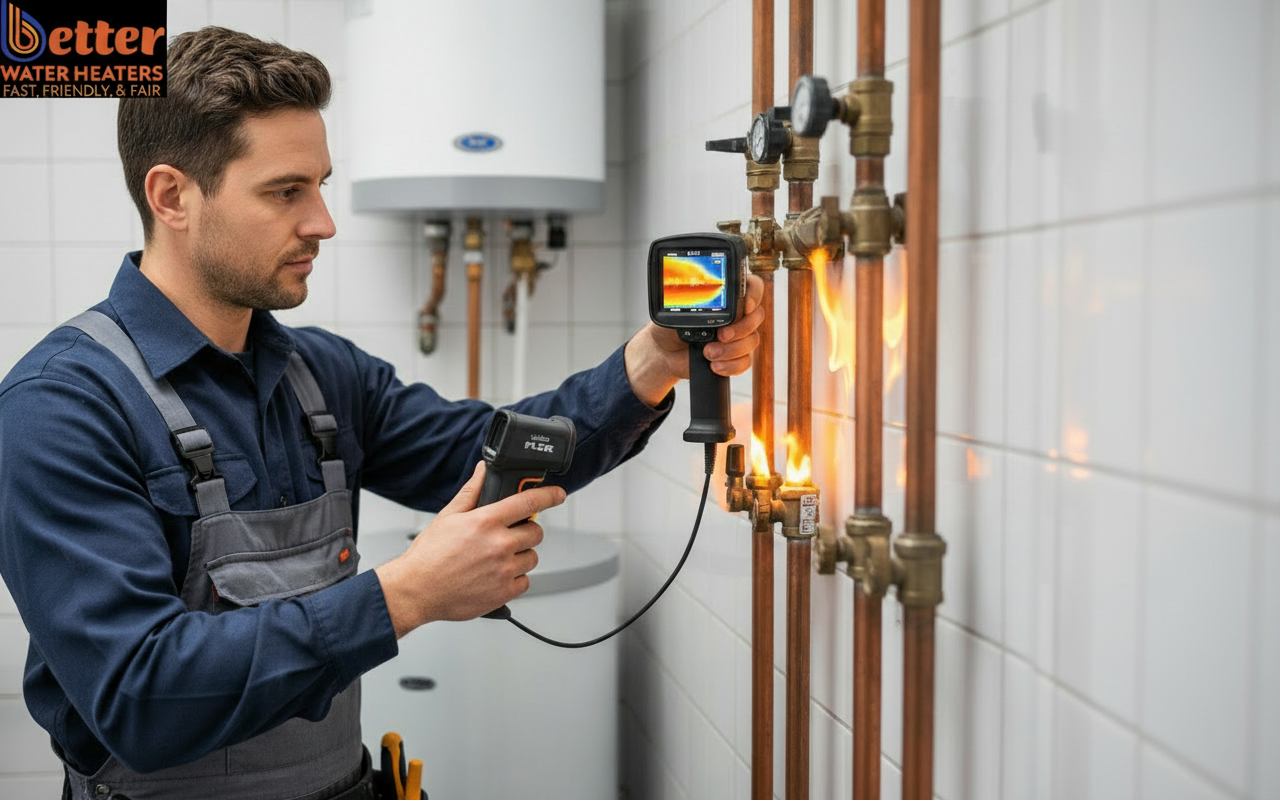
Step 1: Baseline Thermal Profiling and Leak Detection
The most expensive energy is the heat you lose through a wall before the tenant even turns on the tap. In many aging multi-story buildings, uninsulated copper pipes act like radiators for the crawlspace rather than conduits for the bathroom.
- Infrared Diagnostics: We use FLIR technology to visualize heat signatures through drywall, identifying “hot spots” where insulation has failed.
- The Micro-Climate Factor: In fog-heavy zones like Sunset or Richmond, ambient pipe temperature is significantly lower than in inland Walnut Creek, requiring different insulation R-values.
- Non-Invasive Audits: Thermal imaging allows us to find pinhole leaks in recirculating lines that haven’t yet caused visible water damage but are spiking utility bills.
What most people miss is that thermal mapping often reveals the “sandwich effect” in multi-story buildings. Middle units often stay warm due to heat rising from below, while ground-floor units struggle with massive heat loss through the slab. Identifying these discrepancies early prevents the “whack-a-mole” repair cycle common in Bay Area property management scenarios.
Step 2: Load Distribution and Hydronic Balancing
Consistency is the hallmark of professional plumbing, yet most converted multi-family homes suffer from massive pressure drops when two tenants shower simultaneously. The real kicker? Increasing the temperature at the tank rarely fixes the problem—it just increases the risk of scalding and accelerates sediment buildup.
Here’s the thing about load balancing in high-density residences:
- Pressure Analysis: We measure the delta between the pump and the furthest fixture to ensure Title 24 water heating standards are met at every tap.
- Recirculation Timing: Many older systems run pumps 24/7, which is an energy disaster; we map usage patterns to implement smart, demand-based pumping.
- Electrical Load Capacity: For those looking at heat pump water heater integration, we audit the existing panel to see if a centralized or decentralized (unit-by-unit) approach is more cost-effective.
In our work with established Bay Area homeowners, we’ve found that a simple hydronic balancing valve installation—guided by thermal data—can often resolve “end-of-line” cold water delays without needing a full repipe. If you’re seeing inconsistent temps, schedule a professional thermal audit before you commit to expensive equipment replacements.
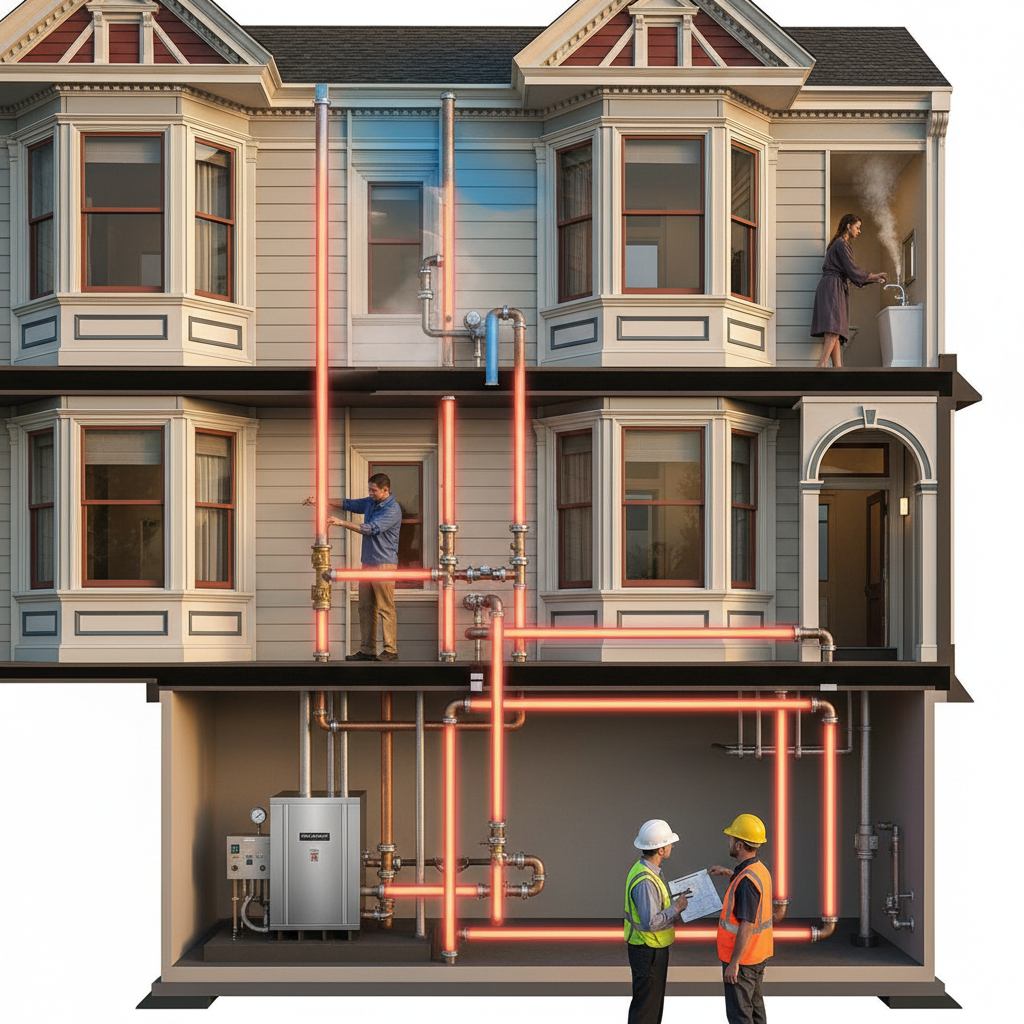
Step 3: Hybrid Transition Planning for 2027 Compliance
The Bay Area Air Quality Management District (BAAQMD) has set a clear path: gas water heaters are on their way out starting in 2027. For a typical Bay Area mid-market client, simply swapping gas for electric isn’t always feasible due to the massive amperage required for instantaneous electric units.
The solution is a hybrid transition plan. By using thermal mapping to understand your building’s actual peak demand, we can design a system that utilizes high-efficiency heat pumps paired with smart storage tanks. This allows you to “buffer” hot water during off-peak hours, saving money and reducing stress on the grid.
Decarbonization ROI for Landlords:
| Feature | Traditional Gas | Heat Pump Hybrid |
|---|---|---|
| Annual Efficiency | 60-80% | 300-400% |
| Local Rebates | None | Up to $4,900+ |
| Regulatory Status | Phasing out 2027 | Future-Proof |
But wait—don’t jump into electrification without checking for Bay Area electrification grants. Programs like TECH Clean California and local utility incentives can often cover a significant portion of the upgrade costs, but only if the system is sized correctly based on a thermal audit.
The Contrarian Insight: Why “Bigger” is Often Worse
Conventional wisdom says that if you have ten units, you need the biggest tank or the highest BTU rating possible. We disagree. In multi-unit water heating, over-sizing leads to “short-cycling,” where the heater turns on and off rapidly, destroying the compressor or burner and wasting energy. Data-driven thermal mapping allows us to size systems for the 95th percentile of use, not the 100th, leading to longer equipment life and lower bills.
At Better Water Heaters, we’ve seen how precision beats raw power every time. Our internal AI content engine, Ingest.blog, helps us track these performance trends across hundreds of local installations to provide better predictive maintenance for our clients.
Seismic Integrity and Thermal Safety
Living in a seismic zone means our plumbing infrastructure is constantly under stress. A thermal imaging plumbing audit can identify stress fractures in pipes or weakened seismic strapping that isn’t visible to the naked eye. After any significant tremor, we recommend a thermal check to ensure no slow leaks have developed in the hot water lines hidden within your building’s core.
What most people miss is that a small leak doesn’t just waste water; it creates a thermal bridge that sucks heat away from the rest of the system, forcing your heaters to work 15-20% harder just to maintain equilibrium. It’s a silent tax on your ROI.
Conclusion: Your Monday Morning Action Plan
Don’t wait for a tenant’s emergency call to understand your building’s thermal health. This week, take a walk through your utility room and check for two things: the temperature setting on your primary heater (it should be 120°F-140°F) and the condition of the pipe insulation within the first six feet of the tank. If the insulation is brittle or missing, you’re losing money every second.
Ready to future-proof your property? Contact Better Water Heaters today for a comprehensive thermal mapping consultation. We’ll help you navigate the complex world of Bay Area rebates and ensure your multi-unit residence is ready for the 2027 transition.
Frequently Asked Questions
How much can thermal mapping save on multi-unit utility bills?
While results vary, a typical Bay Area mid-market residential building can see a 15-25% reduction in water heating costs. By identifying hidden leaks, optimizing recirculation pump timing, and fixing insulation gaps, the system operates far more efficiently, directly impacting the bottom line for master-metered buildings.
Is thermal mapping required for Title 24 compliance?
While thermal mapping itself isn’t a mandatory line item, the performance standards required by Title 24 for multi-unit water heating often necessitate it. Using infrared audits ensures that the HERS (Home Energy Rating System) testers find the required insulation levels and distribution efficiency needed for certification.
Can thermal imaging find leaks in radiant floor heating?
Yes, thermal imaging is the gold standard for diagnosing hydronic radiant floor issues. It allows us to see exactly where the hot water loops are failing or where a leak is occurring under the flooring without having to tear up your tile or hardwood, saving thousands in potential demolition costs.
How does the 2027 gas ban affect my current multi-unit system?
Starting in 2027, the BAAQMD will prohibit the sale and installation of natural gas water heaters in most residential settings. Thermal mapping helps you prepare now by determining if your current electrical infrastructure can handle a heat pump transition or if you need to plan for panel upgrades alongside your heater replacement.