
📋 Table of Contents
A fully loaded 80-gallon heat pump water heater can weigh over 1,000 pounds, yet many Bay Area homes built before 1990 were only engineered for the 500-pound footprint of a standard gas tank. As homeowners rush to claim federal tax credits for electrification, this structural load audit is the only thing standing between a sustainable upgrade and a catastrophic ceiling failure.
The transition to high-efficiency heat pumps is a massive win for your utility bill, but it introduces a “hidden weight” trap. While a traditional gas water heater is essentially a hollow shell with a burner, a heat pump unit includes a heavy compressor, evaporator coils, and often a larger storage tank to compensate for slower recovery times. If you are planning an installation in a second-story laundry room or attic closet, you cannot skip the math.
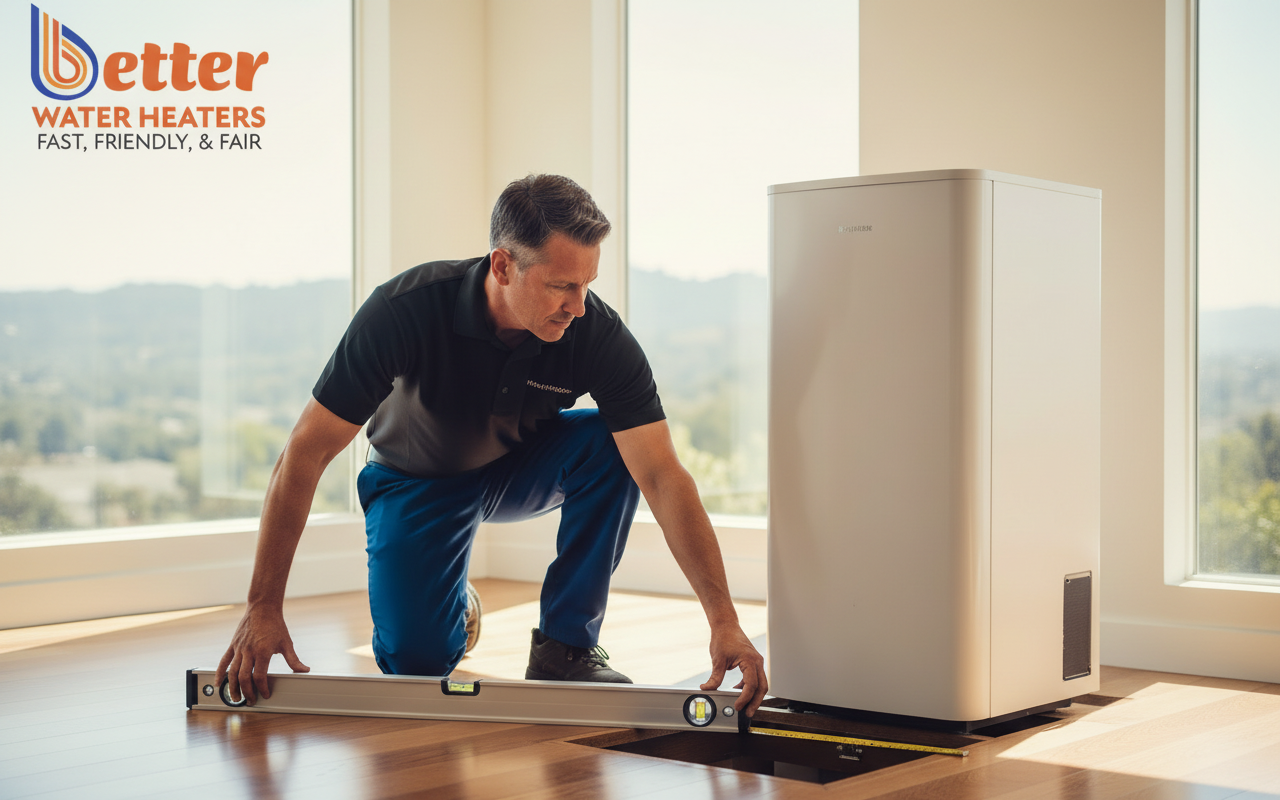
1. Evaluating the Static vs. Dynamic Load Requirements
The first step in any structural load audit is distinguishing between how much the unit weighs sitting still and how it behaves during an earthquake. In the Bay Area, we don’t just worry about gravity; we worry about lateral force.
- Static Load: The combined weight of the tank, the integrated heat pump components, and the water (8.34 lbs per gallon).
- Dynamic Load: The kinetic energy generated during a seismic event, which can effectively double the perceived weight on your floor joists.
- Point Load Distribution: How that weight is concentrated—most heat pumps have a smaller diameter, meaning more weight is focused on a smaller surface area.
What most people miss is that a standard 50-gallon gas tank weighs about 150 lbs empty, while a 50-gallon Rheem ProTerra heat pump weighs closer to 220 lbs empty. Once filled, you’re looking at a 15-20% increase in total weight. For a typical Bay Area mid-market home with 2×8 floor joists, this increase can push the structure past its rated “dead load” capacity.
2. Assessing Floor Joist Integrity and Span
Before the unit arrives, you must verify that your subfloor isn’t just strong, but rigid enough to prevent the “second-story sag.” A sagging floor doesn’t just look bad; it creates micro-fissures in your plumbing connections that lead to slow, hidden leaks.
Here is how we evaluate the structural framing during a professional audit:
- Joist Direction: Does the water heater sit across multiple joists, or is it centered on just one?
- Blocking and Bridging: Is there lateral support between joists to prevent them from rolling or twisting under the heat pump water heater weight?
- Subfloor Thickness: Is the subfloor at least 3/4-inch plywood? Older homes with 1/2-inch OSB often require a load distribution plate.
We often see “Electrification Readiness” audits fail because the homeowner assumed the existing closet was “good enough.” If your home has engineered I-joists, the calculation is even more sensitive. According to Energy.gov, proper placement is critical for both efficiency and safety.
3. Seismic Strapping Requirements for Upper-Level Units
California plumbing code is clear about seismic bracing, but second-story installations face stricter physical realities. A tank on the ground floor is bolted to a slab; a tank on the second floor is bolted to a wall that is itself moving during a tremor.
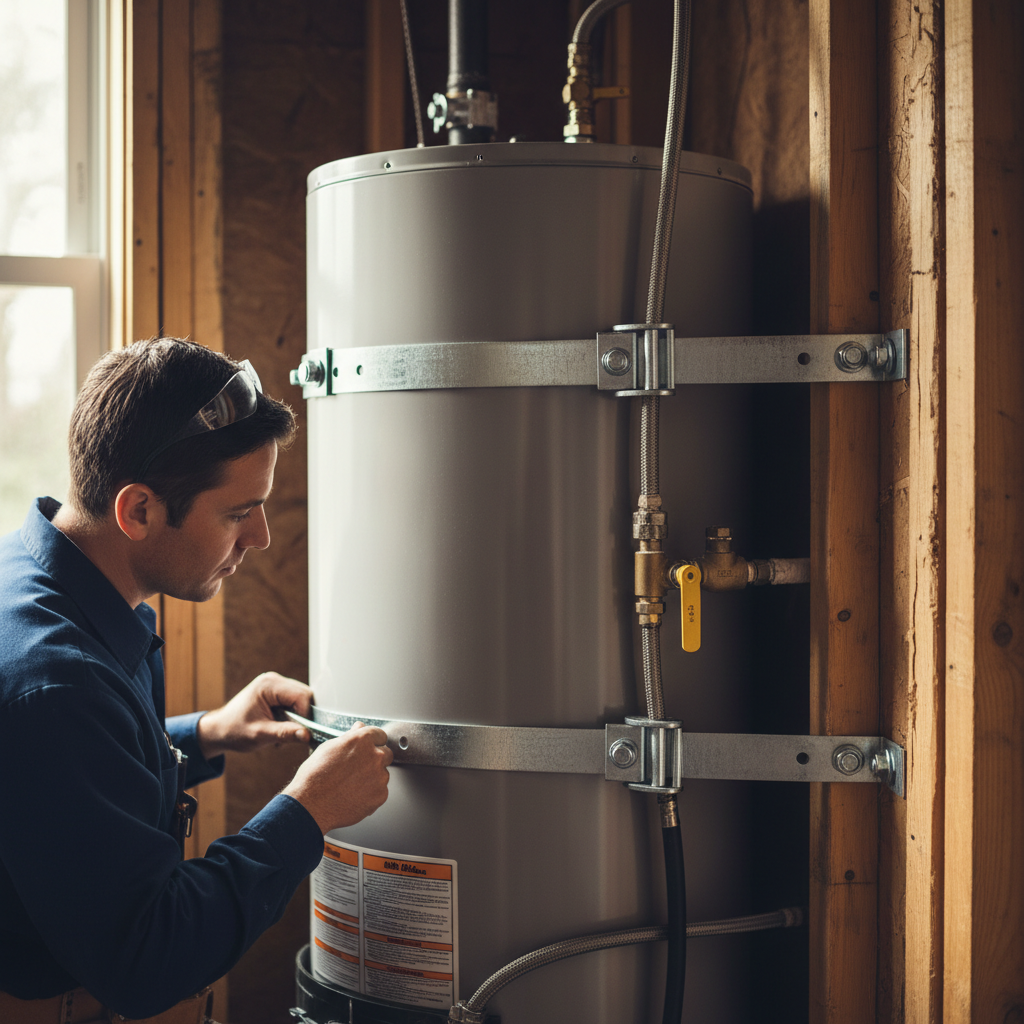
The seismic strapping requirements for heat pumps involve more than just two metal bands. Because these units are taller and top-heavy due to the compressor, the center of gravity is higher. This requires:
- Heavy-duty straps rated for the increased mass of a heat pump.
- Blocking behind the drywall to ensure the lag bolts are biting into solid 2×4 or 2×6 studs, not just the edge of a timber.
- Specific positioning: One strap in the upper one-third and one in the lower one-third of the unit.
The real kicker? If your seismic bracing isn’t documented and your unit tips during a quake, insurance providers often deny claims based on “non-compliant installation.” If you’re unsure about your current setup, schedule a professional structural assessment to ensure you’re up to code.
4. Vibration Isolation and Noise Mitigation
Heat pumps are essentially refrigerators sitting on top of water tanks, and they hum. On a concrete garage floor, this is a non-issue; on a wooden second floor, that hum can turn the entire floor into a sounding board.
To prevent the compressor’s vibration from echoing through the master bedroom below, our structural load audit includes a noise mitigation plan:
- Vibration Damping Pads: High-density rubber or EVA pads placed under the unit to absorb kinetic energy.
- Flexible Connectors: Using braided stainless steel lines instead of rigid copper to prevent vibration from traveling through the pipes.
- Acoustic Enclosures: In some cases, adding sound-dampening insulation to the closet walls.
In our work with tech professionals in San Jose who work from home, noise is often the #1 complaint post-installation. Investing $100 in quality vibration pads during the audit phase saves $1,000 in retrofitting later.
5. Condensate Management and Overflow Prevention
Unlike gas heaters, heat pumps pull moisture out of the air. This condensate needs somewhere to go. On a second story, a failed condensate pump or a clogged drain line doesn’t just wet the floor; it ruins the ceiling below.
| Feature | Standard Gas Tank | Heat Pump (HPWH) |
|---|---|---|
| Avg. Full Weight | 450-550 lbs | 650-1,000+ lbs |
| Condensate Drain | No | Yes (Required) |
| Seismic Risk | Moderate | High (Top-Heavy) |
| Vibration | None | Moderate (Compressor) |
A proper Bay Area structural codes audit ensures that the emergency drain pan is not just present, but correctly sized for the larger footprint of a heat pump. We recommend a secondary leak detection sensor that can shut off the water supply—a small price to pay for peace of mind.
Need help navigating these requirements? You can search our guide on local rebates to see how much you can save on these structural upgrades.
The Contrarian View: Is Tankless Better for Second Floors?
Here is an honest take: Sometimes, a heat pump isn’t the right choice for a second-story retrofit. If your floor joists are undersized and the cost of structural reinforcement exceeds $2,000, a tankless electric or gas system might be more pragmatic. Tankless units weigh roughly 40-70 lbs and mount directly to the wall, eliminating the weight issue entirely. We love heat pumps for their efficiency, but we never prioritize energy savings over structural safety.
Summary Checklist for Homeowners
- Verify joist size and spacing (e.g., 16″ on center vs 24″).
- Check for existing water damage that may have weakened the subfloor.
- Calculate the total “wet weight” of your chosen model.
- Confirm the drain line path for condensate.
- Ensure your contractor pulls a permit—this forces a third-party inspection of the seismic strapping.
Ready to upgrade without the stress? At Better Water Heaters, we’ve spent 20 years mastering the nuances of Bay Area homes. Whether you’re in a 1920s bungalow in Palo Alto or a modern townhouse in Fremont, we ensure your installation is future-ready and structurally sound. Contact us today for a free structural load consultation.
Frequently Asked Questions
How much does a heat pump water heater weigh?
A typical 50-gallon heat pump water heater weighs between 200 and 250 pounds empty. When filled with water, the total weight jumps to approximately 620 to 670 pounds. Larger 80-gallon models can exceed 1,000 pounds when full, making a structural load audit essential for upper-floor installations.
Do I need to reinforce my floor for a heat pump water heater?
It depends on your home’s age and framing. Most modern homes are built to handle 40 lbs per square foot of live load, but a large heat pump creates a significant point load. If your joists are long-span or show signs of deflection, adding a load distribution plate or sistering the joists may be required.
What are the seismic strapping requirements in California?
California Health and Safety Code requires all water heaters to be braced, anchored, or strapped to resist falling during an earthquake. For heat pumps, this usually means two heavy-duty straps anchored into wall studs. Because they are heavier and taller, standard straps used for small gas tanks may not be sufficient.
Are heat pump water heaters noisy on second floors?
They do produce noise similar to a window air conditioner or a dishwasher. On a second floor, this vibration can transfer through the wood framing. Using vibration damping pads and ensuring the unit isn’t touching the wall studs directly can significantly reduce noise transfer to the rooms below.