
📋 Table of Contents
Under the new NEM 3.0 reality, Bay Area homeowners are seeing export credits for solar energy drop by nearly 75% compared to previous years. Smart water heater integration is no longer just a luxury for tech enthusiasts; it is a critical financial strategy to prevent your expensive solar electrons from being sold back to the grid for pennies.
Key Takeaways:
- Treat your water heater as a ‘thermal battery’ to store midday solar energy.
- Automate heating cycles to avoid PG&E peak Time-of-Use (TOU) pricing.
- Leverage local rebates up to $4,900 for Heat Pump Water Heaters (HPWH).
- Maximize NEM 3.0 ROI by consuming your own power on-site.
The Thermal Battery: Why Smart Water Heater Integration Matters Now
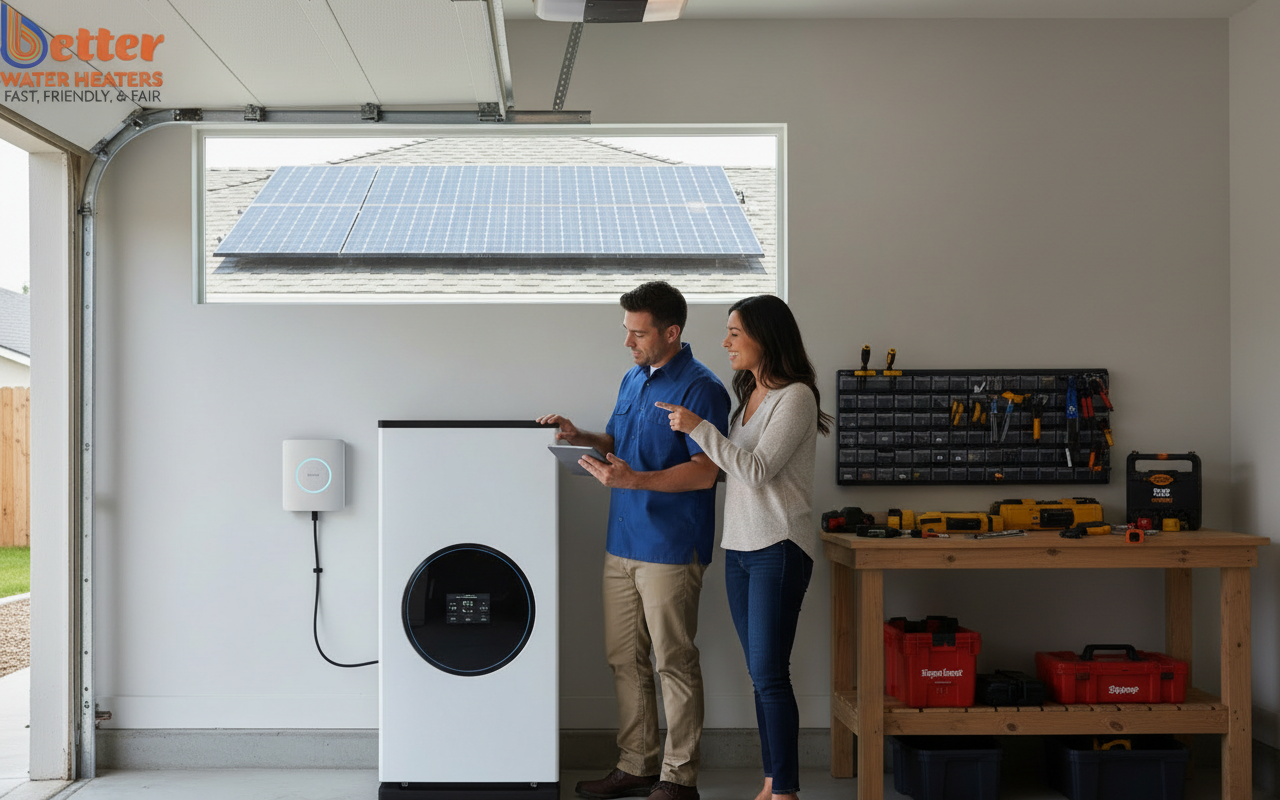
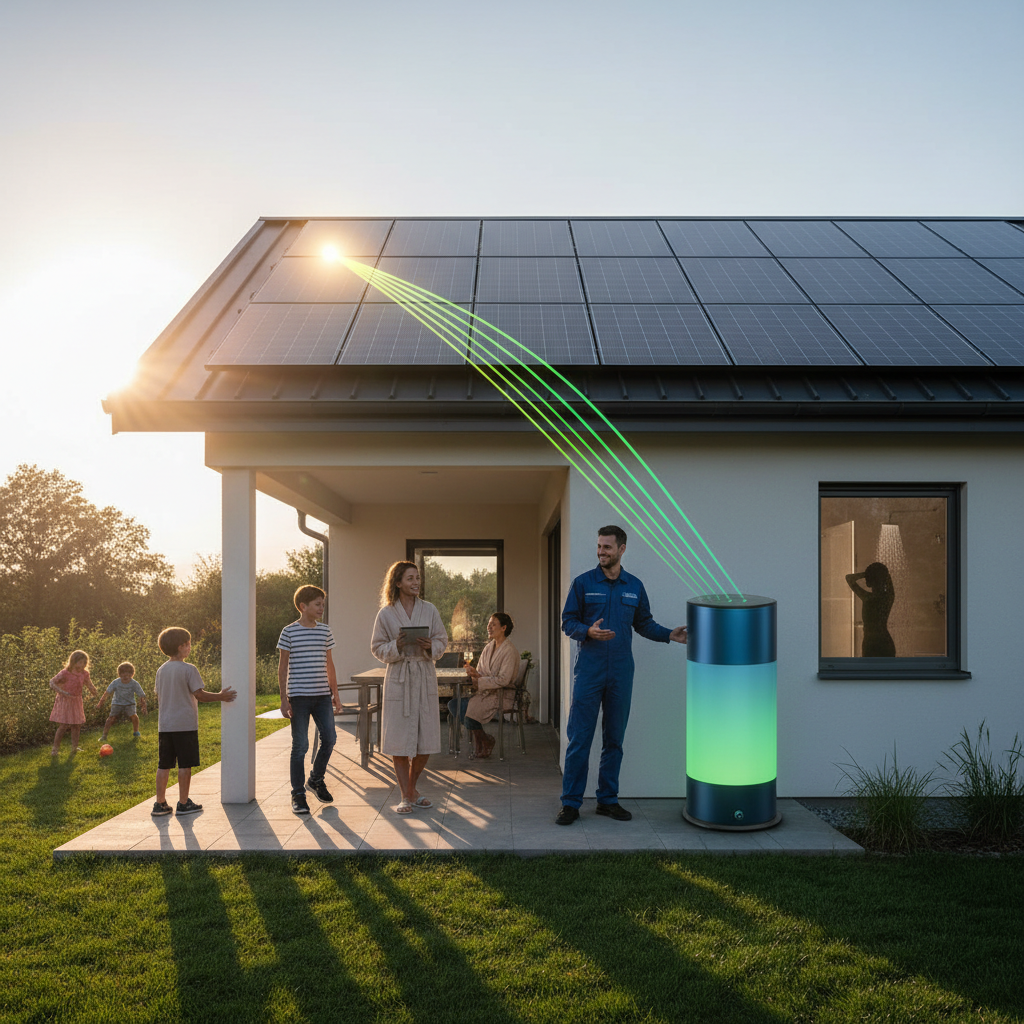
Your water heater is likely the second-largest energy consumer in your home, but unlike an EV or a dishwasher, it can store energy for hours without a chemical battery. By using smart water heater integration, you essentially create a solar thermal battery that ‘charges’ when the sun is high and holds that heat for your evening shower.
What most people miss is that heating water to 140°F during the day and mixing it down to 120°F at night is significantly cheaper than buying a second Tesla Powerwall. Here’s the thing: a standard 50-gallon tank can store roughly the equivalent of 10-12 kWh of energy in the form of heat. In our work with established homeowners in San Jose and Palo Alto, we’ve seen this shift alone reduce evening grid reliance by 20-30%.
- Self-Consumption: Use solar power as it’s generated to avoid low NEM 3.0 export rates.
- Peak Shaving: Automatically shut off the heating elements during the 4 PM – 9 PM PG&E peak window.
- Grid Resilience: Modern CTA-2045 compliant water heaters can communicate directly with smart home ecosystems.
NEM 3.0 Survival: Turning Loads into Assets
Strategic load shifting is the only way to make the math work for new solar installations in the Bay Area. Since the California Public Utilities Commission (CPUC) revised net metering, the value of ‘exporting’ power has vanished. The real kicker? If you aren’t using your solar power the moment it’s generated, you’re losing money.
In a typical Bay Area household, the water heater kicks on whenever someone washes their hands or runs the dishwasher. Without smart water heater integration, this might happen at 7 PM when PG&E rates are highest. By scheduling your ‘heat-up’ cycle for 11 AM to 3 PM, you utilize ‘free’ solar energy that would otherwise be exported for a pittance.
But wait—you don’t have to do this manually. Modern systems like the Rheem ProTerra or AO Smith Voltex use built-in Wi-Fi and i-Comm technology to sync with your solar production. If you’re looking to upgrade, you can schedule a free consultation to see which smart model fits your existing solar array.
Maximizing PG&E Time-of-Use Optimization
PG&E’s TOU-D and TOU-C rates are designed to penalize you for using power when everyone else does. PG&E time-of-use optimization requires a ‘set it and forget it’ automation strategy. By using a smart water heater integration, you can program ‘Load Shedding’—a process where the heater stays off during expensive hours unless the temperature drops below a safety threshold.
| Feature | Standard Electric Tank | Smart Heat Pump (HPWH) |
|---|---|---|
| Annual Operating Cost | $600 – $800 | $150 – $250 |
| Solar Integration | None (Manual Timer Only) | App-Based / Grid-Responsive |
| Bay Area Rebates | None | Up to $4,900+ |
For a typical Bay Area mid-market client, switching to a heat pump model with load shifting hot water capabilities results in immediate monthly savings. According to Energy.gov, heat pump models are up to 3x more efficient than standard electric units, making them the perfect partner for solar.
The Role of CTA-2045 and EcoPort in the Bay Area
You might see the term ‘CTA-2045’ on new water heater specs and wonder if it’s just more tech jargon. It’s actually a communication standard that allows your water heater to talk to the grid and your solar inverter. This is the backbone of smart water heater integration.
Programs like the PG&E WatterSaver program actually pay you to let them occasionally manage your water heater’s load during grid emergencies. For the environmentally-minded resident, this isn’t just about money—it’s about preventing the need for ‘peaker’ gas plants to fire up during Bay Area heatwaves.
- EcoPort: A physical port that allows for easy plug-and-play grid connectivity.
- VPP Readiness: Your home becomes part of a Virtual Power Plant, supporting local grid stability.
- Microgrid Resilience: In a power outage, smart integration ensures your solar plus storage prioritizes hot water efficiently.
Local Incentives: TECH Clean California and BayREN
The upfront cost of a high-end smart water heater integration can be high, but the Bay Area has some of the best rebates in the country. Between TECH Clean California and local programs like Peninsula Clean Energy or Silicon Valley Clean Energy, you could stack thousands in incentives.
What most people miss: These rebates often require a licensed contractor who is enrolled in the specific program. At Better Water Heaters, we handle the paperwork to ensure you get every dollar you’re entitled to. We’ve helped many residents in San Mateo and Santa Clara counties navigate the complex 2027 gas water heater regulations by transitioning to smart electric systems early.
Need help navigating the rebate maze? Contact our specialists today for a transparent quote that includes all available local and federal tax credits.
Installation Challenges in the Fog Belt
Here is a contrarian insight: Heat pump water heaters aren’t always a ‘drop-in’ replacement. While they are amazing for smart water heater integration, they require airflow. In the ‘Fog Belt’ areas like Daly City or Pacifica, installing a HPWH in a tight, unheated closet can actually lead to lower efficiency because the unit ‘steals’ heat from the surrounding air.
To optimize performance, we often recommend:
- Installing in a garage where ambient temperatures stay moderate.
- Using ducting kits to pull air from larger spaces.
- Ensuring the electrical panel can handle the 30-amp circuit required for most HPWH models.
In our work with first-time homebuyers, we emphasize that solar thermal storage is only as good as the installation environment. A poorly placed unit will work harder, negating the gains from your solar array.
Conclusion: Your Monday Morning Action Plan
The transition to a smarter, greener home doesn’t have to happen all at once. If you have solar or are planning to install it, your next move is to audit your water heating. Check if your current unit has a ‘leak’ in your wallet due to PG&E’s evening rates. Start by checking your PG&E app to see your hourly usage; if you see a spike at 6 PM, that’s your target for load shifting.
Ready to turn your water heater into a strategic asset? Schedule your free estimate with Better Water Heaters. We’ve been the Bay Area’s trusted experts for over 20 years, and we’re ready to help you navigate the future of smart home energy.
Frequently Asked Questions
How does a water heater act as a solar thermal battery?
By heating water during peak solar production hours (10 AM – 3 PM), the tank stores that thermal energy for later use. This prevents you from needing to use electricity from the grid during expensive evening hours, effectively ‘storing’ your solar power without the need for an expensive chemical battery system.
Is smart water heater integration compatible with any solar provider?
Yes, most smart water heaters operate independently via their own apps (like Rheem’s EcoNet) or can be integrated into broader smart home ecosystems like Enphase or Google Home. You don’t necessarily need a specific solar brand, though some offer tighter integration for automated load shifting based on real-time production data.
What are the electrical requirements for a smart heat pump water heater?
Most HPWH units require a dedicated 240V, 30-amp circuit. If you are replacing an old gas unit, you will likely need an electrical upgrade. However, there are newer 120V ‘plug-in’ models designed for easier retrofits, though they have slower recovery times and might not be ideal for large families.
Can I still get hot water during a PG&E Public Safety Power Shutoff (PSPS)?
If you have smart water heater integration paired with a solar-plus-storage system (like a Powerwall), your system can be configured to prioritize water heating. Without a battery, a smart electric heater will not run during a blackout, but the tank’s insulation will typically keep water hot for 24-48 hours if used sparingly.