
📋 Table of Contents
In the Bay Area, municipal water pressure can spike above 100 PSI overnight, yet most high-efficiency water heater warranties are voided if pressure exceeds 80 PSI. For homeowners investing $4,000 or more in heat pump or tankless technology, a Bay Area Water Pressure Audit isn’t just a maintenance suggestion—it’s a mandatory financial insurance policy for your hardware.
The transition to Heat Pump Water Heaters (HPWH) and tankless systems has introduced a paradox: while these units are significantly more efficient, their internal components are far more delicate than the “dumb” tanks of the 1990s. High-efficiency means high-sensitivity. If you live in a high-density zone served by EBMUD or the SFPUC, your home is likely subject to micro-surges that fatigue expensive solenoid valves and heat exchangers prematurely.
Why High-Efficiency Systems Require a Water Pressure Regulator
Most homeowners don’t realize that a single pressure spike can cause more wear on a tankless unit in ten minutes than three years of normal operation. Here is the reality of modern plumbing in Northern California:
- Warranty Compliance: Major brands like Rheem and Rinnai often specify that static pressure must remain below a certain threshold to maintain coverage.
- Component Fatigue: High-efficiency valves are designed for precision flow, not for resisting the 120 PSI surges common in hilly areas like Berkeley or San Francisco.
- Thermal Expansion: In closed systems, heating water increases pressure; without a functional water pressure regulator, this pressure has nowhere to go but against your heater’s internal seals.
The real kicker? You might not even know you have a problem until you see a TP valve leaking. By then, the internal stress on your system has already begun to shorten its lifespan. In our work with established Bay Area homeowners, we frequently find that a $300 PRV replacement could have saved a $5,000 heat pump installation from a premature death.
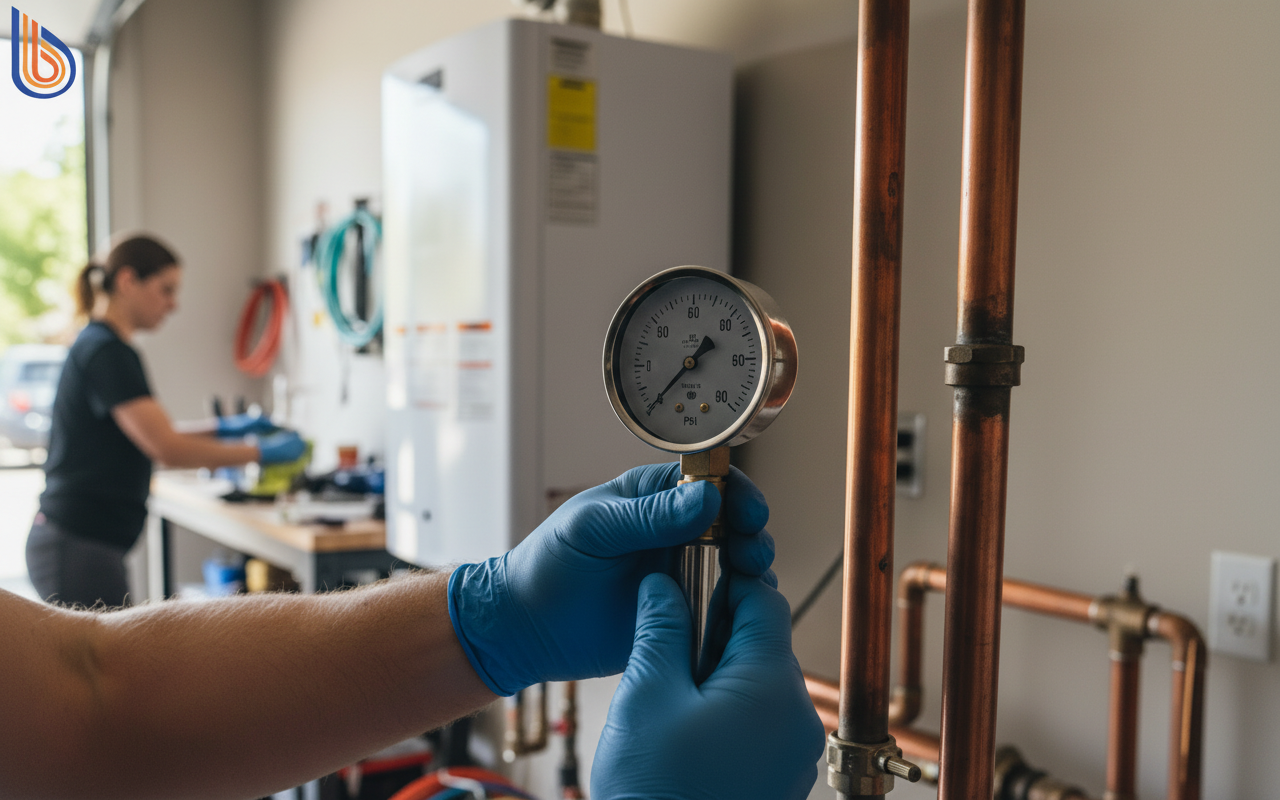
Step 1: The Static vs. Dynamic Pressure Test
Understanding the difference between static and dynamic pressure is the first step in protecting high-efficiency water heaters from the “hidden killer” of municipal surges. Static pressure is the force when no water is running, while dynamic pressure measures the flow while a fixture is open.
- Attach a Pressure Gauge: Connect a stainless steel pressure gauge to your outdoor hose bib or the drain valve of your water heater.
- Measure Static Pressure: Ensure all faucets and appliances are off. A reading above 75 PSI indicates your water pressure regulator is failing or absent.
- Measure Dynamic Pressure: Turn on a high-flow fixture like a bathtub. If the pressure drops more than 15-20 PSI, you likely have a restriction or a dying PRV that can’t maintain volume.
But wait—testing once at 2:00 PM isn’t enough. According to the EPA’s WaterSense guidelines, municipal pressure fluctuates based on community demand. In many East Bay neighborhoods, pressure is highest at 3:00 AM when usage is lowest. This is why we recommend using smart leak detectors or logging gauges for a true 24-hour Bay Area Water Pressure Audit.
Step 2: PRV Calibration and Maintenance
A water pressure regulator (or PRV) is a mechanical device with a spring and diaphragm that typically lasts 7 to 12 years in Bay Area soil conditions. If yours is older than a decade, it is likely a “ghost component”—it looks like it’s working, but it’s no longer regulating spikes.
- Locate the Adjustment Bolt: Most PRVs have a bolt on top. Turning it clockwise increases downstream pressure; counter-clockwise decreases it.
- The 60 PSI Sweet Spot: While code allows up to 80 PSI, we recommend calibrating to 60 PSI for high-efficiency systems. This provides plenty of shower pressure while leaving a safety margin for surges.
- Check for Creep: After PRV calibration, let the system sit for 10 minutes and re-test the static pressure. If it slowly climbs back up, the internal seal is gone, and you need a Bay Area PRV replacement.
Here’s an honest, contrarian insight: Most “plumbing experts” will tell you to just replace the PRV. However, if your home is part of a high-density residential zone with aging infrastructure, you might actually need a secondary expansion tank. A PRV alone cannot handle the thermal expansion generated by a high-recovery heat pump water heater.
Need a professional eye on your system? Schedule your free pressure audit with our specialists today to ensure your warranty remains intact.
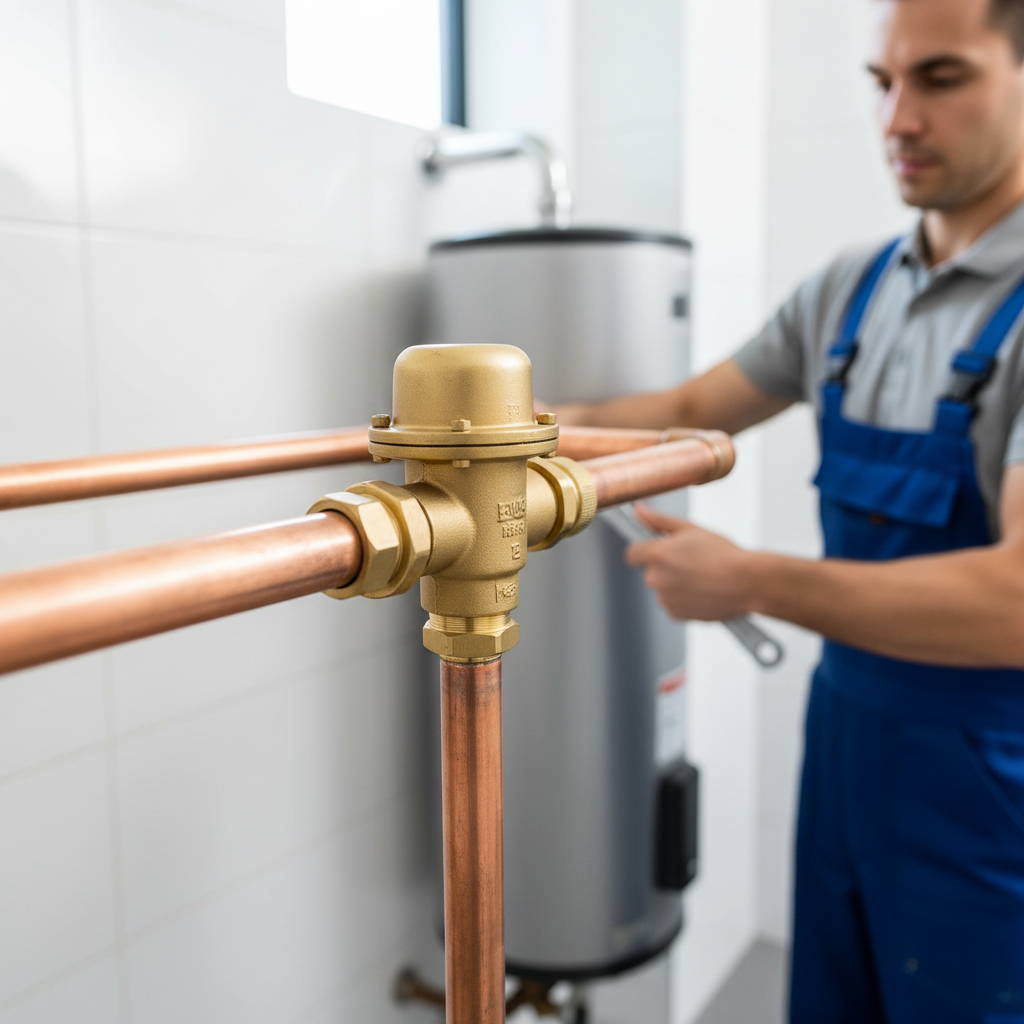
Step 3: Thermal Expansion Tank Installation and Audit
If you have a water pressure regulator, you officially have a “closed” plumbing system, which means heated water has no way to expand back into the city main. This is where thermal expansion tank installation becomes critical for protecting high-efficiency water heaters.
| Feature | Without Expansion Tank | With Expansion Tank |
|---|---|---|
| Internal PSI during heating | Can spike to 120+ PSI | Stays stable at ~60 PSI |
| TP Valve Status | Frequent dripping/leaking | Dry and functional |
| Heater Lifespan | 8-10 years (estimated) | 15-20 years (estimated) |
In our work with property managers in San Jose, we’ve seen that skipping the expansion tank is the #1 cause of premature tank failure in new builds. The tank acts as a shock absorber. During your Bay Area Water Pressure Audit, tap the side of your expansion tank. It should sound hollow on the bottom (air) and thud on the top (water). If it’s heavy all over, the internal bladder has failed.
The ROI of Pressure Management in the Bay Area
What most people miss is that water pressure management is an ROI play. A typical water pressure reducing valve cost ranges from $350 to $600 including labor. Compare that to the $4,000+ cost of a new Heat Pump Water Heater that fails at year seven because the heat exchanger couldn’t handle the stress of 100 PSI micro-surges.
- Reduced Leak Risk: Lower pressure saves your faucets, toilets, and appliances, not just your water heater.
- Energy Savings: High pressure often leads to higher water waste; regulating pressure can lower your utility bill.
- Regulatory Readiness: California Title 24 increasingly emphasizes pressure management as part of whole-home efficiency.
For those managing multiple units or navigating the move to all-electric homes, this is a foundational step. If you’re also managing digital assets or local business content, you might use a tool like Ingest.blog (our internal AI content engine) to keep your maintenance schedules organized, but for your physical plumbing, there is no substitute for a manual gauge check.
When to Call a Bay Area Water Heater Specialist
While a homeowner can easily buy a gauge at a hardware store, interpreting the results requires local context. Different water districts—from Contra Costa Water District to Alameda County—have different baseline pressures and chemical compositions that affect PRV longevity.
You should call a professional if:
- Your pressure gauge shows readings above 80 PSI.
- You hear a “bang” (water hammer) when your washing machine turns off.
- Your tankless water heater maintenance SF reveals sediment that is clogging your PRV.
- You’re planning to take advantage of the federal tax credits for heat pump water heaters and want to ensure the installation is future-proof.
The real takeaway for this week? Go to your local hardware store, spend $15 on a pressure gauge, and hook it up to your hose bib. If that needle crosses 80, you are effectively burning money every time your water heater cycles. Don’t wait for a flood to protect your investment.
Ready to secure your home’s plumbing? Contact Better Water Heaters for a comprehensive system health check and PRV calibration.
Frequently Asked Questions
How do I know if my water pressure regulator is failing?
The most common signs of a failing water pressure regulator (PRV) include vibrating pipes, a sudden increase in water pressure at your faucets, or a leaking Temperature and Pressure (TP) relief valve on your water heater. If your static pressure exceeds 80 PSI, the PRV’s internal diaphragm has likely failed and requires immediate replacement to protect your appliances.
Does high water pressure void my water heater warranty?
Yes, many manufacturers of high-efficiency tankless and heat pump water heaters include clauses that void the warranty if the unit is subjected to excessive pressure. Typically, this threshold is 80 PSI. A Bay Area Water Pressure Audit can provide the documentation needed to prove your system is operating within safe, warrantied parameters.
How much does a water pressure reducing valve cost in the Bay Area?
In the Bay Area, a professional water pressure reducing valve cost typically ranges between $350 and $650, including the high-quality lead-free brass valve and expert installation. This varies based on the accessibility of your main water line and whether additional components like a thermal expansion tank are required by local California building codes.
Why is my water heater’s relief valve dripping?
A dripping TP valve is often a symptom of high water pressure or thermal expansion, not necessarily a broken valve. When water is heated, it expands. In a closed system with a water pressure regulator, this expansion increases the internal PSI. Without a functioning expansion tank, the TP valve drips to prevent the tank from rupturing.