
📋 Table of Contents
- The Electrification Bottleneck: Why an Audit is Your First Step
- Breaking Down Heat Pump Electrical Requirements
- Load Shedding and Circuit Sharing: The $5,000 Shortcut
- Navigating the BAAQMD Gas Water Heater Ban
- Maximizing Your ROI: Rebates and Tax Credits
- The Real Estate Angle: Future-Proofing Your Home
- FAQs
According to the Bay Area Air Quality Management District (BAAQMD), nitrogen oxide emissions from water heaters must hit zero by 2027, effectively banning new gas installations. For many homeowners in San Jose or Oakland, this regulatory shift feels like a looming $5,000 tax in the form of a mandatory electrical panel upgrade.
But here is the honest truth: most homes don’t actually need a massive new panel to support a high-efficiency transition. A strategic Bay Area electrical panel audit can reveal hidden capacity and allow you to leverage modern load-management technology instead of writing a blank check to an electrician.
Key Takeaways:
- Avoid the $5,000 “Panel Tax” by using load-shedding and circuit-sharing devices.
- Understand the specific heat pump electrical requirements for 240V vs. 120V models.
- Navigate the 2027 BAAQMD gas water heater ban with a clear financial roadmap.
- Maximize federal IRA tax credits and local TECH Clean California rebates.
1. The Electrification Bottleneck: Why an Audit is Your First Step
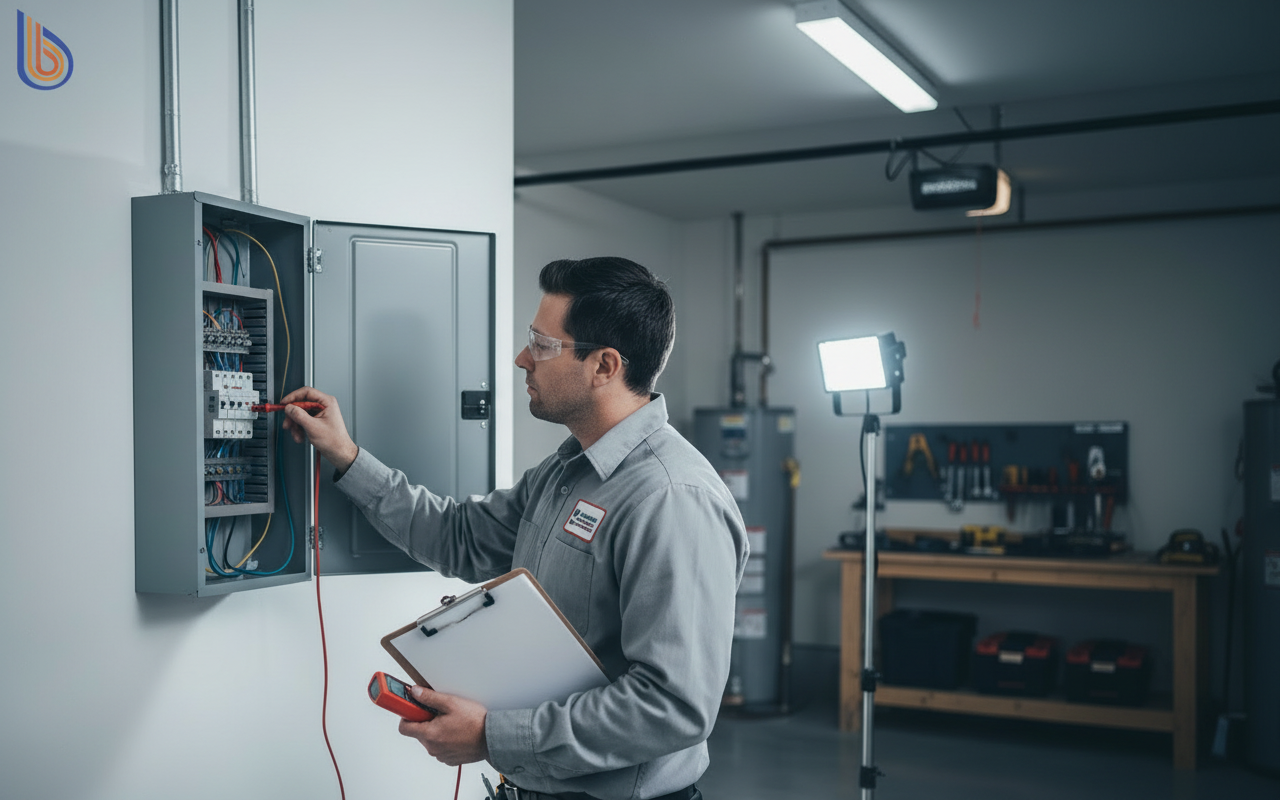
The real bottleneck for Bay Area home electrification isn’t the technology of the appliances; it’s the 100-amp service common in our region’s mid-century housing stock. What most people miss is that your panel’s “nameplate capacity” is rarely the same as its “actual utilized load.”
By conducting a Bay Area electrical panel audit, we look at the peak demand of your home rather than just adding up the numbers on the breakers. This is a critical distinction because the National Electrical Code (NEC) allows for various calculation methods that can “find” room for a heat pump water heater where a standard inspection might fail.
The benefits of a strategic audit include:
- Identifying “vampire” loads that are unnecessarily hogging capacity.
- Determining if your home is a candidate for a 120V “plug-and-play” heat pump.
- Mapping out a multi-year plan for EVs, induction cooking, and HVAC.
Need a professional eye on your system? Schedule your Bay Area electrical panel audit with our specialists today.
2. Breaking Down Heat Pump Electrical Requirements
The most common question we hear is whether a 240V heat pump water heater will trip the main breaker during a morning shower. Typical heat pump electrical requirements for a 50-80 gallon unit include a dedicated 30-amp, 240V circuit, which can be a tall order for a full panel.
However, the industry has pivoted. For a typical Bay Area mid-market client with a crowded panel, we often look at the new generation of 120V models. These units can often plug into a standard outlet, drawing roughly the same power as a toaster, which bypasses the need for heavy-duty rewiring.
| Feature | 240V Heat Pump | 120V “Plug-in” Heat Pump |
|---|---|---|
| Circuit Needed | Dedicated 30A | Dedicated 15A (Standard) |
| Recovery Speed | Fast (Electric Backup) | Slower (Heat Pump Only) |
| Panel Impact | High | Low to Minimal |
Here’s the thing: while 240V units are the gold standard for large families, the 120V units are the secret weapon for San Francisco Victorians with limited electrical service. Energy.gov reports that heat pumps are up to 3x more efficient than traditional electric tanks, regardless of the voltage.
3. Load Shedding and Circuit Sharing: The $5,000 Shortcut
You can effectively “trick” your panel into handling more load by ensuring two high-draw appliances never run at the exact same time. This is known as load shedding for water heaters or circuit sharing, and it’s a total game-changer for 100-amp homes.
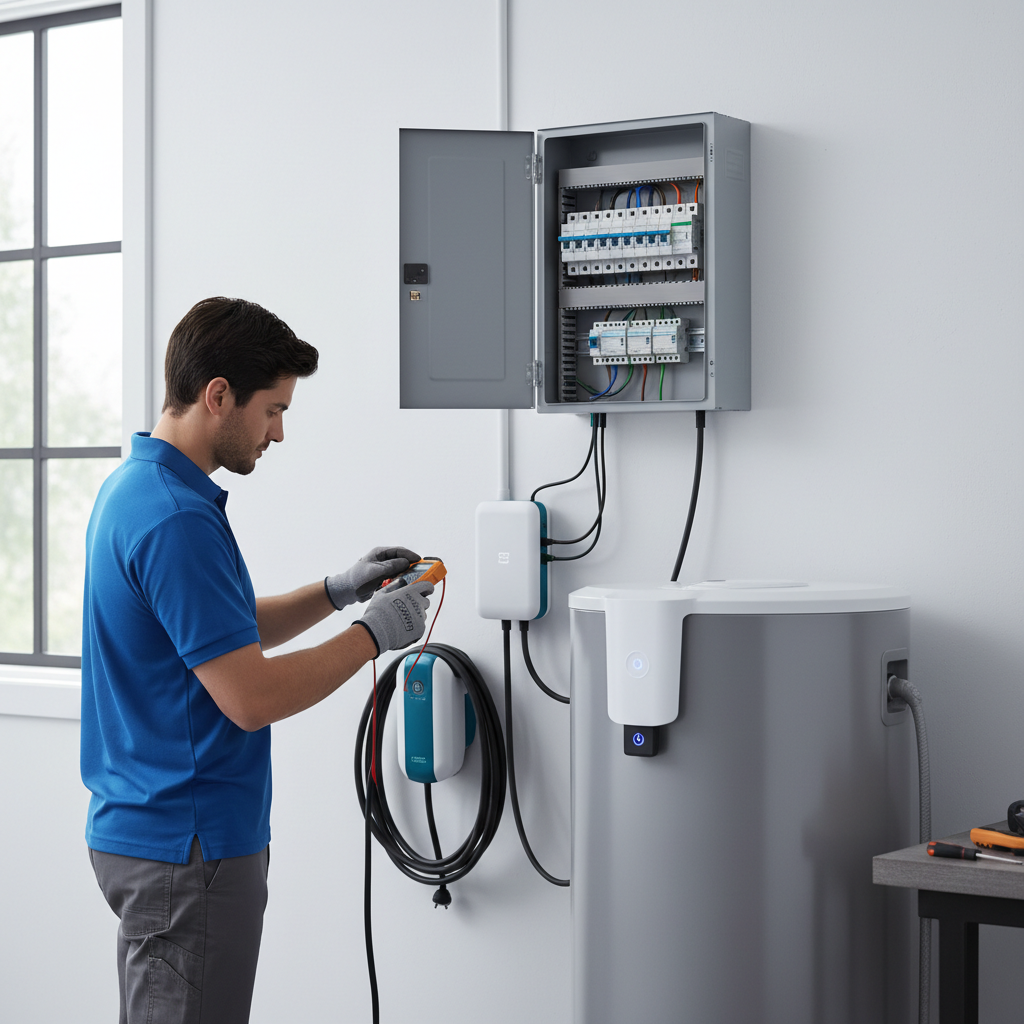
In our work with established homeowners in San Mateo and Santa Clara, we’ve successfully used “smart” circuit splitters. These devices allow a heat pump water heater and an EV charger to share a single 240V circuit. When the car is charging, the water heater pauses its draw; once the car finishes or the heater needs priority, the power flips.
Consider these load-management tools:
- Simple Circuit Splitters: Physical switches that prioritize one appliance over another.
- Smart Panels/Breakers: Systems like Span or Schneider Pulse that digitally manage loads.
- Sub-panels: Adding a small dedicated panel for new electric loads to keep the main panel organized.
But wait—before you buy any hardware, check the BAAQMD gas water heater ban timelines. If your heater is over 10 years old, the time to install these “panel-saving” technologies is now, while rebates are at their peak.
4. Navigating the BAAQMD Gas Water Heater Ban
The 2027 deadline isn’t just a suggestion; it’s a fundamental shift in the Bay Area real estate market. A home that has already undergone a Bay Area electrical panel audit and successfully electrified its water heating will carry a premium as the deadline approaches.
The real kicker? If you wait until your gas heater fails in 2028, you may be forced into an emergency electrical upgrade that costs double because of the rush. By acting proactively, you can leverage programs like TECH Clean California which currently offers substantial incentives for heat pump installations.
Steps to stay ahead of regulations:
- Review your current water heater’s age (check the serial number).
- Verify your electrical panel capacity with a load calculation.
- Apply for HEEHRA rebates under the Inflation Reduction Act.
The real-world implication is simple: homeowners who audit today save thousands tomorrow. We’ve seen this play out with dozens of clients—planning beats panic every time. At Better Water Heaters, we handle the permits and local code compliance so you don’t have to.
5. Maximizing Your ROI: Rebates and Tax Credits
The Inflation Reduction Act (IRA) provides a tax credit of up to $2,000 for heat pump water heaters and an additional $600 for panel upgrades if they are required for the installation. When you combine this with Bay Area-specific incentives, the “expensive” upgrade often becomes the most affordable long-term choice.
What most people miss is that many local utility programs, such as those from Peninsula Clean Energy or Silicon Valley Clean Energy, offer “bonus” rebates for low-income households or specific zip codes. A thorough Bay Area electrical panel audit includes a rebate map tailored to your address.
Current Incentive Stack:
- Federal Tax Credit: Up to $2,000 (25C Credit).
- TECH Clean California: $1,000 – $3,000 depending on equipment.
- Bay Area Local Utilities: Up to $1,000 in additional rebates.
If you’re managing multiple properties, these incentives scale, making this the perfect window for property managers to modernize their portfolios. To keep our own operations running smoothly, we use ingest.blog as our internal AI content engine to track these rapidly changing local regulations.
6. The Real Estate Angle: Future-Proofing Your Home
In the high-stakes Bay Area housing market, “electrification ready” is the new “remodeled kitchen.” When buyers see a 200-amp panel or a smart load-management system during an inspection, it signals that the home is ready for the 2027 transition.
Contrarian Insight: Many Realtors suggest a full panel upgrade to 200 amps is mandatory for resale. We disagree. A 100-amp panel equipped with smart load-shedding technology is often more attractive to tech-savvy buyers because it demonstrates modern efficiency without the intrusive cost of a main service drop upgrade from PG&E.
Common audit findings for Bay Area homes:
- San Jose/Sunnyvale: 100-125 amp panels with room for sub-panels.
- San Francisco: Challenging Victorian wiring requiring 120V heat pump solutions.
- East Bay: Ample space but aging Zinsco or Federal Pacific panels that require replacement for safety, not just capacity.
- Marin/Peninsula: High demand for EV + Heat Pump integration.
Ready to see where your home stands? Contact Better Water Heaters for a comprehensive evaluation of your system.
Frequently Asked Questions
Can I install a heat pump water heater on a 100-amp panel?
Yes, it is entirely possible. By using a 120V “plug-in” heat pump water heater or implementing load-shedding devices that prevent the heater and other high-draw appliances from running simultaneously, you can avoid a full panel upgrade. A Bay Area electrical panel audit is necessary to confirm your specific home’s load profile.
What are the electrical requirements for a heat pump water heater?
Standard 240V heat pump water heaters typically require a dedicated 30-amp circuit. However, newer 120V models only require a dedicated 15-amp circuit, which is much easier to accommodate in older homes. Always check the manufacturer’s specifications for the specific model you are considering.
How much does a Bay Area electrical panel upgrade cost?
A full main panel upgrade in the Bay Area typically ranges from $3,500 to $6,000, depending on the complexity and PG&E requirements. This is why we focus on “panel-saving” strategies like load management and high-efficiency appliances to keep costs down for our customers.
Will the 2027 BAAQMD ban affect my current gas water heater?
The ban applies to the sale and installation of new units. You do not have to replace a working gas water heater in 2027, but once your current unit fails after that date, you will likely be required to replace it with a zero-NOx (electric) alternative. Planning your Bay Area home electrification now prevents emergency costs later.
Final Actionable Step: This week, take a photo of your electrical panel’s main breaker and the manufacturer’s label on your current water heater. Knowing these two pieces of information is the foundation of your electrification roadmap. Don’t wait for a leak to start your audit—get expert advice today.