
📋 Table of Contents
According to Energy.gov, heat pump water heaters are up to three times more energy-efficient than conventional electric resistance models, yet many homeowners risk constant cold showers by choosing the wrong tank size. When sizing a heat pump water heater for a high-demand Bay Area household, you aren’t just buying a tank; you are engineering a thermal battery for your home.
Key Takeaways:
- FHR is King: First Hour Rating matters more than total tank gallons.
- Upsize for Recovery: Heat pumps recover slower than gas; a 65-gallon tank is often the new 50-gallon standard.
- Rebate Ready: Bay Area residents can access up to $4,900 in incentives through programs like TECH Clean California.
- Climate Matters: Unconditioned garage installations require specific volume adjustments for efficiency.
The Shift from Gas to Heat Pump: Why Sizing Is Different
The most important thing to grasp is that heat pumps do not create heat—they move it—which means they take longer to replenish a drained tank than a gas burner. This slower recovery rate is why sizing a heat pump water heater requires a different mental model than replacing a standard gas unit.
What most people miss: In our work with established homeowners in San Jose and Redwood City, we’ve found that a direct one-to-one gallon replacement often leads to disappointment. If you currently have a 50-gallon gas heater, jumping straight to a 50-gallon heat pump might leave you shivering during the third back-to-back shower.
- Gas Recovery: Typically 40-50 gallons per hour.
- Heat Pump Recovery: Often as low as 20-25 gallons per hour in high-efficiency mode.
- The Buffer Solution: Increasing tank volume allows you to store more pre-heated water to compensate for the slower heating cycle.
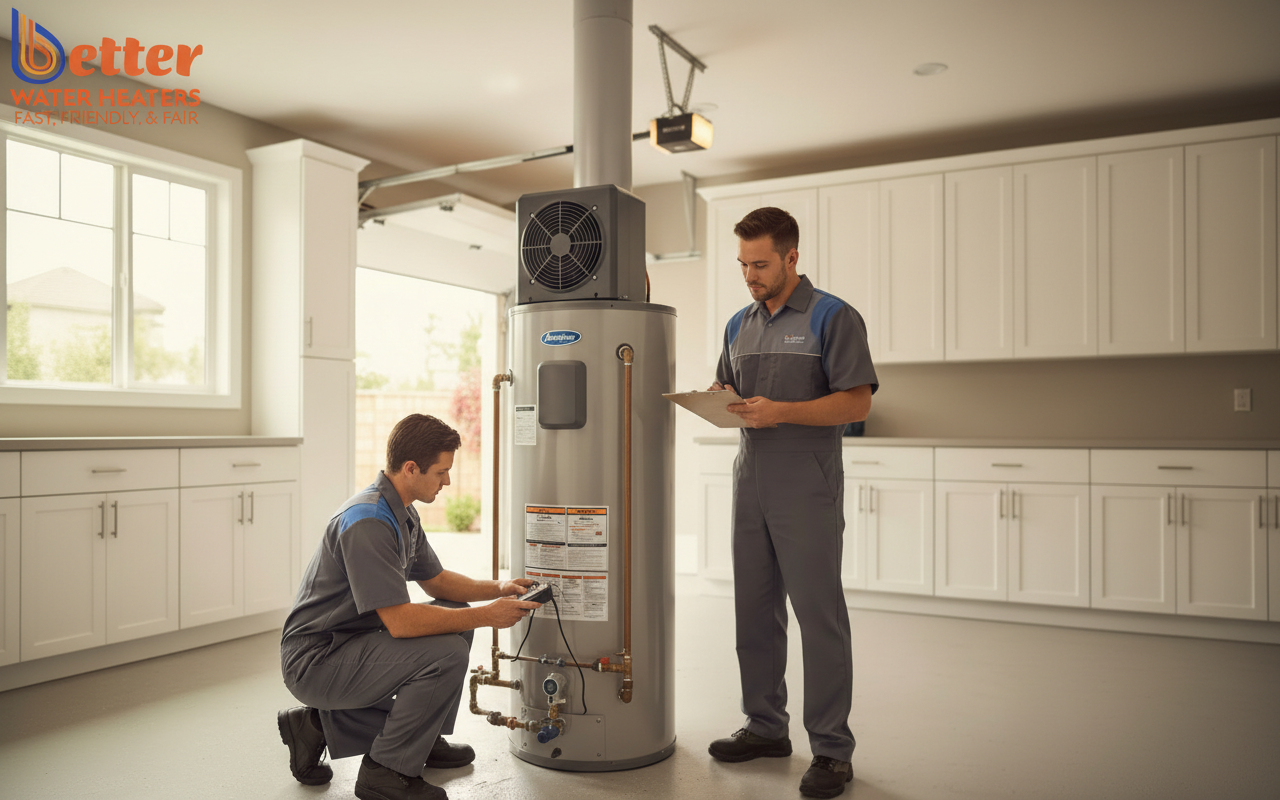
Mastering the First Hour Rating (FHR) Calculation
Your “First Hour Rating” is the true measure of how much hot water the unit can deliver starting with a full tank during one hour of heavy usage. To get your sizing a heat pump water heater strategy right, you must calculate your peak hour demand accurately.
Here is the technical breakdown for a high-occupancy Bay Area home:
- Identify your peak hour: Usually the morning rush between 6:30 AM and 7:30 AM.
- Assign Gallon Values: Use 10 gallons per shower, 2 gallons per shaving/sink use, and 3 gallons for a dishwasher cycle.
- Sum the Total: If three people shower (30g) and the dishwasher runs (3g), your FHR requirement is 33 gallons.
But wait—you need a safety margin. We recommend a 15-20% buffer to account for the “Cold Garage Factor” common in the foggy microclimates of San Francisco or Daly City. If your calculated need is 60 gallons, aim for a unit with an FHR of at least 70.
Need a professional eyes-on assessment? Schedule a free sizing consultation with our local experts today.
The 65-Gallon Standard: Sizing for the Future
In the Bay Area, we are seeing a significant shift where the 65-gallon hybrid unit is becoming the default choice for 3-4 person households. While a 50-gallon tank was the old gold standard, the heat pump water heater sizing logic has evolved to prioritize storage over brute-force heating.
The real kicker? Larger tanks don’t necessarily cost significantly more to operate. Because the insulation is so thick on modern units from brands like Rheem or AO Smith, the standby heat loss is negligible compared to the benefit of having 15 extra gallons of “insurance” against cold water.
Typical Bay Area scenarios we encounter:
- The Empty Nesters: 50-gallon unit is usually sufficient for two adults.
- The Growing Family (3-5 people): 65-gallon unit is the “sweet spot” for reliability.
- Multi-Generational Homes: 80-gallon units are mandatory if an ADU or guest suite is attached.
The Cold Garage Factor and Bay Area Microclimates
Heat pumps extract heat from the surrounding air, meaning their efficiency—and effective FHR—drops when the ambient air temperature falls below 40°F. While the Bay Area is temperate, a drafty garage in the East Bay hills or a foggy Sunset District basement can impact performance.
Here’s the thing: If your unit is in an unconditioned space, you need more air volume. Most manufacturers require roughly 700 to 1,000 cubic feet of space. If your garage is cramped, you might need a louvered door or ducting to ensure the heat pump isn’t trying to pull heat from air it has already cooled down.
Pro Tip: Many of our tech-forward clients in Palo Alto integrate their water heaters with solar and battery systems. By using “Heat Pump Only” mode during peak solar production hours (10 AM – 4 PM), you can effectively store solar energy as hot water, bypassing the high PG&E peak rates.
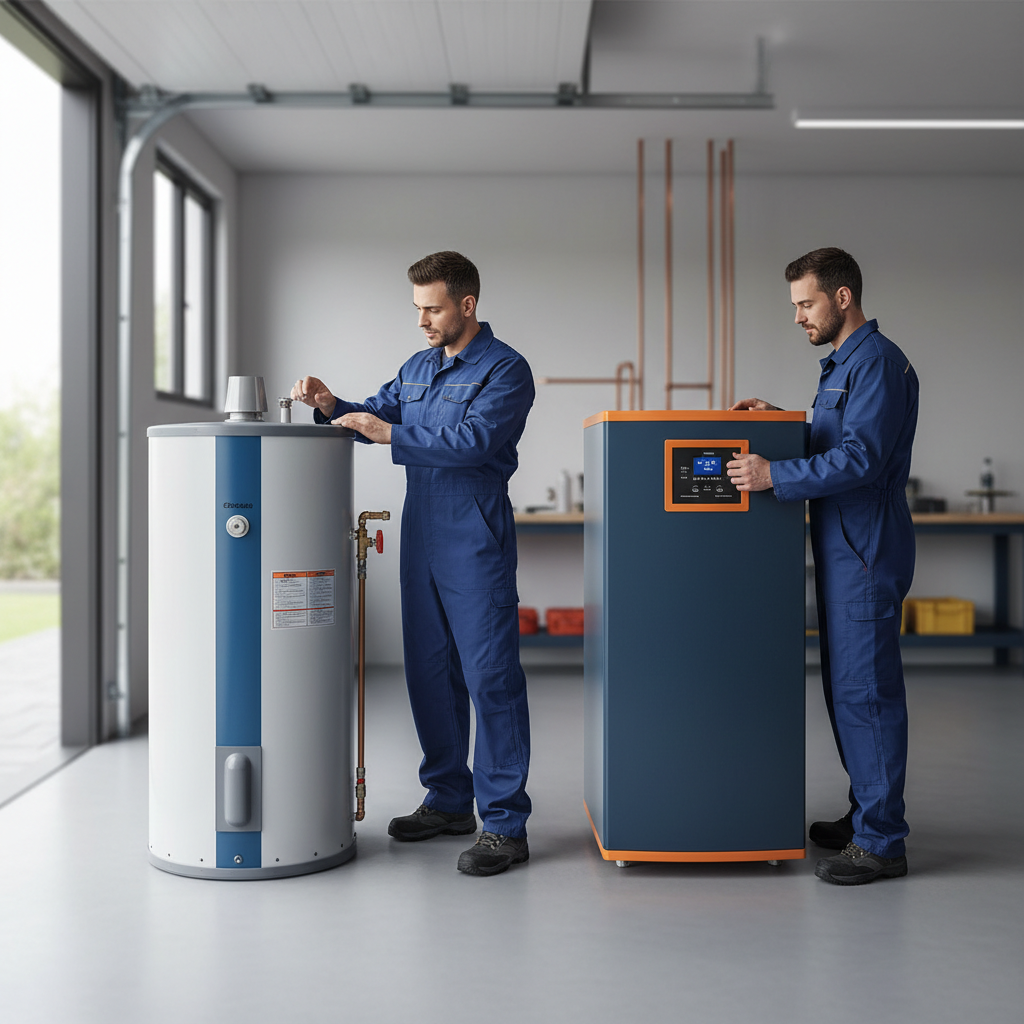
Navigating Bay Area Electrification Rebates and Incentives
The upfront cost of a heat pump can be daunting, but the Bay Area has some of the most aggressive decarbonization incentives in the country. Bay Area home efficiency isn’t just about saving the planet; it’s about maximizing the ROI on your appliance upgrades.
| Program Name | Estimated Incentive | Eligibility Notes |
|---|---|---|
| TECH Clean California | Up to $3,100 | Varies by utility and equipment type |
| BayREN | $1,000 | Must use a participating contractor |
| Federal Tax Credit (25C) | 30% up to $2,000 | Annual cap applies across all upgrades |
What most people miss: These rebates are often stackable. A properly sized installation can frequently see $4,000+ in total offsets. However, these programs require specific permits and licensed contractors to qualify. You can learn more about local rebate requirements on our site.
Retrofit Reality: 120V vs. 240V Options
For many older homes in Oakland or Berkeley, the electrical panel is the biggest hurdle to sizing a heat pump water heater. A traditional 240V heat pump requires a dedicated 30-amp circuit. If your panel is maxed out, you might face a $3,000 panel upgrade just to install a $2,000 water heater.
The contrarian insight? Don’t automatically assume you need a panel upgrade. The new generation of 120-volt “plug-in” heat pump water heaters is a game-changer for retrofits. While they have a slower recovery rate than 240V models, they can often be installed using an existing outlet. If you choose a 120V model, we almost always recommend upsizing the tank to 80 gallons to ensure you have enough stored capacity to get through the day.
Ready to make the switch? Request a quote and we’ll help you navigate the electrical requirements for your specific home.
Frequently Asked Questions
How do I know if a 50-gallon heat pump is enough?
A 50-gallon unit is typically sufficient for a 1-2 person household with moderate water usage. However, if you have a high-flow showerhead or a large soaking tub, you should look at the First Hour Rating. If your peak hour demand exceeds 55 gallons, you should consider stepping up to a 65-gallon model to avoid running out of hot water.
Will a heat pump water heater make my garage too cold?
In the Bay Area climate, the cooling effect is minimal—usually about 3-5 degrees in a standard two-car garage. While it acts as a dehumidifier (which is great for tool storage), it won’t turn your garage into a refrigerator. If the space is very small, we can install ducting to vent the exhaust air outside.
What is the lifespan of a heat pump water heater compared to gas?
Most high-quality hybrid units are rated for 10-15 years, similar to traditional tanks. However, because they are more complex, annual maintenance is critical. Cleaning the air filter every six months and checking the anode rod every 3 years can extend the life of the unit significantly beyond the warranty period.
Are there specific permits required for San Jose or San Francisco?
Yes, all water heater replacements in the Bay Area require a local building permit and a post-installation inspection. This ensures the unit is properly strapped for earthquakes and the electrical work meets California Title 24 standards. At Better Water Heaters, we handle the entire permit process for our clients.
The real takeaway for this week: Don’t wait for your current gas heater to fail. In the Bay Area, the transition to electric is becoming a requirement, not just a choice. Take 10 minutes this weekend to check the age of your current unit—if it’s over 10 years old, contact us for a sizing assessment so you can plan your upgrade before an emergency forces a rushed (and likely undersized) decision.