
📋 Table of Contents
When five or more people reside under one roof, the morning shower routine isn’t just a schedule—it’s a high-stakes stress test of your home’s infrastructure. According to the U.S. Department of Energy, water heating is the second largest energy expense in most homes, but for large Bay Area households, a failing reliability framework can cost much more in wasted time and emergency repairs.
The reality is that standard 40- or 50-gallon tanks were never designed for the simultaneous-use demand spikes of modern multi-generational living. Whether you are housing adult children, moving elderly parents into a new ADU, or managing a bustling household in San Jose, you need a strategy that goes beyond just “buying a bigger tank.”
The 4-Quadrant Reliability Framework Explained
True reliability isn’t about over-engineering; it’s about balancing capacity, compliance, connectivity, and longevity to handle peak-hour demand without spiking your PG&E bill.
- Capacity: Ensuring the water heater recovery rate matches the speed of your household’s consumption.
- Compliance: Navigating 2027 zero-NOx requirements and California Title 24 reach codes today.
- Connectivity: Using smart leak detection and digital monitoring to prevent catastrophic failures in high-use systems.
- Longevity: Combatting the specific hard water profile of the Santa Clara Valley and East Bay to protect your investment.
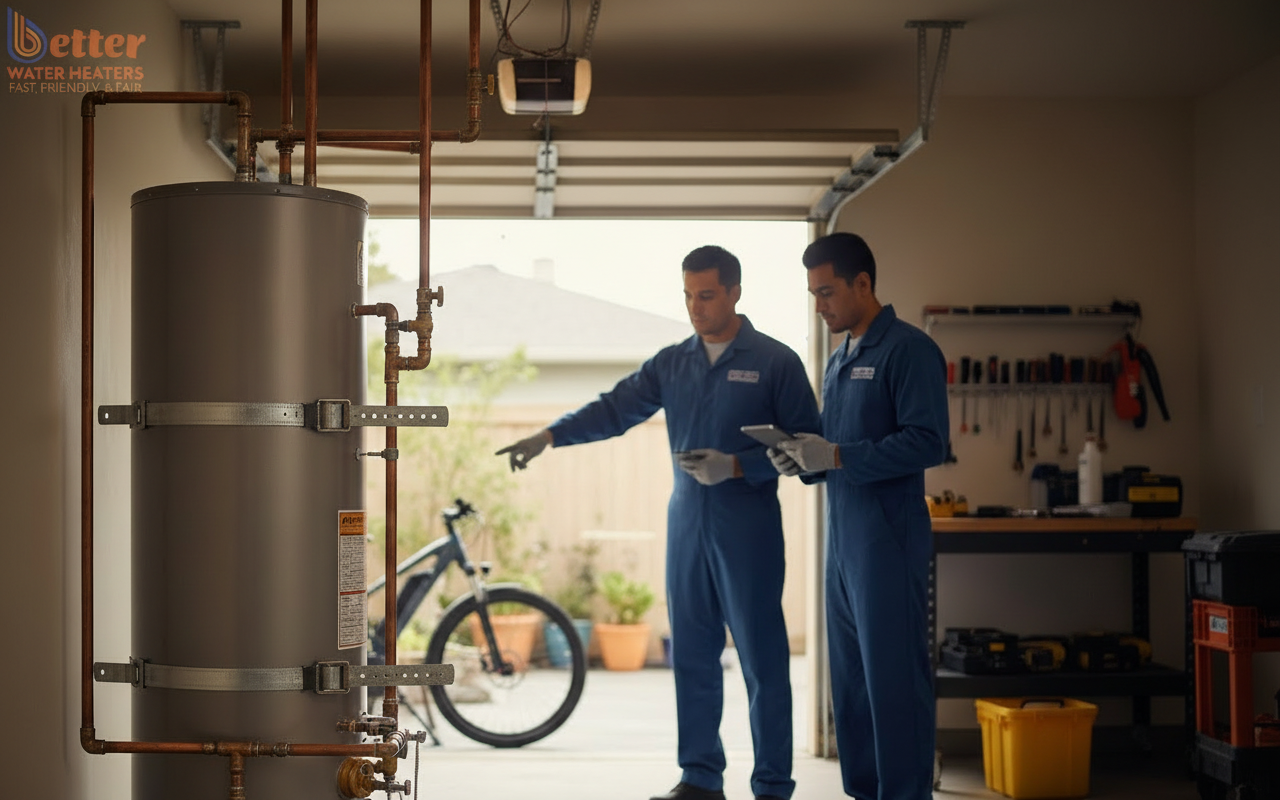
Quadrant 1: Capacity and the ‘No-Cold-Shower’ Guarantee
What most people miss is that a high-capacity system isn’t just about volume; it’s about how fast that volume can be replenished. In our work with established families in Palo Alto and Fremont, we often see 75-gallon tanks that still fail because the water heater recovery rate is too slow for back-to-back showers.
For homes with 5+ occupants, we focus on:
- Peak Hour Demand (PHD): Calculating the maximum gallons needed during your busiest 60 minutes.
- First Hour Rating (FHR): Selecting units that can deliver that PHD without a drop in temperature.
- Simultaneous-Use Loads: Accounting for the dishwasher, laundry, and two showers running at once.
Here’s the thing: A tankless water heater in the Bay Area is often the superior choice for large families because it provides an endless supply. However, if your home’s gas line is undersized—common in 1950s ranch homes—the retrofit cost can be prohibitive. In those cases, a high-recovery hybrid system is the more strategic move.
Quadrant 2: Compliance and the 2027 Electrification Mandate
Building for today is a mistake; you must build for the regulatory environment of 2027 and beyond. The Bay Area Air Quality Management District (BAAQMD) has already set timelines that will phase out the sale of traditional gas water heaters.
The real kicker? Multi-generational home upgrades that don’t account for these mandates now may face “compliance debt”—expensive, forced retrofits when you try to sell or permit an ADU later. We recommend looking at heat pump water heater rebates in California, which can currently offset up to $4,900 in costs through programs like TECH Clean California and local utility incentives.
- Panel-Ready Upgrades: Ensuring your electrical service can handle a 240V heat pump circuit.
- ADU Integration: Designing separate or shared systems that meet strict Title 24 energy budgets.
- Seismic Safety: Proper earthquake strapping is non-negotiable for high-capacity tanks in our fault-adjacent region.
Need help navigating local codes? Schedule a free consultation with our specialists to see which rebates apply to your specific zip code.
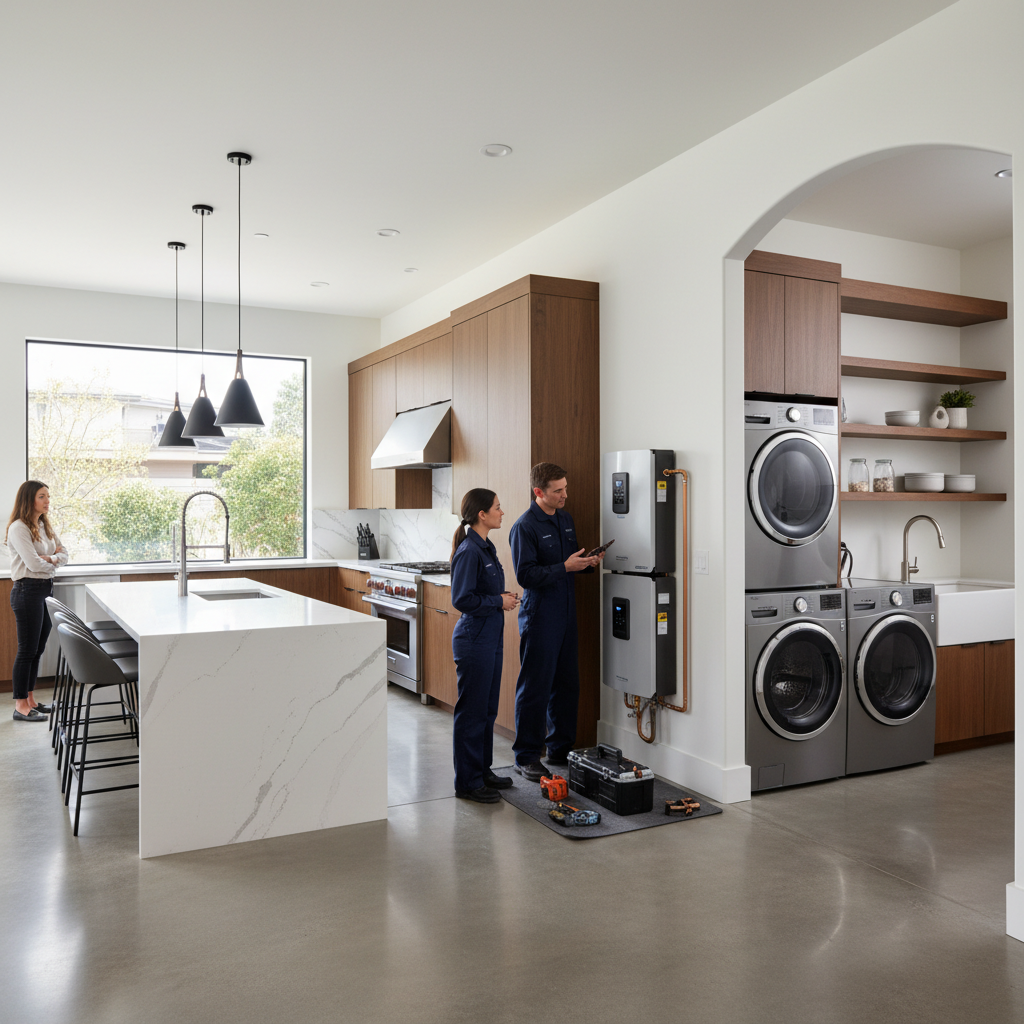
Quadrant 3: Connectivity and Risk Mitigation
In a high-occupancy home, a small leak becomes a flood much faster than in a single-occupant residence. For our typical Bay Area mid-market clients, connectivity isn’t a luxury—it’s an insurance policy against the $20,000+ average cost of water damage remediation.
Smart systems now offer:
- Automatic Shut-off Valves: These detect moisture and kill the water supply instantly.
- Demand Tracking: See exactly when your household hits peak usage to optimize energy settings.
- Remote Diagnostics: We can often see why a system is underperforming before you even lose hot water.
But wait—don’t buy into the hype that every “smart” heater is better. Some proprietary boards are notoriously difficult to repair. We stick to brands like Rheem and Bradford White that balance tech with available local parts.
Quadrant 4: Longevity and the Hard Water Factor
The secret to a 20-year lifespan in the South Bay or East Bay isn’t the brand; it’s the maintenance. High-capacity water heating systems are highly sensitive to the scale buildup common in our local water supply.
| Technology Type | Average Lifespan | Maintenance Requirement |
|---|---|---|
| Standard Gas Tank | 8-12 Years | Annual Flush |
| Tankless (Gas) | 20+ Years | Annual Descale |
| Heat Pump (Hybrid) | 10-15 Years | Filter Clean/Flush |
What most people miss is that adding a simple sediment filter or a salt-free conditioner can double the life of a tankless unit. If you’re investing in multi-generational home upgrades, skipping the water treatment is like buying a Ferrari and never changing the oil.
The ROI of Redundancy: Dual Systems
For ultra-high-demand homes (7+ people), we often recommend a dual-tank or hybrid-parallel setup. This provides the ultimate reliability framework. If one unit needs service, the other keeps the household running. It’s the same philosophy we use for our internal AI content engine at Ingest.blog—redundancy ensures zero downtime.
Ready to stress-test your current setup? Explore our tankless vs. tank comparison guide to see which fits your family’s footprint.
Comparing High-Capacity Options for Bay Area Homes
Choosing the right tech depends on your home’s existing infrastructure. A 1970s home in Sunnyvale has different needs than a new build in San Ramon.
- Heat Pump Water Heaters: Best for those looking to maximize heat pump water heater rebates in California and reduce carbon footprint.
- High-Recovery Gas Tanks: Best for large families who want a lower upfront cost and have existing large gas lines.
- Tankless Systems: Best for space-saving and households where showers happen simultaneously across multiple bathrooms.
Actionable Takeaway for This Week
Before you call a plumber, conduct a “Peak Hour Audit.” Track your household’s hot water usage for one morning. If you have more than three major appliances (showers, washers) running within the same 60-minute window, your standard system is likely operating at 90% capacity, leaving you vulnerable to sudden failure. Identifying this gap now allows you to plan an upgrade on your terms, rather than during a cold-shower emergency.
Don’t wait for a leak to dictate your home’s efficiency. Contact Better Water Heaters today for a professional assessment of your household’s demand and a custom reliability roadmap.
Frequently Asked Questions
How do I calculate the right size for a multi-generational home?
Sizing isn’t just about gallon capacity; it’s about the First Hour Rating (FHR). For a home with 5+ people, you generally need an FHR of at least 80-90 gallons. This accounts for the initial tank volume plus the water heater recovery rate within the first hour of heavy use.
Are heat pump water heaters loud enough to disturb a guest suite?
Modern heat pump water heaters produce about 45-55 decibels, similar to a dishwasher. While not silent, strategic installation in a garage or an insulated closet with proper dampening ensures they won’t disturb occupants in a nearby ADU or guest suite.
Will a tankless water heater work for 4 simultaneous showers?
Yes, provided the unit is sized correctly for the Bay Area’s incoming water temperature (typically 50-60°F). You would likely need a high-output unit (11 GPM or higher) or two units plumbed in parallel to maintain consistent pressure and heat across four bathrooms.
What is the most cost-effective way to meet 2027 regulations now?
The most cost-effective path is installing a Heat Pump Water Heater (HPWH) while current federal tax credits and state rebates are at their peak. By utilizing the reliability framework, you can secure up to $4,900 in incentives, making the net cost comparable to a standard gas replacement.