
📋 Table of Contents
According to the U.S. Department of Energy, water heating is the second largest energy expense in most homes, accounting for roughly 18% of your utility bill. In the high-cost environment of the San Francisco Bay Area, choosing between a tankless vs heat pump water heater isn’t just a home maintenance task—it’s a strategic financial decision influenced by aggressive local decarbonization mandates and rising PG&E rates.
Key Takeaways:
- Heat pumps offer the highest ROI through BayREN and TECH Clean California rebates.
- Tankless systems remain the gold standard for space-saving and endless hot water in high-demand households.
- The 2027 BAAQMD regulations will effectively phase out most standard gas water heaters, making electrification a “future-proofing” necessity.
Step 1: The Regulatory Clock and Future-Proofing
The most important thing to understand is that the choice may soon be made for you by local air quality regulators. The Bay Area Air Quality Management District (BAAQMD) recently passed rules that will prohibit the sale and installation of natural gas water heaters starting in 2027.
What most people miss is that waiting until your current heater fails in 2027 might leave you with zero gas-based options, even if your home isn’t currently wired for electric. When comparing a tankless vs heat pump water heater today, you are essentially deciding whether to stay with gas for one last cycle or leapfrog into the electric future now. For a typical Bay Area mid-market client, moving to a heat pump today often secures thousands in incentives that may not be as generous once the mandate kicks in.
- BAAQMD Rules: Natural gas water heaters must meet zero-NOx standards by 2027.
- Title 24 Compliance: California’s building code increasingly favors high-efficiency electric options.
- Resale Value: Modern electrification is becoming a selling point for tech-savvy Bay Area buyers.
Step 2: Electrical Capacity vs. Gas Infrastructure
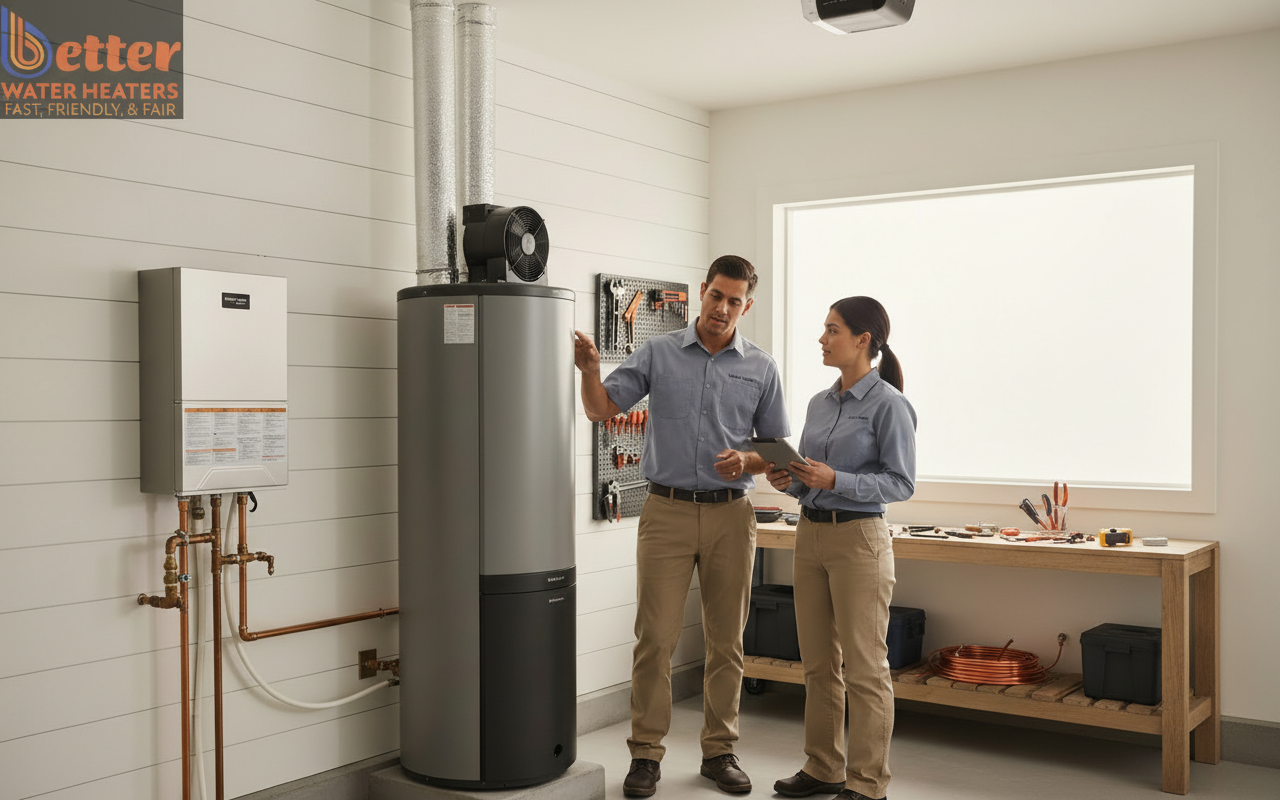
Infrastructure is the “hidden” cost that often dictates the tankless vs heat pump water heater winner. Heat pumps require a dedicated 240V circuit, which can be an expensive hurdle if your main electrical panel is already maxed out at 100 or 125 amps.
On the flip side, high-output tankless units often require a 3/4-inch gas line. Many older homes in neighborhoods like San Mateo or Berkeley are piped with 1/2-inch lines, meaning a tankless upgrade could involve tearing into walls to upsize your gas plumbing. Here is a quick look at the infrastructure trade-offs:
| Factor | Tankless (Gas) | Heat Pump (Electric) |
|---|---|---|
| Power Needs | Standard 120V outlet | Dedicated 30A/240V circuit |
| Plumbing | Possible gas line upsizing | Standard water connections |
| Venting | Special concentric venting required | None (requires air volume) |
The real kicker? If you have a Tesla Powerwall or home battery, a heat pump can often be integrated into your load management system, whereas a gas tankless still requires electricity to ignite and run its internal computer. If you’re feeling overwhelmed by these technical requirements, schedule a free site assessment with our experts to check your panel capacity.
Step 3: Microclimate Assessment and Placement
Your water heater selection framework must account for the Bay Area’s unique microclimates. A heat pump water heater works like a refrigerator in reverse—it pulls heat from the surrounding air to warm your water. This means its efficiency changes based on where you live.
In the foggy, cooler climates of Daly City or San Francisco’s Sunset District, a heat pump located in an uninsulated outdoor closet will work harder than one in a sunny garage in Walnut Creek or San Jose. Conversely, tankless units are immune to ambient temperature but must be carefully protected from the rare but possible hard freezes in the North Bay.
Placement Considerations:
- Space: Tankless units are the size of a suitcase, perfect for ADUs or tight San Francisco property lines.
- Noise: Heat pumps have a compressor and fan (roughly 45-55 decibels). We don’t recommend placing them directly next to a bedroom wall.
- Airflow: A heat pump needs about 1,000 cubic feet of air space to operate efficiently—roughly the size of a small laundry room or garage.
Step 4: The ROI Matrix (Rebates and Operating Costs)
Let’s talk about the “Zero-Dollar” upgrade myth. While it’s rarely literally zero, the combination of federal tax credits (25C) and BayREN rebates 2024 can significantly offset the higher upfront cost of a heat pump. As of 2024, homeowners can often access up to $4,900 or more in total incentives between local, state, and federal programs.
Here’s an honest, contrarian insight: Many contractors push heat pumps solely for the rebates, but if you have a family of six and a small 50-gallon heat pump tank, you will run out of hot water if everyone showers in a row. In high-demand scenarios, the tankless vs heat pump water heater debate often leans toward tankless for pure performance, even if the rebates are lower. At Better Water Heaters, we prioritize your comfort over simply chasing the biggest rebate check.
But wait—if your goal is Bay Area home energy efficiency, the heat pump is the undisputed king. It is roughly 3.5 to 4 times more efficient than a standard electric tank and significantly cheaper to operate than gas when paired with rooftop solar.
Ready to see which rebates you qualify for? Explore our local rebate guide to see how much you can save on your installation.
Choosing the Right System for Your Lifestyle
What most people miss is that this isn’t just a technology choice; it’s a lifestyle choice. In our work with busy tech professionals in Mountain View or startup founders in Palo Alto, we find that the “set it and forget it” nature of a high-end tankless system like a Rinnai or Navien is often worth the extra gas cost. However, for the environmentally-minded resident looking to decouple from fossil fuels, the heat pump is the only logical path forward.
When to Choose Tankless:
- You have high peak hot water demand (back-to-back showers, laundry, and dishwasher).
- You are extremely limited on floor space.
- You prefer the reliability of gas and don’t want to upgrade your electrical panel.
When to Choose a Heat Pump:
- You want to maximize BayREN rebates 2024 and federal tax credits.
- You have (or plan to get) solar panels.
- You want to future-proof your home against the 2027 gas phase-out.
Final Verdict for Bay Area Homeowners
The real winner in the tankless vs heat pump water heater battle depends on your home’s specific “bones.” If you have the electrical capacity and the space, the heat pump is the smartest long-term investment for Bay Area home energy efficiency. If you are retrofitting a tight space and need endless hot water for a large family, tankless remains the superior performance choice.
Don’t wait for a leak to make this decision under pressure. This week, take five minutes to check your electrical panel’s main breaker and look at the diameter of the gas line entering your current water heater. Knowing these two numbers will save you hours of research and potentially thousands in installation surprises. If you’re ready for a professional opinion, contact Better Water Heaters today for a transparent, no-nonsense quote.
Frequently Asked Questions
Which is cheaper to run in the Bay Area, gas tankless or electric heat pump?
Currently, with PG&E’s high tiered electric rates, a gas tankless and a heat pump have comparable operating costs. However, if you have solar panels, the heat pump becomes significantly cheaper to operate. As natural gas prices are projected to rise due to carbon taxes and infrastructure shifts, the heat pump offers better long-term price stability.
Do I really need a permit for a water heater replacement in San Jose?
Yes, all cities in the Bay Area require a permit for water heater replacements. This ensures the unit is properly vented, has the required seismic strapping for earthquake safety, and meets Title 24 energy standards. We handle the entire permit process for our clients to ensure full compliance with local building codes.
How loud are heat pump water heaters?
Modern heat pump water heaters produce about 45 to 55 decibels of sound while the compressor is running, which is similar to a quiet dishwasher. While not “loud,” the constant hum can be noticeable if the unit is installed in a closet directly adjacent to a bedroom or home office.
Will a tankless water heater work during a PG&E Public Safety Power Shutoff (PSPS)?
No. Even though tankless heaters use gas to heat the water, they require electricity to power the sensors, control board, and ignition. To have hot water during a power outage, you would need a small battery backup or an integrated home battery system like a Tesla Powerwall.