
📋 Table of Contents
A homeowner in Palo Alto recently spent $5,200 on a top-of-the-line high-efficiency gas tank, only to have their water heater backdrafting lethal carbon monoxide into their hallway three days later. They thought they were buying safety and efficiency; instead, they bought a localized atmospheric crisis that their smart thermostat didn’t even catch.
Here’s the cold truth: the more you ‘improve’ your Bay Area home with double-pane windows and spray-foam insulation, the more likely you are to turn your water heater into a chimney that flows the wrong way. This isn’t just a minor installation fluke; it’s a systemic failure of modern building science meeting old-school plumbing technology.
The ‘Tight House’ Syndrome: Why Efficiency is Killing Your Draft
The real kicker? Your home is literally gasping for air, and it’s stealing it from the easiest source: your water heater’s exhaust vent.
- Negative Pressure: Modern homes are sealed so tightly that powerful kitchen range hoods or even a clothes dryer can create a vacuum.
- The Path of Least Resistance: When the house needs air, it pulls it down the water heater flue, pushing carbon monoxide safety concerns to the back burner—literally.
- NAECA Standards: Newer 2024 efficiency standards mean tanks are better insulated, but they often produce cooler exhaust that lacks the ‘buoyancy’ to rise out of a cold chimney.
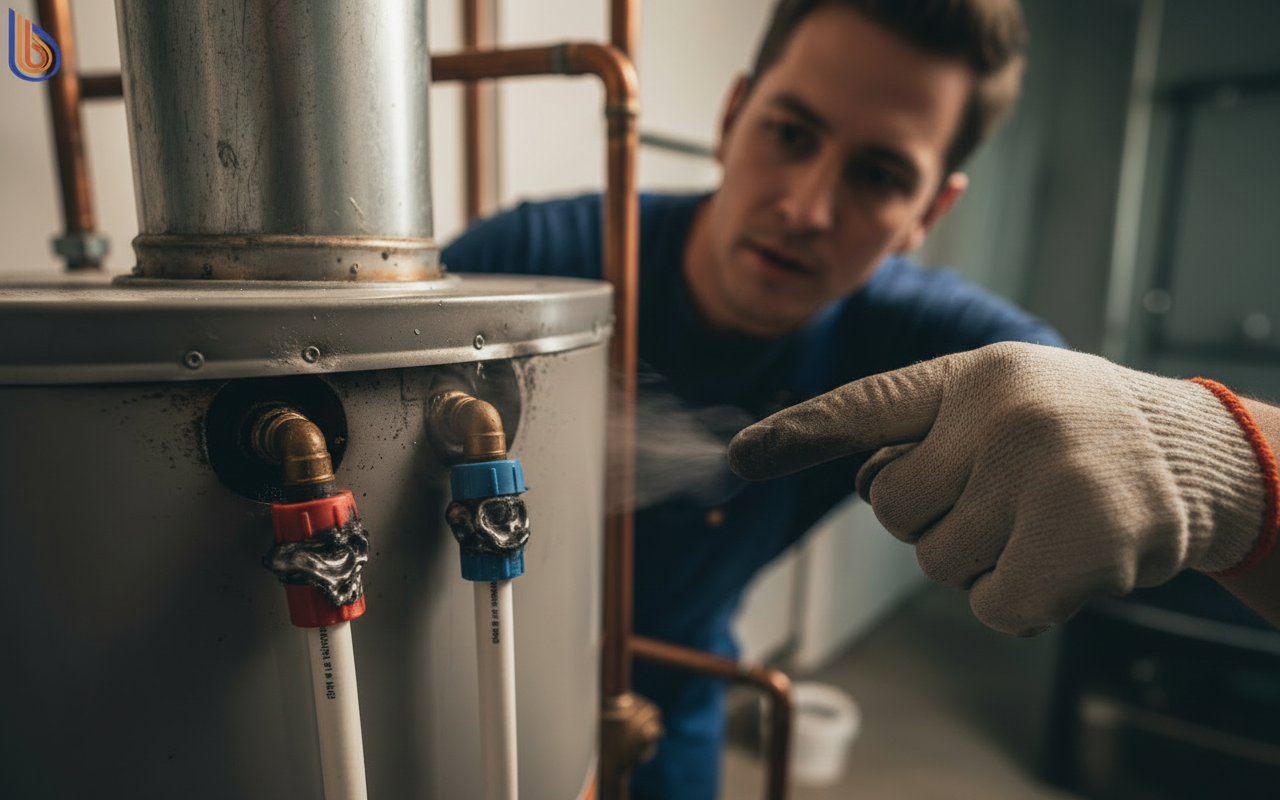
The HVAC-Plumbing Conflict
What most people miss is that your high-CFM Wolf or Viking range hood is the natural enemy of an atmospheric water heater. In a $4M remodel in Los Gatos we recently inspected, the homeowner’s 1200-CFM hood was so powerful it was pulling flames backward out of the water heater burner. If you don’t have a make-up air damper, you’re essentially living in a giant straw where the water heater is the only opening.
Forensic Plumbing: The 30-Second Match Test Every Homeowner Needs
Most ‘pro’ installers drop the tank, hook up the gas, and cash the check without ever performing a combustion air calculation. You can’t manage what you don’t measure.
- The Setup: Turn on all exhaust fans in the house (kitchen, bath, dryer) and close all windows.
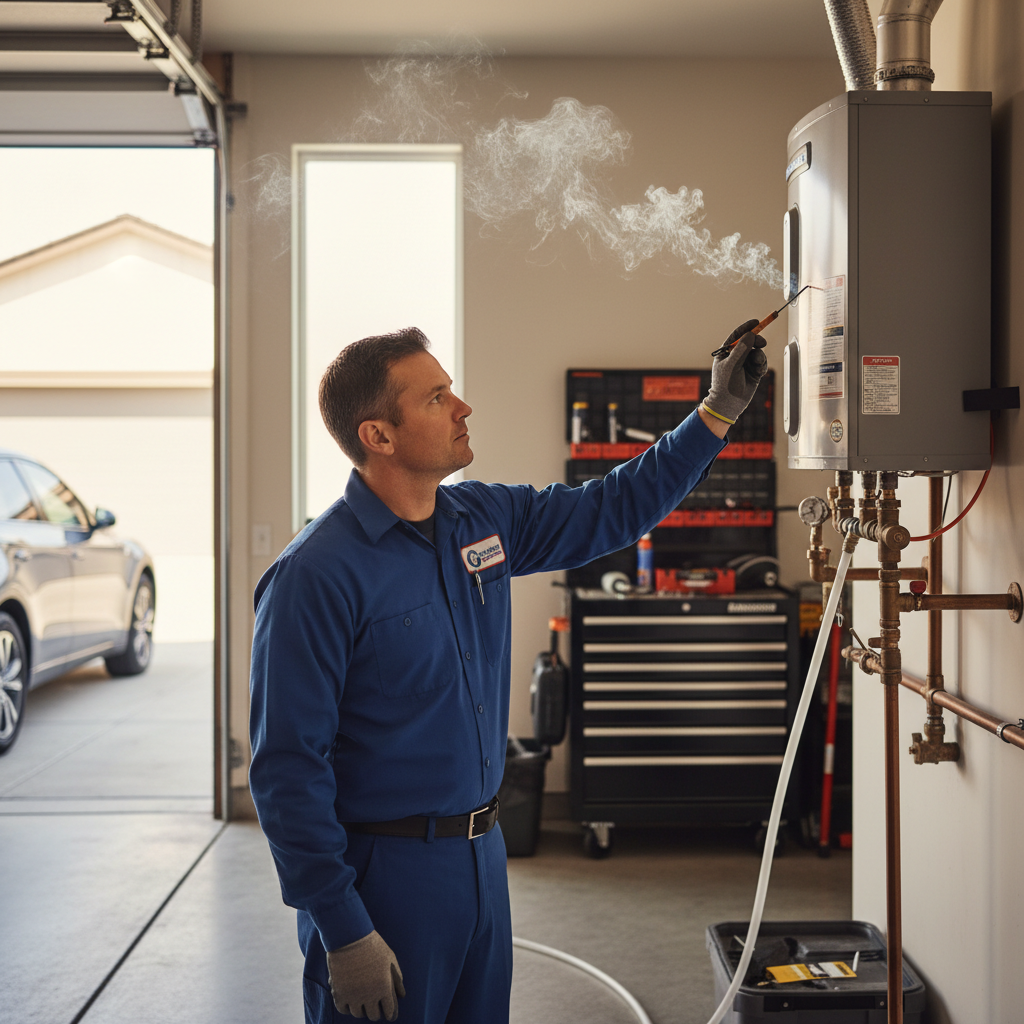
- The Strike: Fire up the water heater and hold a smoking match or incense stick near the draft hood.
- The Result: If that smoke doesn’t get sucked up the vent within 30 seconds, you have water heater backdrafting, and your ‘efficient’ tank is a hazard.
Need a professional to verify your system’s safety? Schedule a forensic safety inspection with our Bay Area experts today.
The Sunk Cost Fallacy of the $5,200 Tank
One of our clients in San Jose spent $5,200 on a high-efficiency tank with a ‘budget’ installer, only to face an additional $4,800 in emergency chimney liner remediation when the inspector red-tagged the unit. They fell into the ‘Phantom Savings’ trap—spending a premium on the appliance while ignoring the infrastructure that makes it work.
| Feature | Atmospheric Vent (Standard) | Power Vent (High-Efficiency) | Heat Pump (Electric) |
|---|---|---|---|
| Upfront Cost | $1,800 – $2,800 | $3,500 – $5,500 | $4,000 – $7,000 |
| Backdraft Risk | High in tight homes | Zero (Fan-forced) | None (No combustion) |
| Bay Area Rebates | None | Minimal | Up to $4,900+ |
But wait—there’s a contrarian insight here: Sometimes, the most ‘efficient’ gas tank is the worst investment for a Bay Area home. If you have to spend $3,000 on a stainless steel chimney liner just to make a gas tank safe, you’re better off jumping straight to a heat pump system and pocketing the available TECH Clean California rebates.
Why Your Insurance Might Deny Your Claim
Insurance companies are getting smarter about carbon monoxide safety and improper venting. If a claim is filed for CO damage or fire, and the forensic investigator finds that the high-efficiency gas water heater was installed without meeting the California Plumbing Code’s combustion air requirements, they have a ‘get out of jail free’ card to deny your claim.
- B-vent clearance: Many installers ‘reuse’ old vents that don’t meet modern 1-inch clearance-to-combustibles rules.
- Thermal spill switches: If your unit doesn’t have a functioning spill switch, it won’t shut off when backdrafting occurs.
- Seismic Strapping: In the Bay Area, an improperly strapped tank can shift just enough to disconnect a vent, leading to immediate CO spillage.
The DIY Disaster of 2024
We’re seeing a massive uptick in ‘plug and play’ installs where homeowners (or cut-rate handymen) replace an old 40-gallon tank with a new high-efficiency gas water heater. They assume the old vent is fine. It rarely is. According to the U.S. Department of Energy, improper venting is the leading cause of appliance-related CO deaths in residential settings.
The 2027 Pivot: Is Gas Still Worth It?
With the Bay Area Air Quality Management District (BAAQMD) pushing for a 2027 ban on NOx-emitting water heaters, the window for gas is closing. If your current tank is backdrafting, it’s a sign that your home’s envelope is ready for electrification.
Here’s the thing: A heat pump water heater doesn’t just save energy; it eliminates the chimney entirely. No chimney means zero chance of water heater backdrafting. It turns a potential ‘Draft Hood Disaster’ into a non-issue while future-proofing your home against upcoming regulations.
Don’t risk your family’s safety on a ‘middle ground’ solution. Talk to our specialists about whether a power-vent gas system or a heat pump is the right move for your specific home layout.
Key Takeaways for Bay Area Homeowners
- Test your draft: If you’ve added insulation or new windows, your old water heater venting may no longer work.
- Calculate Air: Never install a high-efficiency tank without a combustion air calculation.
- Check the Hood: High-CFM kitchen fans are the #1 cause of backdrafting in modern remodels.
- Audit your Installer: If they didn’t use a manometer or a smoke pen, they didn’t test your safety.
Frequently Asked Questions
How do I know if my water heater is backdrafting?
Look for physical signs like melted plastic rings on top of the tank (around the cold/hot pipes), soot or heavy rusting on the draft hood, or moisture beads on the top of the tank. The most reliable way is the ‘Match Test’ or using a professional carbon monoxide detector that tracks low-level PPM, as standard store-bought alarms often don’t trigger until levels are life-threatening.
Can I fix water heater backdrafting without replacing the unit?
Sometimes. Solutions include installing a ‘make-up air’ duct to bring fresh air into the water heater closet, or adding a power-vent blower to the top of the unit to force exhaust out. However, in many airtight Bay Area homes, the most cost-effective solution is switching to a direct-vent gas model or a vent-free heat pump water heater.
Why did my new high-efficiency tank start backdrafting when the old one didn’t?
Newer high-efficiency tanks extract more heat from the flame to warm the water, leaving ‘colder’ exhaust gases. Cold air is heavier than hot air, so it doesn’t have the natural ‘lift’ required to push through an old, oversized, or cold masonry chimney. This is a classic violation of the EPA’s guidelines on combustion appliance safety.
Does a carbon monoxide detector protect me from backdrafting?
Only partially. Most UL-listed CO detectors are designed to prevent immediate death, not chronic low-level exposure. By the time a standard alarm goes off, your family may have already been breathing 30-50 PPM of CO for hours, leading to headaches, nausea, and long-term neurological issues. Prevention through proper venting is the only true safety measure.
The real disaster isn’t the $5,200 price tag—it’s the false sense of security. If your installer didn’t talk to you about negative pressure and combustion air, you didn’t get a professional installation; you got a dangerous gamble. Make the right call before the winter heating season begins.