
📋 Table of Contents
- The Scarcity of Skill: Why Bay Area Plumbing Labor Rates are Set to Explode
- The Anatomy of the $4,200 Surcharge
- The Electrical Infrastructure Deficit: Your Hidden 2027 Roadblock
- Emergency Water Heater Replacement: The Most Expensive Way to Buy
- The Hybrid Strategy: Bypassing the 2027 Hard Stop
- Maximizing Your ROI: Heat Pump Water Heater Rebates and the IRA
- FAQs
In less than 30 months, it will be illegal to install a standard gas water heater in most of the Bay Area, yet 85% of homeowners are sleepwalking into a $4,200 financial ambush. The 2027 gas water heater ban isn’t just a regulatory shift; it’s the starting gun for a labor gold rush that will leave procrastinators paying double for the exact same service.
Here is the reality: the units themselves aren’t the problem—it’s the hands required to install them. We are already seeing a 15% year-over-year contraction in licensed technicians capable of handling complex gas-to-electric conversions. By December 2026, those remaining pros will be charging ‘Black Friday’ premiums to the highest bidder. If you think finding a plumber on Christmas Eve is hard, try finding one during the final weeks of legal gas installs in San Jose or San Francisco.
The Scarcity of Skill: Why Bay Area Plumbing Labor Rates are Set to Explode
What most people miss is that a gas-to-electric conversion isn’t a simple ‘swap’—it’s a multi-disciplinary construction project involving high-voltage electrical and plumbing. Most service plumbers are great at pipes but terrified of a 240V circuit breaker.
- The 400% Lead Time Surge: We project that by mid-2026, standard 24-hour response times will balloon to 14-21 days.
- The ‘Scarcity Premium’: When demand outstrips supply by a factor of ten, Bay Area plumbing labor rates won’t just rise; they will decouple from reality.
- Certification Bottlenecks: New Energy.gov efficiency standards require specialized training that many local shops simply haven’t invested in yet.
Take the case of a property manager in Palo Alto we consulted last month. He had 12 aging gas units and planned to ‘ride them out’ until 2027. After we showed him the projected $4,200-per-unit surcharge for emergency permits and overtime labor in the 2026 crunch, he realized he was looking at a $50,000 mistake. He’s swapping them now while the heat pump water heater rebates are still at record highs.
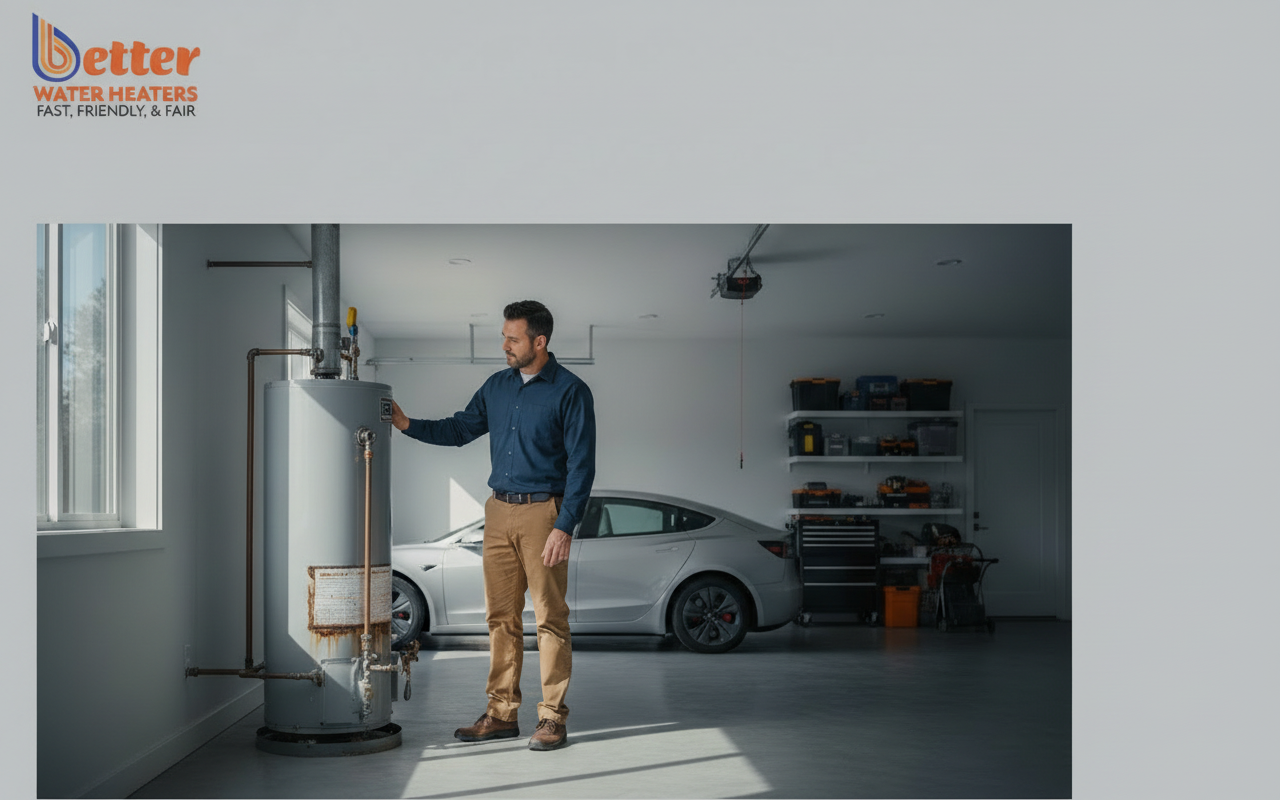
The Anatomy of the $4,200 Surcharge
You might be wondering where that $4,200 figure comes from. It isn’t a random number pulled from a hat; it’s a calculated ‘Cost of Inaction’ based on three specific economic pressures:
| Cost Driver | Standard Rate (2024) | Panic Rate (Late 2026) | The Difference |
|---|---|---|---|
| Emergency Permit Filing | $250 | $850 | +$600 |
| Labor (Conversion Specialist) | $1,800 | $4,500 | +$2,700 |
| Electrical Sub-Contractor | $1,200 | $2,100 | +$900 |
| Total Impact | $3,250 | $7,450 | +$4,200 |
The Electrical Infrastructure Deficit: Your Hidden 2027 Roadblock
The real kicker? Your home’s electrical panel is likely the biggest obstacle to complying with the 2027 gas water heater ban. Most older homes in Redwood City or Fremont have 100-amp or 125-amp panels that are already maxed out by EVs and air conditioning.
Wait—before you assume a simple swap is possible, you need to know that a heat pump water heater requires a dedicated 30-amp circuit. If your panel is full, you’re looking at a $3,500 panel upgrade before the water heater even arrives. By 2026, the wait time for PG&E to disconnect power for a panel upgrade will likely stretch into months, not weeks.
But here’s a contrarian insight: You don’t always need a panel upgrade. There are new 120V ‘plug-in’ heat pump models hitting the market, but they have slower recovery times. If you have a large family, these won’t cut it. You need to secure your 240V upgrade now while electricians are still answering their phones. Need an expert to look at your panel? Schedule your free Bay Area home assessment today.
Emergency Water Heater Replacement: The Most Expensive Way to Buy
The worst time to make a 15-year financial decision is when you have cold water on your back and a puddle in your garage. An emergency water heater replacement in 2027 will be a nightmare because the ‘loophole’—repairing an old gas unit—will become prohibitively expensive as parts manufacturers phase out legacy components.
- Vanishing Inventory: As 2027 approaches, contractors will hoard the last legal gas units, selling them at a 50% markup to desperate homeowners.
- The Permit Trap: City inspectors will be hyper-focused on gas-to-electric transitions, meaning any ‘unpermitted’ work will likely be caught during your next home sale.
- Lost Rebates: Federal and state heat pump water heater rebates (up to $4,900+) are funded on a ‘first-come, first-served’ basis. Waiting until 2026 means the well might be dry.
One client in Los Gatos learned this the hard way. Their tank failed on a Friday night. Because they waited, they couldn’t find a technician available for a gas to electric conversion cost estimate. They ended up paying $2,500 just for a temporary ‘patch’ repair on an obsolete unit—money that could have gone toward a brand-new, rebate-subsidized heat pump system.
The Hybrid Strategy: Bypassing the 2027 Hard Stop
The smart money in the Bay Area is currently moving toward a ‘Hybrid Strategy.’ This involves installing an ultra-low NOx gas unit now or transitioning to a heat pump ahead of the curve to lock in current Bay Area plumbing labor rates.
By upgrading in 2024 or 2025, you effectively ‘grandfather’ your home into the next decade of performance. You avoid the water heater labor surcharge and ensure that your installation is done by a senior technician, not a trainee rushed into the field to handle the 2026 surge. According to EPA guidelines, switching to high-efficiency units now can also save the average household $300+ per year in utility costs.
The real advantage? Peace of mind. While your neighbors are frantically calling every plumber in the Yellow Pages in December 2026, you’ll be sitting pretty with a system that’s already compliant and significantly cheaper to run.
Maximizing Your ROI: Heat Pump Water Heater Rebates and the IRA
The Inflation Reduction Act (IRA) changed the math for California homeowners. Between federal tax credits and local programs like TECH Clean California, the net gas to electric conversion cost has never been lower. But these incentives are designed to encourage early adoption, not last-minute panic.
- Federal Tax Credit (25C): Up to $2,000 back on your annual taxes.
- Local Utility Rebates: Programs from SVCE or Peninsula Clean Energy can add another $1,000 to $3,500 in direct savings.
- Operational Savings: Heat pumps are up to 4x more efficient than gas, insulating you from rising PG&E gas prices.
Don’t leave five figures on the table by waiting for the 2027 gas water heater ban to force your hand. Check out our guide on maximizing Bay Area rebates to see exactly how much you can shave off the sticker price today.
The Verdict: Why December 2026 is the Deadline for the Poor
The wealthy and the proactive are already transitioning. They know that in a market like the Bay Area, labor is the most volatile commodity. If you wait until the NAECA efficiency standards 2026 updates and the looming ban collide, you aren’t just buying a water heater—you’re buying a spot in a very long line, and that spot has a $4,200 entry fee.
The ‘loophole’ isn’t finding a way to keep gas; the loophole is acting while the market is still rational. Secure your home, lock in your rebates, and avoid the scarcity premium that is coming for everyone else.
Ready to beat the rush? Call Better Water Heaters today at 408-250-6672 or request a priority quote online. We’ll help you navigate the rebates and ensure your home is 2027-ready without the 2026 price tag.
Frequently Asked Questions
Is the 2027 gas water heater ban actually happening?
Yes. The Bay Area Air Quality Management District (BAAQMD) has officially passed regulations (Rules 9-4 and 9-6) that phase out the sale and installation of natural gas water heaters starting in 2027. This applies to most residential applications in the region, making it a hard deadline for homeowners to transition to zero-NOx technologies like heat pumps.
Will I be forced to replace my working gas water heater in 2027?
No, you are not required to rip out a functioning unit. However, once your current gas water heater fails after the 2027 deadline, you will not be able to replace it with another gas model. This is why many homeowners are choosing to upgrade early to avoid the inevitable labor shortages and price spikes associated with the mandatory transition.
How much does a gas to electric conversion cost in the Bay Area?
Currently, a full conversion ranges from $4,000 to $9,000 depending on your home’s electrical capacity and the unit chosen. However, with up to $4,900 in available rebates and tax credits, the net cost often drops to a level comparable to a high-end gas installation. Waiting until 2026 will likely add $4,200 in labor surcharges to these figures.
Can I still get parts for my gas water heater after 2027?
While parts will technically be available for several years, the cost of specialized labor to repair obsolete gas systems will skyrocket. Most top-tier technicians will pivot their focus to heat pump technology, leaving gas repairs to ‘legacy’ contractors who will charge a premium for their dwindling expertise and inventory.