
📋 Table of Contents
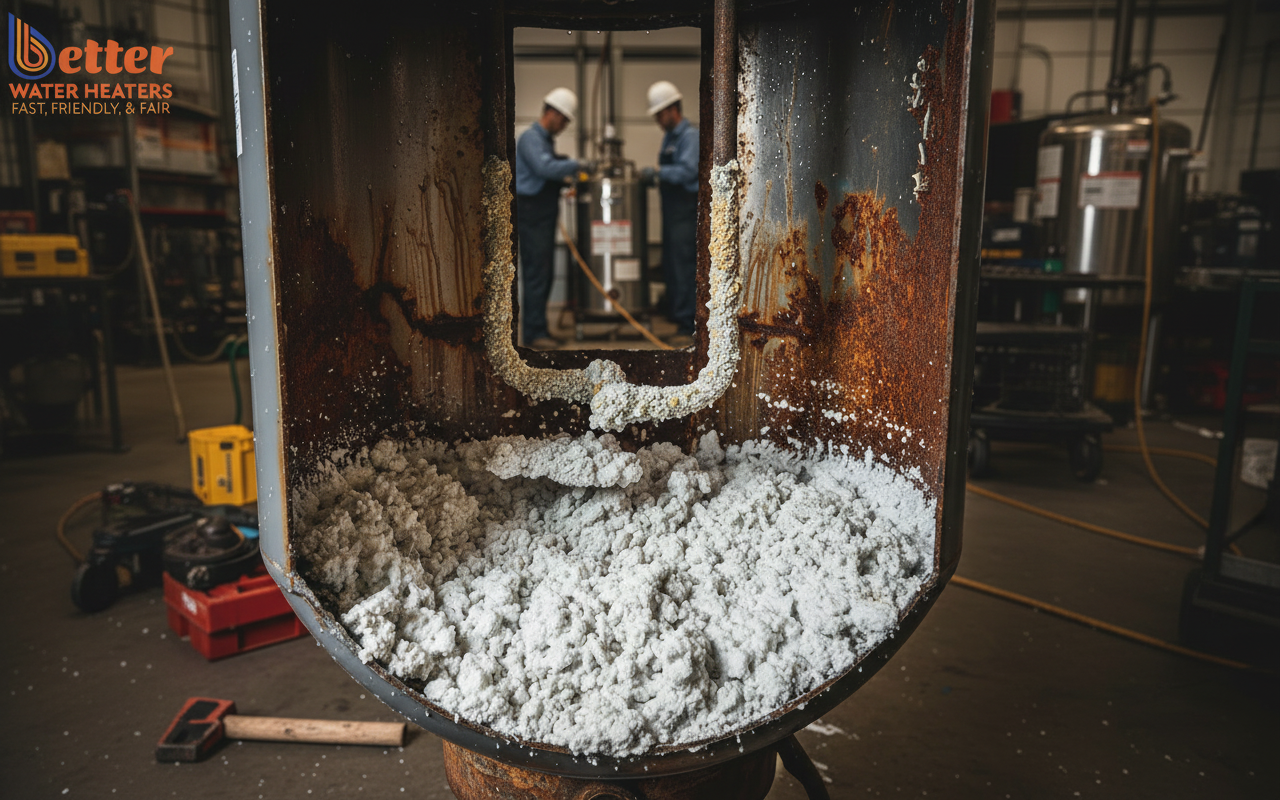
A standard 50-gallon water heater weighs about 150 pounds empty, but last Tuesday in Los Gatos, our team pulled one out that clocked in at nearly 400 pounds. That extra 250 pounds wasn’t high-tech machinery—it was a solid, calcified block of water heater sediment buildup that had literally baked itself into a ‘shell’ at the bottom of the tank.
Here’s the cold, hard truth: Modern high-efficiency water heaters are actually failing faster than the clunky units your parents owned in the 1980s. While those old tanks were built like tanks, today’s high-recovery burners are so powerful they essentially act as a kiln, firing Bay Area hard water into a ceramic-like rock that destroys your appliance from the inside out. If you haven’t thought about your preventative maintenance Bay Area schedule lately, you’re likely sitting on a $5,400 ticking time bomb.
The Physics of the Shell: Why Your Tank is Dying
What most people miss is that sediment doesn’t just sit there; it undergoes a chemical transformation under the intense heat of your burner. When calcium carbonate and magnesium—minerals found in high concentrations in San Jose and Fremont water—settle at the bottom, the burner ‘cooks’ them into a solid, insulating layer.
- The Insulation Effect: That 1-inch layer of rock acts as a thermal barrier between the flame and the water.
- Metal Fatigue: Because the heat can’t transfer to the water efficiently, the bottom of your tank overheats, causing the glass lining to crack.
- The ‘Popping’ Warning: If you hear water heater popping noises, that’s actually steam bubbles exploding as they try to escape from underneath the sediment layer.
Think of it like trying to boil a pot of water with a brick sitting between the stove and the pot. You’ll eventually get hot water, but you’ll burn out the stove—and your wallet—in the process. According to Energy.gov, even a small amount of sediment can increase your energy consumption by 15% or more.
The $5,400 Math: Maintenance vs. Total Collapse
The real kicker? Most homeowners think they are ‘saving’ money by skipping the $150–$200 water heater flush cost. One of our clients, a tech executive in Palo Alto, ignored our maintenance reminders for four years on a high-end unit because ‘it was working fine.’ When the tank finally ruptured, it flooded his finished basement, resulting in a $5,400 replacement cost plus $12,000 in water damage remediation that his insurance company partially denied due to ‘negligent maintenance.’
| Expense Item | Proactive Maintenance | Reactive Replacement |
|---|---|---|
| Annual Service/Flush | $150 – $250 | $0 |
| Unit Lifespan | 12 – 15 Years | 5 – 7 Years |
| Energy Waste (Annual) | $0 | $180 – $350 |
| Emergency Replacement | $0 | $3,500 – $6,000 |
| Total 10-Year Cost | ~$2,000 | ~$7,500+ |
But wait—it gets worse. Modern warranties often require proof of annual maintenance. If we pull out a tank that weighs as much as a grand piano due to calcium carbonate tank damage, the manufacturer is going to laugh at your warranty claim. Need to see where your tank stands? Schedule a professional diagnostic today.
Why Modern Tanks Fail Faster: The High-Efficiency Trap
It sounds contrarian, but ‘better’ technology has made water heater sediment buildup more dangerous. Older water heaters had lower BTU ratings and thicker steel; they could handle a bit of ‘crust’ at the bottom. Modern units are designed for rapid recovery, meaning they blast the bottom of the tank with intense heat to give you that endless hot shower.
- Higher Heat Flux: More heat in a smaller surface area means faster calcification.
- Thin-Wall Construction: To meet energy standards, tanks are lighter and use specialized linings that don’t tolerate the ‘hot spots’ caused by sediment.
- Anode Rod Neglect: Sediment often buries the anode rod, preventing it from doing its job of stopping corrosion.
The result? We are seeing 3-year-old tanks in new San Mateo developments that look like they’ve been in service for two decades. The ‘set it and forget it’ mentality is the fastest way to a cold shower on a Monday morning.
DIY Flush vs. Professional Descaling: Don’t Bring a Hose to a Rock Fight
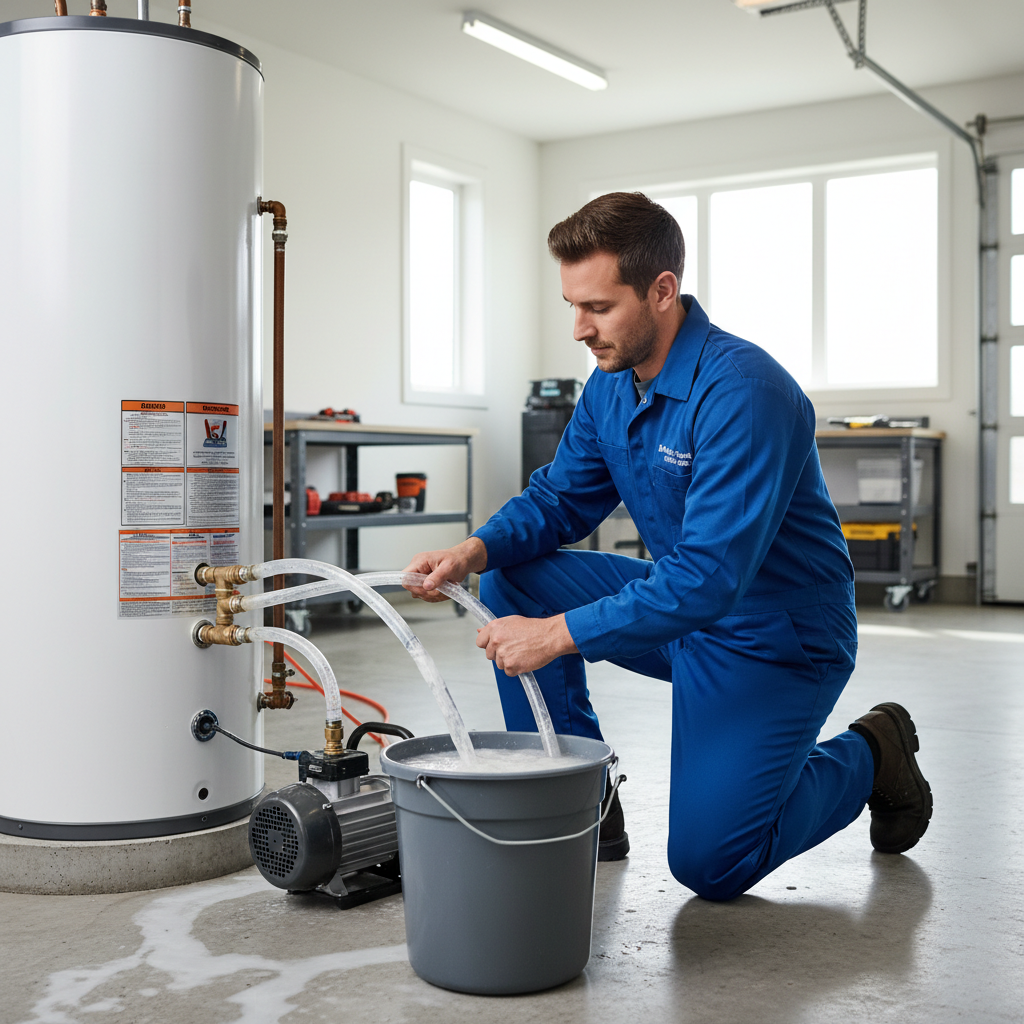
Here’s the thing: Many homeowners try the ‘garden hose’ DIY flush they saw on YouTube. While that’s great for loose sand, it does absolutely nothing for a calcified ‘Sediment Shell.’ Once the minerals have hardened, a simple gravity drain won’t move them. You’re effectively trying to wash a brick away with a squirt gun.
Professional preventative maintenance Bay Area involves high-pressure agitation or chemical descaling agents that safely break down the rock without damaging the tank’s glass lining. If you already hear water heater popping noises, the DIY ship has sailed. You need a specialist to determine if the tank can even be saved. Check out our maintenance guides for more details on what a real flush looks like.
Pro-Tip: If you’re tired of the tank struggle, consider upgrading. While they have a higher upfront cost, tankless systems are much easier to descale and don’t suffer from ‘tank rupture’ floods. For Bay Area residents, the rebates can be massive. Learn more about local water heater rebates that can offset these costs.
The Silent Efficiency Killer: Your Gas Bill is Lying to You
What most people miss is that sediment buildup is a gradual thief. You don’t wake up one day with a 50% higher bill; it creeps up 2% every few months. By the time you notice your water takes ‘forever’ to get hot, you’ve already overpaid PG&E by hundreds of dollars.
A client in Walnut Creek—a landlord managing three units—realized his utility costs were 22% higher than the previous year despite no change in occupancy. After we performed a professional flush on all three units, his thermal efficiency returned to factory specs. The water heater flush cost paid for itself in energy savings within six months.
Key Takeaways for Bay Area Homeowners
- Listen to the Tank: Popping, rumbling, or knocking sounds are the ‘Check Engine’ light of your water heater.
- Weight Matters: If your plumber struggles to move your 3-year-old tank, you have a major sediment issue.
- Maintenance is Mandatory: Annual flushes are the only way to protect your warranty and your home from flood damage.
- Hard Water is the Enemy: The Bay Area’s mineral content is higher than average; don’t assume ‘new’ means ‘safe.’
Your water heater is the most hard-working, ignored appliance in your home. Don’t let a $150 maintenance task turn into a $5,400 emergency. Contact Better Water Heaters today to schedule your professional flush and keep your ‘grand piano’ from crashing through the floor.
Frequently Asked Questions
How do I know if I have water heater sediment buildup?
The most common sediment buildup symptoms include popping or rumbling noises coming from the tank, a decrease in available hot water, and a noticeable increase in your monthly energy bills. If your water looks rusty or takes longer than usual to heat up, these are classic signs that the ‘sediment shell’ has already started to form at the bottom of your unit.
Is a water heater flush cost worth it for a newer unit?
Absolutely. In the Bay Area, hard water minerals begin calcifying immediately. Performing a flush within the first 2-3 years of a unit’s life is actually more critical than doing it later, as it prevents the sediment from hardening into a solid block that cannot be removed. It’s the difference between a $150 service and a $5,400 replacement.
Can sediment buildup cause my water heater to explode?
While modern safety valves (T&P valves) prevent actual explosions, calcium carbonate tank damage leads to ‘tank failure,’ which is a polite way of saying the bottom of the tank ruptures and dumps 50 gallons of water into your home. The internal pressure and localized overheating caused by sediment are the leading causes of premature tank leaks in San Jose and surrounding cities.
How often should I perform preventative maintenance in the Bay Area?
We recommend a professional preventative maintenance Bay Area check-up once every 12 months. Because our local water has high mineral content, waiting two years often allows the sediment to reach a ‘point of no return’ where a standard flush can no longer clear the blockage. Regular maintenance also ensures your seismic strapping and temperature settings are up to California code.