
📋 Table of Contents
Your eco-friendly tankless upgrade is likely dripping industrial-strength acid directly into your home’s structural bones. While you’re enjoying endless hot water, tankless retrofit mistakes made by 90% of local contractors are quietly dissolving concrete foundations from Walnut Creek to San Jose.
The Silent Foundation Killer: Why Your Upgrade is an Acid Factory
Most homeowners don’t realize that high-efficiency condensing water heaters produce a byproduct with the pH level of lemon juice or vinegar. This liquid, known as condensate, is a natural result of squeezing every bit of heat out of natural gas, but it is incredibly corrosive to unshielded materials.
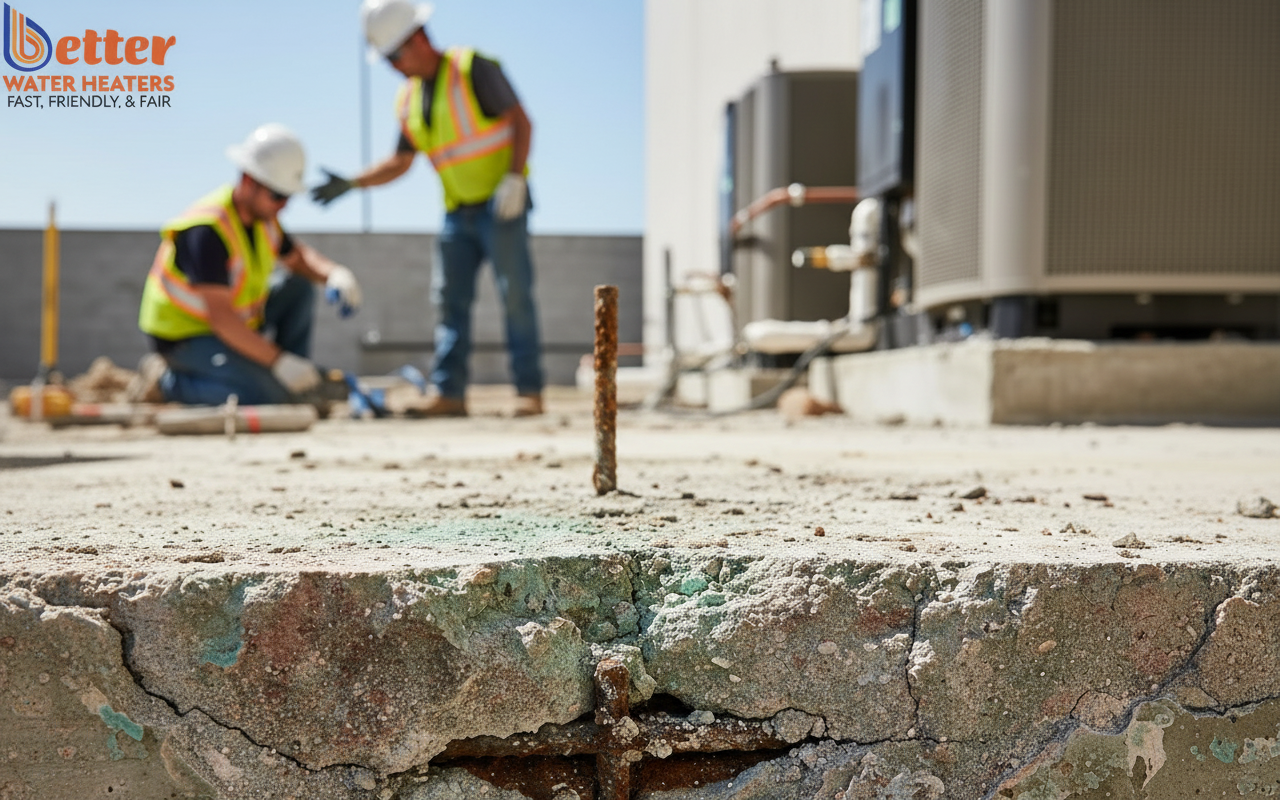
The real kicker? In the Bay Area’s tight crawlspaces, this acid often drains directly onto concrete piers or into cast iron pipes. Over time, this causes “spalling”—a process where the concrete surface bubbles, flakes, and eventually loses structural integrity. We recently saw a home in San Mateo where a three-year-old tankless unit had etched a two-inch deep divot into the stem wall, requiring a $6,200 structural repair.
- pH Levels: Tankless condensate typically hits a 2.9 to 4.0 on the pH scale.
- Volume: A typical household can generate up to 2 gallons of this acid daily.
- Target: Concrete, mortar, and cast iron are the primary victims of untreated runoff.
Why 90% of Bay Area Contractors Skip the $150 Fix
It’s a dirty industry secret: many installers skip the tankless condensate neutralizer because it adds 30 minutes to the job and cuts into their razor-thin margins. In the hyper-competitive Bay Area market, contractors often bid low and pray you won’t notice the missing equipment in your dark crawlspace.
But wait—California Plumbing Code is very clear about this. According to the International Association of Plumbing and Mechanical Officials (IAPMO), corrosive liquids must be neutralized before entering the waste system. Ignoring this isn’t just a shortcut; it’s a code violation that can tank your property value during a home inspection.
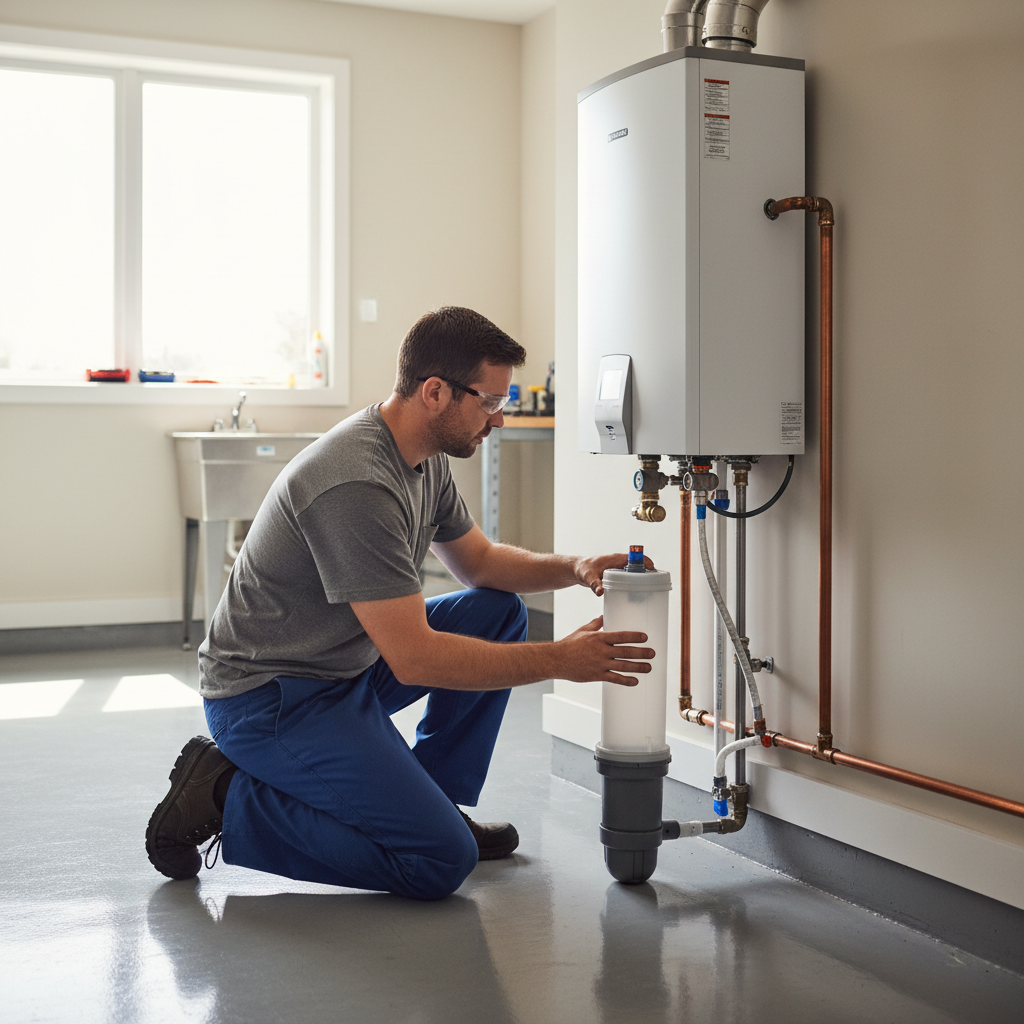
What most people miss is that a condensate neutralizer kit is essentially a plastic tube filled with sacrificial magnesium or calcium carbonate rocks. As the acid flows through, it reacts with the rocks, raising the pH to a safe, neutral level. Without it, you are essentially running an unmonitored chemistry experiment on your foundation.
Common Shortcut Red Flags:
- The drain line is a simple clear plastic tube pointing at the dirt.
- There is no horizontal “cartridge” or tank between the heater and the drain.
- The installer told you “it’s just water” (it absolutely isn’t).
Need to know if your system was installed correctly? Schedule a professional system audit before the etching gets worse.
The Home Inspector’s Nightmare: Escrow and Acid Runoff
Sophisticated Bay Area home inspectors are finally catching on to these tankless retrofit mistakes, and it’s killing deals in Redwood City and Palo Alto. I’ve seen transactions stall because an inspector flagged “foundation etching” caused by a water heater that was supposed to be a selling point.
| Component | Untreated Acid Effect | Neutralized Effect |
|---|---|---|
| Concrete Foundation | Spalling and structural weakening | Zero impact |
| Cast Iron Pipes | Internal corrosion and pinhole leaks | Safe drainage |
| Crawlspace Soil | Changes soil chemistry, harms local flora | Environmentally neutral |
One of our clients, a tech executive in Los Gatos, was forced to credit a buyer $7,500 because their “top-of-the-line” tankless install from 2021 had destroyed a section of the garage slab. The installer had saved $150 on the part, but the homeowner paid fifty times that in the end. This is the definition of a “cheap” install being the most expensive mistake you’ll ever make.
Retrofit vs. Redo: Why ‘Drop-In’ Replacements are a Myth
The biggest lie in the industry is that you can simply swap a tank for a tankless unit without major infrastructure changes. True high-efficiency water heater drainage requires a dedicated path that respects gravity and chemistry, something old Bay Area homes weren’t built for.
Here’s the thing: older homes often have clay or cast iron sewer lines. If you dump untreated condensate into these, you aren’t just hurting your foundation; you’re dissolving your sewer lateral from the inside out. Replacing a sewer lateral in Oakland or Berkeley can easily top $15,000. Suddenly, that energy-efficient upgrade feels like a financial anchor.
What you actually need is a comprehensive strategy that includes:
- A properly sized condensate neutralizer kit.
- A condensate pump if your drain isn’t downhill from the unit.
- UV-resistant piping if any part of the drain is exposed to the California sun.
The Maintenance Audit: Is Your Foundation Already Bubbling?
You can perform a quick check yourself Monday morning to see if you’re a victim of foundation damage from your water heater. Grab a flashlight and head to where your tankless unit is mounted. Follow the small plastic drain line (usually 1/2 inch or 3/4 inch) to its termination point.
If that line ends in a pile of white, crusty-looking concrete or a hole in the dirt, you have a problem. According to the U.S. Department of Energy, proper installation is the #1 factor in tankless longevity. If they cut corners on the drain, they likely cut corners on the gas line and venting, too.
The Better Water Heaters Audit Checklist:
- Check for a neutralizer capsule (looks like a clear or white tube with gray/white rocks inside).
- Look for “efflorescence” (white powder) on the concrete near the drain.
- Verify the neutralizer media hasn’t turned into a solid block of sludge.
- Ensure the drain doesn’t terminate within 3 feet of your foundation wall.
Don’t wait for your foundation to start flaking. Browse our guide on tankless maintenance or call us at (408) 250-6672 to get a certified technician out to your property.
Contrarian Insight: Why ‘Lifetime’ Neutralizers are a Lie
Most contractors who actually do install neutralizers tell homeowners they never need to touch them. This is dangerously wrong. The media inside the tankless condensate neutralizer is sacrificial—it literally dissolves as it does its job. Depending on your hot water usage, those “rocks” will be gone in 12 to 24 months.
Once the media is gone, you’re back to dumping acid on your foundation, but now you have a false sense of security. We recommend a “pH strip test” every year. It takes ten seconds: dip a strip into the discharge water. If it’s red or orange, your foundation is back on the menu. If it’s green, you’re safe.
We’ve seen “high-end” installs in Palo Alto where the neutralizer had turned into a solid, clogged pipe of calcium carbonate, causing the water heater to shut down with an Error Code 29 in the middle of a shower. Regular maintenance isn’t a luxury; it’s the only way to protect your $4,000 investment.
Stop the Etching Before It Costs You Thousands
The Bay Area is shifting toward 2027 zero-NOx requirements, which means almost everyone will eventually move to high-efficiency systems. Don’t let a lazy installation turn a green upgrade into a structural nightmare. Whether you’re in a historic Craftsman in Alameda or a modern condo in San Jose, the chemistry of acid runoff doesn’t care about your zip code.
At Better Water Heaters, we’ve spent 20 years fixing the tankless retrofit mistakes that other guys leave behind. We don’t just hang a box on the wall; we protect your home’s value. If you aren’t 100% sure your condensate is being neutralized, you’re playing a high-stakes game with your foundation.
Ready to fix your install? Contact Better Water Heaters today for a comprehensive inspection and neutralizer installation. We serve the entire Bay Area with transparent pricing and expert code knowledge.
Frequently Asked Questions
How much does it cost to fix foundation damage from water heater acid?
Repairing foundation spalling typically costs between $2,500 and $8,000 in the Bay Area, depending on the depth of the etching and the accessibility of the crawlspace. This often involves cleaning the corrupted concrete, applying a bonding agent, and structural patching. Preventing this with a $150 neutralizer is the far smarter financial move.
Can I install a condensate neutralizer kit myself?
While kits are available, improper installation can lead to drainage backups that trigger internal corrosion in your water heater’s secondary heat exchanger. A professional ensures the slope is correct and the drainage meets local Bay Area plumbing codes, which often vary by city regarding where neutralized water can be discharged.
How often should I replace the media in my tankless condensate neutralizer?
For most Bay Area families, the neutralizing media should be replaced every 12 to 18 months. If you have a large family or a high-demand household, annual checks are mandatory. You can tell it’s time for a change when the stones inside the capsule appear significantly smaller or covered in a dark biofilm.
Is condensate acid harmful to the environment?
Yes. Untreated condensate is toxic to soil microorganisms and can significantly alter the pH of local groundwater if allowed to soak into the earth near your foundation. Neutralizing the liquid makes it as safe as tap water, aligning your home with the environmental goals of high-efficiency appliance upgrades.