
📋 Table of Contents
- The Brutal Reality of Heat Pump ROI in the Bay Area
- Why San Mateo and Santa Clara Appraisers Ignore Your Efficiency
- The ‘Green Addendum’ Strategy: Forcing the Value Increase
- Cost Comparison: Gas vs. Heat Pump in the Bay Area
- The 2027 Gas Ban: Why ‘Future-Proofing’ is a Marketing Myth
- How to Talk to Your Appraiser (Before They Step Inside)
- FAQs
A homeowner in Palo Alto recently spent $9,200 on a top-of-the-line heat pump water heater and a dedicated electrical panel upgrade, only to have the appraiser value the improvement at exactly zero dollars. Despite California’s aggressive push toward electrification, the cold truth is that your home appraisal value is currently held hostage by a valuation model that hasn’t changed since the 1970s.
Key Takeaways:
- Appraisers use “comparable sales,” which often ignore invisible mechanical upgrades.
- The “Pioneer Penalty” means early adopters pay for tech that will be mandatory (and thus expected) by 2027.
- Homeowners must proactively use the “Green Addendum” to force valuation recognition.
- Operational savings (lower PG&E bills) are the real ROI, not immediate equity.
The Brutal Reality of Heat Pump ROI in the Bay Area
Most homeowners assume that if they spend $8,000 on an upgrade, the home appraisal value will climb by at least half that amount. In the world of high-efficiency water heaters, that logic is a fantasy because appraisers view a water heater as a binary asset: it either provides hot water, or it doesn’t.
What most people miss is that the heat pump ROI is calculated by your utility company, not your Realtor. While a kitchen remodel with quartz countertops offers a visual “wow” factor that triggers emotional bidding, a heat pump sits quietly in a garage, invisible to the standard appraisal walkthrough. In markets like San Jose or Sunnyvale, an appraiser looking at three “comps” will see three houses with working water heaters; they rarely adjust the price upward for the one house that uses 70% less energy to heat its water.
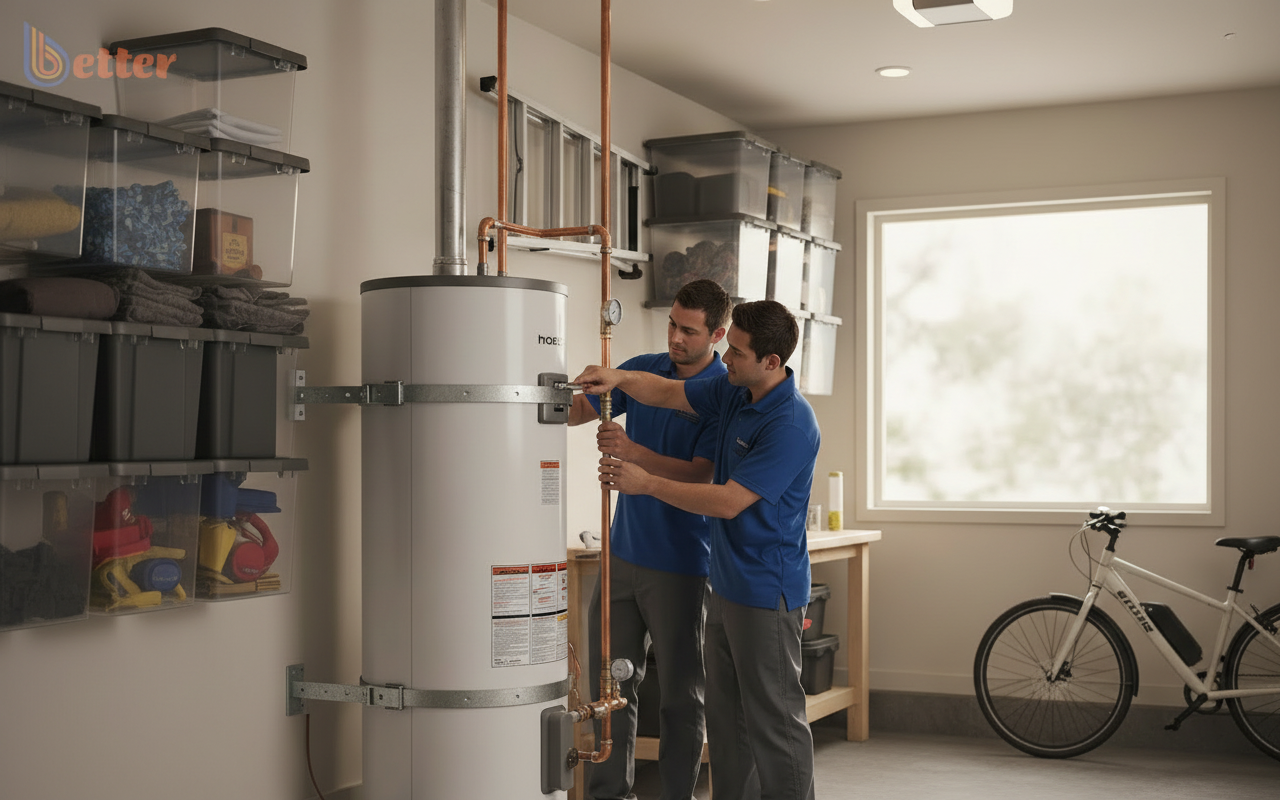
Consider the “Pioneer Penalty.” With the U.S. Department of Energy increasing efficiency standards and California’s looming 2027 gas water heater ban, these units will soon be the baseline. What you see as a premium upgrade, a savvy buyer sees as a “pre-existing requirement.”
- The Invisible Asset: Plumbing and HVAC are considered “required systems,” not “value-add systems.”
- The Comps Problem: If your neighbors haven’t upgraded, there is no data to support a higher price for your home.
- The Panel Trap: A $4,000 sub-panel upgrade required for the heat pump is seen as maintenance, not an improvement.
Why San Mateo and Santa Clara Appraisers Ignore Your Efficiency
The real kicker? An appraiser in Marin might give you a $2,000 credit for a heat pump, but that same unit in San Jose often gets ignored because of local market “norms.” In the high-velocity Bay Area real estate upgrades market, speed of sale often trumps technical efficiency in the eyes of local valuation experts.
Here’s the thing: Appraisers are trained to be conservative. They look for “market resistance” or “market acceptance.” If the majority of homes in your Los Gatos neighborhood still run on gas, your heat pump is viewed as a “non-standard” system. Some appraisers even view complex heat pumps as a liability because they have more electronic components that could fail compared to a simple, “dumb” gas tank.
One of our clients, a tech executive in Mountain View, spent nearly $11,000 on a Heat Pump Water Heater ROI play, including the permit and seismic strapping. When he refinanced six months later, the appraiser noted the unit but made a $0 adjustment. Why? Because the appraiser couldn’t find another sale in the zip code that explicitly closed higher due to a water heater. This is the structural flaw in Bay Area Home Appraisal Green Upgrades—the data hasn’t caught up to the technology.
Learn how we handle complex heat pump installations to ensure they meet all local codes for future valuation.
The ‘Green Addendum’ Strategy: Forcing the Value Increase
But wait—you aren’t totally powerless. If you want to see a real home appraisal value bump, you cannot leave it up to the appraiser’s discretion; you have to spoon-feed them the data using the AI-Ready Appraisal Institute Form 820.06, also known as the “Green Addendum.”
This document allows you to detail the high-performance features of your home. Instead of just saying “new water heater,” you document the Uniform Energy Factor (UEF), the projected annual energy savings, and the Title 24 Compliance Water Heaters status. By providing this, you move the conversation from “plumbing” to “energy asset.”
- Document Everything: Keep your receipts for the unit, the electrical work, and the professional installation.
- Highlight Rebates: Show that while the cost was $8,000, you secured $4,000 in Electrification Rebates vs Resale Value offsets.
- Provide Energy Bills: Show a 12-month comparison of your PG&E bills before and after the install.
The real contrarian insight? The value isn’t in the hardware; it’s in the capacity. By upgrading your electrical panel to support a heat pump, you’ve essentially “pre-wired” the home for EV chargers and solar batteries. That is where the Bay Area real estate upgrades value actually hides.
Cost Comparison: Gas vs. Heat Pump in the Bay Area
To understand the heat pump ROI, you have to look at the 10-year operational horizon rather than the closing day valuation. In the Bay Area, where electricity rates are some of the highest in the nation (thanks, PG&E), the math only works if you maximize rebates.
| Factor | Standard Gas Tank | Heat Pump Water Heater |
|---|---|---|
| Installation Cost | $2,200 – $3,000 | $7,500 – $11,000 |
| Local Rebates | $0 | Up to $4,900+ | $2,200 | $3,500 – $6,000 |
| Annual Energy Cost | $600 – $800 | $150 – $250 |
| Appraisal Value Add | $0 | $0 – $2,500 (with Addendum) |
As of 2025, the Water Heater Installation Cost Bay Area homeowners face is rising due to labor and permit fees. If you’re paying for the upgrade solely to flip the house, stop. You’re better off painting the cabinets. But if you’re staying for 5+ years, the operational ROI makes the appraisal gap irrelevant.
The 2027 Gas Ban: Why ‘Future-Proofing’ is a Marketing Myth
What most contractors won’t tell you is that “future-proofing” your home for the 2027/2029 BAAQMD (Bay Area Air Quality Management District) gas bans doesn’t actually add a premium to your home appraisal value. Why? Because buyers don’t pay extra for something they know the law will eventually force them to do anyway.
Think of it like seismic retrofitting. In San Francisco, having your building bolted to the foundation is expected. You don’t get a $50,000 premium for it; you just get penalized if you don’t have it. We are entering an era where a heat pump is the “new normal.” The heat pump ROI is actually a “loss prevention” strategy—ensuring your home remains sellable as gas becomes a legacy fuel.
Ready to navigate the transition? Check out our guide on maximizing local Bay Area rebates before they expire.
How to Talk to Your Appraiser (Before They Step Inside)
When selling your home in Santa Clara or San Mateo County, the home appraisal value is often determined in the first 15 minutes. Don’t let the appraiser miss the electrification work. Provide a “Home Innovation Binder” at the door.
- The Tech Sheet: Explain that the heat pump is a 3.5+ UEF rated unit, far exceeding Title 24 Compliance Water Heaters standards.
- The Certificate: Include the AHRI certificate for the unit.
- The Tax Credit: Note the $2,000 25C federal tax credit you claimed, which reduces the effective cost of the Bay Area real estate upgrades.
A $4M home in Redwood City recently saw a $5,000 appraisal adjustment specifically because the owner provided a detailed cost-benefit analysis of their whole-home electrification. It wasn’t the heat pump alone; it was the documented reduction in the home’s carbon footprint and operating cost. This is how you win the Bay Area Home Appraisal Green Upgrades game.
Stop Chasing Equity, Start Saving Cash
The obsession with home appraisal value often blinds homeowners to the immediate financial benefit of electrification. If you save $500 a year on energy, that’s a guaranteed tax-free return on your investment. In the volatile Bay Area market, a guaranteed 10% return on the net cost of a water heater beats a speculative 2% bump in home value any day.
At Better Water Heaters, we’ve spent 20+ years helping Bay Area residents make smart choices. We won’t tell you a heat pump will make your home worth $50,000 more—that’s a lie. But we will tell you how to slash your PG&E bill and stay ahead of the 2027 regulations. Contact us today for a transparent quote and an honest look at your home’s electrification potential.
Frequently Asked Questions
Does a heat pump water heater increase home appraisal value?
Typically, a heat pump water heater adds very little to a standard appraisal unless you provide a Green Addendum. Appraisers often treat it as a standard functional utility. However, as gas bans take effect in 2027, homes with these units will avoid the “obsolescence penalty” that gas-reliant homes may soon face.
What is the typical heat pump ROI for a Bay Area home?
The ROI is primarily operational. With local rebates from programs like TECH Clean California and the $2,000 federal tax credit, the net cost often breaks even within 5-7 years through reduced PG&E bills. In terms of resale, the ROI is currently closer to 0-20% of the installation cost.
Will an appraiser give credit for a $4,000 electrical panel upgrade?
Rarely. Most appraisers view electrical panels as part of the home’s basic infrastructure. To get credit, you must frame the upgrade as “EV-ready” or “Solar-ready” capacity, which has higher market appeal than simply being “water heater ready.”
How do I ensure my ‘Green Upgrades’ are valued correctly?
You must provide the appraiser with the Appraisal Institute’s Residential Green and Energy Efficient Addendum. This forces the appraiser to acknowledge the high-performance features and can lead to a specific “line-item” adjustment that a standard appraisal would miss.
The era of “cheap gas” is over in California. While the appraisal industry is slow to move, the smart money in the Bay Area is moving toward electrification for the operational savings and regulatory compliance. Don’t buy the lie that it’s a magic equity boost—buy the truth that it’s a necessary step for a modern, efficient home.