
📋 Table of Contents
That “plug-and-play” 120V heat pump water heater looks like a financial miracle until your teenager takes a ten-minute shower and the hot water vanishes for the next six hours. While contractors push these units as a way to dodge a $4,000 electrical panel upgrade, the reality is that many Bay Area homeowners are trading a one-time installation cost for a lifetime of “slow recovery taxes” and inflated PG&E bills.
The 120V heat pump water heater is the industry’s response to the massive bottleneck of home electrification: the dreaded main service panel upgrade. In cities like Palo Alto or Los Gatos, where homes often still run on 100-amp or even 60-amp service, a standard 240V heat pump is a non-starter without a $3,500 to $5,000 electrical overhaul. Enter the 120V “plug-in” models. They promise the same efficiency without the wire-pulling headache. But here is the catch—physics doesn’t care about your marketing brochure. When you drop the voltage, you drop the recovery speed, and that’s where the hidden costs begin to pile up.
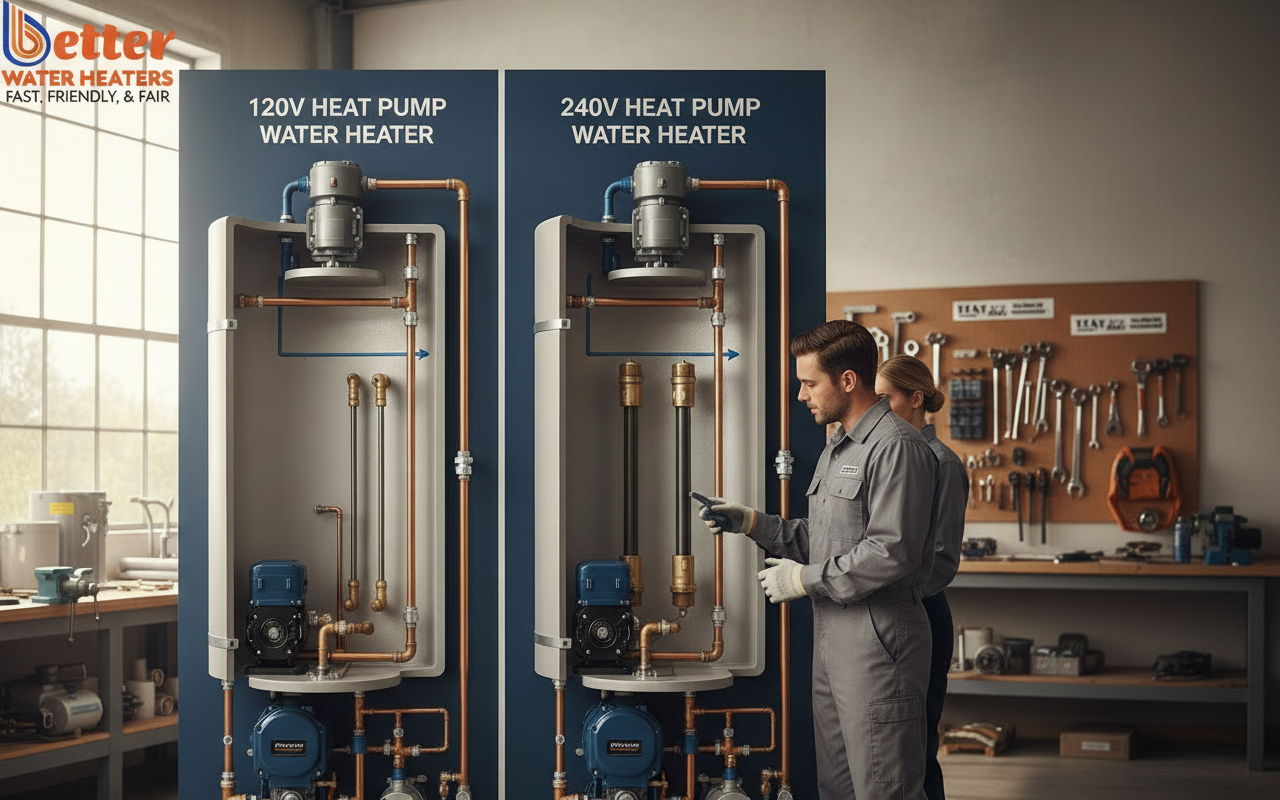
The Myth of the Plug-and-Play Savings
Most homeowners assume that a 120V heat pump water heater is just a more convenient version of the 240V gold standard, but the internal components tell a different story. Here’s the thing: a standard 240V hybrid unit has two 4,500-watt backup heating elements that kick in when the heat pump can’t keep up. A 120V unit? It usually has zero high-wattage backup elements or a tiny 900-watt “booster” that is effectively a glorified curling iron.
- The Recovery Gap: A 240V unit can recover 20-30 gallons of hot water per hour; a 120V model struggles to hit 8-10 gallons.
- The Compressor Fatigue: Because there is no backup element, the compressor must run for 18+ hours a day to keep up with a family of four.
- The Efficiency Paradox: When the heat pump stays in “High Performance” mode to keep up with demand, it often bypasses its most efficient cycles, leading to a 40% spike in real-world energy usage compared to lab-tested ratings.
What most people miss is that the Department of Energy’s efficiency ratings are based on moderate usage. In a high-demand Bay Area household, a 120V unit spends so much time struggling to recover that it loses the efficiency edge it promised. We recently saw a client in Redwood City who installed a 120V unit to save on the panel upgrade, only to find their winter PG&E bill jumped because the unit was running 24/7 in a cold garage just to provide lukewarm morning showers.
Why Heat Pump Recovery Rate is the Only Metric That Matters
If you can’t get hot water when you need it, the efficiency rating is irrelevant. The heat pump recovery rate for a 120V unit is roughly one-third that of its 240V counterpart. For a family of four in San Jose, this means that after the morning shower rush, the tank may not be fully hot again until mid-afternoon.
Consider the “Slow Recovery Tax.” When a unit takes 6 hours to recover instead of 2, you are forced to shift your behavior. You can’t run the dishwasher and the laundry at the same time. You can’t have back-to-back showers. To fix this, many homeowners manually switch the unit into “High Demand” or “Electric Lead” mode. On a 120V circuit, this is the least efficient way to heat water, essentially turning your high-tech eco-appliance into a very expensive, very slow toaster.
| Feature | 120V Plug-In HPWH | 240V Hybrid HPWH |
|---|---|---|
| Installation Cost | $2,500 – $3,500 | $4,500 – $8,000 (with panel) |
| Recovery Rate | ~8-10 Gallons/Hour | ~25-30 Gallons/Hour |
| Backup Elements | None or 900W | Dual 4500W |
| Best For | 1-2 Person Households | Families & High Demand |
The real kicker? The TECH Clean California rebates and federal tax credits often cover a significant portion of the 240V installation. If you’re paying $0 for a panel upgrade but losing $400 a year in operational inefficiency and “cold shower frustration,” you haven’t saved money—you’ve just financed a headache.
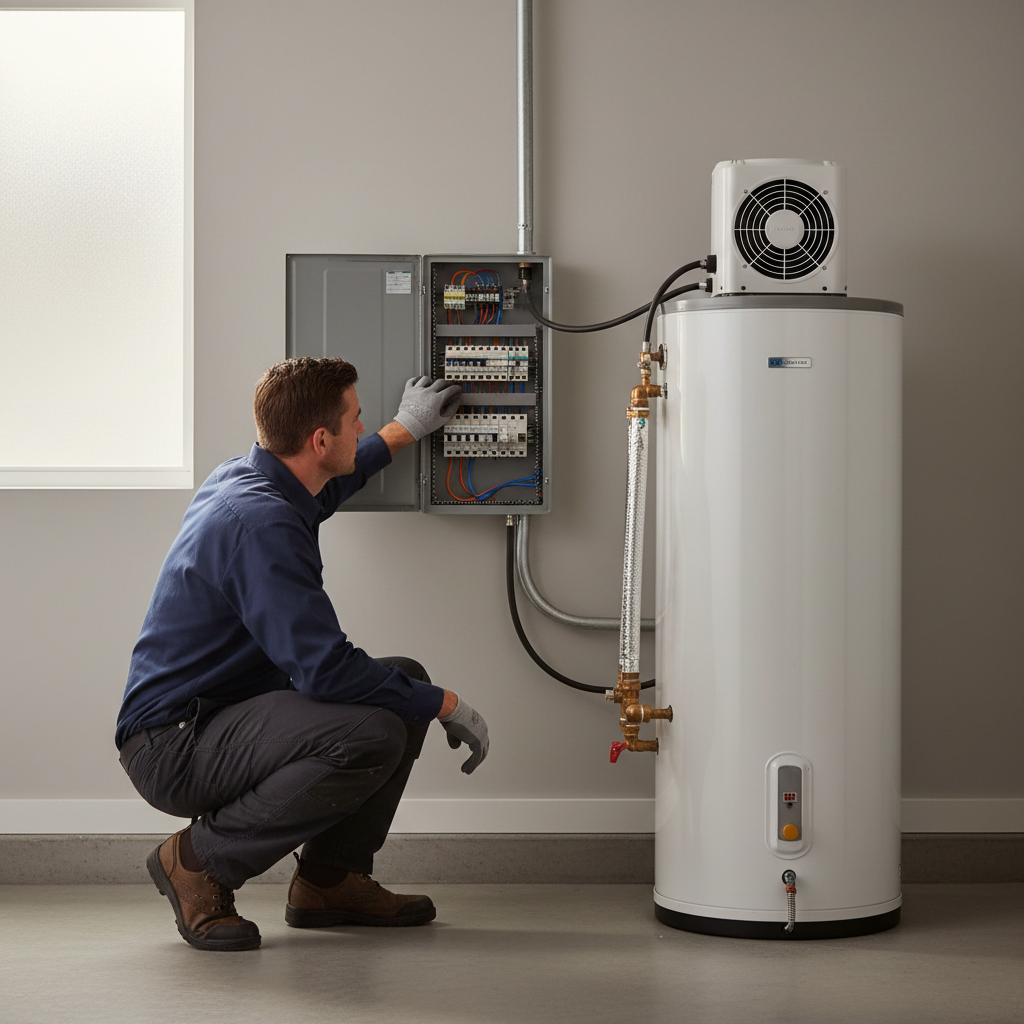
The ‘Shared Circuit’ Danger and Nuisance Tripping
The marketing says “just plug it in,” but local Bay Area building codes and the laws of physics usually have other plans. A 120V heat pump water heater requires a dedicated circuit in almost every scenario to prevent “nuisance tripping.” If you plug that unit into a shared garage circuit where you also run a power tool or a second refrigerator, you’re going to be resetting your breaker in the dark at 6:00 AM.
- The Dedicated Line Requirement: Even if you don’t upgrade the panel, you often still need to run a new dedicated 120V line to the water heater location.
- Permitting Realities: Any professional installation in Santa Clara or San Mateo County requires a permit. Inspectors will check for that dedicated circuit, often negating the “simple plug-in” savings you were promised.
Think about a client of ours in Fremont. They were told by a big-box retailer that the 120V unit was a simple swap. After three days of the breaker tripping every time the garage door opened, they called us. We had to explain that the “no-electrical-work” claim was a half-truth at best. By the time they paid for a dedicated 120V line, they were halfway to the cost of a proper 240V setup that actually works for their family.
Need a real-world assessment of your home’s electrical capacity? Schedule a free consultation with our experts to see if a 120V or 240V system actually fits your lifestyle.
The 2027 Regulation Trap: Don’t Buy Twice
With the Bay Area Air Quality Management District moving toward a ban on gas water heater replacements by 2027, many homeowners are rushing into electrification. But buying a low-performance 120V unit now might be a mistake you pay for twice. If that 120V unit fails to meet your household needs, you’ll eventually end up paying for the 240V upgrade anyway, effectively throwing away the $3,000 you spent on the “easy” solution.
What most people miss is that 240V units are better at “load shifting.” Because they heat water faster, they can do all their work during the day when solar power is abundant or electricity rates are lower. A 120V unit, because it recovers so slowly, often has to run during “Peak” PG&E hours (4 PM – 9 PM) just to ensure there is hot water for evening dishes. This is the exact opposite of what an eco-friendly appliance should do.
Expert Recommendation: When Does 120V Actually Make Sense?
I’m not saying 120V units are garbage—they just have a very specific, narrow use case. They are great for ADUs (Accessory Dwelling Units), single-person condos, or senior citizens living alone who have very low hot water demand. But for a standard 3-bedroom home in the Bay Area, it’s usually a compromise that isn’t worth the savings.
- Check Your Usage: If you use more than 40 gallons of hot water in a 2-hour window, stay away from 120V.
- Leverage Rebates: Between the $2,000 Federal Tax Credit and local incentives like those from Peninsula Clean Energy, the “expensive” 240V upgrade often costs less out-of-pocket than you think.
- Look at the Tank Size: If you must go 120V, you need to “upsize” the tank. An 80-gallon 120V unit acts like a 50-gallon 240V unit in terms of available hot water.
The contrarian truth? Sometimes the most “eco-friendly” choice is the one that uses more power momentarily to save energy over the long haul. A 240V unit that finishes its job in 90 minutes is often more efficient than a 120V unit that grinds away for six hours.
The Bottom Line on Plug-In Water Heater Costs
Don’t let a $0 panel upgrade lure you into a decade of lukewarm showers and high utility bills. The plug-in water heater costs are often back-loaded into your monthly energy statement and your home’s resale value. In the Bay Area, where property values are tied to infrastructure quality, a sub-par water heating system is a liability, not an asset.
Ready to upgrade the right way? Contact Better Water Heaters today for a transparent quote that includes rebate maximization and a system that actually keeps up with your life. We don’t just install heaters; we design hot water solutions that work for the long haul.
Frequently Asked Questions
Does a 120V heat pump water heater really save money?
While you save $2,000-$4,000 upfront on electrical panel upgrades, the long-term 120V heat pump water heater costs can be higher. Due to a slower heat pump recovery rate, these units often run longer and may require “High Demand” modes that consume more electricity during expensive peak hours.
Can a 120V heat pump keep up with a family of four?
Generally, no. A 120V unit recovers hot water at about 1/3 the speed of a 240V model. For a family of four, you would likely need an 80-gallon tank to avoid running out of hot water, which increases the footprint and initial equipment cost significantly.
Do I need a permit for a 120V plug-in water heater in the Bay Area?
Yes. All water heater replacements in California require a permit and inspection. Even “plug-in” models must meet Title 24 energy requirements and seismic strapping codes. Most local jurisdictions also require a dedicated circuit, even for 120V models.
What is the lifespan of a 120V vs 240V heat pump water heater?
Both typically last 10-15 years. however, because a 120V unit’s compressor must run significantly longer to achieve the same temperature rise, it may experience more wear and tear over time compared to a 240V unit that benefits from faster recovery and backup elements.