
📋 Table of Contents
For many Bay Area homeowners, the charm of a 1970s ranch house in Sunnyvale or Walnut Creek is undeniable, but mixing valves & scald prevention represent a critical safety gap in these vintage builds. While your home may have been built to the standards of its time, modern plumbing codes have evolved to address hidden dangers that traditional tank dials simply cannot manage.
Consequently, many families are living with a ‘hot water lottery’ where temperatures fluctuate dangerously. By integrating a thermostatic mixing valve (TMV), you can transform an aging system into a high-performance, safe utility. This guide explores why this specific upgrade is the most cost-effective way to modernize your 1970s plumbing stack.
Key Takeaways for Homeowners
- Safety First: Prevents third-degree burns, especially critical for children and seniors.
- Capacity Boost: Increases usable hot water by up to 50% without a larger tank.
- Health Benefits: Allows tank temperatures high enough to kill Legionella bacteria.
- Code Compliance: Meets modern California plumbing standards for renovations.
The Hidden Dangers of 1970s Plumbing Standards
In the mid-century era, water heaters were often set to a ‘medium’ or ‘high’ dial that lacked precision. Because these older systems lack mixing valves & scald prevention hardware, the water coming out of your tap is often the exact temperature of the water inside the tank.
Furthermore, standard tank thermostats can have a variance of 10 to 15 degrees. This means a setting intended for 120°F might actually deliver 135°F water—enough to cause a severe scald in less than two seconds. According to the National Safety Council, thousands of Americans suffer from tap water scalds annually, many of which are entirely preventable with modern technology.
Why Tank Dials Aren’t Enough
- Thermal Layering: Water at the top of the tank is significantly hotter than at the bottom.
- Inaccurate Sensors: Mechanical thermostats in older units degrade over twenty years.
- Pressure Fluctuations: Flushing a toilet can cause sudden temperature spikes in the shower.
How Mixing Valves & Scald Prevention Work Together
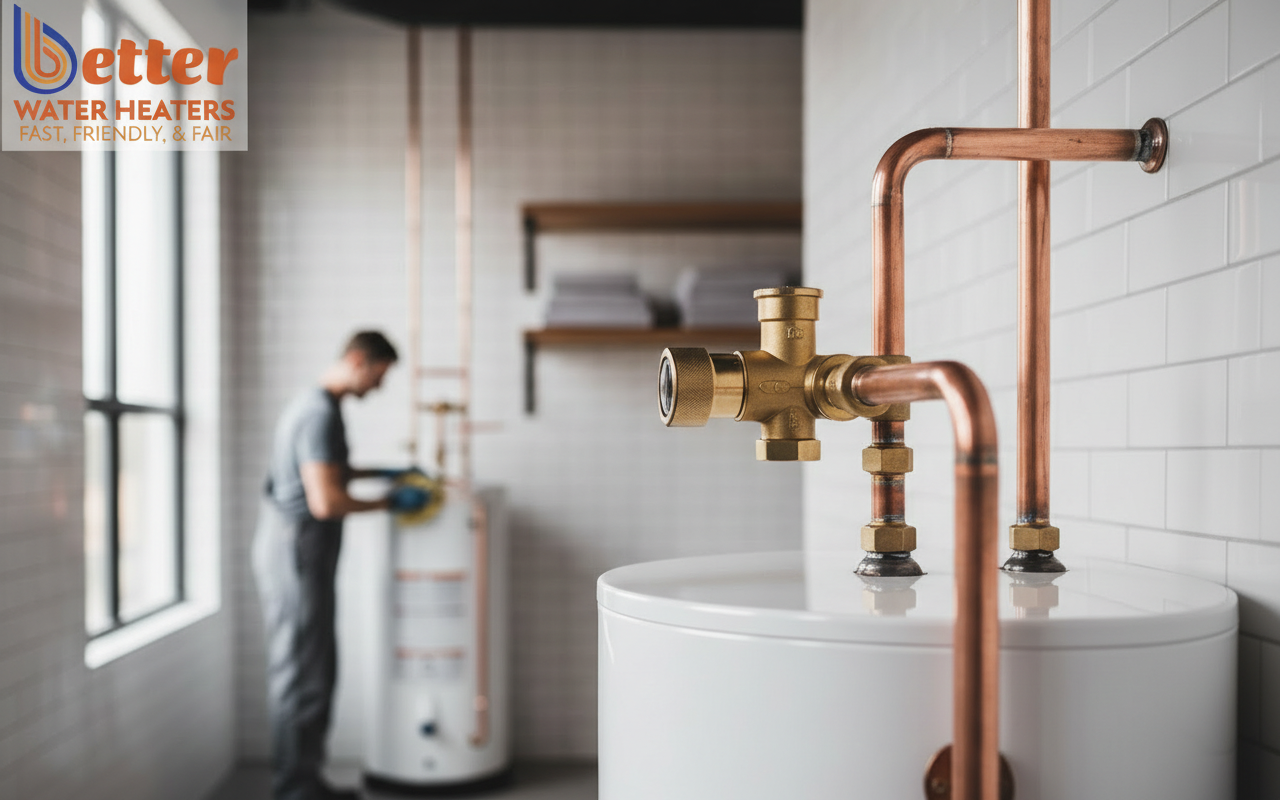
A thermostatic mixing valve is a device that blends cold water with hot water as it leaves the tank. It ensures that regardless of how hot the water is inside the heater, the water traveling to your faucets stays at a consistent, safe temperature (typically 120°F).
Interestingly, this allows you to turn your water heater up to 140°F. While 140°F is dangerous for skin contact, it is the gold standard for Legionnaires’ disease prevention. By keeping the tank at 140°F and mixing it down to 120°F at the outlet, you get the best of both worlds: bacterial protection and scald safety.
The Efficiency Hack: Increasing Capacity by 50%
Many 1970s ranches have small 40-gallon tanks that struggle to keep up with modern soaking tubs or multi-head showers. By using mixing valves & scald prevention strategies, you effectively expand your capacity.
| Feature | Standard 120°F Tank | 140°F Tank + Mixing Valve |
|---|---|---|
| Bacterial Control | Low (Legionella risk) | High (Bacteria killed) |
| Usable Hot Water | 40 Gallons | ~60 Gallons (Mixed) |
| Scald Risk | Moderate | Very Low |
Need to see if your current system is safe? Schedule a professional safety audit today to evaluate your home’s scald protection levels.
The Technical Challenge: 1970s Galvanized Pipes
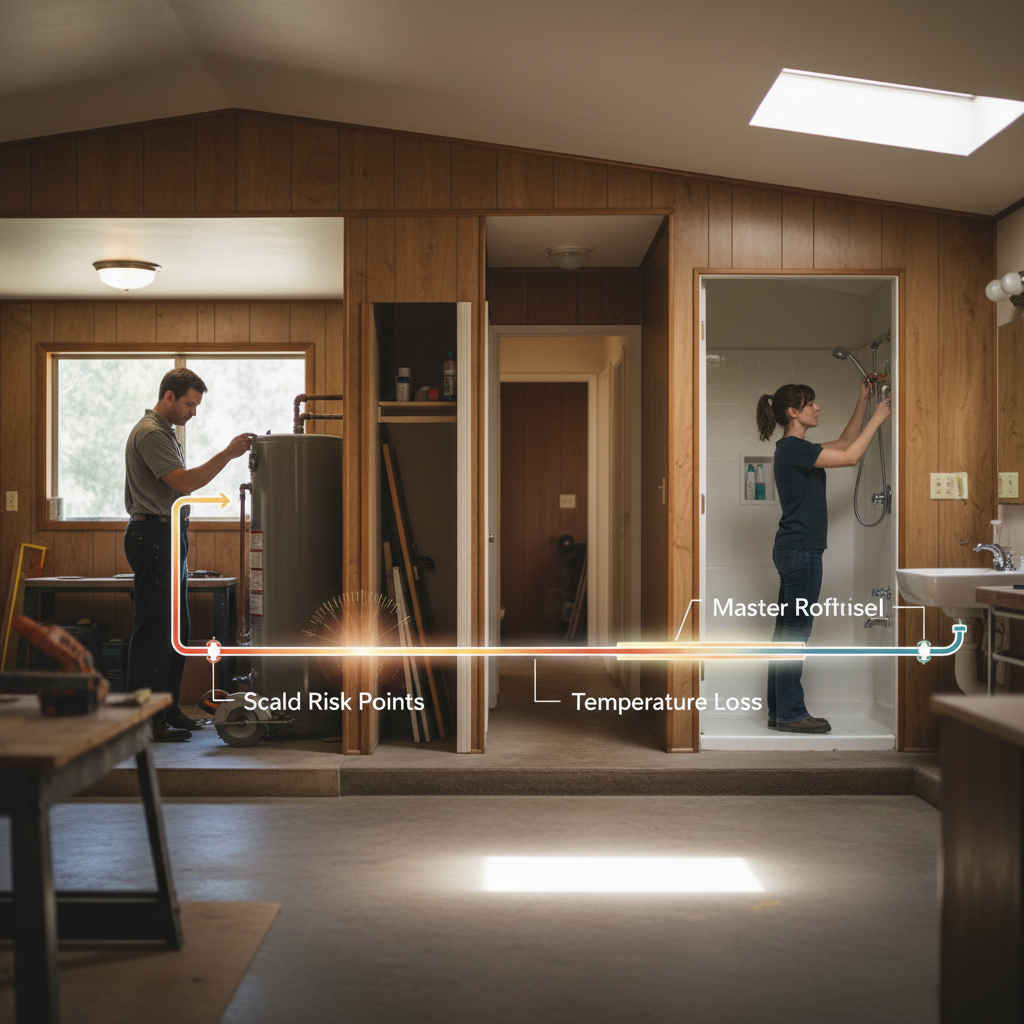
Installing a water heater mixing valve installation in an older Bay Area home isn’t always a straightforward DIY project. Many 1970s homes still have sections of galvanized steel piping or early copper transitions that are prone to internal corrosion.
When you introduce a new brass mixing valve into this environment, you must manage dielectric transitions to prevent accelerated rusting. Professional water heater specialists understand the nuances of ASSE 1017 standards, ensuring the valve is rated for the specific flow rates of your home’s layout.
Common Installation Pitfalls in Older Homes
- Debris Clogging: Old sediment from the tank can clog the sensitive internal screens of a mixing valve.
- Thermal Expansion: Adding a mixing valve creates a closed system, often requiring a thermal expansion tank.
- Improper Sizing: A valve that is too small will drastically reduce your water pressure in the master bath.
Aging in Place: Why Seniors Need Scald Protection
As we age, our skin becomes thinner and our reaction times may slow down. For seniors living in classic Bay Area ranches, mixing valves & scald prevention are not just upgrades—they are essential medical necessities. A sudden burst of hot water can lead to falls in the shower as the individual tries to move away from the heat.
Moreover, many modern smart mixing valves now offer Wi-Fi monitoring. These systems can alert family members or property managers if temperatures exceed safe thresholds, providing peace of mind for those supporting elderly parents in their own homes.
Are you looking to upgrade a senior family member’s home? We offer specialized discounts for seniors and military personnel. Explore our available discounts and local rebates here to save on your safety installation.
Maintenance: The ‘Set it and Forget it’ Myth
While scald prevention devices are incredibly reliable, they are not maintenance-free. In areas like San Jose or Fremont with varying water hardness, calcium deposits can build up inside the thermostatic element. This can cause the valve to ‘stick,’ leading to either lukewarm water or dangerously hot spikes.
Annual Safety Checklist for 1970s Homes
- Check the Temperature: Use a meat thermometer at the tap furthest from the heater; it should read 120°F.
- Inspect for Leaks: Look for green corrosion (verdigris) around the valve joints.
- Exercise the Valve: Briefly turn the adjustment nut to ensure the internal piston moves freely.
- Flush the Tank: Regular flushing prevents sediment from entering the mixing valve screens.
Meeting Hot Water Safety Standards in the Bay Area
Local building departments in cities like Mountain View and Redwood City are increasingly strict about hot water safety standards during water heater replacements. If you are pulling a permit for a new unit, a mixing valve is often a non-negotiable requirement to bring the home up to current California Plumbing Code.
By investing in mixing valves & scald prevention now, you are future-proofing your home for resale and ensuring that your plumbing system meets the highest safety benchmarks. Whether you choose a point-of-source valve (at the water heater) or point-of-use valves (at each faucet), the goal remains the same: total protection for your family.
Protect Your Home and Family Today
Don’t wait for a painful accident to realize your 1970s plumbing is outdated. Better Water Heaters has spent over 20 years helping Bay Area residents navigate local codes and safety requirements. Our expert team can install a high-quality thermostatic mixing valve in a single afternoon, giving you more hot water and better peace of mind.
Ready to upgrade your home’s safety? Contact Better Water Heaters today for a transparent, flat-rate quote on your mixing valve installation. We handle the permits, the tech, and the testing so you can just enjoy the hot water.
Frequently Asked Questions
Does a mixing valve reduce my water pressure?
When sized correctly by a professional, a mixing valve should not have a noticeable impact on your water pressure. However, if an undersized valve is installed or if the internal filters become clogged with sediment from an old 1970s tank, you may experience a drop in flow rate. Choosing the right ASSE-rated valve is key to maintaining performance.
Can I install a mixing valve on an old water heater?
Yes, mixing valves can be retrofitted to most existing tank-style water heaters. This is actually a highly recommended ‘efficiency hack’ for older units, as it allows you to increase the tank temperature to 140°F, effectively expanding your hot water capacity without the cost of a full tank replacement.
How long do thermostatic mixing valves last?
Most high-quality mixing valves have a lifespan of 8 to 12 years, depending on the mineral content of your local water. In Bay Area cities with harder water, we recommend an annual inspection to ensure the thermostatic element hasn’t been compromised by scale buildup, which can affect its ability to regulate temperature accurately.
Is a mixing valve required by law in California?
While requirements vary by specific city and the scope of your project, the California Plumbing Code increasingly mandates scald protection for new installations and major renovations. For 1970s homes, adding a mixing valve during a water heater replacement is often required to pass final inspection and ensure your home meets modern safety standards.